The idea of a single lens that covers nearly every situation is hard to ignore. When you carry a full frame camera, weight and size matter, and lenses are usually the limiting factor. A lens that balances reach, width, and portability solves a real problem when traveling or shooting outdoors.
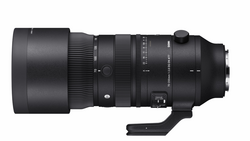
Coming to you from Arthur R, this detailed video takes a close look at the Sigma 20-200mm f/3.5-6.3 DG Contemporary lens. The standout feature is the starting point at 20mm, which makes it genuinely wide enough to serve as a one-lens kit for travel or casual outings. Compared to the Tamron 28-200mm, that extra width means you no longer need to carry a separate wide angle lens. Arthur highlights the size advantage as well: this Sigma is even smaller than Tamron’s 28-75mm G2 while offering both more width and more reach. The weight is just over 1 lb, making it practical to carry all day without fatigue.
The build quality is also emphasized. The mount is all metal, there’s a weather-sealing gasket, and the lens has at least seven seals throughout the body. Sigma uses high-quality plastics with a slightly rubberized feel, and Arthur compares the finish to Sony’s G Master lenses in terms of durability. The zoom ring covers most of the barrel and is damped enough to prevent unwanted extension. Details like the 72mm filter thread, a zoom lock that auto-releases under pressure, and Sigma’s high-speed linear actuator motor for autofocus all add to its appeal. Autofocus performance is reported as fast, silent, and reliable.
Key Specs
-
Focal Length: 20 to 200mm
-
Maximum Aperture: f/3.5 to 6.3
-
Minimum Aperture: f/22 to 40
-
Mount: Sony E, Leica L
-
Format Coverage: Full frame
-
Minimum Focus Distance: 9.8 in (wide) to 25.6 in (tele)
-
Magnification: 0.5x, 1:2 macro ratio
-
Optical Design: 18 elements in 14 groups
-
Aperture Blades: 9, rounded
-
Autofocus: Linear motor
-
Stabilization: None
-
Filter Size: 72 mm
-
Dimensions: 3 x 4.5 in
-
Weight: 1.2 lb / 550 g
Optically, Arthur reports sharp results across the range, with the center holding consistently strong and corners performing well enough for most situations. The trade-off comes with the variable aperture. It transitions quickly, moving from f/3.5 at 20mm to f/6.3 beyond 85mm. While that limits low-light performance, it helps keep the size and weight manageable. Outdoors, this can be an advantage since you won’t constantly need an ND filter in bright light. At longer focal lengths, you can still achieve strong subject separation even at f/6.3.
Arthur points out a few drawbacks worth noting. The lens has no stabilization, which could make handheld video more challenging unless your camera has IBIS. The stiff zoom ring makes smooth zooming difficult, and the lens is not parfocal, meaning focus shifts as you zoom. Flare control isn’t perfect, and you may see strong flaring even with the hood attached. Still, autofocus performance is praised, and focus breathing is minimal, which is rare for a superzoom. Check out the video above for the full rundown from Arthur.




Join the Fstoppers community for free
-
Post comments and join in the discussions
-
Browse the site ad-free
-
Share your work and get featured in the community
-
Compete in the photo contests for fun and prizes
6 Comments
Thank you for making me aware of this lens, Alex.
I currently use a Sigma 10x zoom for my everyday work, the 60-600mm in EF mount. It has been excellent and met my expectations. Even exceeded my expectations somewhat.
I think that this 20-200mm 10x zoom could be a very useful companion lens to my 60-600mm. BUT ...... the lack of any stabilization and the super small aperture of f6.3 cause my enthusiasm to be halted.
Both of these shortcomings seem to be compromises made for the sake of smaller size and lighter weight. But this lens is already so tiny that an extra half pound and an extra half inch in diameter wouldn't bother me in the least. Size and weight really aren't very important, compared to other capabilities.
I do love that they got the minimum focus distance and maximum magnification to be so great! That means I would not have to carry my macro lens when heading afield to photograph lizards, toads, frogs, butterflies, etc.
If Sigma developed a 20-200mm lens that had stabilization and an aperture of f4.5 at 200mm, and still maintained the 1:2 macro magnification ratio, I would buy it in a heartbeat. Seriously. Yes I know that would be double the cost and 1.7 times the weight, but I don't care, it would be so worth it. Those specs would seem to be geared more toward serious and professional nature work, and not toward the hobby / travel genre market.
Alex wrote:
"Aperture Blades: 9, rounded"
On the B&H website that you linked to, it claims that there are 13 aperture blades. Are you correct, or is B&H correct?
This link shows 9: https://www.bhphotovideo.com/c/product/1917712-REG/sigma_si2020035cem_2…
Interesting!
When I click on the link in the 2nd paragraph of your article, that page says 13.
I already tried calling and support chatting with B&H, to get clarification, but they are closed because today is a Jewish holiday. So I guess we will have to wait until tomorrow to find out why they have conflicting information on their site.
In the meantime, I am going to call Sigma - I already have their customer support number saved in my phone, and I call often and always get a real human to answer promptly, even on Jewish holidays ..... lol
Ok, I called Sigma.
According to Nick at Sigma Lens Support, the correct answer is that it has 9 aperture blades. Wonder why B&H has one webpage for the same lens in the same mount that says 13.
This makes me wonder if I can trust any of the information that I see for lenses on the B&H website. Imagine if I bought a lens someday, thinking it had magnification capability of 0.5x, and it actually had only 0.35x or 0.4x ....... horrors!