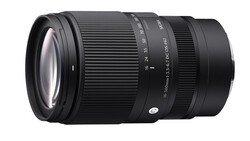
A single lens that can replace a bag full of glass changes how you move with your camera. The Sigma 16-300mm f/3.5-6.7 DC OS Contemporary stretches from wide to super telephoto, a reach that would normally require multiple primes or zooms, making it appealing for travel, everyday use, and times when you don’t want to pack multiple lenses.
Coming to you from Take Kayo, this surprising video takes a close look at the Sigma 16-300mm f/3.5-6.7 DC OS Contemporary lens. Kayo spends time walking through Vancouver, testing the lens at its extremes. At 16mm, you can frame wide city streets and busy shops. Push to 300mm and the frame tightens into details you’d normally need a dedicated telephoto for. This zoom flexibility makes it easy to shift from environmental scenes to compressed close-ups without moving your feet. Image stabilization, a weather-sealed body, and a compact build add to its practicality.
The video shows how versatile it can be in real-world situations. Shooting cherry blossoms, Kayo notes how close 300mm feels, almost like a macro perspective. He compares it to carrying a lineup of primes from 24mm to 450mm equivalent, except they all fit into one barrel. This doesn’t mean it replaces dedicated lenses in sharpness or speed, but it removes the weight and space of carrying multiples. Kayo also demonstrates casual vlogging and talking-head setups, showing that while it may not be the first choice for those uses, it’s capable if you only bring one lens.
Key Specs
-
Focal Length: 16 to 300mm (35mm Equivalent: 25.6 to 480mm)
-
Maximum Aperture: f/3.5 to 6.7
-
Minimum Aperture: f/22 to 45
-
Lens Mount: Canon RF, Sony E, Fujifilm X, Leica L
-
Format: APS-C
-
Minimum Focus Distance: 6.7 in (Wide) to 41.3 in (Tele)
-
Magnification: 1:2 macro reproduction ratio, 0.5x
-
Optical Design: 20 elements in 14 groups
-
Aperture Blades: 9, rounded
-
Autofocus: Yes
-
Image Stabilization: Yes
-
Filter Size: 67 mm
-
Dimensions: 2.9 x 4.8 in / 73.8 x 121.4 mm
-
Weight: 22 oz / 625 g
Where the lens really stands out is its macro ability around 70mm, delivering a 1:2 magnification ratio. That makes it useful for product shots or detail work without switching lenses. The optical design includes FLD and SLD glass to help manage distortion and chromatic aberration across such a large zoom range. Build quality is consistent with Sigma’s Contemporary line, with a 67mm filter thread that matches many of their other lenses. Check out the video above for the full rundown from Kayo.




Join the Fstoppers community for free
-
Post comments and join in the discussions
-
Browse the site ad-free
-
Share your work and get featured in the community
-
Compete in the photo contests for fun and prizes
8 Comments
Alex wrote:
"Where the lens really stands out is its macro ability around 70mm, delivering a 1:2 magnification ratio."
Interesting that you specifically mention 70mm. This causes me a bit of concern, that the lens may not be capable of 1:2 magnification at the extreme ends of the range.
Personally, I would buy this lens solely because of it's close-focusing and macro-like abilities, but I would mostly want to use these capabilities from 16mm to 25mm and then also at 250mm to 300mm.
The ends of the range are where macro-like capability matters to me, for the things I shoot and the way I shoot them. So I would like to know how the lens performs at such tasks in those parts of the focal length range. Do you have any specifications that would tell us this information?
Another thing, Alex .....
Could you do an Fstoppers original that compares this lens to the Tamron 18-300mm? A deep dive review would be great! I mean not just a link to someone else's YouTube video, but a real actual review that pretty much covers everything that every type of niche photographer would be interested in.
Thanks!
Exactly! I have the Tamron and was wondering if this lens is just Sigma playing catch-up, or if it represents a genuine advance. Specs look very similar, apart from a slight advantage at the wide end of the range. However, does it have greater distortion, for example?
I don't have either yet. But I bought an older used crop body Sony mirrorless just so I could use these kinds of lenses (since Canon won't allow them anymore). I want to buy either this one or the Tamron that you have, when a bit of money comes in, but I have no idea which one would be better for what I shoot.
The max magnification at the extreme ends of the range would be the most important feature of comparison for me. Whichever one is better at macro magnification at the widest end and the longest end is the one I will buy.
Tamron has 1:2 at the wide end...
That will be extremely useful for environmental portraits of subjects like toads, geckos, frogs, and small snakes, all of which sit still and allow you to get your lens literally right on top of them.
If it is also 1:2 at the 300mm end of the range, that would be extremely useful for subjects such as butterflies, which do not allow you to get your lens so close, because they will fly off if you try. So you still need to fill the frame with them, but to do so with some working distance, such as 300mm will provide.
For Sony users there is the FE 24-240mm f/3.5-6.3 OSS in Full Frame but with a press of a button for APS-C you get 36-360mm. Great for having on your camera for that somewhat far but closer with the lens on your everyday carry camera. Since March 4th 2015, ya 2015!
Edwin wrote:
"For Sony users there is the FE 24-240mm f/3.5-6.3 OSS "
Yes, this is undoubtedly versatile enough for many photographers, but there is a huge, glaring weakness that matters to a number of us:
Minimum Focus Distance 19.7" / 50 cm
Magnification 1:3.7 Macro Reproduction Ratio, 0.27x Magnification
These specs are nowhere close to what either the Sigma or the Tamron can do, so that Sony 24-240 is completely useless for any of us who would like to use such a lens for close-up photography from time to time, such as photographing butterflies, bumblebees, flowers, geckos, lizards, rings and watches, stamps, coins, etc.
It is really nice that these 3rd party lensmakers do not completely ignore close focusing ability when they design their optics for all-around zoom lenses.