Choosing a standard zoom in the $1,300 range quietly decides how your everyday kit feels in your hand and how long you can stay fresh on a long shoot. When you put a compact 24–50mm against a heavier 24–70mm, you are really choosing how you want to move, react, and work.
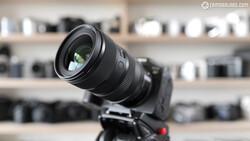
Coming to you from ZY Cheng, this thoughtful video pits the Sony FE 24-50mm f/2.8 G against the Sigma 24-70mm f/2.8 DG DN II Art in a direct, practical showdown. You see the obvious spec trade right away: the Sigma gives you more reach in the same price bracket, while the Sony keeps things smaller and lighter. Cheng walks you through how that extra 20mm at the long end plays out in real scenes, not just on a spec sheet. At the same time, you get a close look at how much size and weight you give up when you choose that extra range. The video keeps the focus on what actually changes in your shooting day, not just what sounds impressive in marketing.
What may catch you off guard is how hard the little Sony pushes back once you look at real images. Cheng shows that the compact zoom is not just “good enough” but often the optically stronger option in key parts of the frame, even though it gives up that 70mm reach. Because it is a first-party lens, you also see the benefits of in-camera corrections, focus behavior, and stabilization coordination on Sony bodies in a way the Sigma cannot quite match. The comparison makes it easier to picture how each lens would behave on a typical full frame body when you are shooting wide open, stopping down, or working in mixed light. You get enough sample scenarios to feel the character of each lens.
The more you watch, the more the question shifts from “which lens is sharper” to “what kind of working style do you want to commit to.” If you like to travel light, hang a single body across your shoulder all day and still have a bright f/2.8 zoom, the Sony starts to look like a very different kind of tool than the Sigma. Cheng also touches on how these lenses balance on common bodies, how they behave for video work when you rely on autofocus and breathing compensation, and how each option fits into a longer term system plan. There are also some nuanced points about how much that 24–70mm range really buys you once you factor in cropping and how often you actually live at the long end, which are worth hearing directly. Check out the video above for the full rundown from Cheng.




Join the Fstoppers community for free
-
Post comments and join in the discussions
-
Browse the site ad-free
-
Share your work and get featured in the community
-
Compete in the photo contests for fun and prizes
No comments yet