
As artificial intelligence continues to advance, everyone seems to be saying AI is coming for the fashion industry, especially for photographers and models. I recently put Nano Banana Pro through a real e-commerce test to see whether it could actually do the job of a professional photographer with a full team.
For reference images, I pulled shots from a campaign we recently produced for a brand. The idea was to see whether one real shoot could be spun into multiple additional shoots just by swapping the model and the outfit. This particular campaign had about 15 looks — normally a half-day to full-day shoot, plus a couple of hours of pre-production and team assembly.
My plan was simple: nail one image, then replicate the approach across the catalog. How hard could it be?
After the first generation, I was genuinely impressed. It wasn't perfect, but for a first pass it was close. The more I prompted, though, the more I understood what AI actually needs to do this job well. A single front-facing photo of a garment isn't enough — the model has to guess too much. For consistent results, you need the front, back, side, and ideally a texture detail so the fabric reads correctly. That last part matters: when I showed some outputs to a designer, they immediately flagged that the fabric didn't match the feel of the real material. For a designer, that's a dealbreaker. The product in the photo has to look like the product in person.
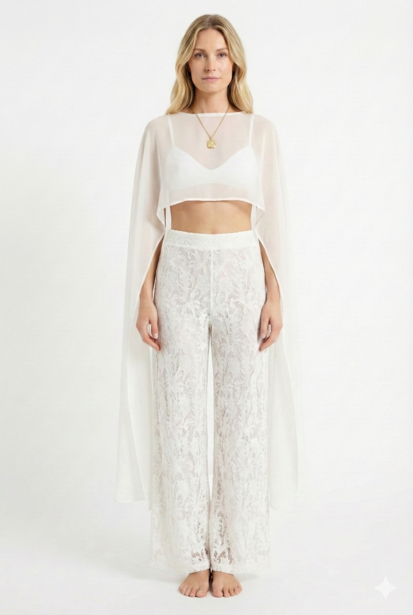
Image created by Gemini/Nano Banana Pro.
Consistency across multiple shots of the same look is the bigger problem. A standard e-com set is front, side, and back at a minimum, plus a detail shot and often a fabric swatch. For a top-and-bottom outfit, I'll also isolate each piece. Because Nano Banana returns one image per prompt, every angle is its own round of prompting — and often its own round of revision. Counterintuitively, giving the AI more reference information sometimes made things worse: outfits started drifting from the original, poses got awkward, and in some cases the garment was swapped out entirely for something that didn't exist. Even telling it, "Now do the same, but with this look," would cause it to revert to a previous outfit or hybridize pieces into a fictional garment.
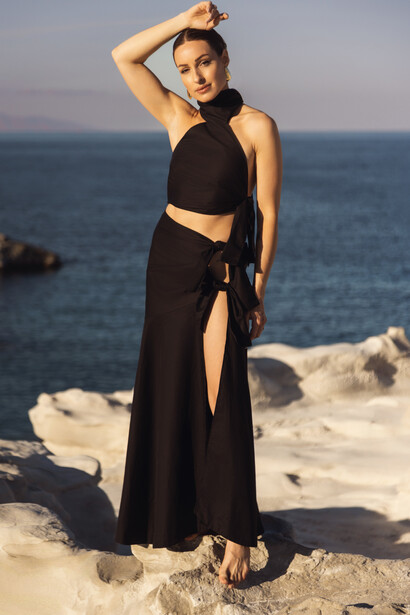
The image above is a good example. At first glance, it looks fine. But compare it to the actual campaign shot below, and the problem is obvious: the clothing in the AI version isn't the clothing the designer actually made. The cut, the drape, the detailing — none of it matches. For a designer whose entire purpose is selling that specific garment, that's unusable. Until I can guarantee the output matches the product, I wouldn't feel comfortable charging a client for AI-generated e-com work.
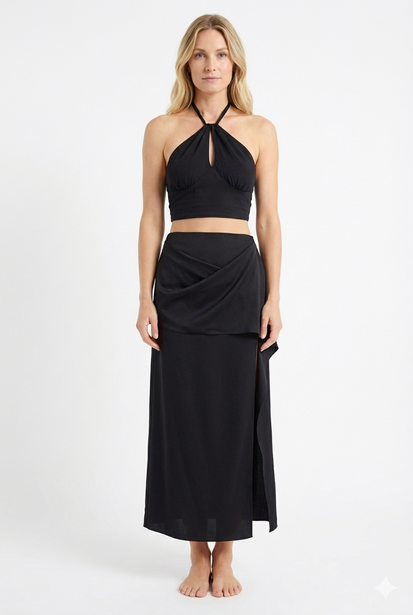
Resolution is the other sticking point. Even at full size, these generations don't come close to what a modern camera produces. You could argue web use doesn't demand high resolution, but shoppers zoom in — they want to see stitching, weave, and finish before buying. And anything headed to print needs far more pixels than Nano Banana currently delivers.
So would I use Nano Banana for fashion e-commerce today? Not as a full replacement. As the tool improves and as I get sharper at prompting, I can see folding it into my workflow. But right now, for professional client work, it's still too sloppy.

Join the Fstoppers community for free
-
Post comments and join in the discussions
-
Browse the site ad-free
-
Share your work and get featured in the community
-
Compete in the photo contests for fun and prizes
No comments yet