Every all-in-one zoom is a bargain with a price attached, and the price is optical quality. Fold a 10x range into a lens the size of a soda can and something has to give: corner sharpness at the wide end, contrast at the long end, distortion so severe that the lens profile is doing half the work before you ever open the file. The reason photographers keep buying them anyway is that the alternative is worse. A bag of three excellent primes you never carry produces no photographs at all, and the shot you miss while swapping glass on a bridge in Kyoto is gone permanently.
This guide is organized around that trade. Some of the picks below are genuinely good lenses that happen to be versatile. Others are compromised lenses that are so useful you forgive them. We say which is which in every entry, because the gap between the two is the whole decision. There is also a second path to a light kit that nobody talks about enough, which is one small prime instead of one big zoom, so we cover the best pancakes and compact primes alongside the superzooms.
Two axes decide this purchase. The first is range versus image quality, and there is no lens on earth that escapes it. The second is stabilization, which matters far more than most buyers realize once your telephoto end lands at f/6.3 or f/8 and your shutter speed starts falling. We flag the stabilization situation on every pick, including the ones that have none and lean on your camera body instead.
At a Glance
- Best Overall All-in-One: Sigma 20-200mm f/3.5-6.3 DG Contemporary
- Best Superzoom for Nikon Z: Nikon NIKKOR Z 28-400mm f/4-8 VR
- Best Superzoom for Sony E: Tamron 25-200mm f/2.8-5.6 Di III VXD G2
- Best Superzoom for Canon RF: Canon RF 24-240mm f/4-6.3 IS USM
- Best Superzoom for APS-C: Tamron 18-300mm f/3.5-6.3 Di III-A VC VXD
- Best Superzoom for Micro Four Thirds: OM System M.Zuiko Digital ED 12-100mm f/4 IS PRO
- Best Travel Zoom for Image Quality: Sony FE 20-70mm f/4 G
- Best Pancake: Nikon NIKKOR Z 26mm f/2.8
- Best Compact Prime: Sigma 45mm f/2.8 DG Contemporary
- Best Budget: Canon RF-S 18-150mm f/3.5-6.3 IS STM
Best Overall All-in-One: Sigma 20-200mm f/3.5-6.3 DG Contemporary
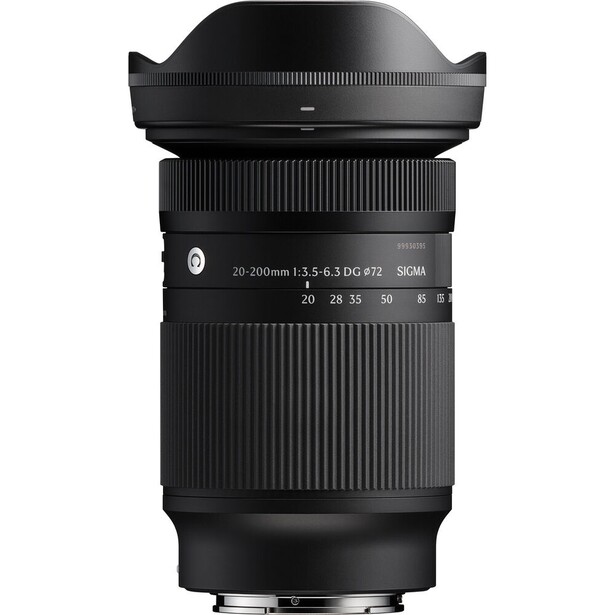
- Mounts: Sony E, L-Mount (full frame)
- Focal range: 20-200mm (10x)
- Maximum aperture: f/3.5-6.3
- Stabilization: none, relies on in-body stabilization
- Minimum focus / magnification: 16.5 cm at 28mm, 1:2 between 28mm and 85mm
- Filter size: 72mm
- Weight: 540 g (Sony E), 550 g (L-Mount)
- Price: $899 (B&H)
The interesting number on the Sigma 20-200mm f/3.5-6.3 DG Contemporary is not the 200. It is the 20. Superzooms almost always start at 24mm or 28mm because the wide end is where the optical design gets punishing, and Sigma pushing it to 20mm on a full frame 10x zoom is the first genuinely new idea this category has had in years. Those four millimeters change what the lens is for. At 24mm you are taking a picture of a cathedral. At 20mm you are inside it.
It is also small in a way the spec sheet undersells. At 540 g in Sony E mount and 117.5mm long retracted, it weighs less than most 24-70mm f/2.8 zooms and takes a common 72mm filter. The close-focus behavior is the other trick worth knowing about: 16.5 cm at 28mm gives you a 1:2 reproduction ratio, which is half life size, and Sigma holds that magnification anywhere from 28mm to 85mm. That is a real half-macro capability inside a travel zoom, and it means the lens covers wide landscapes, environmental portraits, market-stall detail shots, and a 200mm reach for architecture compression without ever leaving your hand.
Now the honest part. There is no optical stabilization in this lens at all, so it is only a sensible buy on a body with in-body stabilization, which rules out several cheaper Sony bodies and makes handheld 200mm shots at f/6.3 a discipline rather than a given. It is a Contemporary-line lens, not an Art, and it behaves like one: soft corners wide open at the extremes of the zoom range and heavy reliance on the correction profile for distortion and vignetting. Stop down to f/8 and it tightens up considerably. Our short hands-on review came away impressed by its autofocus, but it wasn't a full test, so most of this description rests on its specifications and Contemporary-line design.
Buy it if you shoot Sony E or L-Mount, carry a stabilized body, and want one lens that genuinely covers a trip. Skip it if your camera has no in-body stabilization, or if you would rather have fewer millimeters and better glass, in which case scroll down to the Sony FE 20-70mm f/4 G. For everyone else, this is the most useful travel lens released in years, and you can check the current price of the Sigma 20-200mm f/3.5-6.3 DG Contemporary at B&H.
Read our review: Sigma 20–200mm Lens Review: Surprisingly Good
What We Like
- The only full frame 10x zoom that starts at 20mm
- Half life-size magnification held across 28mm to 85mm
- 540 g and a standard 72mm filter thread
- Dust- and splash-resistant construction
What Could Be Better
- No optical stabilization, so it needs a stabilized body
- Corners go soft at the wide and long extremes wide open
- Distortion and vignetting lean hard on software correction
- f/6.3 at the long end is dim for indoor and low-light work
Best Superzoom for Nikon Z: Nikon NIKKOR Z 28-400mm f/4-8 VR
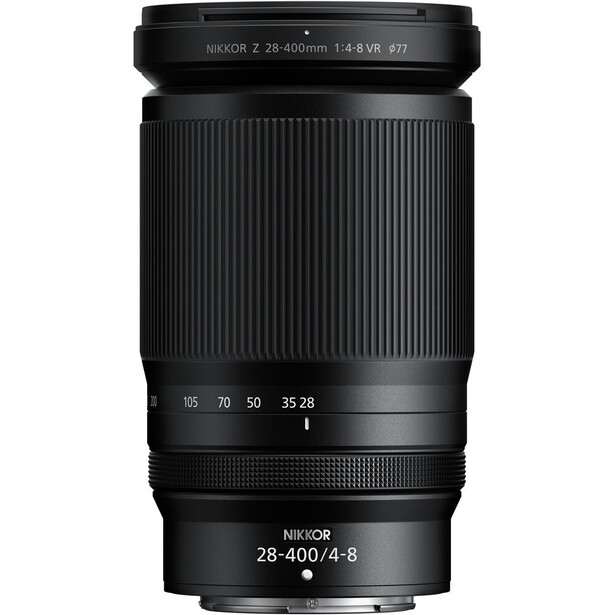
- Mounts: Nikon Z (full frame)
- Focal range: 28-400mm (14.2x)
- Maximum aperture: f/4-8
- Stabilization: VR, rated 5 stops
- Minimum focus / magnification: 0.2 m at 28mm, 0.35x maximum
- Filter size: 77mm
- Weight: 725 g
- Price: $1,296.95 (B&H)
Nikon built the lens that should not exist. The NIKKOR Z 28-400mm f/4-8 VR covers a 14.2x range, from a usable wide angle to genuine wildlife reach, in a 725 g package that is lighter than most 70-200mm f/2.8 lenses and shorter than a water bottle when retracted. On a safari, on a whale-watching boat, or anywhere the subject distance changes by an order of magnitude between frames, it is close to unbeatable, because the alternative is a body swap or a missed animal.
The optical performance is better than the spec sheet has any right to deliver. Twenty-one elements in 15 groups, four of them ED glass, and Nikon's correction work keeps the center respectable across the whole range. The 5-stop VR system is doing enormous work here and it is the reason the lens is viable, because at 400mm you are shooting at f/8, and without stabilization that combination is a tripod lens. Nikon also gave it a 0.35x maximum magnification at the wide end, close enough to macro that you can fill the frame with a flower without carrying anything else.
The f/8 long end is the tax, and it is a real one. In good light it is a non-issue, and modern Nikon sensors handle the ISO you need to compensate. At dusk, in a forest, or under stadium lights, f/8 at 400mm forces ISO numbers that will visibly degrade your files, and the autofocus system has less light to work with too. Corner sharpness at 400mm never gets genuinely crisp, so this is not the lens for a bird photographer who prints large. It is the lens for a traveler who wants one barrel to do everything and accepts that the extremes are compromised.
Nikon shooters who want optical quality over reach should look at the NIKKOR Z 24-120mm f/4 S instead, which is a sharper, faster, constant-aperture lens that gives up 280mm of telephoto. If the reach is the point, nothing else in the Z system comes close, and you can check the current price of the Nikon NIKKOR Z 28-400mm f/4-8 VR at B&H.
What We Like
- A 14.2x range at 725 g, with no direct rival in any system
- Effective 5-stop VR that makes the f/8 end usable handheld
- 0.35x magnification at the wide end for close-ups
- Standard 77mm filters and a retracting design that stays compact
What Could Be Better
- f/8 at 400mm is dim, and low light forces high ISO
- Corners never get truly sharp at the telephoto end
- Not cheap for a variable-aperture consumer zoom
- Nikon Z only, with no equivalent for other mounts
Best Superzoom for Sony E: Tamron 25-200mm f/2.8-5.6 Di III VXD G2
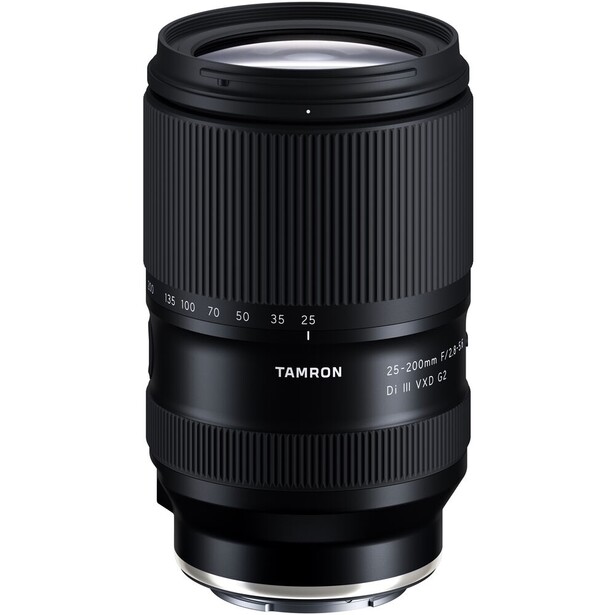
- Mounts: Sony E (full frame)
- Focal range: 25-200mm (8x)
- Maximum aperture: f/2.8-5.6
- Stabilization: none, relies on in-body stabilization
- Minimum focus / magnification: 0.16 m at 25mm, 1:1.9 maximum
- Filter size: 67mm
- Weight: 575 g
- Price: $899 (B&H)
The original Tamron 28-200mm f/2.8-5.6 was the lens that convinced a generation of Sony shooters that all-in-one zooms had stopped being embarrassing, and the Tamron 25-200mm f/2.8-5.6 Di III VXD G2 that replaced it in late 2025 fixes the two things people complained about. It starts at 25mm rather than 28mm, which is the difference between "almost wide enough" and "wide enough" for interiors and street work, and it swaps the older RXD stepping motor for Tamron's VXD linear motor, which is faster and tracks moving subjects far more confidently.
What keeps it in the bag is the f/2.8 wide end. No other zoom in this guide gives you that, and it is a genuine functional difference rather than a spec-sheet flourish. It means you can shoot a dim restaurant, a museum interior, or a candlelit street at 25mm without pushing ISO into the mud, and it means the lens can produce real subject separation at the short end instead of the flat, everything-in-focus look that plagues f/4-6.3 travel zooms. The close-focus figure is close to absurd for a zoom of this class: 0.16 m at the wide end for a 1:1.9 ratio, which is effectively half life size and turns the lens into a workable macro tool.
Like the Sigma, it has no in-lens stabilization, which is a defensible choice on Sony because almost every current Sony body has in-body stabilization, but it means the lens is a bad match for an older, unstabilized body. And the f/2.8 marketing headline evaporates quickly as you zoom; you are at f/4 or slower well before the middle of the range, which is normal for the class but worth knowing before you plan a shoot around it. Its sharpness is very good in the center and merely acceptable in the corners at the extremes, which is the correct expectation for every lens on this page.
If your budget is tight, the outgoing 28-200mm f/2.8-5.6 Di III RXD is still stocked while sell-through lasts, and it is still an excellent lens, so it is worth pricing against the G2 before you commit. For everyone else, check the current price of the Tamron 25-200mm f/2.8-5.6 Di III VXD G2 at B&H.
What We Like
- f/2.8 at the wide end, unique among travel zooms here
- 25mm is meaningfully wider than the 28mm it replaces
- VXD linear autofocus is fast and confident on moving subjects
- 1:1.9 close focus makes it a credible half-macro lens
What Could Be Better
- No optical stabilization
- The f/2.8 aperture disappears quickly as you zoom in
- Sony E mount only
- Corner performance softens at both ends of the range
Best Superzoom for Canon RF: Canon RF 24-240mm f/4-6.3 IS USM
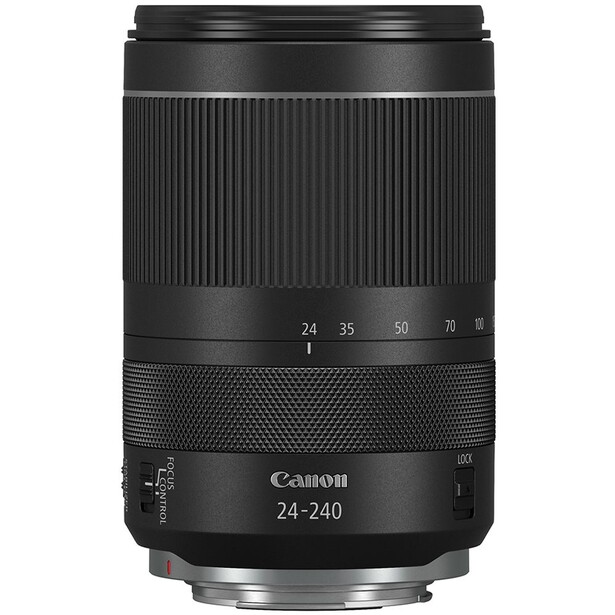
- Mounts: Canon RF (full frame)
- Focal range: 24-240mm (10x)
- Maximum aperture: f/4-6.3
- Stabilization: optical IS, rated 5 stops
- Minimum focus / magnification: 0.5 m at 24mm, 0.26x maximum
- Filter size: 72mm
- Weight: 750 g
- Price: $1,049 (B&H)
Canon RF shooters have a narrower field to choose from, and the RF 24-240mm f/4-6.3 IS USM wins the slot on availability as much as merit. It is the only native full frame RF all-in-one zoom Canon has ever built, it launched in 2019, and it does the job competently rather than brilliantly. One caveat before anything else: Canon's own US store now lists the lens as no longer available, so what remains at retailers is sell-through stock. Check availability before you plan a trip around it. The 10x range is the standard travel span, the Nano USM autofocus motor is quick and silent, and the 5-stop optical stabilization is built into the lens rather than assumed from the body, which matters on RF bodies like the EOS R8 and RP that have no in-body stabilization at all.
That last point is why it survives in a guide that is otherwise unimpressed with it. Half of Canon's affordable full frame lineup lacks sensor stabilization, so an unstabilized third-party superzoom is a non-starter for those users, and the RF 24-240mm quietly solves a problem the fancier alternatives create. The control ring is the other small pleasure, letting you dial exposure compensation or ISO with your left hand while the right stays on the grip.
The optical compromises are more visible than on the newer designs here. Distortion at 24mm is severe enough that the uncorrected raw file looks like a fisheye, and the correction crops meaningful angle of view out of your frame. Sharpness in the corners is unremarkable throughout, and it gets soft at 240mm in a way the Nikon 28-400mm largely avoids. At 750 g, it is also the heaviest lens in this guide, which is an odd place for a travel zoom to land.
APS-C RF shooters should stop reading here and buy the Tamron 18-300mm for RF instead, which is lighter, longer in equivalent terms, and optically newer. Full frame RF shooters who want one lens for a trip do not have a better native option. Check the current price of the Canon RF 24-240mm f/4-6.3 IS USM at B&H.
What We Like
- In-lens 5-stop stabilization, essential on unstabilized RF bodies
- Fast, quiet Nano USM autofocus
- Customizable control ring
- The only native full frame RF all-in-one zoom
What Could Be Better
- Extreme distortion at 24mm that correction has to hide
- Soft at 240mm, and mediocre in the corners generally
- 750 g is heavy for the category
- A 2019 design Canon never refreshed, and now listed as no longer available on Canon's US store
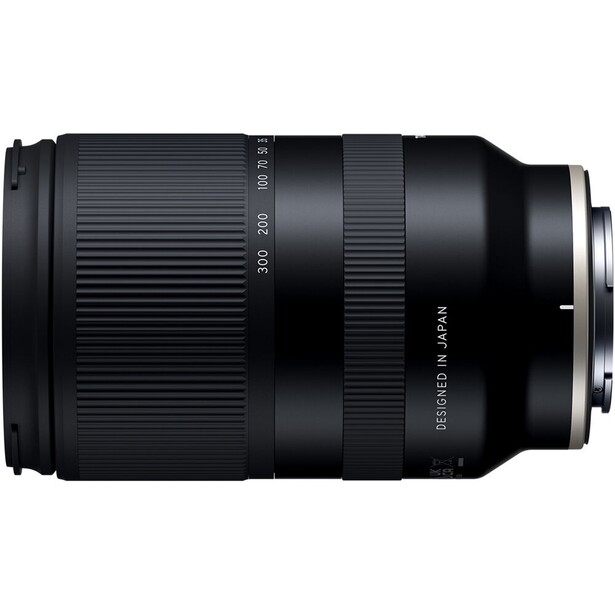
Best Superzoom for APS-C: Tamron 18-300mm f/3.5-6.3 Di III-A VC VXD
- Mounts: Sony E, Fujifilm X, Nikon Z, Canon RF (APS-C)
- Focal range: 18-300mm (16.6x), roughly 27-450mm equivalent
- Maximum aperture: f/3.5-6.3
- Stabilization: VC, in-lens optical
- Minimum focus / magnification: 0.15 m at 18mm, 1:2 maximum
- Filter size: 67mm
- Weight: 620 g to 635 g depending on mount
- Price: $599 (B&H)
Crop-sensor shooters get the best deal in this entire category, and the Tamron 18-300mm f/3.5-6.3 Di III-A VC VXD is the reason. A 16.6x range on APS-C works out to roughly 27-450mm in full frame terms, in a 620 g lens with in-lens VC stabilization, and Tamron now sells it for Sony E, Fujifilm X, Nikon Z, and Canon RF. For a Fujifilm X-T50 owner or a Nikon Z50 II owner heading abroad, that is the entire trip in one lens, and it is the single most practical recommendation in this guide.
It has the same VXD linear focus motor as Tamron's full frame lenses, which is why the autofocus feels quick rather than sleepy, and the 0.15 m close-focus at 18mm gives a 1:2 ratio for close-up work. The stabilization is the important part. Because Fujifilm and Nikon's cheaper crop bodies mostly lack in-body stabilization, an unstabilized 300mm lens on them would be unusable handheld, and Tamron's VC is what turns this from a spec sheet into a lens you can actually shoot at the long end.
The optics behave exactly the way you would expect a 16.6x zoom to behave. It is at its best from about 18mm to 100mm, where it is sharp enough that most people will never complain. Push toward 300mm and contrast falls away, corners get mushy, and you need to stop down to f/8 to recover meaningful detail, which is a demand the f/6.3 maximum makes awkward in dim light. There is also focus breathing and enough barrel distortion at the wide end to need the profile. None of that is disqualifying at this price and range, and pretending otherwise would be dishonest about what a lens like this is.
If you shoot Fujifilm and care more about optical quality than reach, the XF 16-80mm f/4 R OIS WR is the alternative to look at. For a crop-sensor traveler who wants to cover everything from a temple courtyard to a monkey on a distant roofline, check the current price of the Tamron 18-300mm f/3.5-6.3 Di III-A VC VXD at B&H.
What We Like
- A 16.6x range, roughly 27-450mm equivalent, in one 620 g lens
- In-lens VC stabilization, which cheaper crop bodies badly need
- Available for four mounts, including Fujifilm X and Nikon Z
- 1:2 close focus at the wide end
What Could Be Better
- Contrast and corner sharpness collapse toward 300mm
- f/6.3 at the long end while you also want to stop down to f/8
- Noticeable barrel distortion at 18mm
- Fujifilm's own zooms are better built
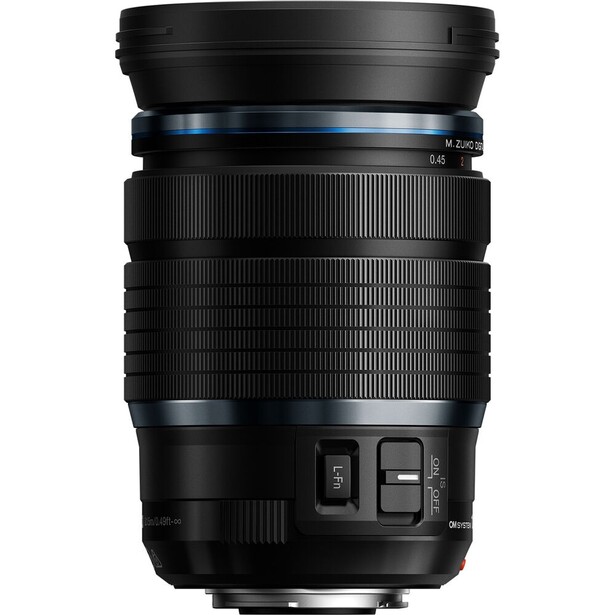
Best Superzoom for Micro Four Thirds: OM System M.Zuiko Digital ED 12-100mm f/4 IS PRO
- Mounts: Micro Four Thirds
- Focal range: 12-100mm (8.3x), 24-200mm equivalent
- Maximum aperture: f/4, constant
- Stabilization: 5 stops in-lens, up to 6.5 stops with Sync IS bodies
- Minimum focus / magnification: 0.15 m, 0.3x (0.6x equivalent)
- Filter size: 72mm
- Weight: 561 g
- Price: $1,499.99 (B&H)
Nearly a decade after it launched, the M.Zuiko Digital ED 12-100mm f/4 IS PRO is still the answer to a question the rest of the industry has not managed to answer: can a travel zoom be optically excellent rather than merely acceptable? This one is. It holds a constant f/4 across a 24-200mm equivalent range, it is sharp corner to corner in a way none of the full frame superzooms here can claim, and it is built like a professional lens because it is one, with an IP53 sealing rating and a pull-back manual focus clutch.
Its party trick is stabilization. The lens provides 5 stops on its own, and paired with a Sync IS body it works with the sensor stabilization to reach 6.5 stops, which in practice means handholding a half-second exposure of a lantern-lit alley is a reasonable thing to attempt rather than a stunt. Add the 0.15 m minimum focus distance and 0.3x magnification (0.6x in full frame terms) and it covers close-up work most photographers would reach for a macro lens to get. Combine it with a small OM body and the whole kit weighs less than a full frame body alone.
Two things hold it back. The Four Thirds sensor behind it means less low-light headroom and less background blur than the full frame options here, and a constant f/4 on Micro Four Thirds gives roughly the depth of field of f/8 on full frame, so the dreamy separation some travelers want is simply not available. It is also expensive for a travel lens, priced like the professional optic it is, and OM System's own store has recently shown it out of stock, so availability is worth checking before you plan around it.
If you already own a Micro Four Thirds body and want the best travel lens in existence for that system, there is no argument to have. If weather-sealing and stabilization drive your buying, our beginner camera guide makes a similar case for OM System bodies. Check the current price of the OM System M.Zuiko Digital ED 12-100mm f/4 IS PRO at B&H.
What We Like
- Genuinely excellent optics, not the usual superzoom compromise
- Constant f/4 across a 24-200mm equivalent range
- Up to 6.5 stops of stabilization with Sync IS bodies
- IP53 weather-sealing and professional build quality
What Could Be Better
- Four Thirds sensor limits low-light and background blur
- Expensive relative to other travel zooms
- Stock has been intermittent
- A design that is now approaching a decade old
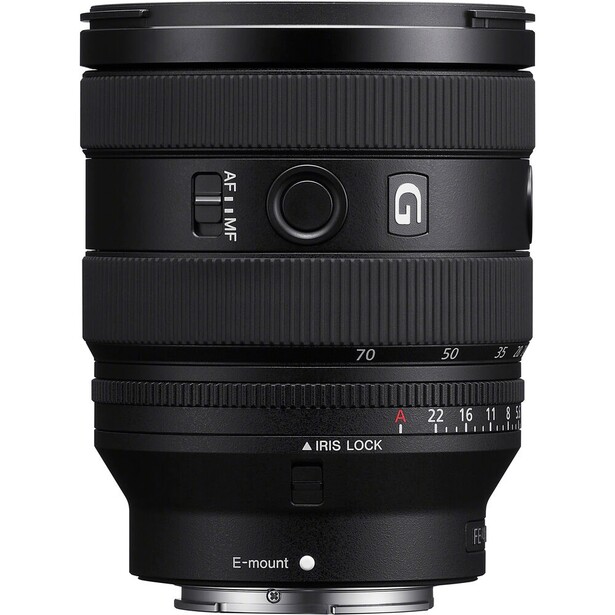
Best Travel Zoom for Image Quality: Sony FE 20-70mm f/4 G
- Mounts: Sony E (full frame)
- Focal range: 20-70mm (3.5x)
- Maximum aperture: f/4, constant
- Stabilization: none, relies on in-body stabilization
- Minimum focus / magnification: 0.3 m at 20mm and 0.25 m at 70mm in autofocus, 0.39x maximum
- Filter size: 72mm
- Weight: 488 g
- Price: $1,198 (B&H)
Not everybody who wants a travel lens wants a superzoom, and pretending otherwise is how people end up disappointed with their photographs. The Sony FE 20-70mm f/4 G takes the opposite bet: give up the telephoto reach entirely, keep the extra wide angle, and refuse to compromise the optics. What you get is a 488 g lens that is sharp across the frame at f/4, focuses fast and silently, has a proper aperture ring with a de-click switch, and produces files that need no apology.
The 20mm wide end is what makes it a travel lens rather than just a good standard zoom. Twenty-four millimeters is not wide enough for cramped interiors, narrow streets, or a group photo taken from across a small table, and the four extra millimeters solve all three. At the other end, 70mm covers portraits and moderate compression, and the 0.39x maximum magnification is high enough for food, textures, and detail work. For a photographer whose trip is cities, food, people, and architecture rather than wildlife, this covers close to everything.
What it does not cover is anything far away. There is no 200mm here, no distant mountain compression, no bird on a wire, and if you need those you either carry a second lens or buy one of the superzooms above. There is also no optical stabilization, which is a non-issue on a stabilized Sony body and a problem on an unstabilized one. And f/4 is a working aperture rather than a fast one, so night portraits will want a prime.
This is the pick for someone who has been burned by a superzoom before and decided the range was not worth the mush. Sony's own FE 24-240mm f/3.5-6.3 OSS is the reach-first alternative in the same system if you want the opposite trade. If image quality is the point, check the current price of the Sony FE 20-70mm f/4 G at B&H.
Read our full review of the Sony FE 20-70mm f/4 G.
What We Like
- 20mm wide end that no rival standard zoom offers
- Sharp across the frame wide open, with no superzoom softness
- 488 g, with an aperture ring and a de-click switch
- 0.39x magnification for close-up work
What Could Be Better
- No telephoto reach at all beyond 70mm
- No optical stabilization
- f/4 is limiting for low light and background blur
- Priced above several longer-reaching zooms
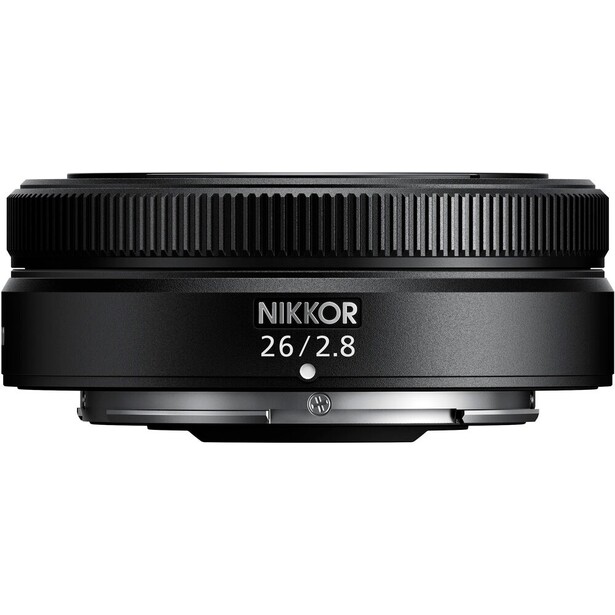
Best Pancake: Nikon NIKKOR Z 26mm f/2.8
- Mounts: Nikon Z (full frame)
- Focal range: 26mm prime
- Maximum aperture: f/2.8
- Stabilization: none, relies on in-body stabilization
- Minimum focus / magnification: 0.2 m, 0.19x maximum
- Filter size: 52mm
- Weight: 125 g
- Price: $496.95 (B&H)
There is a second, quieter way to travel light, and it is to stop bringing a zoom. The NIKKOR Z 26mm f/2.8 is 23.5mm thick and weighs 125 g, which is roughly the weight of a deck of cards, and it turns a Z6 III or a Zf into something you can carry on a shoulder strap all day and forget about. That is not a small thing. The best lens on a trip is frequently the one that does not make you decide whether to bring the camera.
The focal length is well chosen. Twenty-six millimeters is wide enough to work as a street and environmental lens without the distortion of a true wide angle, and it is close to the field of view most phone cameras trained you to see with, which makes it unusually intuitive. Optically it is a genuinely good lens rather than a novelty: sharp in the center from f/2.8, well corrected, and with a metal mount and a weather-sealing gasket that its size does not lead you to expect. On a DX body it becomes a 39mm equivalent, which is a lovely walkaround length.
The compromises come with the form factor. At f/2.8 it is not a low-light lens in the way a 35mm f/1.8 is, background blur is modest at this focal length, and Nikon charges a premium that has nothing to do with the amount of glass involved. It also has no stabilization of its own, so on an unstabilized Z body you are relying on shutter speed alone. Corners take until about f/5.6 to catch up with the center.
Canon shooters looking for the same thing should buy the RF 28mm f/2.8 STM, which is even thinner and considerably cheaper, though it lacks the Nikon's weather-sealing gasket. Nikon owners who want their camera to disappear should check the current price of the Nikon NIKKOR Z 26mm f/2.8 at B&H.
What We Like
- 23.5mm thick and 125 g, so the camera becomes carryable
- Sharp in the center from f/2.8 and well corrected
- Weather-sealing gasket and a metal mount
- 26mm is an intuitive, versatile field of view
What Could Be Better
- Expensive for what it is
- f/2.8 limits low-light and background blur
- Corners need f/5.6 to sharpen up
- No stabilization of its own
Best Compact Prime: Sigma 45mm f/2.8 DG Contemporary
- Mounts: Sony E, L-Mount (full frame)
- Focal range: 45mm prime
- Maximum aperture: f/2.8
- Stabilization: none, relies on in-body stabilization
- Minimum focus / magnification: 0.24 m, 1:4 maximum
- Filter size: 55mm
- Weight: 220 g (L-Mount), 235 g (Sony E)
- Price: $619 (B&H)
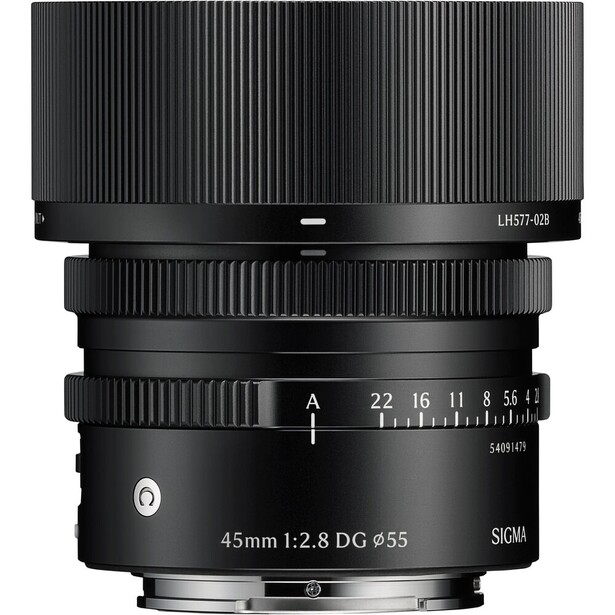
Sigma's I series is the closest thing modern mirrorless has to the small metal primes people used to travel with, and the Sigma 45mm f/2.8 DG Contemporary is the one that suits a trip best. It is machined from aluminum, has a knurled manual focus ring and a physical aperture ring that clicks in third stops, and weighs 220 g. Handling a lens this well made is a slightly odd experience at a price this modest, and it is the reason the I series has the following it does.
Forty-five millimeters is an underrated travel focal length. It is slightly longer than a 35mm, so it flatters faces and compresses street scenes just enough, and slightly wider than a 50mm, so it still takes in context. Sigma tuned this lens for rendering rather than clinical sharpness, and the out-of-focus areas are smooth and unfussy in a way that the brand's Art lenses are sometimes accused of missing. It focuses to 0.24 m for a 1:4 ratio, close enough for a plate of food or a detail on a doorway. Note that Sigma renamed the lens when it dropped the "DN" suffix from its mirrorless line, so the older 45mm f/2.8 DG DN listings you will still find describe essentially the same optic.
An f/2.8 maximum aperture on a normal prime is the obvious limitation, and it is a real one. This is not a low-light lens and it is not a bokeh machine, and anybody expecting the background to melt at 45mm and f/2.8 will be disappointed. Autofocus is a stepping motor and it is accurate rather than fast, so it is not the lens for chasing a toddler through a plaza. Sharpness wide open is good, not spectacular.
Sony shooters who want autofocus speed and a slightly wider field should look at the Sony FE 40mm f/2.5 G instead, which is faster to focus and just as small. If you want a lens that makes you slow down and enjoy shooting, check the current price of the Sigma 45mm f/2.8 DG Contemporary at B&H.
What We Like
- All-metal build with a clicked aperture ring, at 220 g
- 45mm is a genuinely useful compromise between 35mm and 50mm
- Smooth, characterful rendering rather than clinical sharpness
- Available for both Sony E and L-Mount
What Could Be Better
- f/2.8 is slow for a normal prime
- Stepping-motor autofocus is accurate but unhurried
- Modest background blur
- Naming confusion between the DG and older DG DN versions
Best Budget: Canon RF-S 18-150mm f/3.5-6.3 IS STM
- Mounts: Canon RF-S (APS-C)
- Focal range: 18-150mm (8.3x), 28.8-240mm equivalent
- Maximum aperture: f/3.5-6.3
- Stabilization: optical IS, rated 4.5 stops, up to 7 stops with the EOS R7
- Minimum focus / magnification: 0.17 m in autofocus, 0.44x maximum at 50mm
- Filter size: 55mm
- Weight: 310 g
- Price: $569 (B&H)
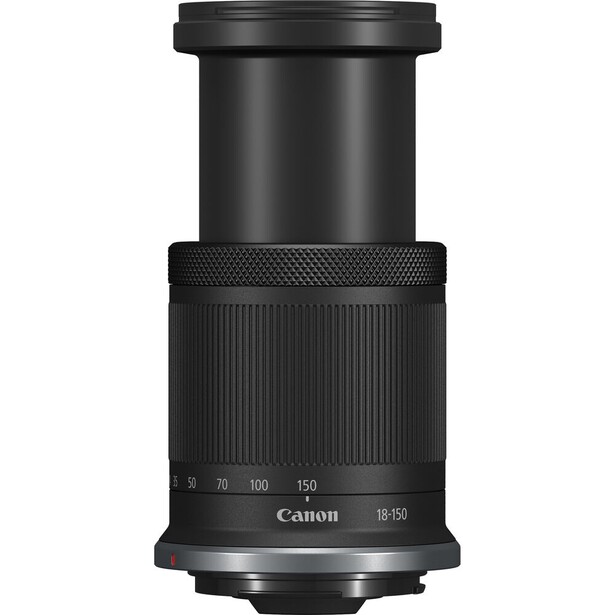
Every guide like this eventually has to answer the question of what you buy when the budget is small and the trip is next month. For a Canon crop-sensor owner, the answer is the RF-S 18-150mm f/3.5-6.3 IS STM, which costs a fraction of anything else here, weighs 310 g, and covers a 28.8-240mm equivalent range. It is the kit lens that comes bundled with the EOS R7 and R10, and it is the rare bundled lens worth owning on purpose.
The reason is that Canon put real stabilization in it. The lens is rated at 4.5 stops on its own and up to 7 stops when it coordinates with the in-body system on an EOS R7, which is a startling figure for a lens this cheap and it makes the dim f/6.3 telephoto end genuinely usable indoors. The 0.44x maximum magnification at 50mm is the other surprise, giving you near-macro framing without a dedicated lens. Autofocus is a quiet stepping motor, fine for travel and video, unremarkable for sports.
You get what you pay for optically. It is soft in the corners across most of the range, softer still at 150mm, and the barrel is plastic, right down to the lens mount, which is rare on a modern lens and not something you want to trust in a downpour. Canon lists no weather-sealing for it, and there is no gasket at the mount. The zoom is not internal, so the barrel extends a long way at 150mm, and it is not a lens that inspires much affection.
It is a lens that gets the shot, which for a first trip with a first camera is the whole assignment. Pair it with a decent bag from our camera backpack guide and you have a complete travel kit for less than the cost of most of the picks above on their own. Check the current price of the Canon RF-S 18-150mm f/3.5-6.3 IS STM at B&H.
What We Like
- By far the cheapest way to cover a 28.8-240mm equivalent range
- 4.5 stops of stabilization, and up to 7 stops on the EOS R7
- 0.44x magnification at 50mm for close-up work
- 310 g, the lightest zoom in this guide
What Could Be Better
- Soft corners throughout, and soft everywhere at 150mm
- No weather-sealing and a plasticky build
- f/6.3 telephoto end is dim
- Canon RF-S bodies only
How to Choose a Travel or All-in-One Lens
Start by working out what you actually photographed on your last trip. Most people who buy a 400mm superzoom discover that 90% of their frames land between 24mm and 70mm, and that the reach they paid for, in weight and in optical quality across the whole range, bought them a handful of pictures of distant buildings. If your camera roll says you shoot wide and normal, buy a good short zoom or a prime, and enjoy files that do not need an apology. If it says you shoot wildlife, sports, or anything that will not let you approach, the reach is worth the compromise and you should buy it without guilt.
Stabilization is the spec that matters far more than people expect. Almost every lens here has a maximum aperture of f/6.3 or f/8 at the long end, which means your shutter speed will be low exactly when your focal length is long, and that is where handheld shots die. If your camera has in-body stabilization, an unstabilized lens like the Sigma 20-200mm or Tamron 25-200mm is fine. If it does not, and plenty of popular bodies including the Canon EOS R8 and most Fujifilm and Nikon crop bodies do not, you need stabilization built into the lens, and that requirement alone eliminates half this list for you.
The spec that matters less than people think is maximum aperture at the wide end. A travel zoom is used outdoors in daylight most of the time, and the difference between f/3.5 and f/2.8 at 24mm is one stop that you will rarely need. What you will notice, and what nobody puts on the box, is the aperture at 50mm and 70mm, which is where the majority of your frames actually get taken and where these lenses have usually already slid to f/5 or f/5.6.
Finally, consider the option nobody sells you: one small prime. A 125 g pancake or a 220 g compact prime turns your camera into something you carry when you would otherwise leave it in the hotel, and it will out-resolve every zoom on this page. The cost is that you zoom with your feet and you accept that some photographs are simply not available to you. For street, food, architecture, and people, that is a trade a lot of photographers make once and never reverse. Elia Locardi's Photographing the World: Japan is a good look at how a travel photographer actually plans and shoots a trip with a deliberately limited kit.
What We're Looking For
We weigh range against optical quality honestly, and we do not pretend a 16x zoom performs like a prime. Beyond that, we look at stabilization (in the lens or assumed from the body), weight and length as carried rather than as printed, close-focus capability, which does more work on a trip than most photographers anticipate, and build quality where the lens will be used in weather. Every specification in this guide was verified against current manufacturer and retailer sources at the time of writing, and prices move constantly, so treat them as a snapshot. Only one entry here, the Sony FE 20-70mm f/4 G, links a full Fstoppers review, and the Sigma 20-200mm links a shorter hands-on one; the others are written from verified specs and each lens' documented design rather than implying testing we have not done.
Frequently Asked Questions
Are All-in-One Zoom Lenses Worth It?
Yes, if you understand the trade. An all-in-one zoom is optically worse than a dedicated lens at every focal length it covers, and it is more useful than every one of them combined for a traveler who cannot swap lenses on the move. Buy one for convenience, not for image quality, and shoot it stopped down to f/8 when you can.
What Is the Best All-in-One Lens for Full Frame?
The Sigma 20-200mm f/3.5-6.3 DG Contemporary for Sony E and L-Mount, and the Nikon NIKKOR Z 28-400mm f/4-8 VR for Nikon Z. The Sigma wins on the wide end and size, the Nikon wins on sheer reach. Canon full frame shooters are limited to the 2019-vintage RF 24-240mm f/4-6.3 IS USM, which Canon's US store now lists as no longer available.
Do I Need a Stabilized Lens if My Camera Has IBIS?
No. If your body has in-body stabilization, an unstabilized lens is fine, and lenses that combine both systems only gain about a stop over the body alone. If your body has no in-body stabilization, which includes the Canon EOS R8 and RP and most Fujifilm and Nikon crop bodies, you should insist on a stabilized lens for anything past 100mm.
Is a Pancake Lens Better Than a Travel Zoom?
It is better optically and worse practically. A pancake like the NIKKOR Z 26mm f/2.8 is sharper than any zoom here, weighs a fifth as much, and makes the camera something you carry everywhere. It also gives you exactly one focal length, so it suits street, food, and architecture far better than wildlife or distant landscapes.
How Much Image Quality Do You Really Lose With a Superzoom?
Less than purists claim and more than the marketing suggests. Centers are usually sharp enough that a normal print or a screen image looks fine, especially from 24mm to 100mm. What you lose is corner sharpness, contrast at the telephoto extreme, and freedom from distortion correction, and the losses concentrate at exactly the two ends of the zoom range you bought the lens for.
Fstoppers may earn a commission from purchases made through links in this article. Our picks are made independently by our editorial team.