
Wide angle glass has always carried a premium price tag. Walk into any camera store and ask about a professional-grade 16-35mm f/2.8, and you'll leave with a lens that costs over $2,000 and weighs nearly two pounds. For photographers who spend their weekends hauling gear up mountainsides, that's a tough pill to swallow.
But here's something most landscape shooters already know: the vast majority of our work happens at f/8 or f/11, mounted on a tripod, with plenty of time to nail focus. That blazing fast f/2.8 aperture? It mostly just adds weight to your pack. Unless you're shooting nightscapes or astrophotography, you're paying a significant premium for speed you'll rarely use.
The good news is that third-party manufacturers and even first-party budget lines have caught up in a big way. Today's affordable wide angle glass delivers image quality that would have been reserved for four-figure lenses just a few years ago. We've rounded up 10 options that maximize sharpness and minimize both cost and weight, all coming in under $1,000.
Ultra-Wide Full Frame Options
When you want those dramatic foreground-to-horizon compositions that make viewers feel like they're standing in the scene, nothing beats a true ultra wide.
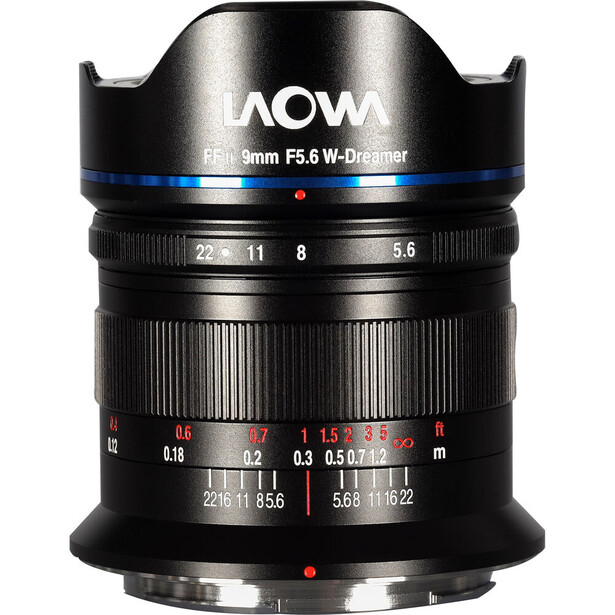
Laowa 9mm f/5.6 FF RL
- Mounts: Sony E, Nikon Z, L-Mount, Leica M
- Price: $499-899
The Laowa 9mm f/5.6 FF RL is the widest rectilinear lens money can buy. With a staggering 135-degree field of view, it captures perspectives that simply aren't possible with any other optic. And unlike fisheye lenses, it keeps your lines straight.
Yes, it's manual focus only, but that's barely a limitation here. At 9mm, the depth of field is so extreme that setting focus to infinity keeps everything sharp from a few feet in front of your tripod all the way to the mountains on the horizon. For landscape work, this lens opens up compositional possibilities that will fundamentally change how you approach a scene.
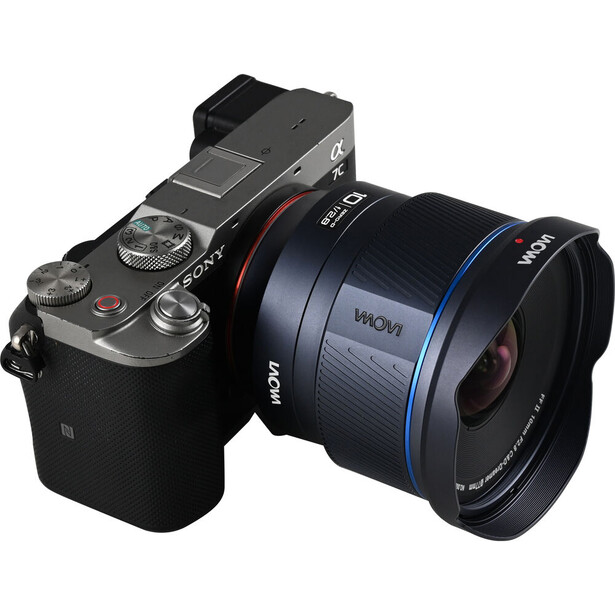
Laowa 10mm f/2.8 Zero-D FF
- Mounts: Sony E, Nikon Z (Autofocus) | Canon RF, L-Mount (Manual)
- Price: $799
Where the 9mm prioritizes width above all else, the Laowa 10mm f/2.8 Zero-D FF strikes a different balance. It's the widest full frame autofocus rectilinear lens currently available, and Laowa's "Zero-D" optical design means your horizon lines stay perfectly straight without relying on software correction in post.
The f/2.8 aperture also makes this surprisingly capable for astrophotography. If you shoot both landscapes and nightscapes and don't want to carry two lenses, the 10mm Zero-D handles both jobs admirably. The autofocus works well on Sony and Nikon bodies, and unlike many ultra-wides, it accepts standard 77mm screw-in filters, which is a huge advantage for ND and polarizer use.
Budget Alternatives to the Holy Trinity Zooms
These lenses replace those heavy, expensive f/2.8 zooms that pros have traditionally relied on. You'll get nearly identical results for a fraction of the investment.
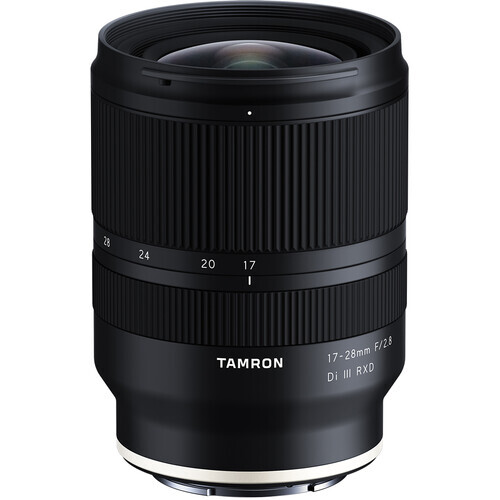
Tamron 17-28mm f/2.8 Di III RXD
- Mounts: Sony E (Nikon Z users: the Nikon Z 17-28mm f/2.8 uses this exact optical design)
- Price: $649
If there's a default recommendation for Sony landscape shooters on a budget, this is it. The Tamron 17-28mm f/2.8 Di III RXD has become the gold standard for value-conscious photographers who want professional results without professional prices.
The internal zoom mechanism means the barrel doesn't extend when you zoom, keeping dust and moisture out during long hikes in challenging conditions. It's meaningfully lighter and smaller than Sony's native options, and the optical performance is close enough that you'd need to pixel-peep to spot the difference. This is the lens that proves you don't need to spend $2,000+ to get excellent wide angle coverage.
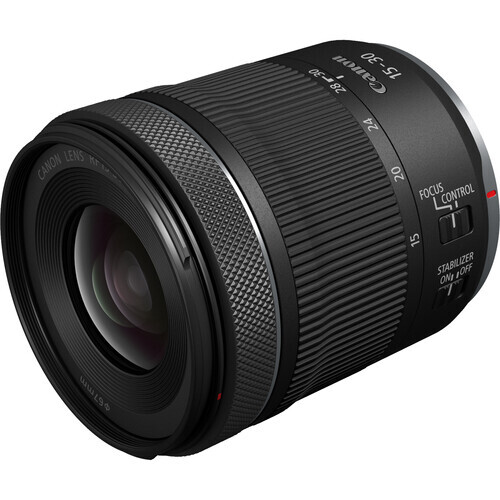
Canon RF 15-30mm f/4.5-6.3 IS STM
- Mounts: Canon RF
- Price: $489
Canon users have had slim pickings in the affordable ultra wide category, which makes this lens particularly valuable. The Canon RF 15-30mm f/4.5-6.3 IS STM is the only full frame native RF autofocus ultra wide zoom under $1,000, and it delivers exactly what landscape photographers need.
The variable aperture might raise eyebrows, but remember: you're probably shooting at f/8 anyway. What matters more is the built-in image stabilization, which lets you shoot handheld at remarkably slow shutter speeds. Want that silky waterfall effect without setting up a tripod? With the IS engaged, you can often get away with half-second exposures handheld. For hikers who value mobility, that's a significant advantage.
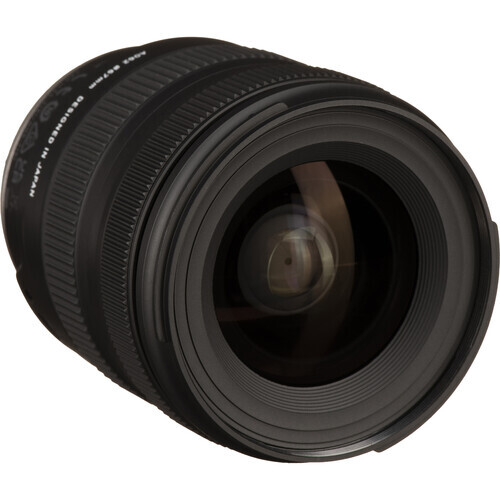
Tamron 20-40mm f/2.8 Di III VXD
- Mounts: Sony E
- Price: $699
The Tamron 20-40mm f/2.8 Di III VXD carves out a unique niche. The 20mm end is wide enough for environmental portraits and landscape work, while the 40mm end gives you reach for travel details and tighter compositions. It's not as wide as traditional ultra wide zooms, but it's considerably more versatile.
The real story here is size and weight. This is the smallest and lightest full frame f/2.8 zoom on our list, making it an exceptional choice for travelers who want one lens that handles most situations. If you're shooting landscapes, street photography, and travel documentation on the same trip, the 20-40mm eliminates the need to swap glass.
Fast Primes for Astrophotography and Maximum Sharpness
When you need to gather as much light as possible or want the absolute sharpest results, these fast primes deliver.
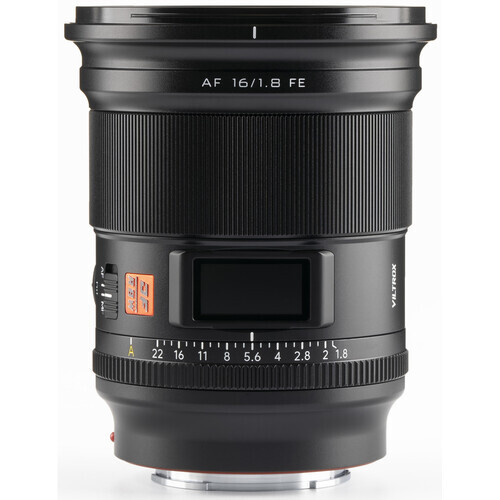
Viltrox AF 16mm f/1.8 FE
- Mounts: Sony E
- Price: $464
The Viltrox AF 16mm f/1.8 FE has disrupted the market in a way few lenses have. It offers resolution that competes with glass costing twice as much, wrapped in a well-built body with reliable autofocus.
A standout feature is the LCD panel on the lens barrel that displays focus distance, even in complete darkness. When you're fumbling around at 3 AM trying to focus on the Milky Way, this small detail becomes genuinely useful. The f/1.8 aperture gathers plenty of light for nightscape work, and stopped down to f/8, it's exceptionally sharp across the frame.
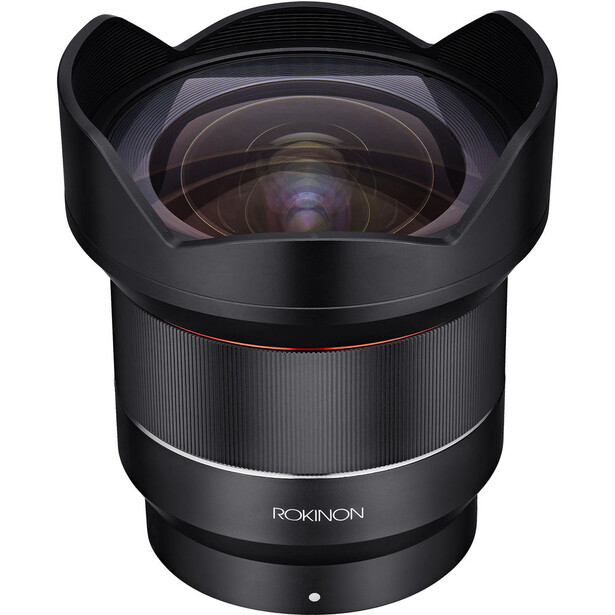
Samyang/Rokinon AF 14mm f/2.8 FE
- Mounts: Sony E, Nikon F, Canon EF
- Price: $439-599
The Samyang AF 14mm f/2.8 FE has been the default budget astrophotography choice for years, and it still holds that position for good reason. The 14mm focal length captures the entire arc of the Milky Way in a single frame, and the f/2.8 aperture gathers enough light to keep ISO manageable.
It's not the newest or most feature-rich option, but it's simple, light, and does exactly what budget-conscious nightscape photographers need. If you're just getting into astrophotography and don't want to spend a lot, start here.
Compact Options for Weight-Conscious Photographers
Every ounce counts when you're miles from the trailhead. These lenses prioritize portability without completely sacrificing capability.
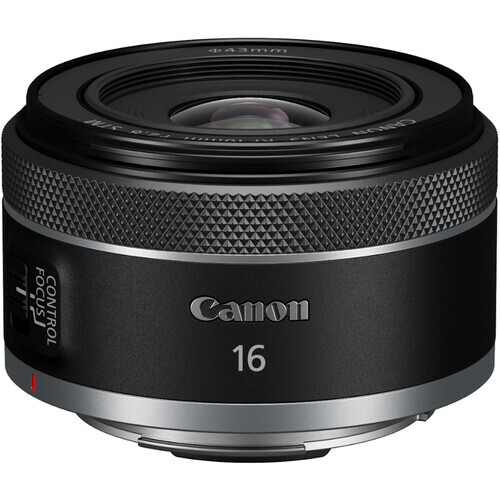
Canon RF 16mm f/2.8 STM
- Mounts: Canon RF
- Price: $259
At this price point, there's almost no excuse not to own this lens. The Canon RF 16mm f/2.8 STM is roughly the size of Canon's famous "nifty fifty" but delivers an ultra-wide field of view. Slip it in a jacket pocket and you've got a backup wide angle that costs less than most tripods.
Image quality is respectable rather than outstanding, with noticeable vignetting and corner softness that require correction in post. But as a lightweight primary lens for casual hiking or a backup that lives permanently in your bag, the RF 16mm is hard to argue against. Sometimes, the best lens is simply the one you actually have with you.
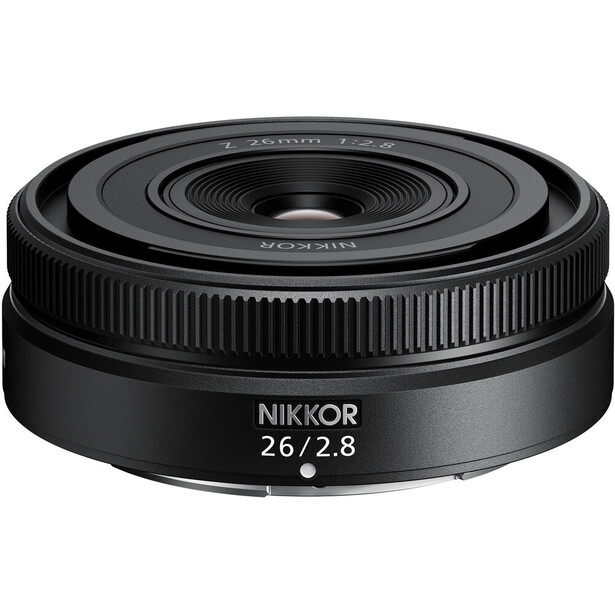
NIKKOR Z 26mm f/2.8
- Mounts: Nikon Z
- Price: $447
True pancake lenses are rare, and the NIKKOR Z 26mm f/2.8 is one of the best. At less than an inch thick, it transforms a Nikon Z body into something genuinely pocketable.
Now, 26mm isn't ultra-wide. You won't capture those dramatic sweeping vistas. But constraints can improve your photography, and this lens forces a more thoughtful, compositional approach to landscapes. Instead of relying on extreme width to create drama, you learn to find it through framing and subject selection. As a travel companion that disappears into your kit, the Z 26mm is exceptional.
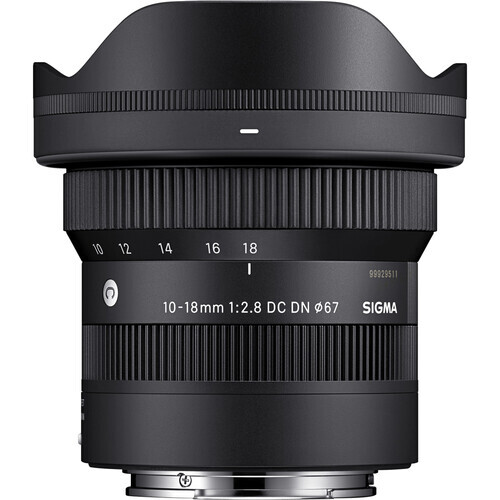
Sigma 10-18mm f/2.8 DC DN
- Mounts: Sony E, Fuji X, L-Mount, Canon RF
- Price: $729
Crop-sensor shooters have long been underserved in the premium wide angle category. The Sigma 10-18mm f/2.8 DC DN changes that. It's the smallest f/2.8 ultra wide zoom for APS-C bodies, delivering sharpness that rivals what full frame photographers have enjoyed.
The included petal hood uses a push-on design that keeps the overall package compact, and the constant f/2.8 aperture means you don't lose light as you zoom. For APS-C users serious about landscapes, this lens should be at the top of your list.
The Bottom Line
Sharp, capable wide angle glass doesn't require emptying your savings account. Every lens on this list proves that third-party manufacturers and budget-focused first-party options have reached a level of quality that was unthinkable a decade ago.
The best landscape photos aren't made by expensive equipment. They're made by photographers who understand light, composition, and their environment. These lenses give you the tools to capture what you see without the financial burden that once came with wide angle photography.
And if you really want to dive into landscape photography, check out our latest tutorial, "Photographing the World: Japan II - Discovering Hidden Gems with Elia Locardi!”



Join the Fstoppers community for free
-
Post comments and join in the discussions
-
Browse the site ad-free
-
Share your work and get featured in the community
-
Compete in the photo contests for fun and prizes
6 Comments
Viltrox AF 16mm f/1.8 is also available for Nikon Z
I bought a clean used Canon EF16-35/2.8III for under a $1K, I think that was a great purchase.
Sony FE 20mm 1.8 G belongs in this group.
I have this lens. It's current price on Sony's lens page is $949 US. i prefer it over my FE 24mm f/1.4 GM lens. It's a feel thing. I just think that the 20mm feels better in my hand.
For day hikes in rugged mountains, I whittled my kit down to one body (Panasonic GX9) and a 28-280 equivalent (Panasonic 14-140/3.5-5.6). Who says landscape photos have to be ultrawide?
https://www.jacquescornell.photography/mountainsofkazakhstan
https://www.jacquescornell.photography/blog/2016/12/hiking-with-a-micro…
Also, Sony's 28-60/4.0-5.6 and Viltrox' 14/4 Air are sharp, affordable ultralight options.
Personally, I do not like most landscape photos that are ultra wide ..... or even wide, for that matter. The problem with trying to capture the whole scene in front of you is that usually, the thing that makes the scene beautiful is one specific feature that is really far away, and when you shoot wide that one interesting thing is so tiny in the frame that it doesn't carry any visual impact.