
There is a reason every professional wedding and portrait photographer owns an 85mm lens. Ask any working pro what focal length lives on their camera during golden hour portraits, and the answer is almost always the same. The 85mm is the portrait lens, and once you shoot with one, you will understand why.
Why 85mm Is the Portrait Choice
The magic comes down to working distance. When you photograph someone with a wider lens like a 35mm or even a 50mm, you have to get closer to fill the frame. That proximity exaggerates features. Noses look bigger. Faces look rounder. It is not as flattering.
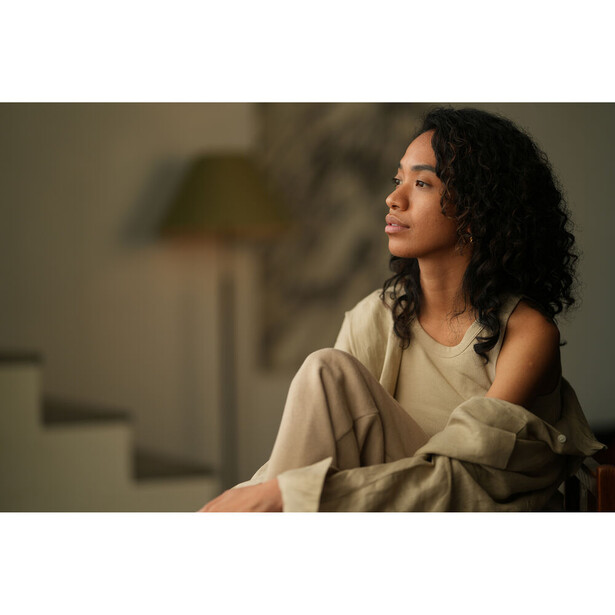
An 85mm lens forces you to step back, and that distance changes everything. Facial features flatten in a more complimentary way. Backgrounds melt into creamy oblivion. Your subject pops off the frame like they belong on a magazine cover. It is not the glass creating that compression. The distance is. But 85mm naturally puts you in that flattering zone without thinking about it.
That is exactly what we are going to sort out. For each major full frame camera system, I am breaking down the Bargain Pick, the Smart Choice, and the Dream Lens. By the end, you will know exactly where to put your money.
Sony E Mount: The Crowded Market
Sony shooters have it both ways. The E-mount ecosystem is packed with options, which means incredible variety but also crippling choice paralysis. Let me simplify things.
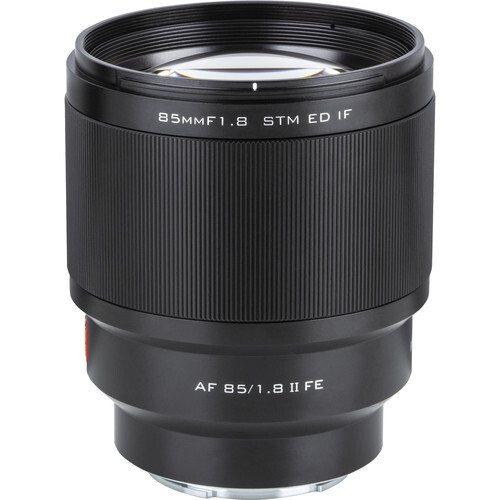
The Bargain: Viltrox 85mm f/1.8 II (~$263)
This lens punches so far above its price point it is almost unfair.
The Viltrox 85mm f/1.8 II delivers sharp images, decent autofocus, and a metal body that feels like it costs twice the price. For hobbyists and enthusiasts who want that 85mm look without the 85mm price tag, this is your lens.
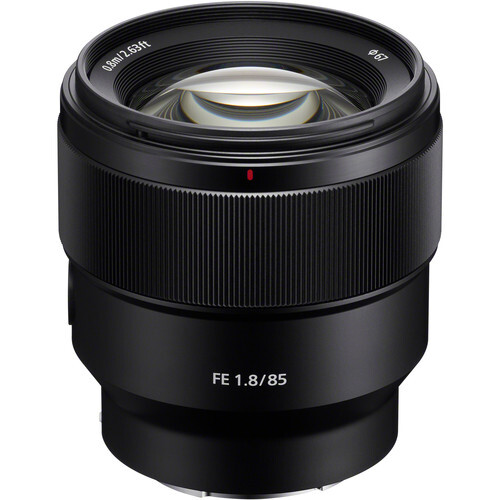
The Smart Choice: Sony FE 85mm f/1.8 ($648)
Sony knocked it out of the park with this one. Genuinely.
The Sony FE 85mm f/1.8 focuses faster than the original Sony FE 85mm f/1.4 GM, and in real-world use, it feels incredibly snappy. The new GM II closes that gap or reverses it, but at more than three times the price. This lens is razor sharp across the frame. It weighs almost nothing. And at $550, it sits in that sweet spot where you are getting genuinely premium optics without the premium price.
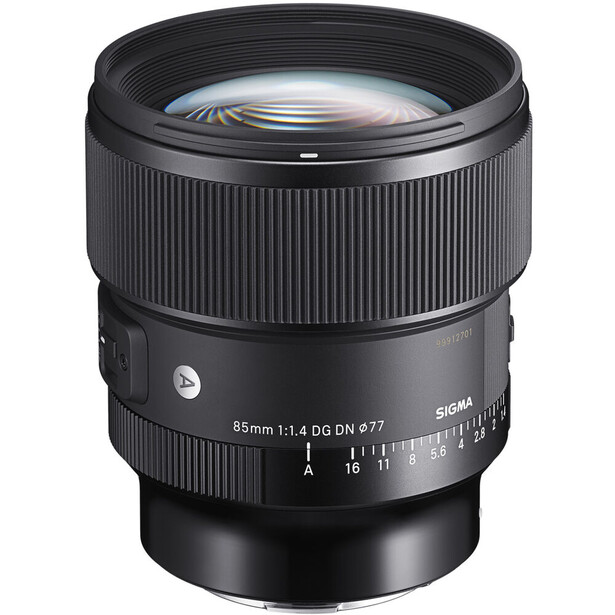
The Dream (Value): Sigma 85mm f/1.4 DG DN Art ($1,199)
Why not the Sony G-Master? Because the Sigma delivers 95% of the performance for nearly half the price.
The Sigma 85mm f/1.4 DG DN Art produces that signature wide-aperture rendering where backgrounds turn to watercolor. Bokeh balls are round and smooth. Skin tones are gorgeous. This is the lens that makes people ask, "What camera do you use?" even though the camera has almost nothing to do with it.
The Dream (Performance): Sony FE 85mm f/1.4 GM II ($2,048)
If money is no object, the new Sony FE 85mm f/1.4 GM II is the ultimate 85mm for Sony shooters.
Canon RF Mount: The 'Pay to Play' Garden
Canon's RF mount is a different beast. The company notoriously restricted third-party autofocus lenses for years, though the gates are finally starting to open. Sigma and Tamron now have official licensing agreements, with APS-C lenses already shipping. But until the market fills with affordable third-party RF primes, portrait shooters are mostly choosing between Canon glass or adapting old EF lenses.
The Bargain and Smart Choice: Canon RF 85mm f/2 Macro IS STM ($639)
Canon does not really have a cheap 85mm. But this lens does double duty, and that makes it the smart money.
The RF 85mm f/2 Macro IS STM is a portrait lens and a 1:2 macro lens for detail shots. Wedding photographers love it because they can shoot the bride's portrait and then get tight on the rings without swapping glass. That versatility is rare.
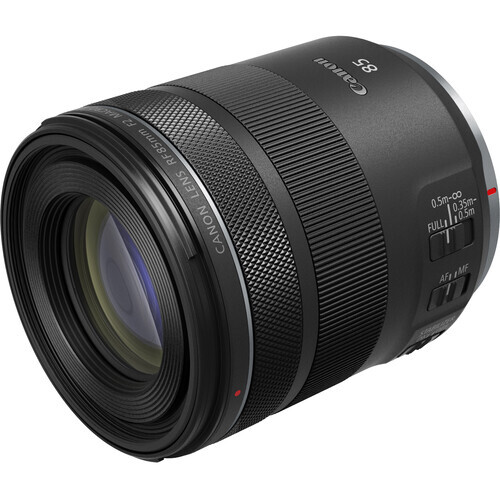
The compromise? The bokeh can be a bit busy or nervous compared to the L-series glass, and the STM focus motor is a little noisy for video. But at $639 with macro capability and IS? This is Canon's best value portrait lens by a mile.
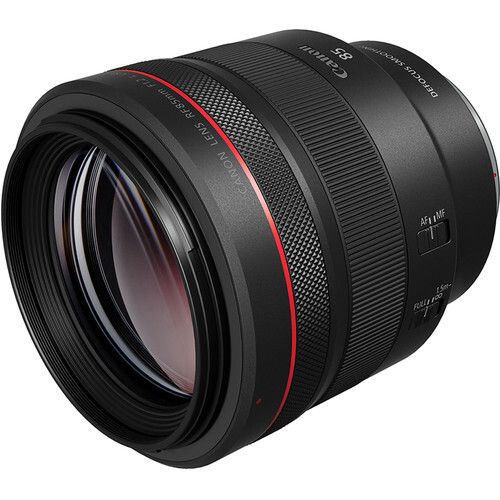
The Dream: Canon RF 85mm f/1.2L USM ($3,099)
The Canon RF 85mm f/1.2L USM exists in a category of one. Nothing else renders quite like it.
The f/1.2 aperture creates a look that cannot be replicated by any f/1.4 or f/1.8 lens. The depth of field is so razor-thin that eyelashes go soft while the iris stays sharp. Backgrounds do not just blur. They dissolve.
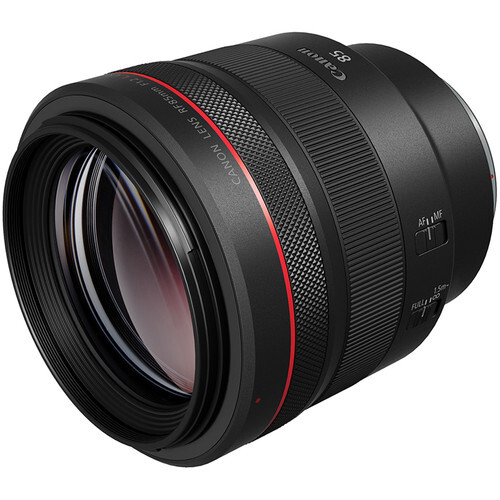
The Alternative: Canon RF 85mm f/1.2L USM DS ($3,399)
The "DS" stands for Defocus Smoothing, and it is exactly what it sounds like.
Canon applies a special coating to the lens elements that feathers the edges of bokeh balls. The result is background blur that looks even smoother and more painterly than the standard f/1.2. It is subtle, but for photographers obsessed with bokeh quality, it is noticeable, making the RF 85mm f/1.2L USM DS a fantastic choice.
Nikon Z Mount: The Optical Perfectionists
Nikon's Z mount S-Line lenses are optically incredible, but they come at a price. Third parties are finally filling in the gaps for budget-conscious shooters.
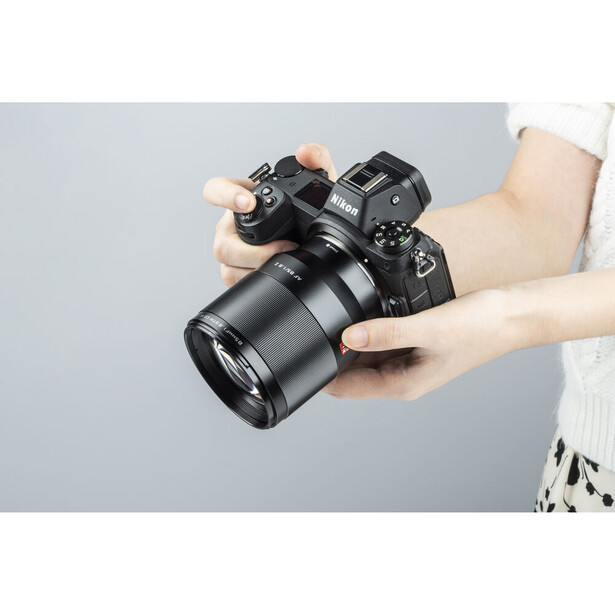
The Bargain: Viltrox 85mm f/1.8 Z ($263)
Nikon Z lenses are expensive. The Viltrox 85mm f/1.8 Z swoops in to save the day for hobbyists.
This lens creates beautiful images on Z5 and Z6 bodies for a fraction of what native glass costs. If you are just getting into portrait photography and cannot justify $700 or more on a single lens, the Viltrox lets you experience the 85mm focal length without the financial commitment.
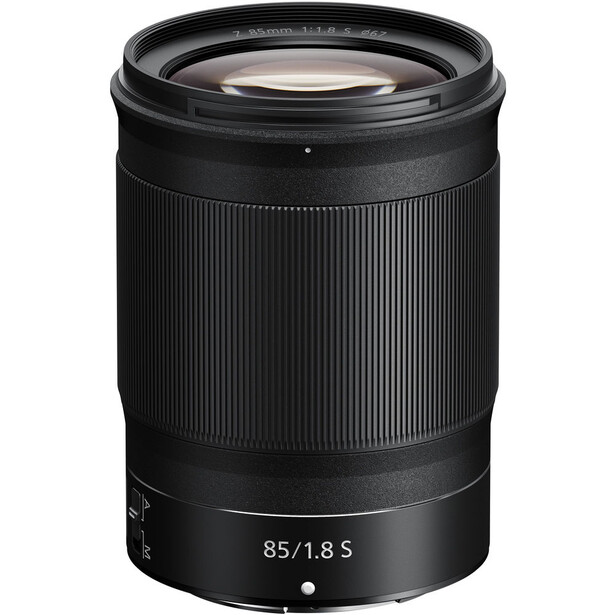
The Smart Choice: Nikon Z 85mm f/1.8 S ($747)
Do not let the f/1.8 aperture fool you. This is an S-Line lens, and that designation means something.
The Nikon Z 85mm f/1.8 S is optically outstanding. It is sharper than most f/1.4 lenses from the DSLR era, with very well-controlled aberrations. It is clinical, precise, and fully weather-sealed. For working professionals who need reliability and optical excellence, this lens delivers both.
The Dream: Nikon Z 85mm f/1.2 S ($2,797)
This is Nikon's answer to the Canon f/1.2, and it holds its own.
The Nikon Z 85mm f/1.2 S is a massive chunk of glass that renders skin tones beautifully and obliterates busy backgrounds. If you shoot in challenging environments with distracting elements behind your subjects, that extra stop of aperture buys you separation that f/1.8 simply cannot match.
The Diminishing Returns Reality Check
Before you pull the trigger on a Dream Lens, let me give you some honest perspective.
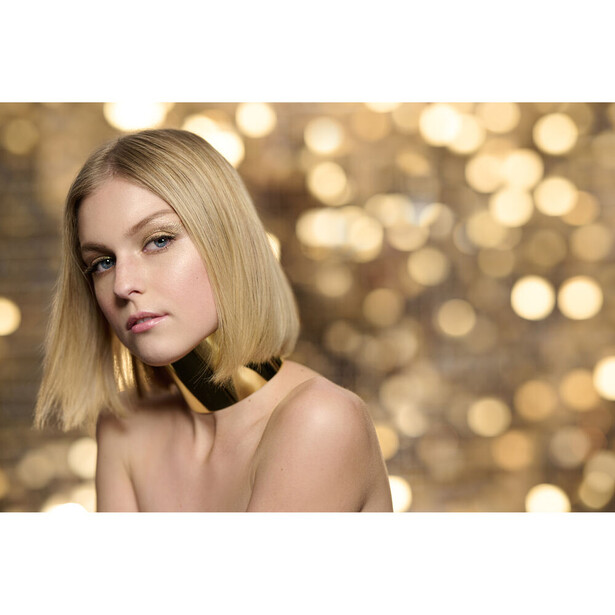
f/1.8 vs. f/1.4 vs. f/1.2
The difference between f/1.8 and f/1.2 is enormous in price. We are talking four times the cost in some cases. But the difference in the actual look? It is subtle.
Yes, f/1.2 creates thinner depth of field. Yes, the bokeh is slightly creamier. But if you showed most clients two portraits side by side, one shot at f/1.8 and one at f/1.2, they would struggle to tell you which was which.
The photographers who benefit most from f/1.2 are those shooting in genuinely challenging conditions: busy urban environments, cluttered venues, or situations where maximum subject separation is critical. For studio work or controlled outdoor shoots, f/1.8 does the job beautifully.
The Clinical vs. Character Debate
Here is something the marketing materials will never tell you: cheaper lenses often have more "character."
The Viltrox lenses produce flares, slight swirls in the bokeh, and optical quirks that some photographers actually prefer. The expensive Nikon S-Line and Sony GM lenses are clinically perfect. Every flaw is engineered out.
Which is better? That depends entirely on your aesthetic. Some portrait artists specifically seek out vintage lenses with imperfections because those flaws create a mood that technical perfection cannot replicate. Do not assume expensive always means better for your style.
Which Bucket Are You In?
Let me make this simple.
- If you are a hobbyist: Buy the Viltrox. It gets you nearly all the way there at a fraction of the cost. Put the money you save toward a lighting course or a reflector kit. Those investments will improve your portraits more than expensive glass ever will.
- If you are a working professional: Buy the Smart Choice in your system. The Sony 85mm f/1.8, the Canon RF 85mm f/2 Macro, or the Nikon Z 85mm f/1.8 S. These lenses are light enough to carry all day and reliable enough for weddings, events, and client sessions. They will never let you down.
- If you are an artist with the budget: The f/1.2 and f/1.4 Dream Lenses offer a look that separates your work from the competition. That paper-thin depth of field is a creative tool. If your style demands it and your bank account allows it, these lenses deliver magic that cheaper glass cannot replicate.
The 85mm focal length is the standard for portraits regardless of which option you choose. The only wrong decision is not owning one at all.



Join the Fstoppers community for free
-
Post comments and join in the discussions
-
Browse the site ad-free
-
Share your work and get featured in the community
-
Compete in the photo contests for fun and prizes
11 Comments
I would recommend this alternative as well... Kase 85mm F1.4 Autofocus Lens For Nikon Z Mount
Regular price$649.00 USD It is a fantastic lens! I like it more than my Nikon Z 85/1.8 S lens.
Do you have direct comparisons between the two?
Had the Sony f1.8 and liked it, but traded for Samyang's f1.4 MkII for low-light event work at the same price. The Samyang is excellent, and it's about the smallest and lightest AF f1.4 out there.
In the expensive category for Canon RF , Zeiss ML 85 1.4
I'd add the Viltrox 85mm F2 for Sony. One thing I notice about those f1.2 lenses; the ultra-shallow DoF sometimes means you have nothing in focus but a single eye. Never liked that.
It depends by the distance you are shooting from, it's not an absolute rule/value
Understood, but I see it way too much.
It’s fun talking about tangible and concrete things such as lenses. Not happy with your f2.8 shots? Then switch to f1.8 or even better f1.2! Dream on. It’s one of those often repeated photographic myths that buying a superior lens will lead to better shots as is the claim that shallow dof is the holy grail of portrait photography.Those that do may need to convince themselves that it is so to justify those significant sums for that f1.4 Speak to any photographer about lenses and most will admit to having a number that live on a shelf seldom used. Yet at the time of purchase each photographer had dreams that those neglected lenses would help deliver amazing images. Cast an eye at the used lens market and ask yourself the question, how did they get there? To shoot really meaningful portraits or any great shot requires much more thought than just deciding which 85mm or other to buy, if indeed that’s the correct focal length for portraiture. Who says? Is there indeed a correct focal length? Just because some random journalist says it’s the case it does not make it so. Taking great shots is a subject that’s much harder to write about without mentioning gear and focusing instead on planning, technique and approach. Ok you shoot events then f1.4 might be the way to go to get over poor lighting conditions but is the quest for razor thin dof in portraits just a fad and does it have any real aesthetic merit? If you were to analyze some of the best portraits ever taken would the focal length and speed of the lens used be a significant factor in the impact and overall aesthetic of the image? Are photography articles like this one that offer such advice actually contributing anything worthwhile or just filling space? Are creamy painterly backgrounds all they are cracked up to be or is a sharp background that says something about the subject and gives context more meaningful? In some situations it may well be the case. My advice to any photographer stating out would be to avoid defaulting to shallow dof for portraits. Save yourself some money and try the f4 option for starters. Less than half the price, lighter and at f8 will most likely be as sharp as the f1.4 at f8. If sharpness is your thing. If you are going to spend anything then spend time on thinking about developing your own unique style while immersing yourself in photographic and artistic research. Ask yourself what focal length did Rembrandt or Caravaggio use!😁
While I do have the Canon RF 85 1.2, I think it's overkill for portraits that are taken in studio. Unless you're really taking a lot of outdoor photos and need to blur the background, I think 1.8 or even 2.8 will suffice. But to each their own.
Nikon F Mount: Go bother Ken Rockwell, leave us alone, you're irrelevant :)
Hmm, I've wondered - is 85mm really the absolute truth? Or is there something somewhere in the 70-20mm (zoom) range that is my personal sweet spot?
That zoom used to be perfect for candid party photography - you could sit in a corner, almost forgotten and follow the goings-on with your longer lens, keeping your distance. Whether you would use a flash (which people would eventually get used to and ignore) or faster film - a matter of choice that also depended on the occasion.
And still - one of my first lenses with a serious SLR was Canon's FD 85 1.2 AL - and although it never was my everyday lens, it has given me endless joy. Portraits, yes, that as well. But any available light situation - window shopping in the evenings before Christmas, the Christmas markets, at concerts - back when they still let you in with a camera ... all very atmospheric shots, probably impossible with a "lesser" lens.
We had it so easy back then - no autofocus to worry about - no stopping down for depth of field, you just looked at what was in the viewfinder and clicked when it was right.
Price? In 1979 it cost me DM 1100 - still mildly painful for me at the time, but I had no family to feed back then.