
Fujifilm, a company that spent most of a century making film, looked at the tidy checkerboard of color filters printed onto every digital sensor and decided the tidiness was the enemy. Its answer was a scrambled 6 by 6 grid of red, green, and blue inspired by the random clumping of film grain, and once that grid was in place the company deleted the one component almost every rival still trusted to keep pictures clean. The X-Trans sensor has been dividing photographers ever since.
What Fujifilm Actually Changed
Almost every color sensor ever built, from the phone in your pocket to a cinema camera that costs as much as a car, relies on the same trick. The photosites under the glass are colorblind. Each one counts photons and reports a brightness value, with no idea whether the light was red or blue. To recover color, the manufacturer prints a mosaic of tiny colored filters over the pixels so that each photosite only sees one channel, then the processor guesses the two missing channels for every pixel by looking at its neighbors. That guessing step is called demosaicing, and it runs on nearly every raw file you have ever opened. The rare exceptions, like Sigma's three-layer Foveon chips and dedicated monochrome cameras, either capture full color at each pixel or skip color entirely.
The standard mosaic is the Bayer array, patented by Kodak's Bryce Bayer in the 1970s. It repeats a simple 2 by 2 tile: one red, one blue, and two green. Green gets the double share because human vision is most sensitive to it and carries most of the perceived detail, so a Bayer sensor is 50% green, 25% red, and 25% blue. It is simple, it is cheap, and the algorithms to decode it have been refined for decades.
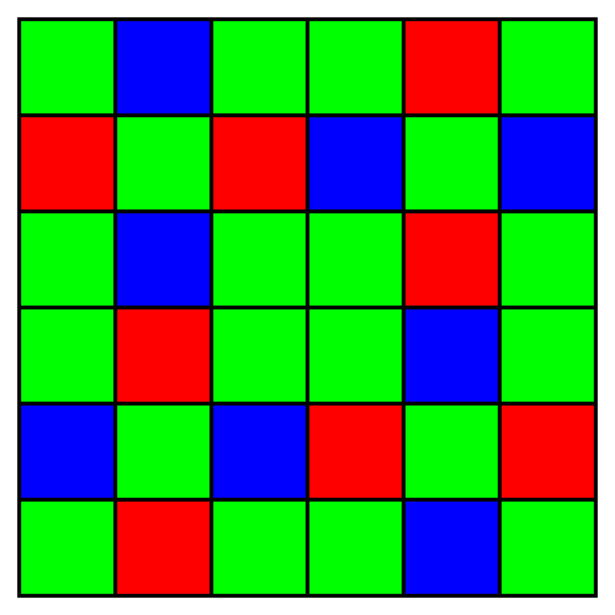
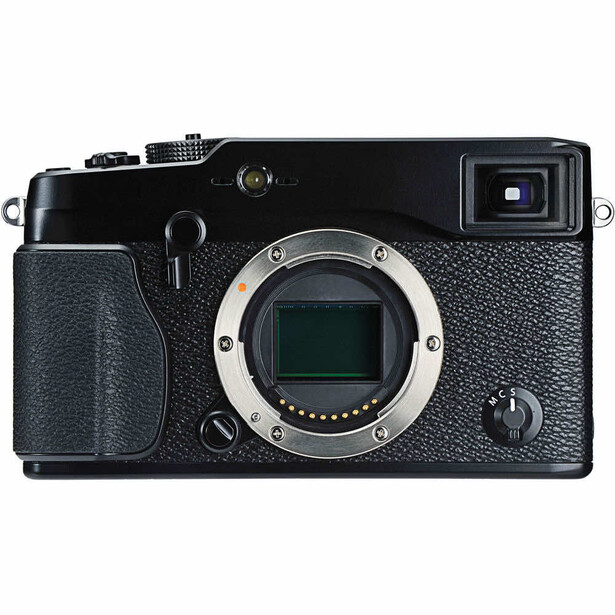
X-Trans throws out the small tile. Fujifilm's pattern repeats every 6 by 6 pixels, a block of 36 photosites holding 20 green, 8 red, and 8 blue. That works out to roughly 55% green, a little more than Bayer, with the red and blue split evenly across the rest. The arrangement inside the block is pseudo-random rather than regular, and it follows one strict rule: every horizontal line and every vertical line contains all three colors. No row or column is ever missing red or blue the way a Bayer grid's alternating lines are. Fujifilm introduced the design in the X-Pro1, announced in early 2012, a 16.3-megapixel APS-C camera measuring about 23.6 x 15.6 mm at the sensor. X-Trans has run almost entirely on Fujifilm's APS-C cameras, both its X-mount bodies and its fixed-lens X100 series, though not exclusively: Fujifilm also built X-Trans CMOS II into 2/3-inch compacts, among them the X20 and the X30. The company's larger GFX medium format line uses ordinary Bayer sensors, and so did several of Fujifilm's cheaper APS-C cameras, like the X-A series and the X-T200.
The Problem It Was Built to Solve
A regular grid of color filters has a specific weakness. When the sensor photographs a subject with its own fine, regular pattern, a herringbone jacket, a brick wall at distance, a bird's feathers, a window screen, the subject's frequency can beat against the grid's frequency and produce moire, those rainbow ripples and maze-like artifacts that were not in the scene. The same regularity also generates false color, stray blotches of red or green along hard edges where the demosaicing math guessed wrong.
For years the industry fix was a piece of hardware called the optical low-pass filter, or anti-aliasing filter, a thin layer over the sensor that deliberately blurs incoming light by a hair. Smear the finest detail just below the grid's resolving limit and those beat frequencies are suppressed, so most moire disappears. The cost is obvious: you paid for sharpness and then threw a little of it away on purpose. Fujifilm's bet was that a filter array random enough would break up those interference patterns on its own, with no blur layer required. Kill the regularity at the source, the reasoning went, and you can remove the anti-aliasing filter entirely and keep every bit of resolution the sensor can deliver.
On that narrow claim, it worked. X-Trans bodies shipped without an anti-aliasing filter and produced crisp, detailed files that punched above their pixel count, with moire that stayed rare in normal shooting. Other makers were reaching a similar conclusion around the same time, shipping Bayer cameras with the anti-aliasing filter weakened or gone, but they did it by accepting a small risk of moire on an ordinary grid. Fujifilm was the only one that redesigned the entire color mosaic to earn the same result. The files had a reputation for bite and for pleasing color rendering, helped along by Fujifilm's film simulations, and a devoted following formed fast.
The Problems It Created
Randomizing the mosaic solved moire and created a much harder math problem. Decoding a Bayer file is close to a solved discipline, with decades of tuned algorithms behind it. The larger, less regular 6 by 6 X-Trans block is far more complex to demosaic, and the software world was not ready for it. Adobe's Camera Raw and Lightroom, the tools most photographers actually used, had engines built and optimized around Bayer, and pointing them at X-Trans files produced a now-infamous failure. Fine, high-frequency texture turned into mush.
Photographers named the two symptoms quickly. The "watercolor" effect flattened intricate detail into smeared, painterly blobs, worst in foliage: a distant stand of green trees, a grassy hillside, or a head of hair would lose its structure and go soft and waxy. The "worm" effect laid down squirming, string-like artifacts and false outlines along contrasty edges. Neither was subtle once you knew to look, and both were maddening precisely because the sensor had captured the detail faithfully. The information was in the raw file. The converter was mangling it on the way out. Processing was also slower, and third-party raw support arrived late or not at all. Photographers who wanted clean results leaned on Capture One, or built a careful Lightroom workflow tuned to hide the flaws, or routed every file through a dedicated tool like Iridient X-Transformer before editing began. It was a real tax on the workflow, and it soured a lot of first impressions.
How the Software Slowly Caught Up
The fixes came, just slowly and unevenly. Adobe shipped a feature called Enhance Details in February 2019, a machine-learning demosaicing option with a model trained specifically on X-Trans data alongside a separate one for Bayer. It cut the worms substantially and gave Lightroom users a path to clean files without leaving the application. Capture One had already spent years as the raw converter Fuji shooters recommended to each other. DxO, whose PhotoLab was prized for the best noise reduction in the business, held out the longest, declining to process X-Trans files for years on the grounds that its pipeline could not do them justice. It finally added X-Trans support in PhotoLab 5 in October 2021, bringing its flagship DeepPRIME denoising to the format.
By the early 2020s the demosaicing gap had mostly closed. Modern converters, several of them now leaning on neural networks that handle demosaicing and noise reduction together, pull clean, sharp detail out of X-Trans files without special handling. The problem that defined the format for its first several years is, for practical purposes, solved. The reputation outlived the defect. Ask around and you will still hear that Fuji files are a pain to edit, a verdict formed on 2012-era software and repeated long after the software stopped deserving it.
Where X-Trans Stands Today
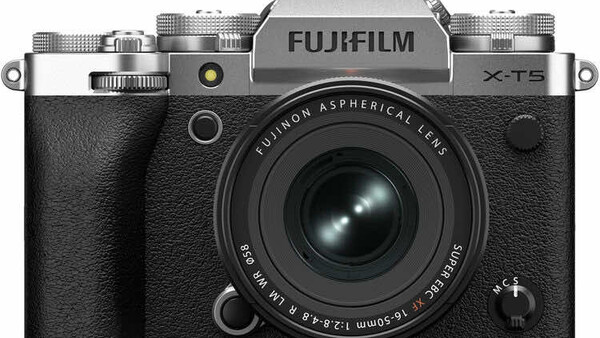
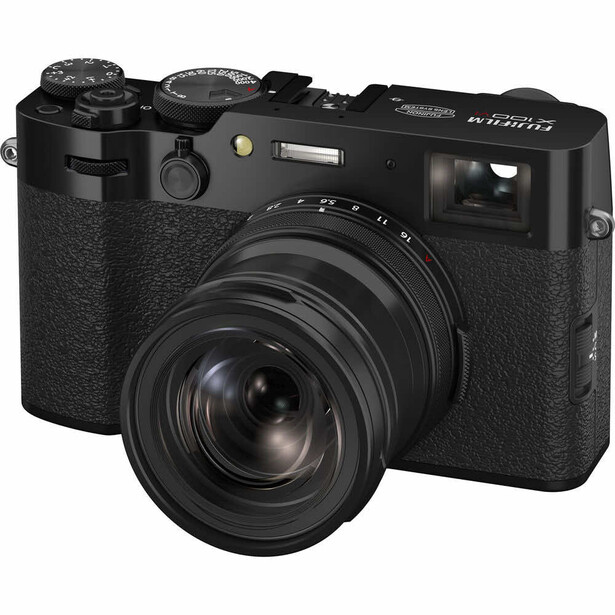
The current generation is X-Trans CMOS 5, and it splits into two branches. The stacked, speed-focused 5 HS sensor runs about 26 megapixels in the X-H2S. The high-resolution 5 HR sensor packs 40 megapixels onto the same APS-C area and sits in the Fujifilm X-T5, the Fujifilm X-H2, the fixed-lens Fujifilm X100VI, the smaller Fujifilm X-T50 from 2024, and the rangefinder-style Fujifilm X-E5. That 40-megapixel figure quietly undercuts the original argument. Cram pixels that small and dense onto an APS-C chip and the subject detail that used to trigger moire mostly falls below what the sensor resolves anyway, so the anti-aliasing filter that X-Trans was designed to eliminate would have little to do on a Bayer version of the same sensor. The clever mosaic still delivers, but the specific problem it was built to beat has gotten smaller on its own.
None of that makes X-Trans a mistake, and it was never a gimmick. It is a real engineering tradeoff, made with open eyes, that did exactly what its designers claimed: it suppressed moire and false color well enough to drop the anti-aliasing filter and keep the resolution. The bill came due in demosaicing complexity, in years of smeared foliage, and in a workflow tax that pushed people toward Capture One and Iridient while the rest of the software world caught up. Whether the sharpness was worth the pain is a judgment each photographer gets to make, and plenty of Fuji shooters, looking at the files their cameras produce, answer yes without hesitation.
What is harder to argue with is that no other manufacturer followed. Fourteen years on, X-Trans remains Fujifilm's alone, absent from its own medium format line, a rebel design that solved its one problem, made its own set of new ones, and outlasted every one of them. The pattern that once broke Lightroom now sits behind 40-megapixel files that out-resolve plenty of full frame cameras, and the worms have become a story you tell newer photographers who never had to fight them.






Join the Fstoppers community for free
-
Post comments and join in the discussions
-
Browse the site ad-free
-
Share your work and get featured in the community
-
Compete in the photo contests for fun and prizes
10 Comments
Great article! I'll add that my workflow is built around Lightroom Mobile on Android, which doesn't have enhance details. It's also pretty annoying to have to wait the several seconds that this takes to run on my desktop.
I wish Fuji had open sourced their demosaicing algorithm and helped Adobe and others integrate it into their software.
Something bizarre happened when I went over to Fuji I started selling a lot more prints. I shot exactly the same locations with a nikon d850.... I went back to those locations with a Fuji XT5 and then a Fuji GFX 50 S mark ii....... And I can tell you the Fuji prints sold way more than the D850 I didn't change much in editing but there's something about the Fuji sauce
Even using their latest sensors and the best Fujinon lenses, the "worms" were one of several insurmountable issues that drove me away from Fujifilm. It is very curious that Fuji does not use X-Trans sensors in their medium format GF system.
hi Alex, i made comparison photographs of my X-Pro 2 images and GFX 50R images and found that even though i preferred the pixel density and detail of the 50 megapixel images, i felt that the colours from the aps-c x-trans sensor seemed more to my liking. i was doing post editing in Capture One.
i suspect that it is because the colour dyes chosen for the colour arrays were first selected for the x-trans sensors and when the same dyes ( which is an assumption ) were used for the beyer array, which you mention has a different proportion of green, the colours feel slightly dissimilar though to the naked eye they seem to be the same
for aps-c cameras i would almost always choose a Fujifilm with their mechanical dials and fine f1.4 and f1.2 and f1.0 lenses, however in most instances i would not choose the GFX cameras as most are too large and many of the lenses too heavy ( apart from the GFX 50R which i had but which had a slightly too small battery and no ibis )
hi Alex, as a side note, i initially had the Fujicrons, i.e. the xf 16mm f2.8, the xf 23mm f2.0 and the xf 35mm f2.0 and i found the colours from my Fujifilm to be somewhat inferior however when i switched to a slightly larger body, i purchased the newer generation f1.4 lenses and somehow the colours were significantly better not due to the sensor but due to the improved lenses
hi Alex, people already know this but as a beginner in the Fujifilm ecosystem, i did not realise that Capture One produced better results than Adobe Lightroom for Fujifilm raf raw files nor that the lens profiles of Capture One and Lightroom could influence the quality of the image so significantly
Apple Photos was a total fail for several of my Fujifilm images
i sometimes do test prints of digital cameras at 20" x 30" and the Apple Photos version was a fail with distortion and vignetting
there is one more thing which is that with my Canon and Nikon and previously Sony videos, i would do colour grading with a colour chart but for videos shot with my Fujifilm digital cameras which were mostly outdoors, and a few on a gimbal or steadycam ( full frame digital cameras and cinema cameras are rather large and heavy on gimbals ), i found with the film simulations that the colours were satisfactory and required no colour grading
and medium format digital cameras usually do not autofocus as fast as aps-c digital cameras so the x-trans Fujifilms usually do better for video than the GFX for autofocus speed thought for image aesthetics medium format images are rather unusual and Hasselblad does not do video properly though this is a digression
hi Alex, there is another unexpected positive characteristic about Fujifilm which is when i made a direct comparison between my aps-c Sony and my aps-c Fujifilm i found that Fujifilm has a more conservative approach to iso when in auto mode ( aperture priority, shutter priority and program ) versus Sony which increases iso aggressively probably because Fujifilm has more history as a camera manufacturer and programmes its settings to maintain more conservative iso values much like colour reversal or colour negative film photographers would try to use as slow a film as possible to maintain fine grain and saturated colours
This was a really well timed article. I've been struggling with the possibility of changing camera systems, from Fuji to another camera company with full frame sensors. for several days this past weekend, I attended the New York Fujikina show and saw some prints enlarged to about 36" x40" +-. They were tack sharp and clean. This, and your article have set my mind at ease. Thank you. it clarified so much , so I am now waiting for the XT6 to arrive before choosing a second camera body. I learned the hard way that no camera is immune to failure. My XT 5 shutter froze two weeks into a nine week bucket list trip to New Zealand and Australia. Never again!
hi Jeremy, i am of the opinion that the 40 megapixel aps-c x-trans sensors are pushing the pixel pitch too far and that the noise is not quite so acceptable even at iso 800 compared with the 24 and 26 megapixel sensors which are being phased out with the exception of the high end 26 megapixel x-h2s stacked sensor