

Compact cameras were once the lifeblood of photography’s middle ground. They bridged the gap between bulky interchangeable-lens systems and casual point-and-shoots. They were the cameras you could throw in a bag, carry on a long walk, or bring along on a trip without worrying about extra weight. They were also priced to be attainable. Fast-forward to 2025, and the landscape isn't quite the same.
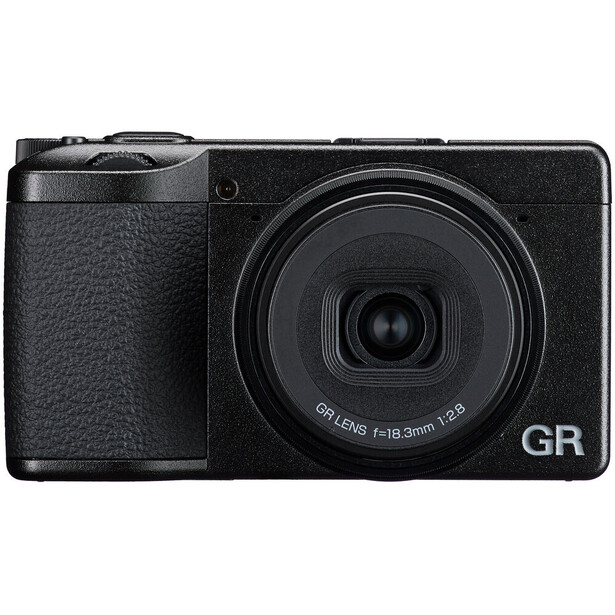
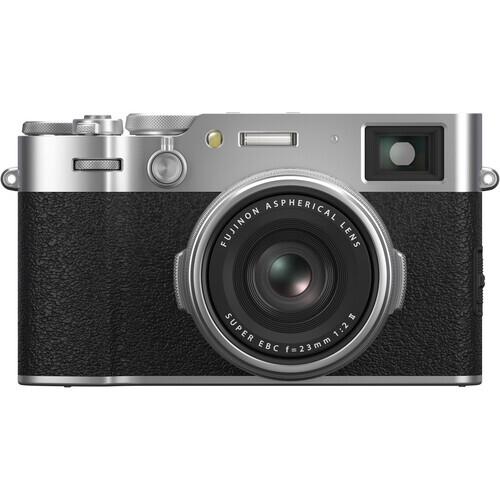
Compact cameras have been pushed out of their once-democratic space. The Ricoh GR IV arrives at $1,500, the Fujifilm X100VI retails for $1,800, and Sony RX1R III — the most extreme case — costs a staggering $5,100. These prices rival or exceed the cost of full frame interchangeable-lens bodies, many of which can be had with kit lenses for less money. At the same time, compacts face relentless competition from smartphones below and compact full frame cameras above. The question that lingers is simple but uncomfortable: are compacts still essential creative tools, or are they becoming luxury toys?
From People’s Cameras to Prestige Gear
To understand the shift, it’s worth remembering what made compacts so beloved in the first place. The Ricoh GR series built its reputation on the streets, where its slim body, snap focus mode, and discreet operation made it the perfect camera for capturing fleeting moments. It wasn’t glamorous, but it was reliable and affordable. The Fujifilm X100, when it launched in 2011, wasn’t perfect either: autofocus was slow, and the early sensor lagged behind full frame rivals. But it made up for it with charm, film-like styling, and a price that felt within reach. Sony’s RX100 line became the de facto premium point-and-shoot, fitting into a pocket while delivering image quality that embarrassed most phones. None of these cameras were cheap, but they were accessible in a way that kept them relevant to a broad audience.
The New Price Reality
The numbers tell the story with brutal clarity. The GR III launched at $899, a price that made it a serious investment but still achievable for most enthusiasts. Its successor, the Ricoh GR IV, starts at $1,499, a 70 percent jump that makes it a harder pill to swallow. The Fujifilm X100VI has officially crossed into $1,800 territory, and because of shortages and viral demand, many photographers pay over $2,000 on the used market. The Sony RX1R III pushes the limits even further at $5,100, a price that directly competes with Leica’s boutique cameras rather than mainstream tools.
To put this in perspective, $1,500 could buy you a capable laptop and a phone. It could cover a round-trip international flight. It could buy an interchangeable-lens camera with a bigger sensor and a kit lens. In other words, compacts are no longer priced as “extras.” They’re priced as primary systems. That shift changes how they are perceived and purchased. Instead of being a spontaneous addition to a photographer’s kit, they become considered investments, objects of desire weighed against full systems, and in many cases, status symbols. What once felt like a gateway to photography now feels like an aspirational lifestyle accessory.
Pressure From Above: Affordable ILCs
Part of the squeeze comes from above. Compacts once held a clear advantage over interchangeable-lens cameras: they were smaller, lighter, and cheaper while delivering similar image quality. That advantage has eroded. APS-C mirrorless bodies like the Canon EOS R10, Nikon Z fc, and Fujifilm X-T30 II can all be purchased for under $1,000, often bundled with a lens. These are full system cameras with room to grow, and they now live below the price of many compacts.
Even full frame, once an elite category, has come down in price and size. The Canon EOS RP retails for $800, the Nikon Z5 for $1,150, both available with kit lenses for just a bit more. The Sony a7C, in particular, is a compact full frame body explicitly designed to occupy the same portability niche that compacts once owned, and it's priced right in line with those aforementioned compacts, and it comes with a bigger sensor and interchangeable lenses. It gives buyers full frame quality, access to an entire ecosystem of lenses, and video features that surpass what most compacts can offer, all for less money than a Fujifilm X100VI, with a kit lens. For anyone weighing the purchase of a compact against a compact ILC, the case for the fixed-lens option has never looked weaker.
The result is that compacts face existential competition from system cameras that have become smaller, cheaper, and more versatile. For the same or less money, you can buy a camera with more flexibility and better long-term value. This undermines the very proposition that once made compacts compelling.
Pressure From Below: Smartphones Closing the Gap
While compacts are pressured from above, they’re also squeezed from below. Smartphones have eaten nearly all of the casual photography market. They boast computational features that rival dedicated cameras in many scenarios: multi-frame HDR stacking, periscope telephoto zooms, astrophotography modes, advanced portrait tools, and AI-driven noise reduction. For casual users, these phones already cover 90 percent of the situations where someone might once have carried a compact.
The cultural shift is equally important. For an entire generation, the phone is the only camera they know. It is always with them, always connected, always improving with each software update. To convince someone to carry a separate device, that device must offer dramatic benefits. But when a compact costs $1,500 or more, the argument grows weak. It’s not just about carrying an extra object; it’s about carrying an object that competes against a phone that’s already in your pocket. Compacts risk being stranded in a shrinking middle ground: too expensive and redundant for casual users, too limited for enthusiasts who could buy full systems instead.
Justifications for Higher Prices
Manufacturers have explanations, of course. They point to rising production costs, global inflation, and the expense of producing niche products in small volumes. They emphasize the technological improvements: higher-end sensors, in-body stabilization, faster autofocus, premium build quality. These arguments hold some truth, and for certain buyers, they make sense. But they do not fully explain the gulf between what compacts used to cost and what they cost today.
The Risk of Going Boutique
The danger is that compacts may slide into boutique territory without consciously choosing to. Leica thrives as a luxury brand because it deliberately embraces that identity. Its cameras are priced to signal exclusivity and aspirational status. But Ricoh and Fujifilm built their reputations differently. They were loved not because they were exclusive, but because they were approachable.
If they lean too far into boutique pricing, they risk alienating the very audience that made them relevant. Young photographers, students, and enthusiasts could be priced out entirely. Faced with a choice between a $1,800 fixed-lens camera, a $1,200 full frame ILC, or a smartphone already in their pocket, many will choose the latter two. In that scenario, compacts cease to be cultural staples and become niche luxury objects, admired more for their scarcity and style than for their role in everyday creativity.
The Future of Compacts
The future of compacts seems to fork in two directions. In one, they embrace boutique status. They lean into exclusivity, marketing themselves as lifestyle products for those with disposable income. They sell fewer units but at higher margins, and they join Leica as niche players in a shrinking market. In the other, they reclaim their role as accessible creative tools. They cut prices, emphasize portability and fun, and lean on features that make them uniquely different from both phones and ILCs.
For compacts to survive as more than luxury toys, they must carve out a distinct space. They cannot simply argue that they are smaller cameras. They must prove that they are different cameras, that they provide an experience that no phone and no compact ILC can replicate. Whether through computational features, tactile design, or cultural positioning, they must make a case for relevance that transcends price.
Conclusion: The Cultural Cost of Price Creep
Compact cameras once embodied the most democratic spirit of photography. They were the cameras you carried without thinking, the ones you trusted to be there when inspiration struck. They lowered the barrier to creativity by being small, affordable, and good enough. They reminded us that photography wasn’t about gear bragging rights but about capturing life as it happened.
Price creep threatens to erase that legacy. At $1,500, $1,800, or $5,100, compacts no longer feel like democratic tools. They feel like aspirational purchases. If this trend continues, the industry risks losing one of its most vital bridges between casual shooters and serious photographers. And if compacts become luxury toys, photography itself becomes a little poorer — not because the cameras are bad, but because the people who might have carried them will never get the chance to.






Join the Fstoppers community for free
-
Post comments and join in the discussions
-
Browse the site ad-free
-
Share your work and get featured in the community
-
Compete in the photo contests for fun and prizes
2 Comments
There are enough people now that can afford higher end items to make it profitable for companies to cater exclusively to them. You see that in cameras, cars, apartments, houses and many more things. The profit margins of luxury items are very high so finding lower end things of decent quality is getting hard. Not a good trend but that’s where we are.
Just read in Mirrorless Rumors that the average price of cameras had quadrupled in the last decade. Not too many things have gotten cheaper, for sure. But as you point out, the ever-increasing capabilities of smartphone cameras is growingly making it harder to justify dishing out so much money for small cameras that don’t do as much. The quality differentials have become largely irrelevant to a new generation of digital creatives and consumers. They love content above pixel-peeping perfection. And those using smartphones professionally to make a living just don’t get much attention from the traditional photo news community, but tacitly or purposefully ignoring them will not make them go away. Just look around everywhere we go and you will see where the world is moving to.