

Look at any camera store today and you'll notice something remarkable: many of the hottest new cameras look suspiciously like they're from 1975. The Fujifilm X-T5 sports chrome dials that could have been pulled from a vintage SLR. The Nikon Zf deliberately mimics the iconic FM series. Critics dismiss this as shallow marketing, a cynical play for hipster dollars in an increasingly commoditized market. They're wrong.
The photography industry's embrace of nostalgia represents the most significant creative movement we've seen in years. Far from being a step backward, this trend is a necessary correction to an era of sterile, technical perfection that nearly drained the soul from our craft. It's a collective return to what makes photography magical: the tactile experience, the beautiful imperfections, and the focus on the moment rather than the gear's spec sheet.
A Return to Tactile, Intentional Photography
There's something profoundly different about turning a physical dial to change your aperture versus scrolling through a digital menu. When you grip a lens' aperture ring and feel each click from f/1.4 to f/16, you're not just changing a setting. You're engaging with the fundamental physics of photography in a way that connects your hands to your creative vision.
This isn't nostalgia for nostalgia's sake. These manual controls force a more deliberate and thoughtful approach that makes better photographers. By requiring physical interaction with aperture, shutter speed, and ISO, these cameras become powerful teaching tools. They reconnect seasoned professionals with the fundamentals while giving newcomers a more intuitive grasp of the exposure triangle than any menu-driven system ever could.
The ergonomic benefits extend beyond mere convenience. Cameras designed with analog-inspired layouts naturally encourage photographers to understand the relationship between their settings. When shutter speed, aperture, and ISO each have their own dedicated control, the exposure triangle becomes a physical reality rather than an abstract concept buried in camera menus, and it keeps your eye to the viewfinder.
The Liberation of 'Perfectly Imperfect' Images
For years, digital photography became a relentless quest for clinical sharpness and flawless rendering. Pixel-peeping forums obsessed over corner sharpness at 100% magnification. Camera manufacturers competed to eliminate every trace of character from their sensors, producing images that were technically perfect and emotionally sterile.
The nostalgia trend liberates us from this tyranny of technical perfection. It celebrates character over clinical precision. The soft flare of a vintage lens, the distinct color science of a film simulation, the pleasing texture of added grain: these "flaws" are what give images personality and emotional resonance. They're qualities often lost in an overly sanitized digital file. This shift is something more than mere aesthetic preference. When photographers embrace these imperfections, they're freed to focus on what really matters: storytelling, emotion, and artistic vision. A photograph's impact doesn't come from its technical specifications but from its ability to move the viewer.
Consider how Fujifilm's film simulations or the renewed popularity of vintage glass have changed post-production workflows. Instead of spending hours in Lightroom trying to create a unique look, photographers can achieve distinctive character straight out of the camera. This efficiency isn't just about saving time. It encourages photographers to nail their vision during capture rather than hoping to fix it in post.
The most successful images from this movement prove that technical perfection often stands in the way of emotional connection. A slight vignette draws the eye to the subject. Film grain adds texture and depth. Color shifts from vintage glass create mood that clinical accuracy could never achieve.
A Gateway to Deeper Creativity and Storytelling
Restrictions breed creativity, and the nostalgia trend provides beautiful constraints that push photographers toward more thoughtful work. When you commit to shooting with a 35mm lens and Kodachrome simulation for an entire project, you can't rely on gear to solve creative problems. You must think harder about composition, light, and timing. This approach taps into something deeper than mere aesthetics. By evoking the look and feel of bygone eras, photographers create instant emotional connections that transcend the literal subject matter. A portrait shot with vintage glass and warm film simulation doesn't just document a person. It evokes memories, emotions, and associations that resonate on a universal level.
The trend also encourages photographers to slow down and be more intentional about their work. When you're limited to specific focal lengths or film simulations, each shot requires more consideration. This mindfulness often results in stronger individual images and more cohesive bodies of work.
Building a Bridge Between Generations
Perhaps the most valuable aspect of the nostalgia movement is how it connects photographers across generations. Suddenly, the manual focus lenses gathering dust in closets are in demand. This cross-pollination of gear and knowledge enriches the entire photographic community. Young photographers discover that their vintage Pentax lens produces character their modern glass cannot match. Experienced photographers realize that their decades of film experience gives them insights into color, exposure, and composition that pure digital natives might lack. And hopefully, that shifts many conversations away from gear comparisons and back to art.
This generational bridge serves photography in ways that go beyond gear discussions. It preserves knowledge and techniques that might otherwise be lost. It reminds everyone that great photography is not tied to the latest sensor technology but to timeless principles of craft and vision. The movement has also created new appreciation for photographic history. This education creates better photographers who understand their medium's rich tradition rather than just its latest innovations.
The Future Is Hopefully Imperfect
The nostalgia trend in photography is more than a fleeting fashion. It's a fundamental rebalancing of priorities that puts creativity, emotion, and craft ahead of pure technical achievement, and it's also a realization that there was something fundamentally right in the approach of yesteryear. By embracing the tactile nature of analog-inspired cameras, the character of imperfect optics, and the aesthetic choices of previous eras, photographers are rediscovering what made them fall in love with the medium in the first place.
This doesn't mean we should reject technological progress. Instead, selectively embrace the advances that serve creativity while discarding the relentless pursuit of technical perfection for its own sake. The result is photography that feels more human, more emotional, and more connected to the rich tradition of the medium. The nostalgia trend has reminded us that sometimes the most powerful creative tool is the constraint that forces us to see differently.
The next time someone dismisses this trend as mere nostalgia, remind them that the best movements in art have always looked backward to move forward. Photography is no different. By honoring its past, the medium is ensuring a more creative and emotionally resonant future.





Join the Fstoppers community for free
-
Post comments and join in the discussions
-
Browse the site ad-free
-
Share your work and get featured in the community
-
Compete in the photo contests for fun and prizes
8 Comments
Alex,
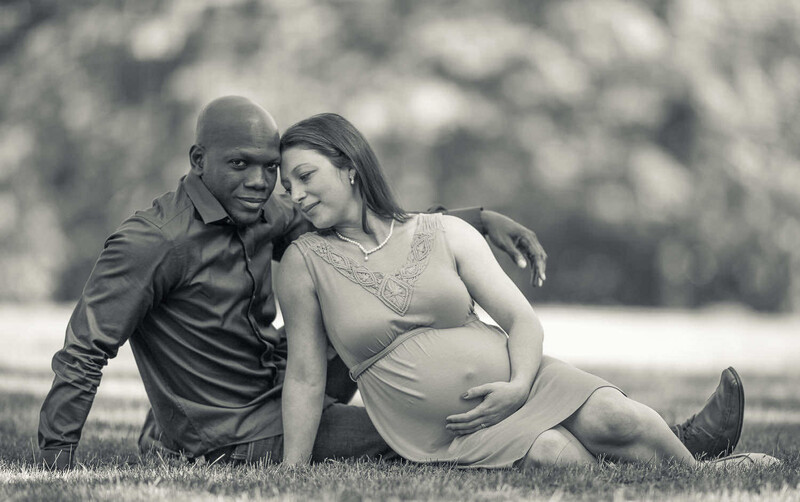
I especially love the way the background foliage is rendered in the last photo that you included in the article (the black and white one). The degree to which the vegetation is blurred is gorgeous!
I am interested in knowing what lens, focal length (if a zoom), aperture, and sensor size you used to create that image and its gorgeous out-of-focus background.
Thank you! 200mm f/2 on a 5D Mark III
Another fine essay. Amazing in these "content creation" days to read well arranged words and well thought out ideas.
".... the best movements in art have always looked backward to move forward."
Any examples to support that claim?
I would like to think that inspiration and the love of photography has absolutely nothing to do with the design of the camera.
Renaissance: Artists revived classical Greek and Roman ideals to reinvent perspective and anatomy.
Neoclassicism: Painters drew on ancient severity to counter Rococo’s ornament.
Postmodernism: Artists remixed past styles to fracture modernist purity.
As a former Contax film shooter, I always preferred Panasonic's sleek, modern aesthetic over Olympus' retro look.
For another kind of nostalgic creativity, try including backgrounds in photos of people. It takes a lot more skill than just putting long, expensive glass on to make the background go away. When I think of the most affecting images from the history of photography, images I'll remember always and would love to have on a wall in my home, NONE of them rely on shallow DoF.
I agree. The trick is to blur the background slightly, so that it's still recognizable, but allows the subject to pop out a bit. This takes much more skill than just using the widest aperture available on a lens.