How can a pure photo camera still evolve in 2025? While many manufacturers push for new video features, photography itself has felt like it hit a technological plateau. Real innovations have been rare. So what should a new version of the Hasselblad X2D, already one of the best cameras in the world, actually bring to the table?
As an architectural photographer, I never felt anything was missing from the original X2D: the image quality was superb, the body was solid, the interface elegant, and the handling among the most intuitive I’ve ever experienced. So what does Hasselblad do when the core of the camera is already close to perfect, and they’re not trying to grab headlines with video specs? The answer is the new Hasselblad X2D II.
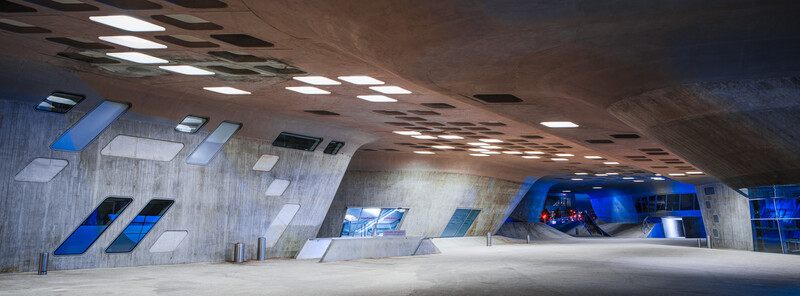
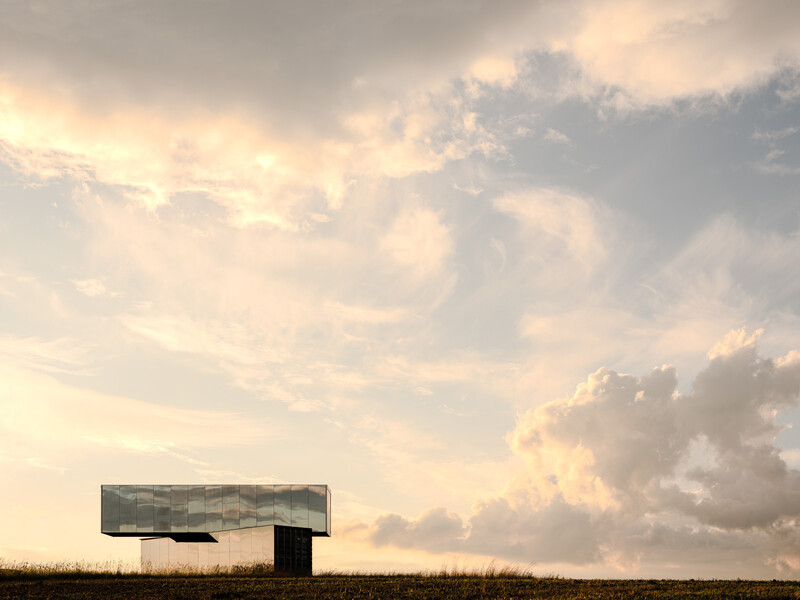
Instead of heading abroad for this shoot, I stayed closer to home in central Germany, exploring four extraordinary buildings that blend bold design with the calm of untouched countryside. My subjects: the Palaeon and Nebra Ark by Holzer Kobler Architekten, the iconic Phaeno by Zaha Hadid Architects, and the poetic Mirror Ark by Kathrin Siebert. Each tells its own story, and in the soft glow of a long summer day, their character unfolded in front of the X2D II with striking elegance—proof that you don’t always need to travel far to find world-class architecture.
What truly set this series apart, though, was a new feature I had never had at my disposal before: HDR imaging straight out of the camera. On modern screens, these files reveal a depth that feels closer to being there in person, highlights that hold, shadows with detail, richer color, and a new sense of dimensionality.
New Features of the Hasselblad X2D II
Hasselblad has clearly been listening to its community. Instead of chasing every industry trend, the X2D II refines the details that make a difference in daily work.
At Last: A Joystick
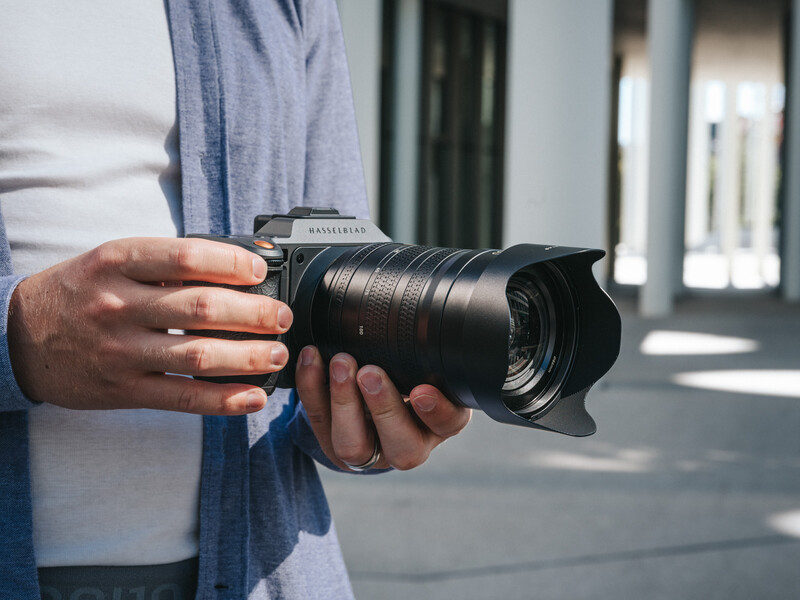
The X2D II introduces something many photographers have been asking for: a joystick. Until now, I was happy to move the autofocus point via the touchscreen, but I’ll admit, I’ve come to use the joystick more often than I expected.
It’s not limited to focus control, either. You can move the image section in playback mode and even navigate the menu without touching the screen. That’s a real win in winter, when gloves make touchscreens a hassle.
More Freedom With Custom Buttons
Customization has taken a big step forward. Out of 14 buttons, 7 can now be reassigned, along with 3 control dials (including the custom lens dial). In total, you’re looking at more than 35 assignable functions. The lens dial alone can hold up to five settings, perfect for switching between different focus targets, like face or subject recognition.
A new button has also been added beneath the joystick, and both the joystick and front control dial are now pressable and assignable. The only drawback: Auto Exposure Lock and AF-D mode remain fixed, which feels like a missed opportunity. Personally, I rarely use either.
Auto ISO in Manual Mode
One of the most requested features is finally here: Auto ISO in manual mode. You set shutter speed and aperture and let the camera handle ISO. It’s a small change with a big impact, especially in shifting light conditions. Professionals have been asking for this for years, and now it’s finally available.



Join the Fstoppers community for free
-
Post comments and join in the discussions
-
Browse the site ad-free
-
Share your work and get featured in the community
-
Compete in the photo contests for fun and prizes
2 Comments
Thank you for presenting a very good short review of the X2D II. A fantastic camera that I or most of us will never be able to afford. Looking at your excellent samples it realy makes sense to use a MF digital camera as your main tool, for sure your digital data will be used by customers to make very large prints for display on a wall to be considered art. I sold my last MF analog Fuji GSW 6x9 ten years ago as the lab fees were just getting to be very expensive and honestly I found that FF or even APSC sensor size can be very competitive in the architecture or commercial photography business world.
All the best...
Matthias
Hi Matthias, I absolutely agree with your statement. Success in commercial photography is not at all about which camera brand or sensor you use. In my workflow I produce images with tiny drone sensors, APS-C, Full-Frame and Mediumformat. What counts is your creative vision and your business skills. When deciding on a camera manufacturer it is more about personal taste, ergonomics and streamlining the process of image creation.