
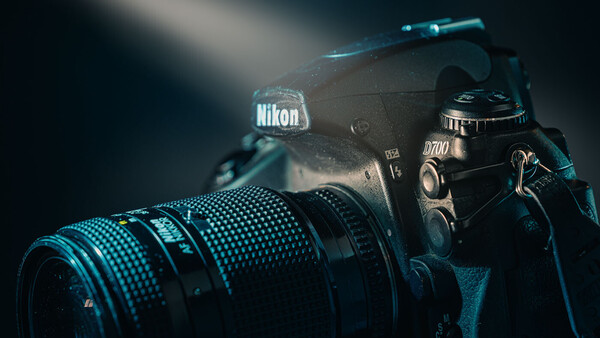
There's this idea going around that the newest cameras, with the latest sensor or faster processor, will give you the best image quality. I say to that, what absolute twaddle! (They wouldn't let me use the "B" word).
Every year we're fed a long list of features designed to convince us that our current camera is now inadequate. Sure, camera technology has undoubtedly improved over the past twenty years, but those improvements have become increasingly incremental. For most photographers, a camera that is ten, fifteen, or even twenty years old is still capable of producing outstanding images. But most photographers don't know that!
It's easy to forget, while being bombarded with the latest specs, that the limiting factor isn't the camera—it's the photographer.
The Great Camera Image Quality Myth
From my experience, image quality doesn't improve dramatically with every new generation of cameras. The reality is that photography reached a point of technological maturity quite some time ago.
When I compare images shot on my 18-year-old Nikon D700 to images I shot on my new Nikon Z6 III, there is no real difference. In fact, I would even go so far as to say that in some situations, the sensor on the old D700 has a nicer, more organic quality about it.
It's true that many early digital cameras often struggled with high ISO performance and dynamic range when shooting in low light or scenes with both very bright and very dark areas. Older digital sensors had fewer megapixels too, although that has little to do with image quality, just the size of the image you can print. I shot photos on my D700 that appeared on the cover of magazines or in glossy brochures. They looked great. A well-exposed image from this, and many other cameras from back then, can still be printed large, published professionally, displayed in galleries, and shared online without anyone questioning its quality.
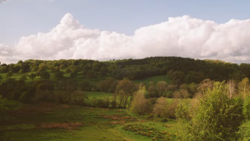
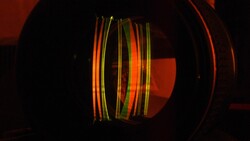
Below are some comparison photos. The first in the sequence was shot on an 18-year-old Nikon D700, and the second was shot on a brand-new Nikon Z6 III. The same lens was used on both cameras to keep things fair. Can you really see a difference in image quality? Nope, didn't think so.
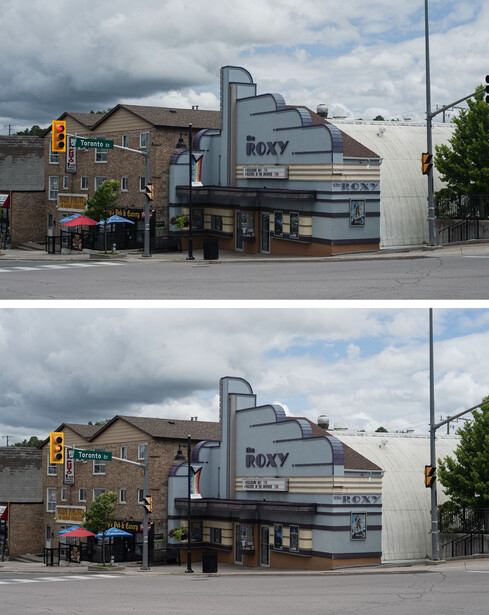
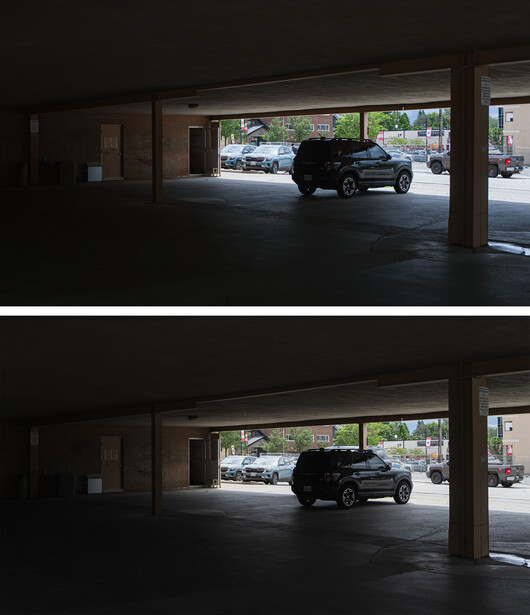
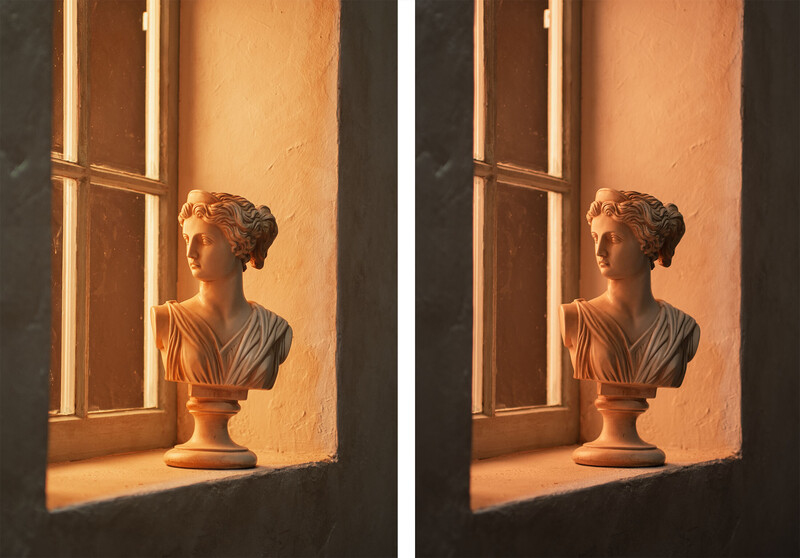
A used D700 can be purchased for around $485, and a new Z6 III will cost you $2,000. Maybe it's worth penny-peeping instead of pixel-peeping?
Nobody Looks at a Great Photograph and Asks About the Sensor
When you look at the most memorable photographs you've ever seen, what stands out? What do you remember? The emotion, feeling, story, great lighting, or the dynamic range the sensor was able to capture?
Viewers do not respond to camera specifications. This is irrelevant the moment a photograph connects with us emotionally. I've said this on my YouTube videos, and many times in my articles on Fstoppers, and I'll keep saying it: a photograph succeeds because of what it says, not because of the equipment used to create it.
Older Cameras Often Have More Character
Something rarely discussed is that older cameras often possess a unique rendering that many photographers find appealing. Older CCD sensors like those found in the Leica M9 rendered colors much better than modern stacked CMOS sensors do. Reds, greens, and skin tones are much richer and more natural looking.
Early digital sensors could be less clinically accurate, less aggressively processed, and more distinctive in their output. Some say they can be more analog and film-like in their rendering. I have to agree.
Older sensors require a little more care in getting the right exposure, as highlights can blow out more easily. There is less dynamic range, which means a more contrasty, expressive image—perfect for street photography. Or the requirement to take a couple of exposure-bracketed shots and merge them together in post. Newer sensors are clean, precise, and clinical. Someone recently said it's the difference between listening to a vinyl record versus a high-resolution digital audio file.
My take is that older sensors are better for expressive artistic photography, whereas modern sensors are more practical and superior for commercial work.
The reason photographers romanticize CCD cameras is the same reason many photographers romanticize vintage lenses. It's not because they're better. It's because they're different. Like modern lenses, modern cameras are designed to remove flaws.
Many photographers eventually discover that some of those flaws were actually part of the charm in the first place.
More Megapixels Means Better Photographs, Right?
Wrong. The megapixel race has convinced many photographers that resolution is everything.
Yet for most real-world applications, it isn't. As you've seen with the samples above, a 12-megapixel camera can produce excellent results, the same as a 24-megapixel camera. Making prints from these two cameras is no different, up to a point. Many of the photographs hanging in galleries were created using cameras with far fewer megapixels than modern cameras.
Unless you're making enormous prints, cropping heavily, or working in specialized commercial fields, the difference between 24 megapixels and 45 megapixels is often far less important than manufacturers would like you to believe.
Modern Cameras Solve Problems Most Photographers Don't Have
Today's cameras are remarkable. Eye-tracking autofocus using subject recognition. 20 frames per second shooting with AI-driven processing. There is no doubt that wildlife photographers and sports photographers will find these features useful. But if you're photographing architecture, landscapes, travel, street photography, portraits, or everyday life—well, I certainly don't need any of it, how about you? Why pay for something you don't use? Why carry around incredibly sophisticated—and often bigger—cameras while photographing subjects that could be captured perfectly well with a camera released a decade ago?
Final Thoughts and Recommendations
Camera manufacturers need to sell cameras; that's obviously their business. So it's no surprise that with each new release, they have to hype up a game-changing advancement that will somehow transform your photography.
Come on though, when you look at photographic history, the images we remember were rarely created because of cutting-edge technology. They were created because someone had something to say and knew how to say it with a camera.
Modern cameras are wonderful tools, but older cameras remain remarkably capable. They are still as relevant today as the day they were released. A well-maintained camera from ten or twenty years ago can still produce professional-quality images, as good as any new camera can.
I've chosen five cameras that have achieved almost legendary status and are still actively used by enthusiasts and professionals today.
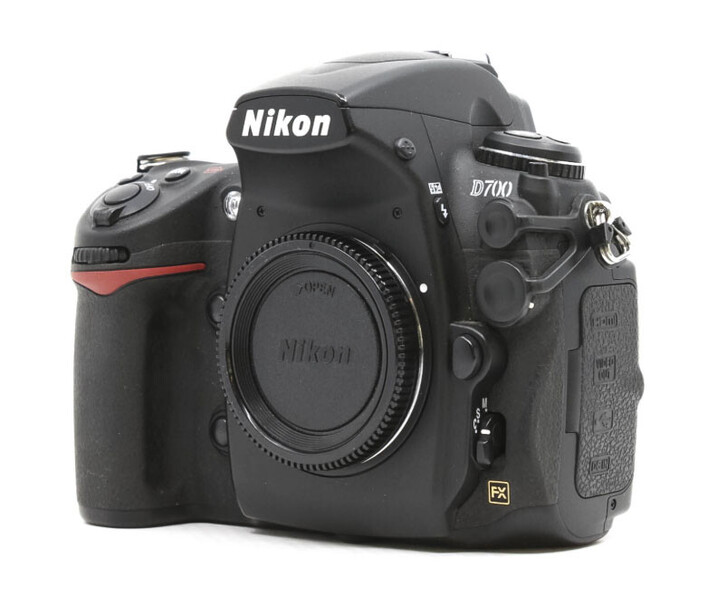
1. Nikon D700 (2008)
When this camera was launched, it was a game-changer for me and my professional work. I would go so far as to say it sits alongside the D850 as the best digital Nikon ever made. I'm not including the D850 in this list, as it's a larger pro-bodied camera, not really necessary for everyday/hobbyist photography use.
I chose the D700 over the D850 because I used it for travel and lifestyle photography and wanted the smaller form factor. Even then, it's a bit of a beast, a hefty piece of metal weighing a little over 1 kg! This is the only negative this camera has. It's otherwise perfect. If it were 300 g lighter and a little smaller, I'd still be using it today.
- Full frame, 12.1 megapixels, but capable of producing professional results. It's still perfect for documentary, portrait, and wedding photography. And if you really must have a larger image file for large-format printing, you can always use Generative Upscale in an app like Photoshop.
- The color rendition and tonal range are a pure delight.
- Pricing: Expect to pay $320–$615.
The D700 has developed a cult following; get one with a low shutter count before it's too late!
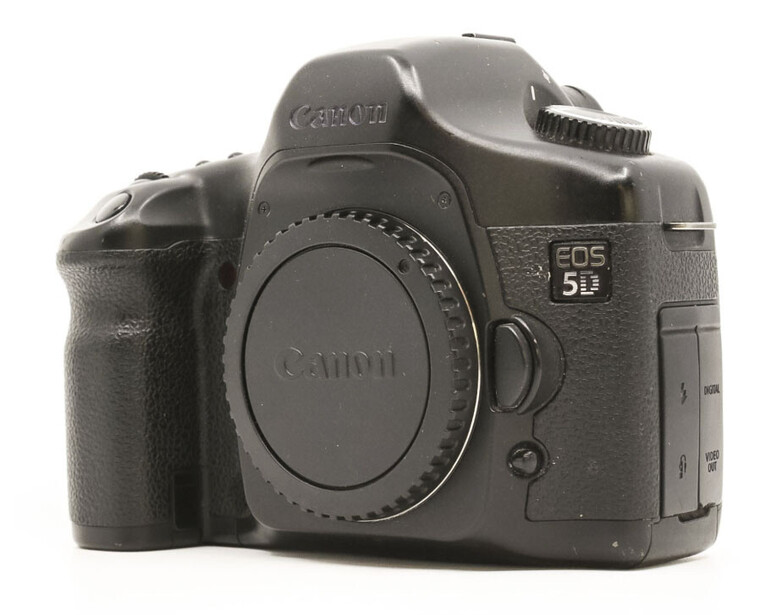
2. Canon EOS 5D (2005)
This was the first camera that made full-frame digital photography accessible.
- Full-frame CMOS 12.8-megapixel sensor.
- Weighs just over 900 g.
- Has a distinctive color palette and rendering.
- Many Canon enthusiasts still prefer its files to those of modern cameras.
- Not as well built to withstand extreme conditions as Nikons, but equally as capable image-quality-wise.
- Pricing: Expect to pay $160–$250.
Another camera that has developed a cult following.
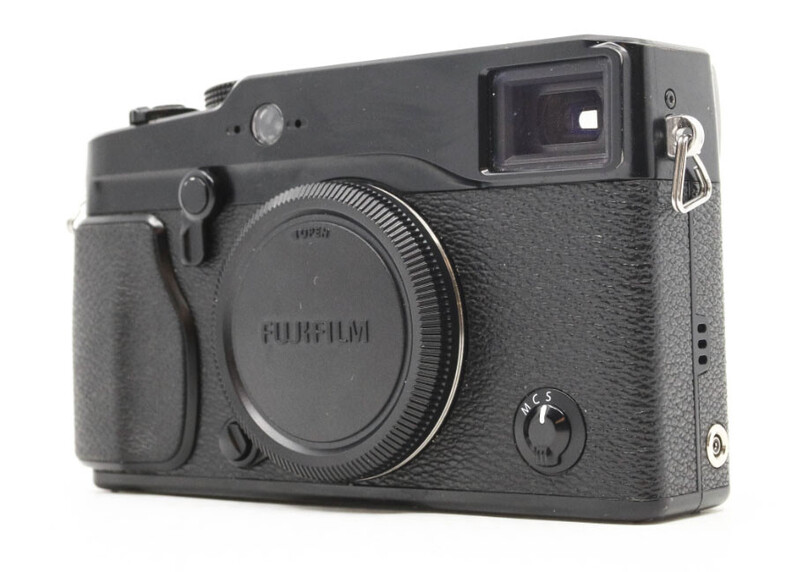
3. Fujifilm X-Pro1 (2012)
This little puppy is a highly regarded rangefinder-style camera, perfect for street and travel photography. It's known for its unique 16.3 MP APS-C X-Trans CMOS sensor rendering, which lacks a low-pass filter, resulting in very sharp images.
- Weighs just 450 g.
- Beautiful color and tonal response.
- Sluggish focus and processing.
- Encourages a slower, more deliberate style of photography. The all-metal camera feels good to hold and use, and offers a great user experience.
- Produces images many photographers describe as film-like.
Pricing: Expect to pay $500–$620.
Many street photographers have discovered this camera since the newer X100V and X100VI became hard to buy new.
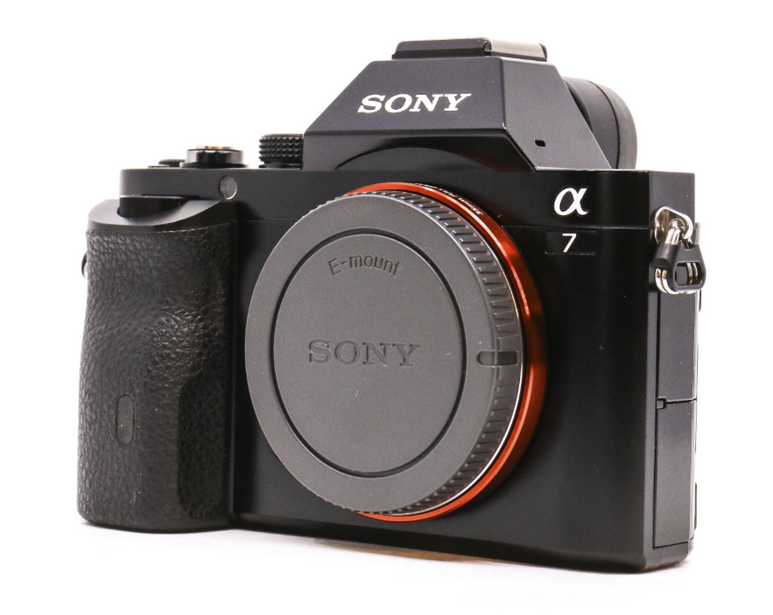
4. Sony a7 (2014)
This is the hybrid camera that started the mirrorless revolution. This was because it had good video capability and became a popular choice for hybrid content creators during the early days of YouTube's increasing popularity.
- 24.3-megapixel full-frame BSI CMOS sensor.
- Weighs 475 g.
- Video: the ability to shoot 10-bit 4:2:2 internally, in addition to 5-axis IBIS, was the main factor this camera shot to fame with hybrid creators. Nothing else could touch it at the time.
- Excellent image quality by modern standards, although not the best option for portraits, as skin tones were yellow-green and muddy.
- Huge adaptability for vintage lenses.
- Pricing: Expect to pay $330–$550.
This camera shows that a decade-old mirrorless camera is still more than capable of holding its own against newer mirrorless models.
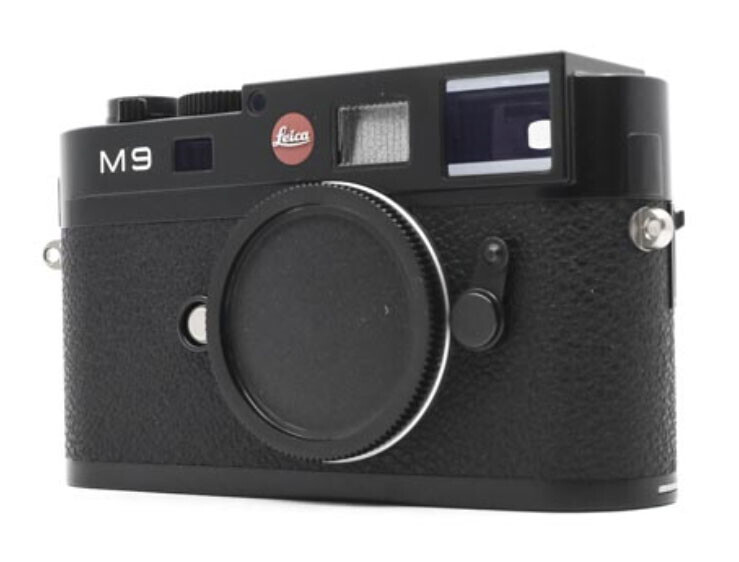
5. Leica M9 (2009)
This early digital M rangefinder is the most antiquated camera of this bunch, with limitations similar to those of using a film camera. ISO is the big one; things start to look grainy after ISO 800. So you need good lighting and/or fast lenses. The sensor is said to be "magic," giving film-like results, with lovely highlight roll-off.
The big elephant in the room with the M9 is the corrosion issues the sensor had. You need to find an example that had Leica's recall upgrade, or you're taking a huge risk.
- 18-megapixel Kodak CCD sensor has a very distinctive look.
- Weighs 585 g.
- One of the most sought-after and affordable digital Leica cameras, often the gateway drug to the world of Leica M!
- Not technically perfect, but renowned for its rich color and rendering.
- Pricing: Expect to pay $3,400–$3,850.
This popular camera demonstrates that character and user experience often matter more than specifications.
The next time you're tempted by the latest release, ask yourself a simple question: would that latest new camera genuinely improve your photography over an older model? For most of us, the answer is obvious.
I'd rather buy an older camera and put that money saved into some vintage lens or a photographic travel adventure.

Join the Fstoppers community for free
-
Post comments and join in the discussions
-
Browse the site ad-free
-
Share your work and get featured in the community
-
Compete in the photo contests for fun and prizes
47 Comments
Enough with the megapixel argument. All the writers on Fstoppers must only use 20mp or less cameras right? Besides, the new argument that defines a "quality" camera these days is not megapixels, but readout speed. If it's above 15 ms it no good (according to many vloggers). You can also include opengate and precapture as well. Many older DSLR models are fantastic cameras, but except for a few, most "pros" use modern equipment (with all those nasty megapixels)
I would suggest that for most kinds of photography, readout speed is a non-issue. Opengate is something some content creators like when shooting video, but this is really a photography article. Megapixels is something that needs to be discussed, as there is too much emphasis on it. It's just not as important as camera companies and influencers want you to believe.
I can't speak for the other writers on Fstoppers, but as a professional photographer, I use cameras with megapixels ranging from 12mp to 100mp. My preference is 24mp, it's more than enough for most applications.
Thanks for commenting.
There’s also the concept of the quality of those pixels to consider. I did a side-by-side comparison of the Sony Xperia 5iv against the D80, comparing the Sony’s 60mm equivalent telephoto (which I considered very sharp for a smartphone tele) with the D80 and the Nikon 40mm Macro. No one would be surprised to know I guess that I’d prefer the D80 shots, but it reminded me that ‘surprisingly good for a smartphone’ is still a long way off even a 20yo camera, Handily they matched focal lengths, and cropping the Xperia to 3:2 gave a 10mp image the same resolution as the D80. But the D80 had a lot more detail.
Great article! I regularly shoot gigs on an old GX7 and get results that I and the bands are happy with and its not even any hassle. I mostly shoot one handed from just below my eyeline so I can watch the gig at the same time. I've bought a D80 and an E-PM1 to see just how much I can get away with at the next gig.
One note on the A7 though, I think you might be confusing the Mk1 and the others? Theres no ibis and definitely no 4k on that mk1 unless there was a stonking firmware update.
You are correct, IBIS wasn't introduced into the Sony a7 until version 2. For the first iteration, we had to rely on lenses with stabilization.
I don't know much about the GX7 in low light, but I know the D80 struggles beyond 800 ISO. It will be interesting to compare the two at gigs. The colour rendering on the D80 is very appealing.
Yeah, I'm hoping some smaller venues will let me in with the D80 given its definitely not pro league anymore 🤣 I might even nab a 50 1.4 if I can find a cheap one as I don't expect a huge amount of sharpness at ISO1600-3200.
Though, DxO has worked wonders compared to it's original JPEG processing... So you never know. Hence why I want to try it.
Because the camera DOES NOT matter. You can make great photos with anything that takes pictures.
Correct, this is something I always preach and it annoys the heck out of some people! The only reason a camera matters is when choosing one that you love the feel of, you love to hold and use. That's important.
What camera(s) do you use?
I was in Paris last week with a 1932 Agfa Box. Took 20 rolls of film, very happy with the results. Mostly I use fujifilm gw690, x-e4 for daily walks, gfx and mamiya 645 with shift lens for architecture walks, products and still lifes.
From the types of cameras that you have, I would say that you've carefully selected which ones serve your greatest needs for specific purposes. Therefore gear does matter to you.
In your case it looks like the gear does matter as you made particular choices. A 1932 Agfa box a GW690 and 645 with a shift lens are specific choices that you made.
You did not choose a run of the mill simple camera like a Pentax K1000 with a 50mm lens.
Nice article, I am always amazed how many people think the key to a great photograph is the camera! My favorite camera is still my 5X7 Deardorff that was made in 1972! But I also do love my D850. Photography is one of those media that attracts a large number of science/engineering/techie-type personalities. In workshops I have taught over the years, I have noticed these people are really more about the technology than the image. Even when dealing with large-format photographers, working with big sheet film, development, dark-room work, the discussions can go down a technology/science rabbit hole. Very little time is actually spent discussing light, composition, emotion in the print, etc. I couldn't care less about the camera; how I respond to the final image is the most important thing. I see a lot of technically excellent work, but precious little of it stirs the emotion. Most is flat-out boring. But, to each his own.
Strange you would bring it up, but the D850 is still available, new. I always wanted one — maybe it's time to pull that trigger. I don't know . . .
That might be my next step too. I've had my eye on it at the B&H website for quite awhile. Maybe a Black Friday sale this November will push me over the edge.
F-Mount lenses are readily available used. I bought 2 in 2017 that are now discontinued. I've sold one and use the other with my FTZii adapter. New ones will be drying up if you only want to buy new. I loved my D850, but for sports, the Z8 and even the Z-50II run circles around it. But its sensor is incredible for big enlargements. You can't go wrong by getting one. It's just a bit heavy.
I have zero interest in photographing sports, wildlife, or about anything that moves. I've looked at the used D850s at MPB, but the difference between new and used prices is not so great that I would buy used. At least at this time. Who knows if the new will even be available by the end of the year. It's lasted on the B&H site longer than I expected.
Hi Eric, I too have noticed many people are all about the technology, science and engineering. Nothing wrong with that, I enjoy vintage lenses and camera for the same reason. But as you correctly point out, the gear has little to do with making a great photo.
My first digital camera was the 5-megapixel Olympus E-1, purchased in 2003. The very first thing that impressed me about the E-1 was the richness of color. I only knew how to shoot a JPEG at that point so the image was influenced by those settings, but nevertheless the color really impressed me. A few years later in 2008, I upgraded to the 10-megapixel Olympus E-3, and my first impression was... wow, the colors just aren't as rich as the E-1. Granted, the increased resolution was important for printing images in publications at 8 1/2 x 11 and 11 x 17, and I eventually followed the megapixel race and replaced my Olympus gear with the Nikon D800E.
Nothing since 2013 has inspired me to replace the D800. At 36-megapixels, the resolution serves my needs just fine. Shadow detail is essentially as good as modern mirrorless cameras. Detail in larger print sizes is exquisite. I'll probably shoot with it until it's not worth fixing, if and when that time comes. But I'll never forget the thrill of taking that E-1 out of the box for the first time.
I still have and love my E-1. 5MP of good ol' CCD goodness. Nice shots, BTW.
Magical images!
I'm still impressed with the images I capture on my humble old Pentax K-1 MkII. At the time of its release, the K-1 MkII had what was, considered (by some) one of the best sensors available. It also opened an affordable entry point into FF format. The camera is getting pretty long in the tooth (and the Pentax brand itself seems to be on its deathbed), but I'm still impressed with the images it captures.
As for the comparison photos in this article, It seems, to me that there is greater contrast in the Z6 III capture of the bust of the woman on the window sill, despite the caption stating the the greater contrast was supposed to come from the older camera (the D700). Maybe it's my old eyes.
I always love how people say "new camera tech isn't important" and then post comparisons pictures with a completely static scene (really, there is absolutely no movement) and relatively easy lighting. Yeah, for those pics I don't need a camera at all, I'll take the phone.
How about shooting star trails with these with the exact same settings as newer cameras? I´d really like the noise level and details on those shots. Also, please take a side-by-side comparison at higher-playing speed sport. Do the older cameras get all the shots? Are you missing some because of lower FPS? Family pics of kids running like hell? Can AF keep up? In the last case, I think it is doable, the others not so much. Point is, please specify the use BEFORE making that tremendous claim. For landscapes and architecture old cameras will show little to no age. In low light, the difference is literally day and night. There also must be a reason why sports photographers still update their camera every four years... just sayin.
I´m with on the MP argument though.
I did state "for most photographers". Most of us don't shoot action sports or star trails. I did shoot action sports professionally years ago though, using a Nikon D700. Learning some skill is great when you don't have AI technology to help you. 😉
On with the MP argument?
Take a shot with a 12MP, a 24MP and a 45MP or higher, try cropping each of them equally, then get back to me.
I don’t know what happened to “photographers” when one of the most basic elements of photography is so easily dismissed. A 45MP is hands down better than a 24MP when cropping an image.
I disagree that a 40MP is better than a 24MP image. I shoot 24MP and 48PM. I can't see any difference unless I zoom right in and pixel-peep. But what's the point of that?
You don't judge a photograph on the clarity from the sensor resolution. if you do, maybe you're doing photography wrong?
🤦♂️ I literally said “A 45MP is hands down better than a 24MP when cropping an image” and you replied that you disagree “unless I zoom right in”.
You understand that “cropping” is when you “zoom right in”, right?
They offer courses online for photography; Maybe sign yourself up for one?
You missed my point I wasn't talking about cropping the file, I was talking about zooming in to peep at the pixels.
Does it make you feel good to be so rude?
It's interesting those with all the mouth online never have an actual profile picture or share any of their work. It's evident I don't need to take a photography course. How about you?
Perhaps the final destination of an image impacts the importance of megapixels and pixel peeping? Granted if one never shows their pictures in anything more than social media where images are low resolution compressed files, then resolution really doesn't matter.
However, as one makes progressively larger prints, technical details do indeed matter. You probably wouldn't even be able to distinguish them on an iPhone, but at larger print sizes, things like sharpness, chromatic aberration, halos, and dust spots become significant distractions.
You might argue that those flaws are only apparent to another photographer. Yet I believe from my experience that the average buyer of one of my prints recognizes technically superior photography, even if they can't articulate the precise reasons for it. Indeed most customers first reaction to seeing their 40x60 print is one that makes me feel like all the technical work going into making the photo and print was worthwhile. If not, why would they buy my work instead of printing one of their own snapshots?
Even if nobody else on the planet cared, I would still place high value on technically skilled prints. I love examining the detail in prints, probably more than any other aspect of photography, from hiking to capture through editing to printing. Whether it's a bottle of wine, a leather jacket or a photograph, craftsmanship matters.
Destination is a consideration, but not so much as the type of photograph being made. Some photos are about showing detail, some are about showing emotion The "craftsmanship" for the later is about the ability to capture something that moves others, not the ability to create a technically perfect image.
Regarding resolution, a 24pm file will print as well as a 48 mp file in a quality magazine. In the commercial printing world, more megapixels make editing easier as there is more detail to manipulate.
I doubt we'll ever resolve our differences with this issue. It would be great if we could sit down at a table and share a few prints. At least then we could demonstrate what sort of photographs "move" us and discuss why. One thing I'm pretty sure is that a photograph might move one person and not another. Which is why I don't waste much time thinking about how other people might react to my images.
I can appreciate how you come from a place where "moving others" with street photography is more important than technical qualities. Street photographs appear to get a little more latitude in that regard. With landscape images, the viewer might be enamored with waterfalls and bored to tears with desert scenes. That's totally outside my control. Therefore I focus on craftsmanship based on technical merits and let "moving others" take care of itself.
By the way, I worked for well over 40 years in commercial printing, starting long before the industry evolved into a digital workflow. I agree about megapixels in that respect. In fact, I made 12 megapixels work for brochures and catalogs for many years. But even then, technical qualities were extremely important. My customers didn't hire me to print blurry images. My entire reputation was built on attention to detail. What you call "pixel-peeping" was essentially the brand behind my work, and continues to serve me well as a semi-retired landscape photographer.
I'd love to sit down with you and have a pint or two and chat all things photography. Where are you in the US? If I find myself in your region I would happily give you a shout!
Click on my name and I have my location and a small portfolio of images, as well as a link to my website.
🤦♂️ I literally said “A 45MP is hands down better than a 24MP when cropping an image” and you replied that you disagree “unless I zoom right in”.
You understand that “cropping” is when you “zoom right in”, right?
They offer courses online for photography; Maybe sign yourself up for one?
Fuji XT1, Nikon D850, Sony RX cameras, Canon 5D
I believe that Ansel Adams is quoted as saying, after being asked where do you hang large prints, he allegedly said over the piano. That is a way of keeping people from getting their nose up against your images of course.
I think the technical aspects of photography, learning about exposure, developing black and white and color film at home in the 1970s, learning the process and controlling the process developed lifelong skills. After mastering a process then you experiment with tweaking the process to get different results. I controlled everything from filtration to dodging and burning, to temperature control, to even localizes temperature control by rubbing prints as they develop repeat from the hands and the friction, causing local eyes chemical acceleration to bring out sky detail all led me to become a special electronic device repairer in the Army repairing night vision goggles and other thermal optical images. Today, I am a senior program analyst for the Department of War. I find that many guys my age who are good with computers and technology either started out with photography or ham radio in the 1960s and 1970s. Back then those were the technical hobbies. I have always considered myself more of a technical photographer than I creative photographer.
I own everything from 6x9 German folding film cameras through the Nikon F through the Nikon D850, a 4x5 Linhof, as well as a Bronica ETRS 6x45 cm camera. I also still dabble in dark room work for black and white film photography and plan to shoot some film for the 4th of July just to document the event on film which probably most people will not do.
I have noticed that some of my best photos are not driven by the camera technology nor technique. They tend to be the ones with the best color, the best emotion, which sometimes is just an accident.
Years ago on an early Fuji point and shoot type camera probably with a three time zoom lens, Took one of my favorite photos. I believe it was 3.1 megapixels. It was one of my first digital cameras. I got a great shot at arches National Park way back in the park near the double Arch, but this was of the single arch nearby almost like a keyhole, and unknown to me until I looked at the photo on a computer the moon was dead center during the late afternoon. I did a little color tweaking post-processing, to bring out a little bit more of the reddish-orange color that I recall seeing at the scene. Was the final rendition technically accurate, probably not. Did it make a great photo... Yes.
I ended up making a 16x20 of that print and it still hangs in my living room today, the color is unbelievable. It's not something you want to put your nose up against but a normal feeling distance it has quite an impact. Hence the reason Ansel said to hang it over the piano.
At 64 and looking back, I realize photography has made me a better tourist in life. While I was stationed in Germany I visited many old cities, and while other people were busy photographing the front of the church cathedrals, or other interesting buildings, I was walking to the back to see what else I could find. Some of the external buttresses to support the large vaulted ceilings were clearly visible from the back of the church instead of the front. I probably saw things just poking around in many places around the world missed by other people just because I was looking for a different shot.
.
I would love to see your photo of Arches National Park. Can you post it here?
Saying that megapixels don’t matter is saying you don’t understand what cropping means.
A 45 megapixel camera gives you far, far more opportunities to crop and recompose than a 24. Full stop, end of story.
Maybe use the correct lens, or position yourself closer to your subject, so you don't need to crop?
The illustration of the Nikon 700 with its Nikkor 35-70 f2.8 or was it a Nikkor 28-105 3.5D warms my heart. I used to have 2 D700s, now one. The camera and both of these lenses were made of metal in Japan. Many years ago I was told by an astronomer that bigger pixels, no matter how many them that you have on the senser would always be better at gathering light than smaller ones. One other point - the D700 is slightly heavier the the D850. Every heavier camera is generally steadier than a lighter one.
The D700 and 35-70 in the photo is mine. I have owned the camera since the day it was launched, and that lens from the mid-1990s. It's a great combo, and i actually took it out for a shoot a few weeks ago. Its still as relevant as ever.
It i true that smaller resolution sensors gather light more effectively because of the physical size of each cell.
Nice article. I have a D700, love it for sports; just got a Df, love it for street; P7800, love it for travel and what got me back into photography a Z50ii. All these cameras produce fabulous images in various situations and genres. Like whisky, there is no bad whisky, just different or better whisky depending on your mood. I think people obsess with tech, I have paired the Z50ii with an old Nikon E 75-150 because i can and the photos are brilliantly sharp and retro (see below). That's 40+ years difference in tech and you go wow! After all, isn't that what photography is about, having fun experimenting and capturing images in anyway possible.
Good analogy Colin. I have a Z50 I pair with 1970s and 80d lenses too. Great combo! I agree, photography is about having fun and experimenting, and there is so much older gear out there to play with. 🙂
Great article. I love that line, "modern cameras solve problems most photographers don't have". I have said this for as long as I have been shooting digital: megapixels are overrated. When I began shooting weddings with a digital camera (I shot film for 20 years before that), I was using the 8.2 MP Canon 20D, and I had 20x30s hanging in my studio from that camera and the 30D that followed it (also 8.2 MP), which looked good and helped me book a lot of weddings.
I recently had to go back to a file I shot with that 20D in 2005, using a Canon 17-85, an APS-C lens that is not highly regarded today. I was amazed by the sharpness of that 20D. Of course, I didn't shoot with it today, but one of my kids has it and still uses it. What do I shoot with today? A 30MP camera...
A lot the same discussion I have heard many times, too many times, since I have been involved in the art and the craft of photography. It was formerly which les was the sharpest, completely oblivious to the fact that the lenses had much greater sharpness and resolution than the film behind it could register which is why those of us who used cameras as professional tools and not objects of adoration migrated to larger and larger format cameras until the cameras were larger than we could easily carry. Mine stopped at 4x5, though I have friends and acquaintances who moved to even larger cameras with one going to an 11x14 camera, which I found unreasonably heavy and cumbersome. BTW, I looked into the back of a 20x24 camera once - no thanks.
Now the argument is who has the most pixels, and there are other discussions attached to that. My first digital camera was a Fuji Finepix Pro S-3. It was an excellent camera and images at 16x20 and even 24x30 were very acceptable. That from a 12.9mp sensor. The only fly in the ointment was that it didn't handle shadow areas very well. The point, for me anyway, is that it's very hard to see the difference between prints at very large sizes from any modern camera. I have made photographs using a Leaf 80mp back on my Hasselblad cameras and it is impossible to tell by looking at the prints that the image came from an 80mp sensor or a 22.9mp sensor. Frankly, the reason is that the paper we print on has more sharpness limitations than the lens and sensors do. And how sharp does a photograph become until it looks unnatural looking?
I actually shoot a D300 with cheap glass, including a nifty fifty. I owned a pair of D850 (before going bankrupt), so I am familiar with modern performance.
Stuff that annoys me:
Poor dynamic range
Low ISO performance above 500, namely noise
Terrible low light performance
Exotic/expensive wide angle lenses versus just about any modern mirrorless.
95% of the third party lenses for the F mount are mediocre to acceptable.
The selling point is that I got it for about lunch money's worth after bankruptcy, and it got me back into the game. I could upgrade nowadays, (actually, I could go right to a Z9), but I've become so ungodly cheap I only replace things if they break.. and my D300 keeps chugging along...
Some of my all-time favourite photos were shot on my trusty old D300. A great camera. I regret giving mine away.