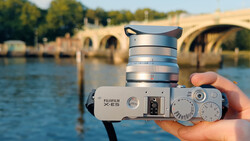
The X-E5 targets a very specific need: a compact rangefinder-style body that still hands you serious files and usable video. If you shoot streets, travel, or daily life and want IBIS, a modern 40.2-megapixel sensor, and Fujifilm color without carrying a brick, this will get your attention.
Coming to you from Gerard Needham, this concise video puts the Fujifilm X-E5 mirrorless camera in context by showing how the 40.2-megapixel X-Trans CMOS 5 HR sensor and five-axis IBIS hold up on a lightweight travel shoot. You see why editing raw files pays off when lifting shadows and holding highlights rather than relying only on in-camera looks. Needham also flags the DR settings as a subtle way to protect tone without that crunchy HDR sheen. He points out that small ergonomics, like custom film sim positions, the tiny joystick, and clean top-plate controls, speed up real-world work.
The video also presses on friction points you should consider. There’s a crop in 6.2K video that affects framing, and quick-record won’t switch into the higher-quality log movie mode you might expect. The EVF remains 2.36 million dots, which feels behind competitors at this price, especially if you rely on manual focus peaking or tight composition. Price is the other sticking point, landing near bodies that add dual card slots and full weather-sealing, so you’ll want to be clear on priorities before ordering.
Key Specs
-
40.2-megapixel APS-C (7728 x 5152) CMOS sensor
-
Five-axis sensor-shift stabilization
-
Photo ISO 125–12,800 (64–51,200 extended)
-
Video ISO 125–12,800 (64–25,600 extended)
-
Internal H.264/H.265, MOV/MP4, up to 6.2K 29.97 fps, DCI/UHD 4K up to 59.94 fps, Full HD up to 240 fps
-
4:2:2 10-bit via HDMI; 12-bit raw via HDMI
-
Single SD UHS-II card slot (V90 recommended)
-
3-way tilting 3" touchscreen LCD
-
NP-W126S battery, rated around 310 shots
-
Wi-Fi 5 and Bluetooth 4.2
Needham spends time on lenses and accessories you might pair with a small body like this. The kit zoom most people start with is the Fujifilm XF 18-55mm f/2.8-4 R LM OIS, which covers a flexible 27–84 mm equivalent range and balances stabilizing video with decent close-focus for travel. If you want a tiny walk-around prime, look at the Fujifilm XF 23mm f/2 R WR, which keeps the package pocketable and weather-resistant. A compact on-camera flash like the Godox TT350 adds quick fill for backlit scenes without killing the minimalist vibe.
You also get a clear comparison against Fujifilm’s siblings. If you never swap lenses and want the smallest rig with the same 40.2-megapixel sensor and IBIS, shortlist the X100VI with its built-in 23mm. If you need weather-sealing, dual slots, and a beefier EVF, the X-T5 sits a step up and overlaps in price depending on sales and kits. That framing helps you decide whether the X-E5’s size and control layout outweigh the compromises.
If you’re weighing video, note the 6.2K option, 4:2:2 10-bit over HDMI, and the ability to run log workflows, which makes the body a credible B-cam on small productions. IBIS means you can keep shutter speeds low for stills and avoid jittery handheld clips without rigging a cage or gimbal. Check out the video above for the full rundown from Needham.



Join the Fstoppers community for free
-
Post comments and join in the discussions
-
Browse the site ad-free
-
Share your work and get featured in the community
-
Compete in the photo contests for fun and prizes
No comments yet