Small APS-C bodies can look like side projects compared to the flagship full frame cameras, yet they often end up being the workhorses that leave the house most. If you care about staying nimble as a photographer, hearing how the Nikon Z50 II mirrorless camera has actually behaved over a year of real shooting is a faster way to judge it than reading specs in isolation.
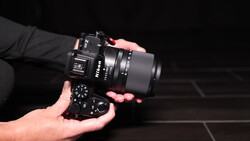
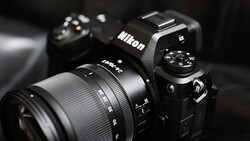
Coming to you from Adrian Alford Photography, this practical video walks through one year of real-world use with the Nikon Z50 II mirrorless camera. Alford explains how a failed studio and vlogging body pushed him into picking up the Z50 II as a compact, flip-screen workhorse that could handle video, talking-head content, and day-to-day shooting without feeling like a downgrade. You see how the Expeed 7-level processing, subject detection, and crop sensor combo give you a body that can sit on a tripod in the studio during the week and still pull its weight with more serious shooting on the weekend. The video gives you a clear sense of how the Z50 II slots into a system that might already include heavier bodies such as a Nikon Z8 or Nikon Z9.
Once Alford takes the Z50 II outside the studio, things get more interesting. Pairing it with the Nikon NIKKOR Z 180-600mm f/5.6-6.3 VR, he leans into the 1.5x crop to get a 270–900mm equivalent field of view, which turns the camera into a serious wildlife tool. If you like the idea of a light body with a big telephoto zoom, his clips of birds and distant subjects show how much reach you can squeeze out of this combo without dragging multiple primes around. He also experiments with older F-mount glass via the Nikon FTZ II adapter to keep legacy lenses in play, something that matters if you have years of Nikon gear in your closet. On the video side, he talks about using 4K recording with H.265, N-Log, and 10-bit options so you can grade more aggressively while still working with a small body and a single SD card slot. There is more nuance in how he dials in those settings and when he accepts the crop for higher frame rates, and that is where watching him build actual projects is helpful.
Key Specs
-
APS-C body with 23.5 x 15.7 mm CMOS sensor
-
Effective 20.9 megapixels (5,568 x 3,712 resolution)
-
Native ISO 100 to 51,200 for photos, expandable to ISO 204,800
-
14-bit still files with JPEG, HEIF, and raw capture
-
Continuous shooting up to 30 fps at full resolution
-
UHD 4K (3,840 x 2,160) internal recording in H.264/H.265 8-bit and 10-bit
-
Full HD 1,920 x 1,080 recording up to 120 fps for slow motion
-
N-Log and HLG gamma options for flexible grading
-
231-point phase-detect autofocus with sensitivity down to -9 EV
-
Articulating 3.2" touchscreen LCD and 0.39" OLED EVF with 2.36M dots
-
Single SD/SDHC/SDXC UHS-II card slot
-
Stereo mic, headphone jacks, and USB-C for power and data
-
Uses Nikon EN-EL25a battery or Nikon EN-EL25 battery, rated around 230 shots
-
Body-only weight of 17.46 oz / 495 g
Where the video gets especially useful is when Alford starts talking about tradeoffs. He is upfront about the battery life not matching the performance the processor and autofocus system encourage, especially when you lean on high frame rates or long bursts with wildlife. If you shoot full days, you will want multiple batteries and probably a dedicated charger, which is why he adds a third-party option like the K&F Concept EN-EL25 dual battery charger into his kit instead of relying on in-body USB charging alone. He also points out that the body lacks in-body stabilization, so for video or low light work you are better off with lenses that have VR built in, such as the Nikon NIKKOR Z DX 18-140mm f/3.5-6.3 VR or the super telephoto zoom he uses for wildlife. You get to see how he works around these limits in practice instead of hearing a simple list of pros and cons.
Alford also gives you a sense of how the Z50 II feels as a main camera on the road rather than just a backup. When he travels or hikes, he often leaves the heavier bodies at home and runs with this one and a couple of lenses, which is exactly the situation many people are in when they want a small kit that can still handle serious work. He hints at how the camera behaves in more demanding conditions like low-light scenes, long nights, and specialty work such as astrophotography without turning the video into a pure technical breakdown. The result is a realistic picture of what your experience might be like if you switch from a DSLR or larger mirrorless body and expect this one to cover studio video, casual shooting, and more demanding subjects. Check out the video above for the full rundown from Alford.
Join the Fstoppers community for free
-
Post comments and join in the discussions
-
Browse the site ad-free
-
Share your work and get featured in the community
-
Compete in the photo contests for fun and prizes
4 Comments
Same weight as the A6700 and youre giving up IBIS? Thats a tough sell Alex
If your left eye dominent the Sonys are a pain to use.
The a6700 is 50-60% more expensive (depending on sales). This competes directly with a camera like the a6400, which also does not have IBIS.
I have a Z8, Zf, a Leica Q2M, but I still really love and shoot my Z50ii for sports and birding more than any other. For a Sony lens owner, probably not a good option... But for some of us... A great camera.