Photoshop's Blend Modes Made Easy
Blend modes decide what stays, what goes, and what glows in your edits. Learn them well and you can drop elements into scenes, add believable light, and color grade with intention without wrestling a dozen masks.
Below are the most bookmarked articles by our members.
Blend modes decide what stays, what goes, and what glows in your edits. Learn them well and you can drop elements into scenes, add believable light, and color grade with intention without wrestling a dozen masks.
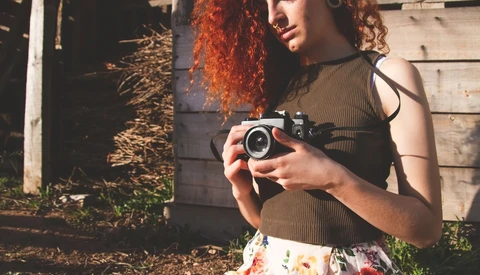
Every few years, camera companies roll out something meant to grab attention. Sometimes, those ideas turn into revolutions: autofocus, in-body stabilization, and mirrorless mounts all began as risks that paid off. But for every real innovation, there’s a graveyard of gimmicks — features and products that sounded futuristic, won headlines, and then died in obscurity. Here are five of the quirkiest gimmicks that promised to change photography but went nowhere.
Great pictures aren't enough anymore, at least not if you want to survive as a photographer today. One strong image might once have been the end of the process, but now it feels more like the beginning of a much larger chain of expectations. Content. Reels. Behind-the-scenes clips. YouTube.
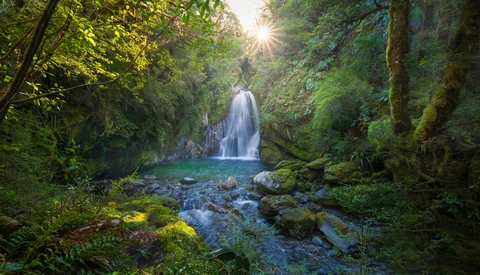
Light doesn’t just make an image; it shapes it. Shade and balance can be the difference between a flat photo and one that feels alive. When you think about your next outing, consider how you’re letting the environment work for you, not just what your camera can record.
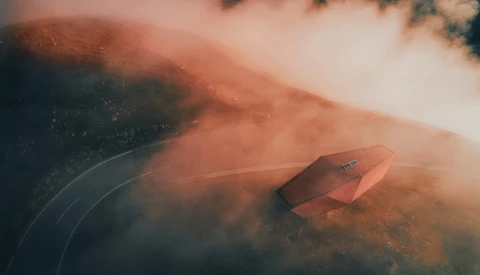
Developing your own style in photography is one of the biggest challenges for any photographer. We’re constantly told that we have to stand out from the crowd to succeed. But what does that actually mean in practice? How do you find a style that feels authentic? And do you even need a distinct signature look to make it in photography?
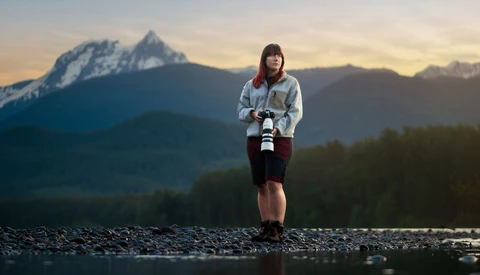
For as long as digital photography has existed, full frame has been treated as the gold standard. Camera marketing has hammered home the idea that “serious” photographers need the biggest sensor, the fastest zoom, and the heaviest glass. That narrative worked for a while, but in 2025, it’s looking increasingly out of touch.
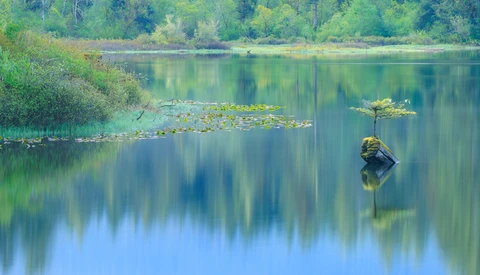
Are we making photos to be seen or to be felt? Today, photographers navigate between creating content for attention and creating meaning for expression—a choice that shapes not just our work, but how we experience it.
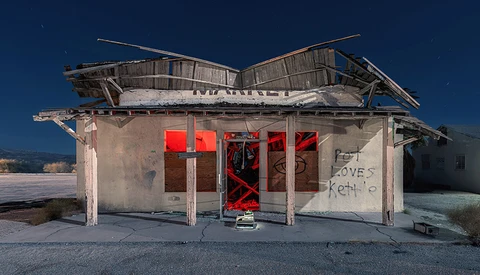
I set out to photograph and light paint a collapsing market in Desert Center, California. Here’s how I pulled it off. I'll take you behind the scenes of my desert ghost town night photography safari.

The photography world is buzzing with AI talk, but let's cut through the noise. While everyone's debating whether AI will replace photographers, smart professionals are quietly using artificial intelligence to streamline their workflows and deliver better results to clients. These aren't gimmicky features or experimental tools that might work someday. These are practical AI applications that are already saving photographers hours of work.
Layer masks let you hide and reveal exactly what you want, which means cleaner cutouts and composites that actually look like they belong together. If you care about believable edges, quick revisions, and nondestructive edits, you need them in your toolkit.
Understanding the histogram is essential for any landscape photographer who wants to master exposure and achieve their creative vision. The histogram provides a visual representation of the tonal range in your image, allowing you to make informed decisions in-camera and during post-processing.
Adjustment layers are the quiet power tools in Photoshop that let you shape light and color without touching the pixels. They keep edits flexible, stackable, and reversible, which matters when you need to test ideas fast and still return to a clean base later.
When your photos feel flat or uninspired, it can be tough to know what went wrong. The problem isn’t always your camera or your gear. Often, it’s about how you approach a scene, the way you see light, and the confidence you bring to pressing the shutter more than once.
Modern mirrorless lenses are beautifully crafted technological masterpieces. Yet, these lenses come at an expense. What if investing in older technology provides a comparable, if not more pleasing, result at a fraction of the price of its modern-day equivalent?

Every photographer builds habits over time. Some are good: the little rituals that make your setup faster, your workflow smoother, and your results more consistent. Others are neutral, quirks that don’t matter much one way or another. But then there are the bad habits, the ones that creep in slowly, feel harmless at first, and eventually start sabotaging your work without you even realizing it.
Camera makers design their gear for the broadest possible audience. Out of the box, the settings are meant to serve vacationers, hobbyists, and anyone who just wants to point and shoot without digging into a menu. These defaults are tuned for safety, not precision, and they prioritize avoiding disaster over achieving excellence. That makes sense for casual use, but it’s a silent liability once you start working in professional environments.
Street photography is a story of two halves. On the one hand, you can quite literally stroll down a street and capture some shots; whether it’s with your phone, a retro camera, or a modern DSLR, you’ll be doing street photography in one way or another.
Most photographers obsess over megapixels, autofocus points, and dynamic range when shopping for new gear. But while you're comparing sensor specs and lens sharpness charts, you're probably overlooking the features that could actually revolutionize how you shoot.
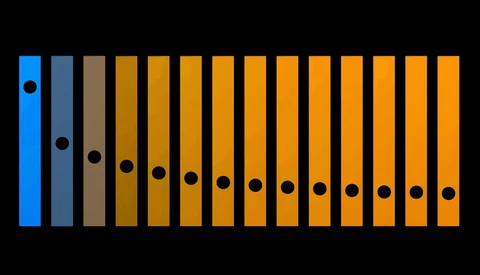
White balance is something most photographers know affects how colors appear, but a recent video argues that almost every camera, even high-end cinema models, is designed in a way that makes precise control harder than it needs to be.

Photoshop just got a wave of updates that could speed up your workflow and make certain edits far easier. The updates also add new AI-powered options that can handle more complex adjustments automatically.
Some of the most respected names in photography didn’t just create remarkable images. They sustained that quality for decades. Their mastery came from consistent effort, not a single burst of inspiration.

I’ve shot with a lot of cameras, film and digital—but if there’s one that’s been through it all with me, it’s the Canon 6D. This isn’t a pixel-peeping review comparing MTF charts or arguing about dynamic range. This is a look back at a decade spent with one of Canon’s most underrated full frame DSLRs. From dusty MiLB diamonds and fluorescent-lit engineering offices to golden hour family portraits and rain-soaked street photography, my 6D has quietly been the backbone of my professional and personal work.
Every photographer dreams of that pristine lens collection, but many end up with expensive glass gathering dust while scrambling to find the lenses they actually need. The brutal reality is that lens purchases gone wrong hurt because good glass costs so much and directly determines whether you can accept paying jobs.
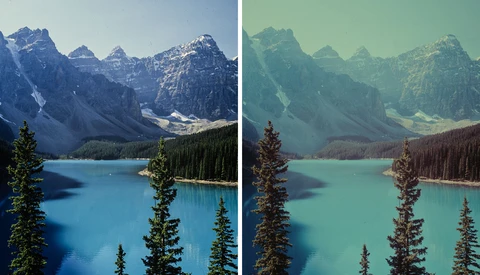
Some say film photography is better than digital. Film has a more organic, natural look. Shooting with an analogue camera is a better experience and a purer form of photography. Others say digital photography is better because computer technology makes photography easier. You can shoot more frames and focus quicker, and experiment more by shooting more without the need for a second mortgage. Buckle up, this might get ranty.
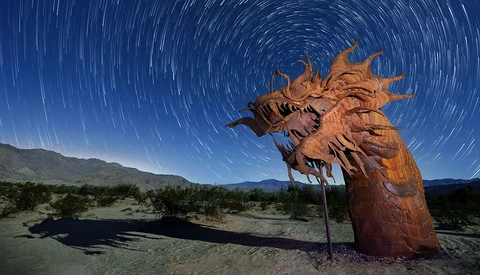
Auto White Balance (AWB) works for some scenarios. Night photography is not one of them. Here are five solid reasons to ditch AWB—and how doing so can instantly improve your night photography game.