Photography Education

Whether you just picked up your first camera or you've been shooting for years and hit a plateau, there's always more to learn. This section is where Fstoppers publishes educational content aimed at genuinely improving your photography — not just gear tips, but the foundational understanding of light, composition, and visual thinking that makes the difference between a competent photographer and a compelling one.

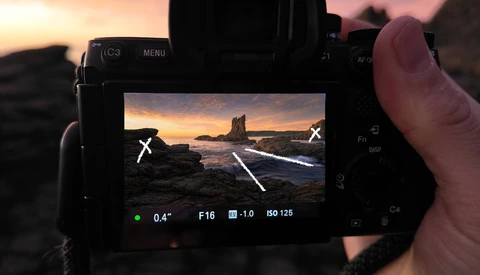
What Hyperfocal Distance Is and How to Use It for Sharp Landscapes

You frame a landscape with a striking rock in the foreground and mountains on the horizon, you focus on the mountains because that is your subject, and when you get home the foreground rock is soft. Or you focus on the rock, and the mountains go mushy. The scene your eye saw as sharp from front to back will not cooperate. The fix is more than a century old and it is one of the most useful, and most misunderstood, ideas in landscape photography: the hyperfocal distance.

Why the Best Portrait Photographers Think About Darkness First

Choosing the right light is one of the most misunderstood skills in portrait photography, and most advice online focuses on the wrong things entirely. Gear and camera settings have almost nothing to do with why certain portraits feel alive while others fall flat.

Flash vs. LED: Why Experienced Photographers Still Choose Strobe

Choosing between flash and continuous LED lighting is one of the more consequential decisions you'll make when building out a studio kit. The gap between the two has narrowed, but it hasn't closed, and understanding where each system breaks down in real-world conditions changes how you spend your money.

What Is Focus Breathing and Why Do Videographers Care?

Pull focus on a video clip from a near subject to a far one and watch the edges of the frame. On many lenses, the image seems to subtly zoom in or out as the focus shifts, as if the lens is quietly inhaling and exhaling. That is focus breathing, and once you have noticed it you cannot unsee it. For photographers it is usually a footnote. For anyone shooting video, it is one of the defining differences between a photo-first lens and a lens built for video or cinema, and it explains a large part of why true cinema lenses cost what they do.

How Your Focal Length Data Might Be Telling You to Buy a Different Lens

If you shoot wildlife and you've never looked at which focal lengths you actually use most, you're probably making lens decisions based on guesswork. Jan Wegener and Duade Paton did exactly that analysis, and what they found challenges some of the most common assumptions about which lenses wildlife shooters actually need.

The Shot You're Waiting For May Already Be Gone

The best landscape compositions have an expiration date, and most people don't realize it until the scene is gone. Sea defenses get completed, piers collapse further into the ocean, buildings get renovated, and the shot you kept putting off simply disappears.

What Is Bokeh, and What Actually Makes It 'Good' or 'Bad'?

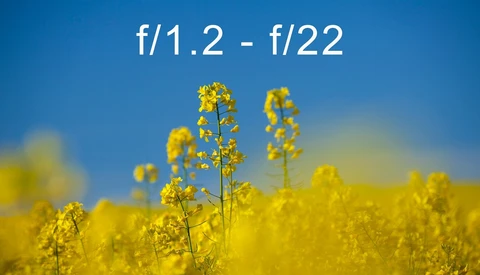
Bokeh is one of those words you hear constantly in photography and almost never hear defined. People use it to mean "blurry background," they use it to mean "expensive lens," and they use it as a compliment without being able to say what they are complimenting. So let us clear it up, because once you understand what bokeh actually is, you can stop chasing it blindly and start using it on purpose.

Why Your Best Ideas Only Come in the Shower

Knowing what you want to make and actually making it are two very different problems. The gap between them isn't talent or equipment; it's the mental framework you're using to approach creative work.

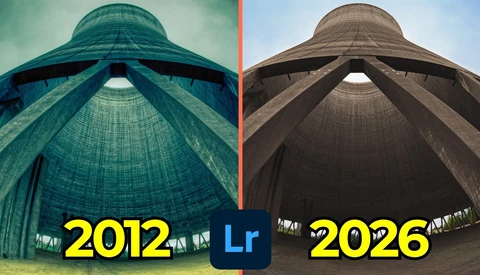
This Lightroom Technique Turns a Flat Long Exposure Into a Warm, Airy Shot

Stacking a polarizing filter with an ND filter on a wide angle lens creates serious vignetting issues, and that's exactly where this long exposure edit begins. Knowing how to work through that kind of technical constraint while still landing on a warm, airy, high-key result is a skill worth building.

Make Mine Black and White: Learning to Convert to Digital When All My World Was Film

I am, by training and inclination, a black and white photographer. My very first exposure to black and white photography, as an artful medium, was a photograph that I saw when I was in art school many years ago that was entitled "Monolith, the Face of Half Dome." At that time I was studying to become a Board Illustrator, which would have been a bored illustrator. The moment I saw that one photograph became a transformative one for me. Of course, when that happened the only option in terms of doing photography was to use film (this was way before digital was available), and my goal was to use black and white photography as my means of artistic expression.

The Gear a Beginner Needs to Shoot Landscapes (and What to Skip)

Landscape photography has a reputation as a gear-hungry genre, and it is easy to believe you need a closet full of equipment before you can shoot a decent mountain. You do not. The genre actually rewards a small, deliberate kit more than almost any other, because you are usually on a tripod, working slowly, with time to think. This guide walks through the categories that matter, points you toward solid current options in each, and is honest about what you can skip.
Lightroom Classic 15.4 Adds a Duplicate Finder and Smarter Group Culling

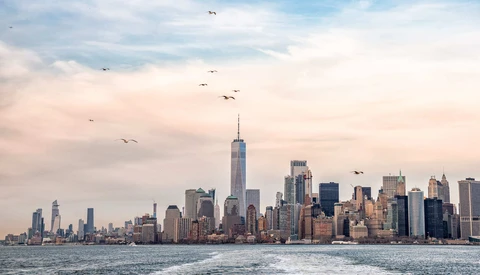
Lightroom Classic 15.4 shipped with a duplicate finder, improved AI masking, and smarter culling tools, and at least a few of these updates will change how you manage and edit images day to day. If your library has grown to tens of thousands of files, one of these features alone is worth knowing about.
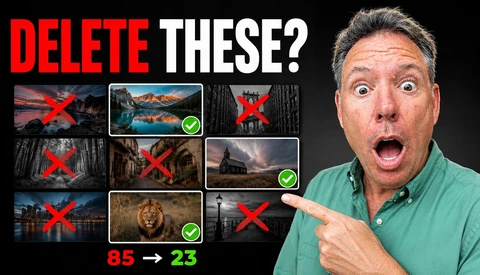
Why Most Landscape Photographers Are Ignoring Half Their Best Shots

Landscape photography has a bias problem. The vast majority of images flooding social media and print focus on sunsets, northern lights, and those much-visited "honeypot" locations where tripod holes wear into the ground from overuse, while whole categories of equally compelling scenes get ignored entirely.

Portrait Photography for Beginners: Settings, Lenses, and Posing Basics

The fastest way to make better portraits is not to buy a flash, a softbox, and three light stands. It is to learn to see and shape the light you already have. Natural light is free, it is forgiving once you understand it, and it teaches you the fundamentals that every lighting setup later builds on. This guide covers the gear, the camera settings, and the posing and light-shaping basics that get a beginner from snapshots to real portraits, all without a single strobe.

Bracketing Explained: Exposure, Focus, and White Balance

Most photographers meet bracketing exactly once, in a tutorial about high dynamic range landscapes, and walk away thinking it means "shoot three exposures and merge them." That is one kind of bracketing. There may be two more sitting in your camera's menu right now, and most people never touch them.

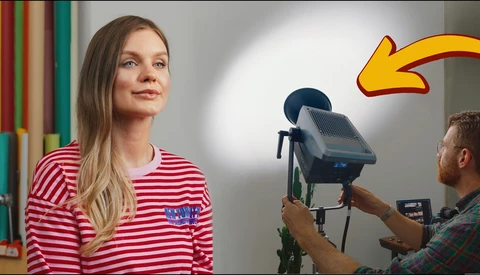
Is Your Home Studio Lighting Making Your Videos Look Cheap?

Lighting a home studio well is harder than most people expect, and the gap between flat, lifeless footage and something that actually looks intentional usually comes down to a few decisions. Getting those decisions right early saves you from buying gear you don't need and reworking your setup from scratch later.

What Photographers Rarely Learn From Painting

Photographers have been learning from painting for decades, but only from one half of it. Light, composition, proportion, tonal control — everything that strengthens representation has been absorbed and taught. And that is where the study usually stops. The moment painting stopped depending on the subject, photography largely stopped following it.

15 Beginner Photography Mistakes (and the One-Line Fix for Each)

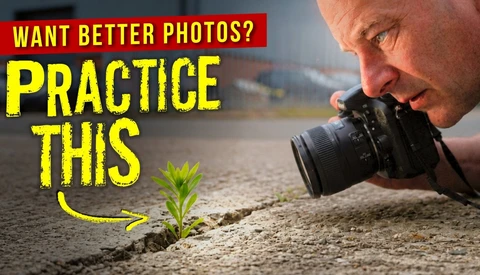
Every photographer makes these. The difference between someone who improves fast and someone who plateaus isn't talent; it's how quickly they stop repeating the same fifteen errors. None of these require new gear or more money to fix. Most take a single setting change or a shift in habit. 

Why Terminator 2's Visual Effects Hold Up 30 Years Later

Terminator 2: Judgment Day turns 35 this year, and it still looks better than most action films being made right now. The reason isn't budget or nostalgia. It's a set of deliberate filmmaking decisions that hold up under scrutiny.

How to Choose Between APS-C and Full Frame as a Beginner

One of the first real decisions a new photographer faces is sensor size, and it arrives wrapped in more anxiety than it deserves. The internet will tell you that full frame is "professional" and APS-C is "entry level," as if the sensor inside the camera decides whether your photos are any good. It does not. What sensor size actually changes is your reach, your low-light headroom, the amount of background blur you can get, the size and weight of your kit, and how much you spend, both now and over the years you keep shooting. Understanding those tradeoffs honestly is what lets you pick the right tool instead of the most expensive one.

Saving Your Photos Wrecked by Smoke From Nearby Wildfires

In one of my great examples of bad timing, a friend and I headed to southern Utah a few days ago. We were aware of spreading wildfires in the eastern part of the state, but where we were going, SE Utah, things were reported to be good. 

When the Gear on Your Shelf Stops Being Just Inventory

The popular rule of selling unused gear after six months describes one specific kind of author, and photographers who keep specialized equipment connected to their actual practice are not the kind it had in mind. 

Why Separation Makes or Breaks a Wide Angle Forest Shot

Photographing palm trees on a tropical coastline sounds straightforward until you're actually standing in front of a tangled cluster of trunks, messy sand, and scattered coconuts with no obvious composition in sight. Finding a shot that goes beyond a simple silhouette takes deliberate thinking about separation, foreground interest, and depth.

The Case Against Chasing Epic: Why Your Local Forest Might Be Your Best Subject

Chasing dramatic landscapes and remote destinations is easy to justify when the results look stunning on social media. But Adam Gibbs, who has photographed Antarctica, Patagonia, Iceland, and the Canadian Rockies, has spent years questioning whether spectacular scenery actually produces better photographs.

Finding Frames Inside Frames: A Summer Beech Woodland Shoot

Shooting in summer woodland feels like a compromise before you even start. The light is harsh, the shadows are heavy, and translating a complex three-dimensional forest into a compelling two-dimensional frame is genuinely difficult.

Carry-On Rules Are Getting Stricter for Photographers in 2026: Here's How to Adapt Your Kit

If you fly with a camera bag, 2026 is the year the gate finally caught up with you. The bag that "always made it on" for the last five years is now getting weighed, measured, and gate-checked with a consistency that did not exist before. For most travelers this is an annoyance. For photographers it is a real problem, because a camera kit is the densest, heaviest, and least checkable thing most people carry. A few bodies, a couple of fast lenses, batteries, and a charger can push past a 7-kilogram (15.4 lb) cabin limit before you have packed a single shirt, and unlike a sweater, you cannot exactly stuff a 70-200mm into the overhead and hope.

Why Posing Maternity Clients Starts Long Before You Pick Up Your Camera

Why do I tell every maternity client, "Show up in your pajamas and I will take care of you"? Great maternity portraits have very little to do with fancy equipment or complicated lighting setups. They start with trust, and that trust begins long before the camera comes out.

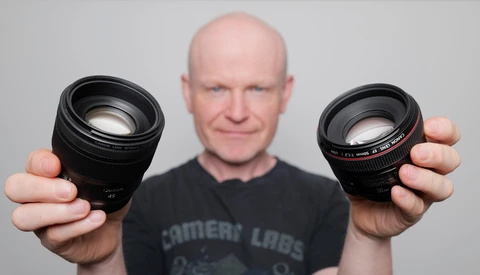
How to Actually Use an 85mm Lens for Better Portraits

Buying an 85mm lens is one of the most common moves in portrait photography, and it's also one of the most misunderstood. The lens has a reputation for good reason, but the way most people use it wastes most of what makes it worth owning.

The Loneliness Nobody Warns You About in Landscape Photography

Shooting landscapes solo sounds peaceful in theory, but for many people it's genuinely difficult at first, especially if you've spent most of your life surrounded by others. Ian Worth spent nearly two decades earning a living with a camera, and even he found the transition jarring.

The Two-Camera Wedding Setup That Actually Works

Shooting a wedding with one camera is a gamble. One malfunction, one missed moment, and there's no recovering it. That's the core reason most working wedding photographers carry two camera bodies, but the backup argument is only part of the story.

Raw vs. JPEG at the Grand Canyon: What Four Cameras Actually Showed

Choosing between raw and JPEG isn't just a technical preference; it directly affects how much you can recover and reshape an image in post. This helpful video tests this in a setting where the stakes are real: a Grand Canyon sunset, shot across four current-generation camera bodies.

Chasing the Light: Tips for Dramatic Landscapes

Let's talk about a few careful composition choices I made at sunrise in a quiver tree forest of Namibia, and how good ambient light helped to make the landscape photography shoot successful.

Which Is Right for You? Canon's R6 Lineup Compared: Mark II vs. Mark III vs. R6 V

The Canon EOS R6 used to be a simple recommendation. You wanted a full frame hybrid that did a little of everything well without costing as much as the R5, so you bought the R6, and that was the end of the conversation. That clarity is gone. The line has split into three very different cameras that happen to share a name, and choosing between them now means knowing what kind of shooter you actually are. The good news is that once you sort that out, the right answer becomes obvious, because Canon has aimed each of these bodies at a genuinely different person.