Photography Education

Whether you just picked up your first camera or you've been shooting for years and hit a plateau, there's always more to learn. This section is where Fstoppers publishes educational content aimed at genuinely improving your photography — not just gear tips, but the foundational understanding of light, composition, and visual thinking that makes the difference between a competent photographer and a compelling one.

The Secret to Becoming a More Versatile Photographer

Most photographers hit a ceiling not because they lack technical skill, but because they keep doing the same things over and over. Breaking out of that pattern is what separates a one-trick shooter from someone who can walk into any situation and come away with something worth showing.

Deposits Are Not Optional, and Photographers Who Do Not Require Them Are Working for Free

Most photographers treat the deposit as a courtesy request. A nice-to-have. Something you ask for politely, and if the client pushes back or seems uncomfortable, you waive it because you do not want to lose the booking. This is the standard operating posture of the photography industry, and it is costing working photographers thousands of dollars a year that they never see on their books, because the losses are invisible until you run the math.

The Secret to a Full Calendar Is Answering Your Damn Email

There is an entire industry selling photographers the idea that their booking problems are marketing problems. Instagram strategies, SEO courses, funnel templates, lead magnets, content calendars, brand refreshes, niche-defining workshops, and $2,000 mentorships that promise to "unlock the pipeline." Photographers buy them, implement them, and wait for the calendar to fill. For most photographers, it does not.

How to Decide If Your Photo Should Be Black and White

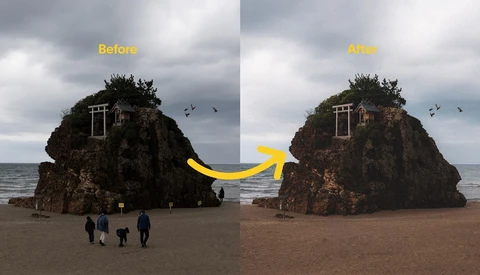
Knowing when to convert a photo to black and white is one of those decisions that separates a thoughtful edit from a forgettable one. Get it wrong and you strip out color that was doing real work; get it right and you reveal something the color was actually hiding.

Flash Photography Mistakes Most Beginners Don't Know They're Making

Flash photography has a surprisingly short list of things that will quietly ruin your shots, and most beginners hit several of them before they even realize there's a problem. Knowing what those mistakes are before they cost you time, money, or a shoot you can't redo is worth more than most gear upgrades.

Why Planning the Perfect Shot Produces Worse Photos

The pressure to nail every frame is one of the most common things that stalls creative growth. A decades-old classroom experiment reveals exactly why that pressure works against you, and what actually produces better images over time.

How Far Can You Push a 5 MP Raw File With Modern Upscaling Software?

Megapixel count is one of the most debated specs in photography, and the question of how few you can get away with for large prints is one that rarely gets a straight answer. Keith Cooper put that question to a real test using a camera from 2002 and actual prints made today, and the results are worth seeing.

The Honest Results of Shooting JPEG-Only for an Entire Month

Shooting in raw is so ingrained in modern photography that giving it up for a month sounds almost reckless. This photographer does exactly that, and what he finds out about his own habits is more revealing than any gear review.

What It's Like to Operate a Camera on an Actual Feature Film

Getting invited onto a feature film set as a guest camera operator is not something that happens every day, and when it does, the gap between that world and smaller productions becomes impossible to ignore. The crew size, the budget pressure, the overtime math: it all adds up to something that operates on a completely different level than commercial shoots or YouTube content.

The Hidden Problem Ruining Your Natural Light Portraits

Natural light sounds foolproof until you realize the walls, grass, and brick around your subject are quietly wrecking your skin tones. Omar Gonzalez shot four portraits in four different locations, same camera, same white balance, and the color differences are visible enough to make you rethink where you've been setting up.

Your First 30 Days With a New Camera: A Day-by-Day Learning Plan

You just bought a camera. Maybe it is a Canon EOS R50, maybe a Nikon Z50 II, maybe a Sony a6400 you found on sale, maybe a Fujifilm X-T50 that took three months on a waitlist. Whatever it is, you unboxed it, charged the battery, took a couple of test shots of your cat, and now it is sitting on the counter while you wonder what to do next.

Stop Guessing in Lightroom and Start Editing With a Plan

Many people approach editing by opening an image, applying a preset, and hoping for the best. That works occasionally, but more often it produces results that feel slightly off in ways that are hard to diagnose, let alone fix.

You Can Shoot Professional Model Portraits With a Phone. Here's How.

Shooting model portraits well has less to do with gear than most people assume, and everything to do with understanding light and how to pose a subject. Whether you're working with a phone by a window or a pair of strobes in a studio, the gap between a flat, forgettable shot and one that actually stops someone mid-scroll comes down to a handful of decisions you make before you ever press the shutter.

14 Hidden Costs of Being a Professional Photographer Nobody Talks About

When you calculate whether photography can support you financially, you start with the obvious math: how many sessions per month, times your session rate, equals annual income. That number looks promising. It is also wrong, because it does not account for the dozens of expenses that sit between your gross revenue and the money you actually take home.

Why Light Pollution Killed This Comet Shot at 4 a.m.

Comet PanSTARRS had a narrow visibility window, and Brent Hall had roughly 12 hours to pull together a shot. What followed was a scramble of location scouting, dead batteries, cactus needles in the leg, and a hard lesson about light pollution direction.

Picture vs. Photograph: Why the Difference Matters

Most of us overlook great images not because we fail to see them, but because we stop at thinking, "That's a nice picture." A picture serves as proof that you were present; a photograph shows you made deliberate choices. Here's how to transform quick snapshots into purposeful photographs, both in the field and during editing.

12 Signs Your Photography Has Plateaued and What to Do About Each One

A plateau does not announce itself. There is no notification, no error message, no dramatic moment where you realize you have stopped growing. It arrives quietly, disguised as comfort. You know your camera. You know your style. You know your workflow. Everything is efficient, consistent, and predictable. And that predictability is exactly the problem.

How to Shoot Striking Body Silhouettes With Minimal Gear

Silhouette figure photography strips the human form down to pure outline, and the results can be surprisingly powerful. If you've been shooting bodyscapes with complex lighting setups and wondering whether there's a simpler approach that still produces striking images, this is worth your attention.

16 Signs You Are Ready to Go Full-Time as a Photographer

The question is not whether you are talented enough. Talent got you to the point where going full-time even feels possible. The question is whether the business infrastructure, the financial runway, and the personal support system are in place to survive the transition without collapsing under the weight of it.

Why Top Gun Still Looks Better Than Its Own Sequel

The original Top Gun was shot in 1986 with heavy film cameras, no drones, and a U.S. Navy that charged by the hour. Nearly four decades later, Top Gun: Maverick used six Sony Venice cameras and some of the most precisely engineered aerial photography ever put on film. The gap between those two productions tells you almost everything about why one of them still feels like lightning.

9 Things That Go Wrong on Every Landscape Photography Trip and What to Do About Each One

Landscape photography looks serene from the outside. A lone figure on a hillside, tripod silhouetted against a sunrise, communing with nature. What the Instagram post does not show is the two-hour predawn drive, the boots soaked through before the first frame, the sky that refused to cooperate, and the 200 exposures that produced three usable images. Landscape photography is not a passive activity. It is an ongoing negotiation with an environment that does not care about your shot list.

Stop Editing Photos Without Asking This First

Shooting in thick sulfur smoke with burning eyes and barely enough air to breathe, Mitchell Kanashkevich still managed to walk away with images that communicate something real. Most edits of a scene like that end up feeling like nothing, and the reason almost always comes down to one flawed habit that's remarkably easy to fix.

Spot Metering Is the Most Misunderstood Mode on Your Camera

Exposure metering is one of those fundamentals that separates guesswork from consistently well-exposed images. Even with today's sophisticated camera systems, knowing how your camera reads a scene and when it gets it wrong changes how you shoot.

One Desert Location, Three Different Days, Completely Different Images

Shooting the same desert location across multiple days and radically different conditions is one of the best ways to push your landscape work forward. This Arizona desert shoot is a masterclass in staying adaptable, and the images prove that preparation and flexibility matter far more than waiting for the perfect moment.

10 Summer Photography Projects You Can Finish Before September

Summer is the easiest season to photograph and the hardest season to use well. The light is long, the weather cooperates, and the subjects are everywhere. But without a specific project to anchor your shooting, those three months dissolve into a scatter of random images that do not add up to anything.

The Real Reason Your Travel Photos Don't Match the Moment

Most travel photos disappoint not because of bad gear, but because of bad decisions made before or during the trip. If you've ever come back from a trip with hundreds of images and only a handful that actually capture how it felt to be there, the problem is almost certainly in the planning, or the lack of it.

Sharpness Is the New Beige

We finally reached a weird point in photography where sharpness isn't even a goal anymore; it's given. Modern lenses are so good that "tack sharp" is basically a factory setting. And yet, scroll any comment section, and you would think sharpness is a whole sport. Not light. Not timing. Not mood. Just crazy sharp.

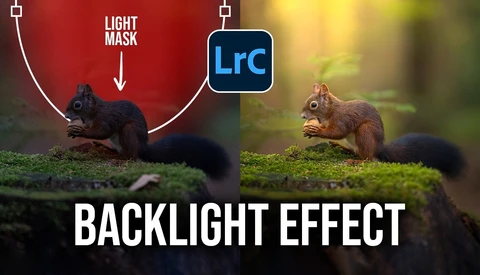
10 Lightroom Secrets That Will Change How You Edit Photos

Lightroom has more depth than most people ever tap into, and after 15 years of using it, Serge Ramelli has a clear sense of which techniques actually move the needle. These aren't beginner tips about sliders; several of them involve AI-powered masking tricks and a dodge-and-burn workflow that can fundamentally change the way a finished image looks.

10 Things That Go Wrong During a Client Consultation and How to Redirect Each One

The consultation is supposed to be the easy part. The client reaches out, you meet (in person, by phone, or over video), you discuss what they want, you explain what you offer, and you both walk away aligned on the vision, the scope, and the price. That is the theory. In practice, the consultation is where every mismatched expectation, unrealistic budget, and conflicting creative vision reveals itself, and your ability to navigate those reveals determines whether the conversation ends with a booking or a polite "I'll think about it" that means no.
The Concept Comes First: Building a Photograph From an Idea, Not a Scene

Most photographers start with a subject or theme. Conceptual photographers start with a question. What does isolation feel like? Not, where can I shoot next? Entering the world of conceptual photography is a beast of its own. It comes with its own challenges and rewards. My biggest question was, how do I start?

"Fix It in Post" Is Costing You Money: A Mathematical Case for Getting It Right in Camera

You are standing on location. The light is good, the client looks great, and you are in the zone. Then you notice it: an orange traffic cone lurking at the edge of the frame. Your assistant is nowhere to be found. The client is already in position. You could pause everything, walk over, and drag the cone out of shot. Or you could keep the momentum going and mutter those five dangerous words to yourself: "I'll fix it in post."

The Proper Camera Settings for Travel and Street Photography

Shooting in the wrong exposure mode or using the wrong autofocus setup can cost you the shot. For travel and street work especially, your camera settings aren't just technical preferences; they shape what's even possible in the moment.

Photoshop 2026's Dehaze Tool Is More Powerful Than You Think

Photoshop 2026 added a Clarity and Dehaze adjustment layer, and if you shoot landscapes or anything with atmospheric haze, it's worth knowing how to use it properly. The catch is that throwing dehaze on an entire image can look heavy-handed, so selecting only the hazy area before applying it makes a real difference.

Why Time Is a Landscape Photographer's Most Valuable Asset

Time might be the one thing standing between you and your best landscape images. Not gear, not skill, not vision: just the raw, uncontrollable factor of being somewhere when the light, weather, and landscape align in a way that only happens a handful of times a year.

12 Things That Go Wrong on Every Outdoor Portrait Session (and What to Do About Each One)

If you have shot outdoor portraits for any length of time, you already know that the session you planned and the session you got are never the same session. Something always goes sideways. The light shifts, the location changes, a variable you could not have predicted shows up and rearranges everything. The difference between a beginner and a working portrait photographer is not that the veteran avoids these problems. It is that the veteran has been ambushed by them so many times that the solutions are automatic.

10 Milestones That Make You Feel Like a "Real" Photographer

Nobody hands you a certificate. There is no exam, no licensing board, no official moment where someone taps you on the shoulder and says "you are now a photographer." The transition from hobbyist to something more happens gradually, in small moments you do not always recognize as significant while they are happening. But looking back, every photographer can identify a handful of milestones that shifted something internally, moments where the thing you had been doing started to feel like the thing you are.