Gear Reviews

Fstoppers gear reviews are written by photographers who actually use the equipment — not benchmark testers looking at spec sheets. This section covers cameras, lenses, lighting, accessories, bags, software, and everything else in a working photographer's kit. The goal is always the same: give you an accurate picture of whether something is worth your money before you spend it.

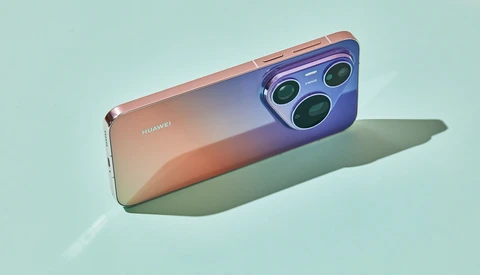
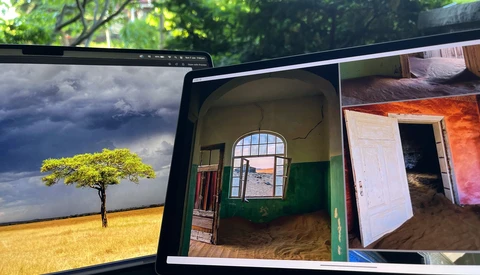
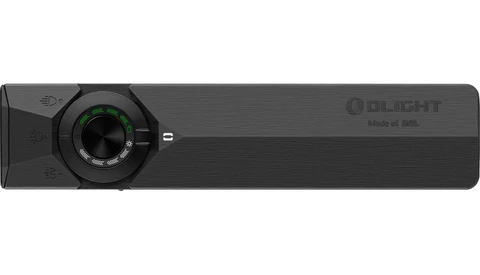
A Portable Projector for Portraits, Outdoor Exhibitions and More

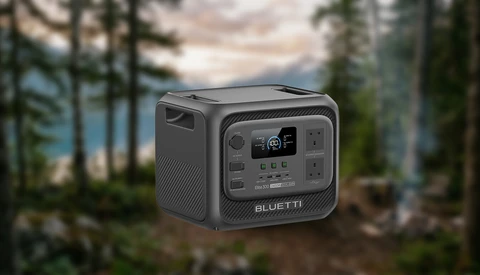
I've been looking for new ways to exhibit my photo and video work, ways that aren't tied to white walls or interior spaces. That search led me toward projectors, and I found one that fits. The appeal of something untethered is obvious in the fact that you can take your work almost anywhere. I initially expected I'd need a separate power station, but instead I found a quality projector with a built-in battery, making the whole setup far simpler than I'd imagined.

The Sharpest 24mm Lenses You Can Buy Right Now

A $200 lens outperforming a Zeiss on corner sharpness is exactly the kind of result that shows how fast optics have moved. The 24mm focal length gives you a wide field of view with just enough drama to hold onto your subject, and paired with a bright aperture, it delivers backgrounds that fall away beautifully.

Hohem MT3 Pro Gimbal: A Solo Creator's Dream

At this point, there are so many brands of gimbals that it can be hard to know which direction to go, especially with heavy-hitting names like DJI at the forefront of most publications and media outlets. But when I saw the MT3 Pro from Hohem, there was a standout feature that made me pause.

Why a Two-Decade Full Frame Shooter Switched to Micro Four Thirds

Twenty years behind a camera can lock you into fixed ideas about what gear delivers the results you want. A long-held bias against Micro Four Thirds is exactly what gets challenged here, and the reasons have less to do with specs than with how you actually shoot.

The Tamron 17-70mm f/2.8 vs. Sigma 17-40mm f/1.8: One Wins on Paper, the Other Wins in Practice

Choosing between a wider aperture and a longer zoom range is one of the most common trade-offs in APS-C lens selection, and few comparisons make that tension as concrete as the Tamron 17-70mm f/2.8 versus the Sigma 17-40mm f/1.8. These two lenses cost $200 apart, share the same weight, start at the same focal length, and yet produce noticeably different results depending on what you're shooting.

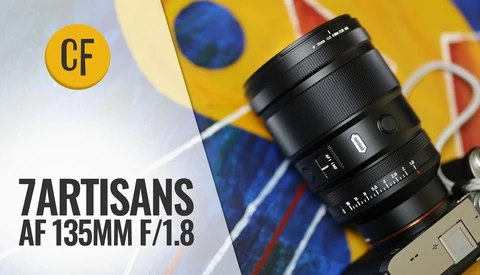
7Artisans 135mm f/1.8 vs. Viltrox: Which One Is Actually Worth Buying?

Choosing between the 7Artisans 135mm f/1.8 and the Viltrox 135mm comes down to a real tradeoff: raw optical and autofocus performance versus a lighter, smaller package at a lower price. At $689, the 7Artisans sits well below the Viltrox, and that gap raises a fair question about what you're actually giving up.

Recreating a Legendary Leica Lens: Mandler 35mm F/2

Owing to the growing popularity of Leica cameras in recent years, a bunch of new lens manufacturers have sprung up to provide much cheaper alternatives to Leica lenses. And what's particularly exciting is that, with the aid of modern technology, many rare and desirable Leica lenses from the past can now be reproduced with incredible accuracy.

Canon EOS R6 V vs. EOS C50: Which Camera Actually Makes Sense for You

The Canon EOS R6 V is Canon's first full frame V-series hybrid camera, priced at $2,500 body only. It's built for video makers who still need serious stills capability, and at that price, it competes in a range of the market where buyers are making real commitments.

Viltrox 35mm f/1.8 Evo Review: Is This the Best Budget Prime for Nikon Z and Sony?

Finding a fast prime with an apochromatic design under $400 is almost unheard of, and that's exactly what the Viltrox 35mm f/1.8 Evo claims to be. Apochromatic lenses correct chromatic aberration by aligning all three color wavelengths to the same focal plane, a feature you typically only find in lenses costing several times more.

Sony's Most Beloved 55mm Gets a Serious Challenge From Viltrox

Choosing between a $370 lens and a $1,100 lens is easy when the cheaper one wins on almost every technical measure. The Viltrox AF 55mm f/1.8 Evo is a direct challenge to the Sony Zeiss 55mm f/1.8 ZA, and Dustin Abbott's side-by-side test on the Sony a7R VI makes that case in detail.

This 135mm f/1.8 Is the Sharpest Lens 7Artisans Has Ever Made, But With a Catch

The 135mm autofocus lens market has gotten crowded fast, with options from Samyang, Viltrox, and Sigma all competing for your attention on Sony E-mount, Nikon Z-mount, and L-mount. The 7Artisans 135mm f/1.8 enters that field with the lowest MSRP of the group at $689, but price alone isn't enough to stand out when the competition has had years to mature.

Brightin Star 14mm f/2.8 Review: Shockingly Cheap, but Does It Deliver?

Ultrawide lenses used to cost a fortune. A full frame 14mm f/2.8 from Canon or Nikon ran around $1,500 just over a decade ago, which put serious glass out of reach for a lot of people. Budget manual focus alternatives have changed that equation, and the Brightin Star 14mm f/2.8 is one of the most affordable yet, coming in at around $279.
A $999 Anamorphic Lens vs. a $3,900 Cinema Lens: How Close Is the Gap?

Anamorphic lenses produce a look that's immediately recognizable: stretched bokeh, horizontal lens flares, and a cinematic quality that's defined Hollywood films for decades. The question most people face is whether that distinctive look is worth the tradeoffs compared to a conventional spherical lens.

Leica SL3-P Review: Is This the Hybrid Camera the SL System Always Needed?

The Leica SL3-P positions itself as Leica's answer to a problem that has frustrated SL system users for a while: you had to choose between the video-focused SL3-S and the resolution-focused SL3, and if you shoot both stills and video seriously, neither option was a clean fit. The SL3-P sits between them, and Leica calls it the best camera they've ever made.
A $135 Full Frame Lens That Shouldn't Be This Good

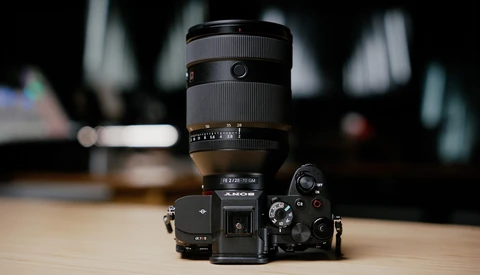
At $135 a full frame autofocus 50mm lens sounds like a compromise waiting to happen. The Yongnuo 50mm f/1.8S DF is that lens, and it turns out the compromises are a lot smaller than you'd expect.
Testing the 7Artisan 35mm f/2.8 LTM Lens

To paraphrase a favorite pair of authors of mine: once is never, twice is always. Not sure where the third and fourth times something goes wrong rates. 

Because that's how many times my Leica MP pulled my bulk-loaded film out of the canister. Not the camera's fault; instead, the cheap tape I've been using didn't seem to be holding up to the stress of those final few tugs of the film advance. The first time it was something important: two dozen arrests during a protest downtown. Thankfully the rest were less important, mostly technical shots for this lens review.

Apple's Cheapest MacBook Ever Is an Amazing Deal

The MacBook Neo sits at the bottom of Apple's MacBook lineup, and that single fact shapes everything about it. At its price point, it goes up against laptops that routinely disappoint, which makes what Apple has pulled off here genuinely worth paying attention to.

Leica SL3-P Review: 45 Megapixels, 8K Video, and a Real Autofocus Upgrade

The Leica SL3-P sits in an interesting position: a 45-megapixel hybrid that Leica designed to land between the speed-focused SL3-S and the resolution-heavy SL3, and the question of whether it actually pulls that off has real stakes if you're considering dropping serious money on any of the three.

Canon RF 20-50mm f/4L IS USM PZ Tested on Full Frame and APS-C

The Canon RF 20-50mm f/4L IS USM PZ is a lens built around a specific kind of shooter: someone who wants wide angle coverage, reliable stabilization, and smooth power zoom control, all in one relatively compact package. At $1,400, it sits in territory where performance has to justify the price tag.

We Review Thypoch’s Ksana 21mm F/3.5 Asph: A Modern Interpretation of a Vintage Coating

Thypoch has been slowly making a name for itself in the industry and is no stranger today to creating modern manual lenses that pay homage to classic lenses—starting with the Simera, Eureka, and now the Ksana. The 21mm f/3.5 Asph is Thypoch's first entry in the new "Ksana" series, designed to be an ultra-light and compact everyday lens with vintage rendering. If you must know, the name Ksana comes from the Sanskrit word Kṣaṇa (क्षण /ˈksɑːnə/), representing the eastern concept of the "instant" or the duration of a sudden enlightenment.

5 Sony APS-C Lenses Worth Shooting With Right Now

Choosing the right lens for a Sony APS-C camera is genuinely difficult right now, because the options have multiplied fast and the differences between them aren't always obvious. Curtis Padley has been shooting Sony APS-C for six years and has run through enough glass to have strong, experience-backed opinions about what actually works.

We Review Thypoch Latest Compact M Mount Lens: The Ksana 35mm F/2 Asph

Following my recent speculation about M-mount lenses being the next big thing, the M-mount ecosystem has seen some truly exciting developments lately. Even in such a niche and crowded market, we are still getting frequent releases from companies like Thypoch. And after all the good releases, they still manage to surprise us every now and then to give us a reason to pick their lens.

The Leica D-Lux 8 After 18 Months and 3,000 Shots

The Leica D-Lux 8 sits in an unusual spot: a Micro Four Thirds compact with a fixed zoom lens, priced like a premium tool, marketed as something you actually carry. After nearly 19 months and close to 3,000 images, Peter Fritz has moved well past first impressions, and his conclusions are more nuanced than the usual early review.

PMI's New 'Vanishing Fog' Makes Adding Smoke Easier Than Ever

 I used to think all fog machine liquid was the same. Never once had I considered that a new fog formula could be far better than what I've been using for decades. PMI's Vanishing Formula Kit has changed my opinion, and today I test it against three of the most popular portable fog systems on the market. 

Fujifilm X100VI vs. Panasonic Lumix LX10: Which Compact Is Actually Better for Travel?

Choosing a compact travel camera is harder than it looks, especially when two solid options sit at very different price points with very different sensor sizes, lenses, and feature sets. The Fujifilm X100VI and the Panasonic Lumix LX10 both pitch themselves as small, capable everyday cameras, but they take genuinely different approaches to getting there.

The Panasonic L10 Is the LX100 Successor Nobody Expected

The Panasonic L10 lands in a genuinely narrow space: a compact camera with a large sensor, a zoom lens, and serious video features. If you've wanted something between a Ricoh GR IV and a full-blown mirrorless kit, this camera makes a real case for itself.

7Artisans 35mm f/2.8 M Mount: A Tiny Lens With Classic Rangefinder Charm

If you think the 7Artisans 35mm f/2.8 M Mount lens looks like it belongs to another era, you'd be quite correct. It was inspired by the compact optics used on Leica's early Barnack cameras in the 1930s. This tiny beauty, weighing just 88 g, embraces simplicity, portability, and character in a way that many modern lenses have forgotten.

The Canon EF 50mm f/2.5 Compact Macro Is 40 Years Old. Here's How It Holds Up.

Canon's oldest EF mount lenses are worth a second look now that they adapt so cleanly onto modern mirrorless bodies. The Canon EF 50mm f/2.5 Compact Macro is one of the more interesting cases: a lens from 1987 that regularly sells for under $100 on eBay and still communicates fully with current Canon R-series cameras, including in-body stabilization and in-camera corrections.

The Sony a7R VI Has the Best Full Frame Sensor Ever Made. Here's the Catch.

The Sony a7R VI raises the resolution bar for full frame cameras to 66.8 megapixels on a fully stacked sensor, and that combination produces results that will make you rethink how much camera you actually need. The stacked design isn't just about pixels — it's what allows the a7R VI to shoot 30 frames per second with full autofocus and a blackout-free viewfinder at that resolution.

40-150mm Plastic Fantastic: Can a $100 Lens Actually Deliver?

Sharpness is one of photography's most debated specs, and it's also one of the most overrated. The Olympus 40-150mm f/4-5.6 R is widely considered one of the least sharp lenses in the Micro Four Thirds lineup, and Chris Baitson decided to take it out for a full shooting session anyway.