Gear Reviews

Fstoppers gear reviews are written by photographers who actually use the equipment — not benchmark testers looking at spec sheets. This section covers cameras, lenses, lighting, accessories, bags, software, and everything else in a working photographer's kit. The goal is always the same: give you an accurate picture of whether something is worth your money before you spend it.

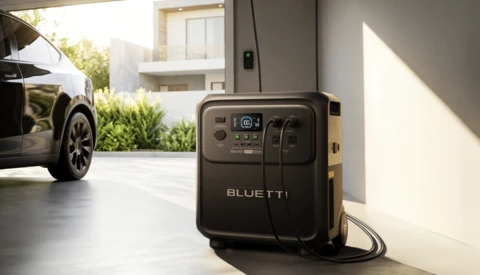
Bluetti Elite 400 Review: A Massive Rolling Battery for Outage Backup, Travel Power, and Keeping Everything Charged

The Bluetti Elite 400 is a 3,840 Wh portable power station that rolls, and that second detail turns out to matter almost as much as the first. This is a nearly 4 kWh LiFePO4 battery with a 2,600 W pure sine wave inverter, built into a case with luggage wheels and a telescoping handle, and it is aimed squarely at the gap between the little 1,000 Wh boxes you carry with one hand and the 100-pound bricks you never actually move. That gap is exactly where a lot of real-world power lives: a computer you do not want to lose in an outage, a fridge to keep cold when the grid goes down, a campsite to run, and a permanent pile of batteries and devices that need charging.

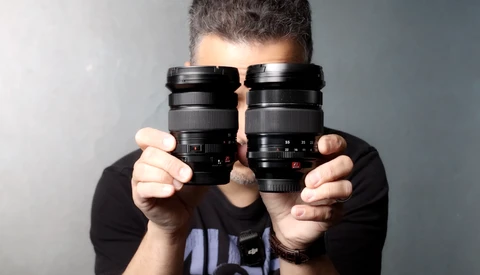
Five Fujifilm Pancake Lenses Tested Side by Side: Which One Wins?

Pancake lenses promise to shrink your camera down to something you'll actually carry, but the gap between the marketing and real-world performance can be wide. Five slim options exist for Fujifilm X-mount cameras, and their prices, quality, and quirks vary far more than their similar shapes suggest.

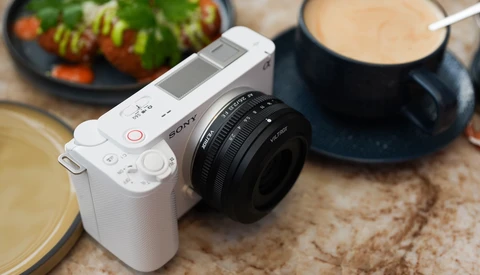
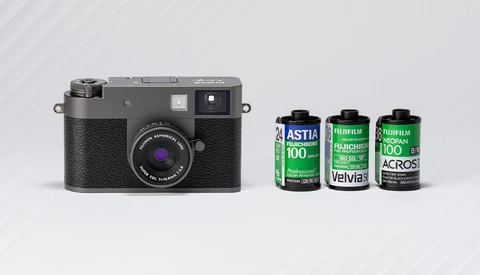
Fujifilm X half Review: The 1990s Point-and-Shoot Experience, Reborn in Digital and Ridiculously Fun

The Fujifilm X half is a machine for time travel, and the destination is roughly 1997. It takes the experience of a cheap, cheerful point-and-shoot film camera, the kind you took on school trips and to parties and then left in a drawer, and rebuilds the whole thing in digital form: the vertical half-frame photos, the wind-on lever, the roll you have to finish before you can see anything, even the little date stamp burned into the corner. It is not trying to make better pictures than your phone. It is trying to make taking pictures fun again, the specific analog kind of fun a lot of us have not felt since we were kids, and against my expectations, it absolutely succeeds.

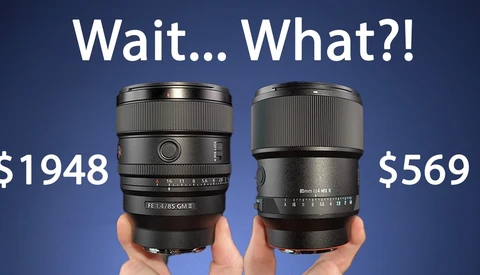
A $569 85mm That Matches a $1,948 Lens?

Two 85mm portrait lenses, one costing $1,948 and the other $569, produce photos so close in sharpness that even a 200% crop of a model's eye barely separates them. That kind of price gap between near-identical results forces a real question about what you're actually paying for when you buy first-party glass.

Is the Nikkor Z 85mm f/1.8 S Still Worth $750 in 2026?

The Nikkor Z 85mm f/1.8 S came out in 2019 as the only 85mm option on Nikon's mirrorless system, and today it sits in a crowded field where third-party glass costs a third as much. That single shift, from sole option to premium holdout, is the whole story behind whether this lens still deserves a spot on your list in 2026.

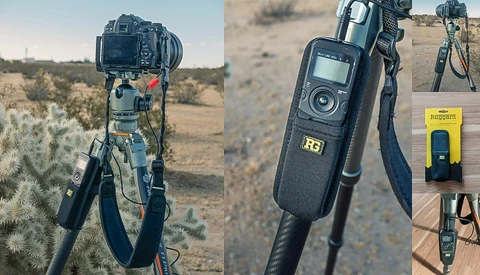
How to Stop Your Timer Remote From Dangling: Ruggard RTC-10 Review

If you shoot long exposures at night, you know the frustration — your intervalometer dangling from your camera, swinging in the breeze, pulling on the cable. Not good. The Ruggard RTC-10 Timer-Remote Case (Standard) fixes that with a padded holder that straps directly to your tripod leg. It works great, with one Velcro gripe we'll get to shortly.

Can a Zoom Lens Match a Prime for Astrophotography?

A 12-20mm zoom at f/2.8 sits right in the sweet spot for astrophotography, wide enough to swallow the Milky Way and fast enough to pull in faint starlight. Most shooters reach for a prime when the sky gets dark, which makes a zoom that can keep pace worth a real look.

Review of the ThinkTank Focuspoint 30L Backpack

For my photo tour in Iceland, I wanted to go lightweight. I had my eye on the new Think Tank FocusPoint 30L because it just looks great. Amazingly, my gear did fit in this compact photo backpack, and I took it with me to Iceland. Let me tell you about my experiences.

PolarPro’s Controversial Portra Film-Inspired Filter. What’s Going On?

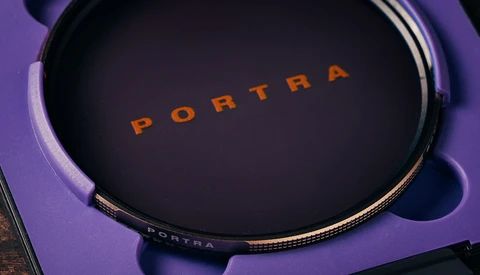
About six months ago, PolarPro sent me their new Portra filter. On their website it states, "Inspired by the look and feel of Portra 400 film… the Portra Filter blends color tone, diffusion, and glare reduction into one optical filter for a finished look." Hmm, sorry, it looks nothing like Portra 400 film. And I hadn't even put the filter on my camera at this point. I simply looked at the sample photos on their website, and thought about all the photos I've shot on Portra film.

Nikon's 35mm f/1.4 vs. the 35mm f/1.8 S: Which One Wins?

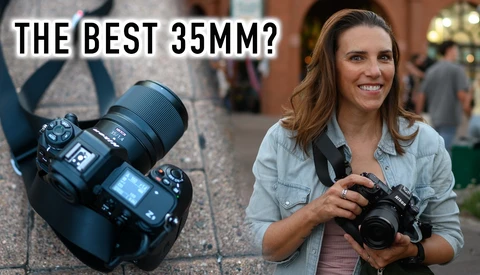
Nikon sells three different 35mm prime lenses for the Z mount, and picking between them comes down to details that specs alone won't reveal. The gap between the Nikon 35mm f/1.4 and the Nikon 35mm f/1.8 S is smaller than the labels suggest.

Two OM System White Lenses, One Coast, and a 1,000mm Reach Test

An 800mm equivalent lens that fits in a hand and a 1,000mm equivalent monster share the same day out on the Welsh coast. That kind of reach used to mean carrying gear you could barely lift, and the shift toward smaller sensors covering it is one of the more interesting developments in wildlife photography right now.

The Anker Nano Power Strip Fixes the Ugliest Corner of Your Editing Desk

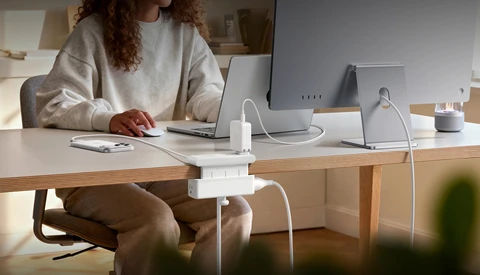
Every desk has one ugly corner: the gray knot of chargers and power bricks that no cable management ever truly tames. The Anker Nano Power Strip (10-in-1, 70W, Clamp) clamps to your desk edge and swallows that knot whole, and after a month running my entire charging setup off it, I'm not going back.

Canon R5 C Long-Term Review: Did Canon’s ‘Cripple Hammer’ Ruin a Masterpiece?

A few years ago, when the shutter on my Canon 5D Mark II finally gave out after 12 years of use, I needed to upgrade my equipment. With so many mirrorless cameras available on the market, it was a difficult decision. However, one camera consistently stood out to me. No matter how many times I tried to convince myself that there might be a better option for my needs, something kept drawing me back to it.

Fujifilm XF16-55mm f/2.8 R LM WR I vs. II: Is It Worth Upgrading?

Fujifilm's original XF16-55mm f/2.8 lens has long been considered one of the best in the X-mount lineup, and is a lens I've owned and loved to use for many years. I know from personal experience that it's truly one of the best, whether discussing sharpness, detail, autofocus, build quality, or usability.

A 2010 Camera, a 2012 Lens, and a Trip to Italy

A 15-year-old camera with no USB-C charging, no eye sensor, and dated video specs still earns a spot in a working photographer's bag for a trip to the Italian coast. That says something about what actually keeps a camera in rotation years after its spec sheet stops mattering.
Three Full Frame Cameras: One Trip, One Clear Winner

Picking one full frame camera for travel means weighing color, size, stabilization, and price against each other, and the differences rarely show up on a spec sheet. Three cameras in the same price range can feel like completely different tools once you actually carry them through a city all day.

The Proof Even Legendary Photographers Miss Most of Their Shots

Impostor syndrome hits almost every creative person at some point, and if you shoot photos, you know the feeling: you look at work you admire and wonder why you even bother picking up a camera. Jesse Senko has a surprisingly practical answer to that spiral, and it comes from an unlikely source.

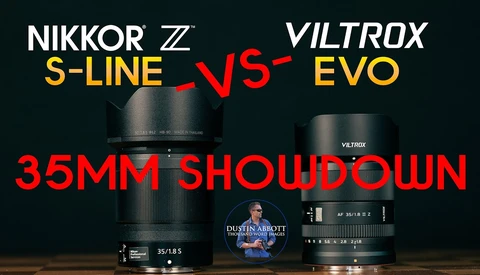
A $395 Lens Just Beat a $900 Nikon at Its Own Game

For years, Nikon's f/1.8 S-line lenses stood almost alone: premium optics at a maximum aperture where you rarely find premium anything. That comfortable spot is now under real pressure, and a head-to-head test shows exactly how much.
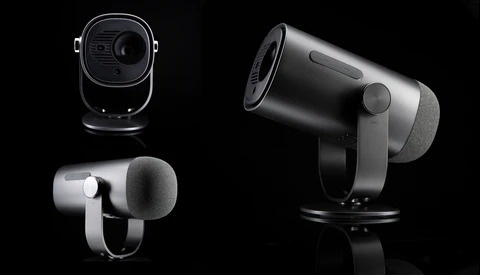
A Portable Projector for Portraits, Outdoor Exhibitions and More

I've been looking for new ways to exhibit my photo and video work, ways that aren't tied to white walls or interior spaces. That search led me toward projectors, and I found one that fits. The appeal of something untethered is obvious in the fact that you can take your work almost anywhere. I initially expected I'd need a separate power station, but instead I found a quality projector with a built-in battery, making the whole setup far simpler than I'd imagined.

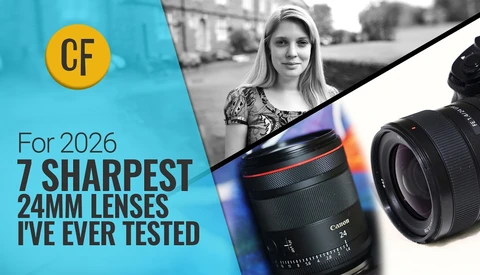
The Sharpest 24mm Lenses You Can Buy Right Now

A $200 lens outperforming a Zeiss on corner sharpness is exactly the kind of result that shows how fast optics have moved. The 24mm focal length gives you a wide field of view with just enough drama to hold onto your subject, and paired with a bright aperture, it delivers backgrounds that fall away beautifully.

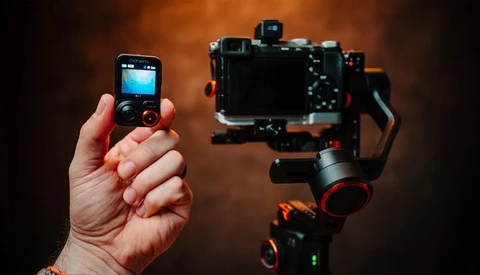
Hohem MT3 Pro Gimbal: A Solo Creator's Dream

At this point, there are so many brands of gimbals that it can be hard to know which direction to go, especially with heavy-hitting names like DJI at the forefront of most publications and media outlets. But when I saw the MT3 Pro from Hohem, there was a standout feature that made me pause.

Why a Two-Decade Full Frame Shooter Switched to Micro Four Thirds

Twenty years behind a camera can lock you into fixed ideas about what gear delivers the results you want. A long-held bias against Micro Four Thirds is exactly what gets challenged here, and the reasons have less to do with specs than with how you actually shoot.

The Tamron 17-70mm f/2.8 vs. Sigma 17-40mm f/1.8: One Wins on Paper, the Other Wins in Practice

Choosing between a wider aperture and a longer zoom range is one of the most common trade-offs in APS-C lens selection, and few comparisons make that tension as concrete as the Tamron 17-70mm f/2.8 versus the Sigma 17-40mm f/1.8. These two lenses cost $200 apart, share the same weight, start at the same focal length, and yet produce noticeably different results depending on what you're shooting.
7Artisans 135mm f/1.8 vs. Viltrox: Which One Is Actually Worth Buying?
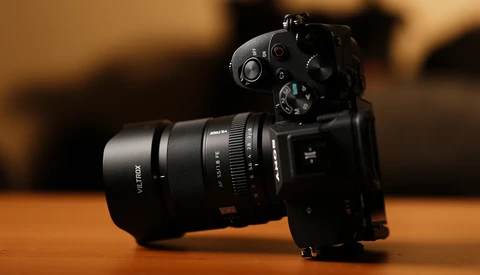
Choosing between the 7Artisans 135mm f/1.8 and the Viltrox 135mm comes down to a real tradeoff: raw optical and autofocus performance versus a lighter, smaller package at a lower price. At $689, the 7Artisans sits well below the Viltrox, and that gap raises a fair question about what you're actually giving up.

Recreating a Legendary Leica Lens: Mandler 35mm F/2

Owing to the growing popularity of Leica cameras in recent years, a bunch of new lens manufacturers have sprung up to provide much cheaper alternatives to Leica lenses. And what's particularly exciting is that, with the aid of modern technology, many rare and desirable Leica lenses from the past can now be reproduced with incredible accuracy.

Canon EOS R6 V vs. EOS C50: Which Camera Actually Makes Sense for You

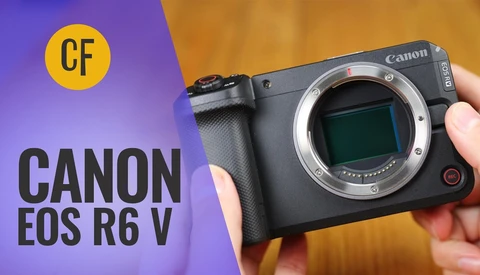
The Canon EOS R6 V is Canon's first full frame V-series hybrid camera, priced at $2,500 body only. It's built for video makers who still need serious stills capability, and at that price, it competes in a range of the market where buyers are making real commitments.

Viltrox 35mm f/1.8 Evo Review: Is This the Best Budget Prime for Nikon Z and Sony?

Finding a fast prime with an apochromatic design under $400 is almost unheard of, and that's exactly what the Viltrox 35mm f/1.8 Evo claims to be. Apochromatic lenses correct chromatic aberration by aligning all three color wavelengths to the same focal plane, a feature you typically only find in lenses costing several times more.

Sony's Most Beloved 55mm Gets a Serious Challenge From Viltrox

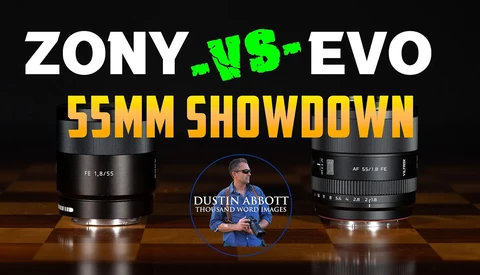
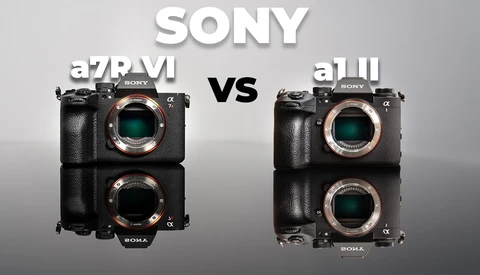
Choosing between a $370 lens and a $1,100 lens is easy when the cheaper one wins on almost every technical measure. The Viltrox AF 55mm f/1.8 Evo is a direct challenge to the Sony Zeiss 55mm f/1.8 ZA, and Dustin Abbott's side-by-side test on the Sony a7R VI makes that case in detail.

This 135mm f/1.8 Is the Sharpest Lens 7Artisans Has Ever Made, But With a Catch

The 135mm autofocus lens market has gotten crowded fast, with options from Samyang, Viltrox, and Sigma all competing for your attention on Sony E-mount, Nikon Z-mount, and L-mount. The 7Artisans 135mm f/1.8 enters that field with the lowest MSRP of the group at $689, but price alone isn't enough to stand out when the competition has had years to mature.

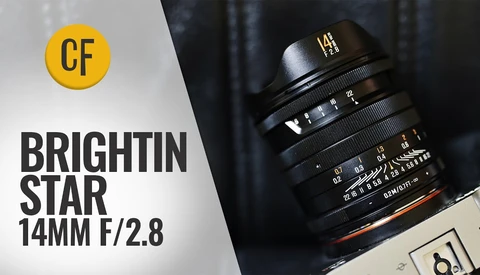
Brightin Star 14mm f/2.8 Review: Shockingly Cheap, but Does It Deliver?

Ultrawide lenses used to cost a fortune. A full frame 14mm f/2.8 from Canon or Nikon ran around $1,500 just over a decade ago, which put serious glass out of reach for a lot of people. Budget manual focus alternatives have changed that equation, and the Brightin Star 14mm f/2.8 is one of the most affordable yet, coming in at around $279.

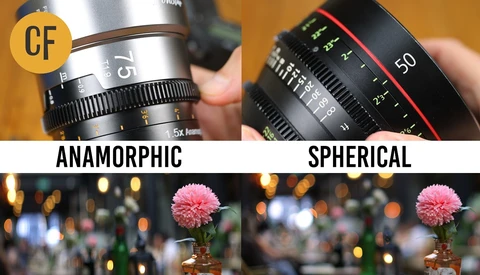
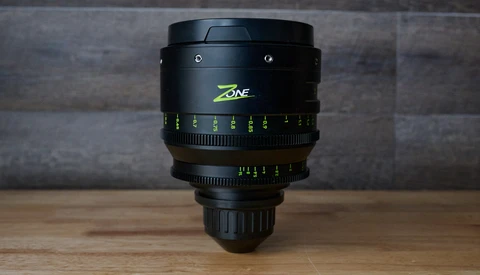
A $999 Anamorphic Lens vs. a $3,900 Cinema Lens: How Close Is the Gap?

Anamorphic lenses produce a look that's immediately recognizable: stretched bokeh, horizontal lens flares, and a cinematic quality that's defined Hollywood films for decades. The question most people face is whether that distinctive look is worth the tradeoffs compared to a conventional spherical lens.

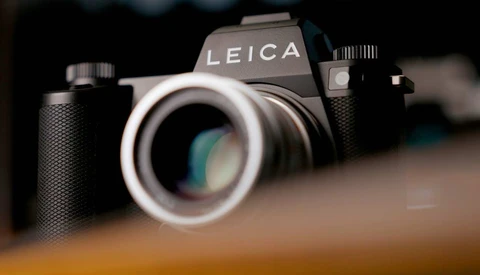
Leica SL3-P Review: Is This the Hybrid Camera the SL System Always Needed?

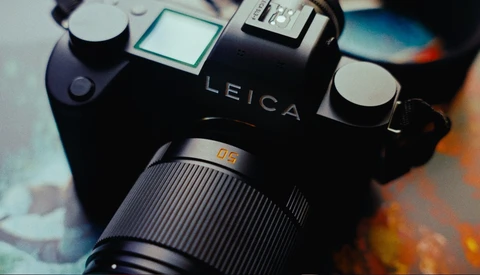
The Leica SL3-P positions itself as Leica's answer to a problem that has frustrated SL system users for a while: you had to choose between the video-focused SL3-S and the resolution-focused SL3, and if you shoot both stills and video seriously, neither option was a clean fit. The SL3-P sits between them, and Leica calls it the best camera they've ever made.

A $135 Full Frame Lens That Shouldn't Be This Good

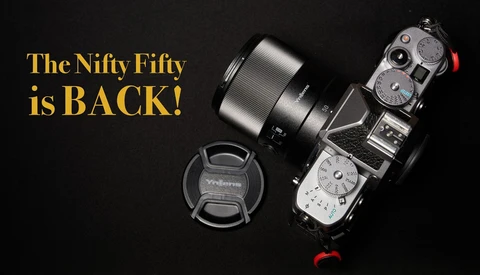
At $135 a full frame autofocus 50mm lens sounds like a compromise waiting to happen. The Yongnuo 50mm f/1.8S DF is that lens, and it turns out the compromises are a lot smaller than you'd expect.

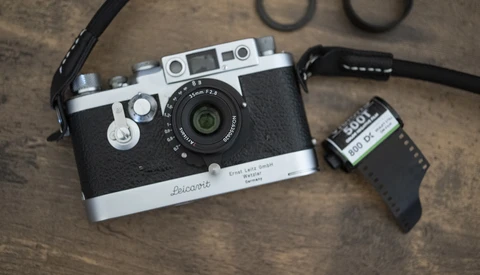
Testing the 7Artisan 35mm f/2.8 LTM Lens

To paraphrase a favorite pair of authors of mine: once is never, twice is always. Not sure where the third and fourth times something goes wrong rates. 

Because that's how many times my Leica MP pulled my bulk-loaded film out of the canister. Not the camera's fault; instead, the cheap tape I've been using didn't seem to be holding up to the stress of those final few tugs of the film advance. The first time it was something important: two dozen arrests during a protest downtown. Thankfully the rest were less important, mostly technical shots for this lens review.

Apple's Cheapest MacBook Ever Is an Amazing Deal

The MacBook Neo sits at the bottom of Apple's MacBook lineup, and that single fact shapes everything about it. At its price point, it goes up against laptops that routinely disappoint, which makes what Apple has pulled off here genuinely worth paying attention to.

Leica SL3-P Review: 45 Megapixels, 8K Video, and a Real Autofocus Upgrade

The Leica SL3-P sits in an interesting position: a 45-megapixel hybrid that Leica designed to land between the speed-focused SL3-S and the resolution-heavy SL3, and the question of whether it actually pulls that off has real stakes if you're considering dropping serious money on any of the three.