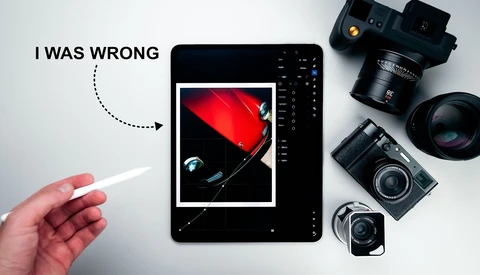
One Tuscan Morning, 12 Different Images: How to Read the Light
Shooting the same Tuscan scene for two hours straight and walking away with a dozen completely different images isn't luck. It comes down to reading how light moves across a landscape.
Fstoppers gear reviews are written by photographers who actually use the equipment — not benchmark testers looking at spec sheets. This section covers cameras, lenses, lighting, accessories, bags, software, and everything else in a working photographer's kit. The goal is always the same: give you an accurate picture of whether something is worth your money before you spend it.
Shooting the same Tuscan scene for two hours straight and walking away with a dozen completely different images isn't luck. It comes down to reading how light moves across a landscape.
The Fujinon GF 500mm f/5.6 is one of the more unusual lenses you can buy right now. Pairing a 500mm telephoto with a medium format sensor is a rare combination, and the results raise real questions about where medium format ends and wildlife work begins.
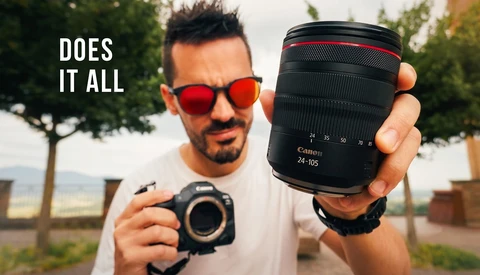
Recently, I had the chance to go hands-on with the Canon RF 24-105mm f/2.8 zoom lens to see exactly who this lens is for and if it is something that would fit into my existing workflow and maybe make it better.
Spending $15,000 on a single lens is not a decision you make lightly, and getting it wrong is an expensive mistake. Tom Mason owns the Nikon Z 600mm f/4 TC VR S and has put it to work as a professional wildlife shooter for years, but he's the first to admit it might not be the right call for everyone.
Choosing a 35mm lens for wedding and portrait work is genuinely difficult when the options range from compact primes to heavier, more ambitious glass. The Viltrox AF 35mm f/1.2 Lab II lands squarely in that debate, and it's making a strong case for itself.
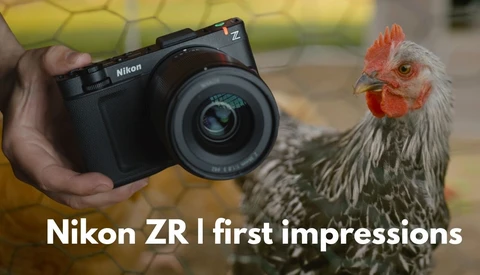
Picking the right cinema camera for run-and-gun work is rarely straightforward, and the Nikon ZR raises real questions about whether its feature set justifies its size and complexity for everyday shooting. This video puts that to the test not on a studio set or controlled shoot, but on a full movie-location road trip through Flagstaff, Arizona.

Today, I'll have a look at the new Laowa CF 4.5-10mm f/2.8 Fisheye Zoom and share a few thoughts.
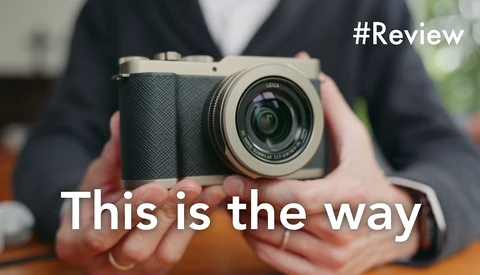
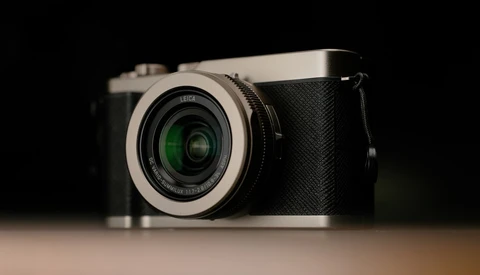
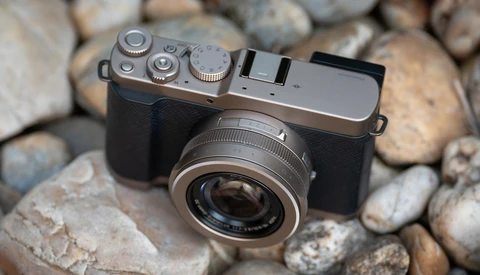
The Lumix L10 is a compact camera built around a 26 MP Micro Four Thirds sensor, a fixed Leica-branded zoom lens, and a spec sheet that will make you question whether Panasonic even knows how to make a simple camera. At $1,500, it sits in a crowded space occupied by cameras like the Fujifilm X100VI, and the question worth asking is whether it can hold its own.
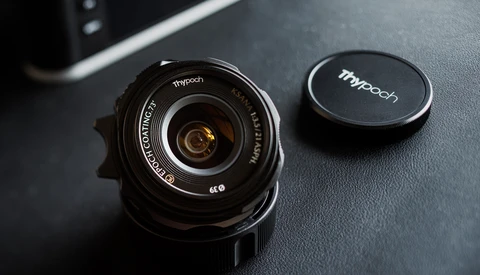
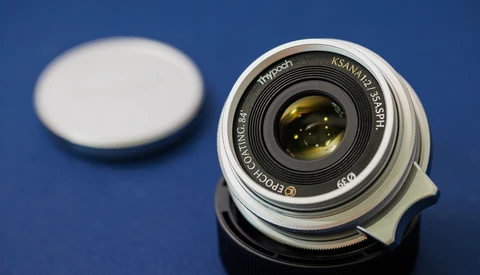
Thypoch built its reputation on manual focus prime lenses, so when the company announced an autofocus zoom, nobody saw it coming. The Thypoch 24-50mm f/2.8 is not only the brand's first zoom lens, it's the first autofocus zoom lens to come out of China entirely, and it lands at $619 on Sony E-mount, undercutting the Sony 24-50mm f/2.8 G by roughly half.
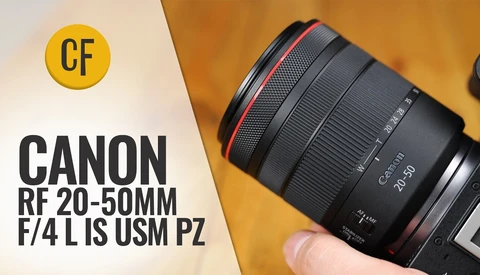
Canon's new RF 20-50mm f/4L IS USM PZ covers ultra-wide to standard focal lengths in a compact, lightweight body with a powered zoom and optical stabilization. At around $1,400, it sits in a competitive price bracket where Canon already has some well-established options.
The Sony FE 100-400mm f/4.5 G Master is Sony's answer to what a professional telephoto zoom should look like when price is no object. At roughly $4,300, it sits in a category where the competition is thinner and the stakes are much higher.
The Canon EOS R6 V sits in a genuinely interesting spot in the lineup, and if you're trying to decide between it, the Canon EOS R6 Mark III, and the Canon EOS C50, the answer is not as obvious as Canon's marketing might suggest.
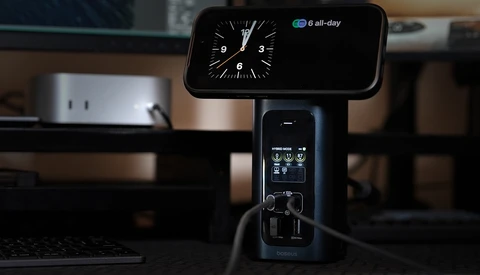
Chargers are the gear no one thinks about — at least until there is a need. Anker sent their Anker Prime Charging Station (8-in-1, 240W), a smart charger with app control. Who might benefit from this? And why might they need app control?
Sony has officially announced the new FE 100-400mm f/4.5 GM OSS, a super-telephoto zoom designed for wildlife, birding, sports, and photojournalism work.
The Lumix L10 is a fixed-lens compact camera with a leaf shutter, a viewfinder, a hot shoe, and a Leica-branded 24–75mm f/1.7–2.8 lens on a Four Thirds sensor. If you're weighing compact cameras for travel or daily carry, the spec sheet here is worth a close look.
The Leica M11-D is a digital camera with no rear screen, and that single omission is either its greatest flaw or its greatest feature depending on how honest you are with yourself about how you actually shoot. If you've ever told yourself you'd stop chimping and never followed through, this camera calls that bluff immediately.
The Fujifilm XC 13-33mm f/3.5-6.3 OIS is the one of the newest kit lens options for the Fujifilm's X-mount system, and it takes a different approach than most. Instead of the typical 15-45mm range, this lens goes wider, giving you a full frame equivalent of 20mm to 50mm, which opens up genuinely different shooting possibilities for landscapes, interiors, selfies, and vlogging.
Today, I'll have a quick look at the new Allen Smart Suction Snap Camera Mount. It's a tool designed for mounting compact mirrorless cameras, action cams, and smaller DSLRs to smooth surfaces via a suction cup that can deliver dynamic moving shots.
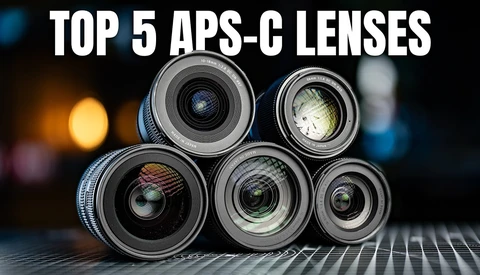
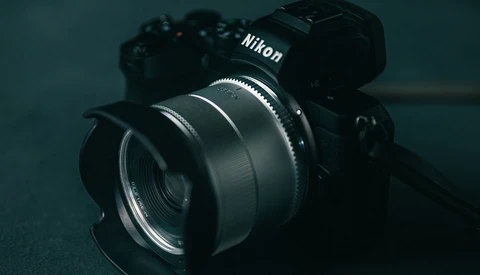
APS-C cameras are quickly becoming the main choice for everyday photography. I've owned a Nikon Z50 for seven years now, and it's still my favorite everyday camera, especially for travel, street, and urban photography. But finding lenses for it has always been a problem.
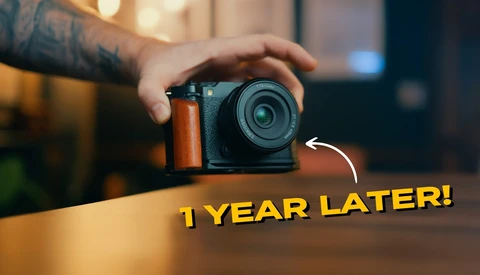
The Fujifilm X-E5 sits in an interesting spot in the Fujifilm lineup: it has the same 40-megapixel sensor as the Fujifilm X-T5 but in a body closer in size to the X100 series, with interchangeable lenses. After a year of daily use, including replacing the X-T5 as his main body, Mitch Lally has a clear picture of exactly who this camera is for and where it falls short.
My first impression when pulling Freewell's latest filter kit offering out of its packaging was how small and light it was. Filter kits tend to be bulky and take up lots of space, often housed in boxes that take up valuable space in camera bags too. They can be a nuisance to lug around. Not this kit. I immediately liked it.
The Nano-X Pro filter system proves there's still a place for those who try to get it right in camera.
The Sony a7 V is one of the most talked-about hybrid cameras of the past years. What actually happens when you run it through real paid work over an extended period?
Want to reclaim your desk space and maybe even reduce the pain in your neck by optimizing your viewing angle? Consider a monitor arm. Here, we take a look at the HUANUO FlowLift™ Single Monitor Mount (formerly SS6, but still model HNSS6). I also discuss the HUANUO Universal VESA Mount Adapter Kit (Model HNMUA4), which was needed for my particular monitor. How well did they work? How easy were they to install?
The Lumix S1 II sits at $3,200 list price, currently discounted to around $2,900, and it's trying to compete with video-focused cameras from Canon, Sony, and Nikon on both features and value. Whether it actually pulls that off depends heavily on a few specific trade-offs that aren't obvious from the spec sheet.
Picking a compact, affordable 35mm lens for Sony full frame is harder than it looks. The Samyang AF 35mm f/1.8 FE sits at around $400 and promises a lightweight option for Sony E-mount shooters, but whether the image quality backs up that price is a different question.
Viltrox's 35mm f/1.2 Lab was already one of the sharpest, most capable lenses in its class when it launched. The new "N" version strips out the OLED screen and replaces the unconventional control ring with a traditional aperture ring, and that single change makes a lens that was optically exceptional finally handle the way it should.
The Sony RX1R Mark III launched to a lot of ridicule. At $5,100 with no IBIS, no tilt screen, and a battery that's been around since 2013, the internet had a field day, and honestly, the criticism wasn't wrong on the specs alone.
Canon and Sony each make a flagship 35mm lens, and on paper they're remarkably close in size, weight, price, and optical spec. But close on paper doesn't always mean close in practice, and the differences that do exist could matter depending on how you shoot.
Choosing a normal-length prime for your Fujifilm X system sounds straightforward until you realize there are seven legitimate autofocus options sitting in roughly the same focal length range, each with a different price, build, and rendering character. The gap between the best and worst of them is smaller than you'd expect, but the differences in autofocus reliability and real-world usability are anything but trivial.
The Nikon ZR is a camera that has generated a lot of conversation since Nikon acquired Red Cinema, but most of that conversation focuses on specs and codec comparisons. What's harder to find is a perspective from someone who actually shot on a Red camera for years, sold it, moved on, and then picked up the ZR expecting to be underwhelmed.
The Fujifilm X-T30 III sits at $1,000 body only, positioning it as one of Fujifilm's most accessible entry points into the X-series system. For that price, you're getting a 26-megapixel APS-C camera with some video specs that don't match what you'd expect from a camera in this range.
After testing more than 800 lenses, Christopher Frost has narrowed his personal favorites for portrait work down to three. The picks span a wild range of price points and design philosophies, which makes the list genuinely worth paying attention to.
Choosing an everyday carry camera is harder than it looks. You're balancing size, image quality, and price, and most cameras force you to sacrifice at least one of them.
The Nikkor Z 14-30mm f/4 S has been on the market since 2019, and it remains the wide angle zoom that ends up on more Nikon Z mount cameras than probably any other. At its current discounted price of around $1,100, the calculus of buying it versus something like the Nikkor Z 14-24mm f/2.8 S at roughly $2,000 gets very interesting very fast.
The Tamron 35-100mm f/2.8 sits in an interesting spot: it's compact and light enough to travel with, but fast enough to handle portraits, events, and low-light shooting. At around $899, it's priced to compete with other mid-range zooms, and whether it delivers enough to justify that price is genuinely worth understanding before you buy.
Choosing a 35mm f/1.4 lens for Sony E-mount means navigating a short but competitive list, and the Sigma 35mm f/1.4 DG DN Art just reshuffled that list significantly. The Mark II version makes a strong case against both its predecessor and Sony's own G Master offering.
Since the debut of the first Osmo Pocket series, launched seven years ago, it has quickly grown its user base with its one-of-a-kind design, tapping into a niche market segment by offering quality stabilized video at a pocketable size. While it wasn't perfect back then, it offered an innovative solution for the market's pain point, and it's commendable that they took the risk to do things out of the norm. Fast forward to 2026, the DJI Osmo Pocket 4 is currently at its 4th iteration of product development, keeping the same design language. Building on the success of its predecessor, it now offers enhanced imaging capabilities and further refinements to its user experience.
The Tamron 35-100mm f/2.8 Di III VXD is a fast standard zoom for Sony E-mount and Nikon Z-mount cameras, priced at $899 for Sony and $929 for Nikon. That longer reach comes at a direct cost: you lose the wide end compared to a typical 24-70mm, and whether that tradeoff works for you depends entirely on how you shoot.
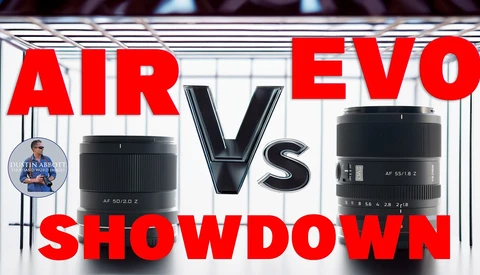
Picking a 50mm lens for your Nikon Z system just got more complicated. The Viltrox 55mm f/1.8 from the Evo series is an apochromatic lens priced at $370, and it's gunning directly for the Nikkor Z 50mm f/1.8 S.
The Fujifilm XF 16-55mm f/2.8 R LM WR II is a significant lens for anyone shooting in the X system. It's a red badge lens, which means Fujifilm's highest standard, and the original version set a high bar that this new iteration has to clear.
The Sony a7 V sits at $2,900 and bills itself as an enthusiast camera, but its feature set tells a different story. Whether you shoot stills, video, or both, what's inside this body has real implications for how far it can take your work.
The Fujifilm X-T5 has been on the market for nearly four years, and the question of whether it still holds up is worth asking seriously. At 40 megapixels in an APS-C body priced well below full frame alternatives, it sits in an unusual spot.
Choosing photo editing software is harder than it used to be. With Lightroom Classic no longer the only serious option, five credible alternatives now compete for your workflow, each with real tradeoffs in power, speed, and learning curve.
Choosing the right Sony camera is genuinely hard. The lineup spans everything from pocket-sized compacts to flagship sports bodies, and picking the wrong one means spending money on specs you'll never use or missing features you actually need.
Choosing a 35mm lens for a Sony camera used to mean paying a premium for the Sony FE 35mm f/1.4 GM or settling for something that fell short in one area or another. The Sigma 35mm f/1.4 DG DN Art changes that math in a meaningful way, and the second version of this lens is smaller, lighter, and improved across nearly every metric compared to its predecessor.
The Viltrox 35mm f/1.2 is already a well-regarded fast prime, but Viltrox has now released a revised version called the AF 35mm f/1.2 STF N, dropping the LED display and swapping the old control ring for a proper aperture ring. If you shoot Sony E-mount and have been watching this lens, the changes are worth understanding before you spend $999.
Compact cameras have exploded in popularity, and finding the right one is harder than it sounds when you're comparing genuinely capable options across very different price points and form factors. The Fujifilm X100VI sits at the center of that conversation right now, and for good reason.
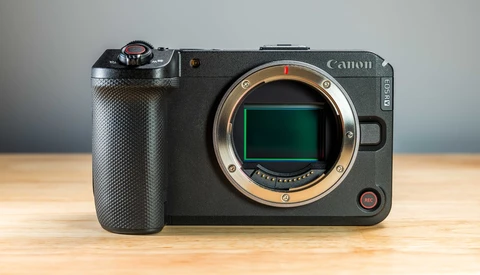
The Canon Cinema EOS C50 is a compact cinema camera aimed squarely at solo shooters and traveling videographers who want cinema-quality footage without hauling a full-size rig. If you already own a Canon Cinema EOS C80 and wonder whether the smaller body is worth the trade-offs, the answer is more interesting than you'd expect.
The Lumix S 40mm f/2 is a compact full frame lens aimed squarely at keeping the Lumix S9 system small and pocketable, and it's the kind of release that makes a lot of S9 owners stop and pay attention. At $399, it sits at a price point where the tradeoffs actually matter, and knowing what they are before you buy could save you a lot of frustration.