
For as long as digital photography has existed, full frame has been treated as the gold standard. Camera marketing has hammered home the idea that “serious” photographers need the biggest sensor, the fastest zoom, and the heaviest glass. That narrative worked for a while, but in 2025, it’s looking increasingly out of touch.
The most interesting cameras right now aren’t the biggest. They’re the small ones: the ones you actually want to carry, the ones you don’t dread packing into your bag, and the ones that make photography feel like an everyday practice rather than a special occasion event. Micro Four Thirds, Fujifilm APS-C, and Ricoh’s cult-favorite GR series are proving that smaller doesn’t mean second-rate. In fact, the excitement around these systems suggests the opposite: compact cameras are where the real innovation lives. They may not dominate spec sheets or Instagram bragging rights, but they’re winning something more important: relevance in the way people actually shoot. The future of photography may not be bigger, sharper, and heavier. It might be smaller, smarter, and more fun, which ultimately aligns more with why most people pick up a camera in the first place: not to test lab charts, but to tell stories, capture moments, and make art that feels alive.
The Myth of Full Frame Supremacy
The industry has spent years selling photographers on the idea that bigger sensors equal better results. There’s truth in that, of course: full frame can give you shallower depth of field, cleaner high-ISO files, and more detail. But the question is not whether full frame is good, it’s whether it’s necessary for most photographers. For many, the benefits have become marginal. When even an APS-C camera can print beautifully at poster sizes and a Micro Four Thirds body can shoot clean ISO 3200 with strong stabilization, the narrative starts to wobble. The superiority of full frame is no longer unquestioned. It is conditional, dependent on a specific kind of shooting that most people rarely do.
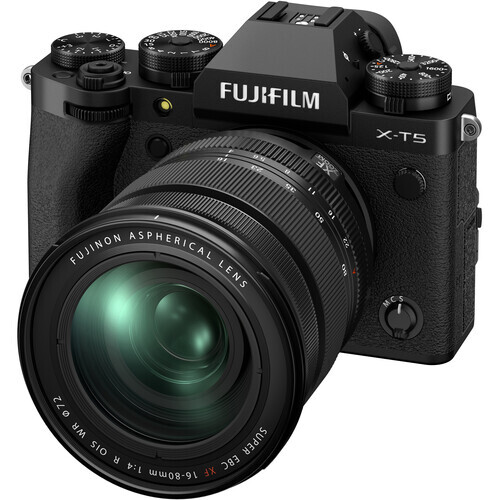
What compact systems offer instead is freedom. A Fujifilm X-T5 with a couple of small primes weighs less than a single full frame f/2.8 zoom. An OM System body with a 50–200mm f/2.8 lens gives you an 800mm equivalent setup you can carry in one hand. A Ricoh GR IV slips into your pocket and delivers images that rival what DSLRs were doing just a decade ago. The point isn’t that smaller systems are “just as good” as full frame in every single way. It’s that they change the experience of being a photographer. They lower the barrier to entry not by being cheap, but by being accessible, ergonomic, and easy to integrate into your actual life.
And that experience matters. You’re more likely to carry the camera that fits your bag, your hand, or your pocket. You’re more likely to experiment with a system that doesn’t feel like a burden. You’re more likely to actually make images when the gear you own doesn’t demand a special trip or a cleared schedule. In practice, the best camera isn’t always the one with the best specs; it’s the one that’s actually with you, ready to translate your intent into a frame.
The Narrowing Gap
Another reason compact systems are thriving is that the technical gap between them and full frame has shrunk dramatically. Ten or fifteen years ago, you could easily spot the difference in files. Smaller sensors suffered from noisy shadows, banding at high ISOs, and less dynamic range. Those differences were real, and they gave weight to the argument that if you were serious, you had to shoot big. But sensor design has advanced to the point where the differences now require close inspection or extreme conditions to matter at all.
An APS-C sensor today offers the kind of resolution and image quality that professionals would have envied in their full frame cameras not long ago. Micro Four Thirds, once dismissed as “too small,” now produces clean, detailed results up to ISO 3200 or even 6400. And the Ricoh GR IV, with its compact APS-C sensor, delivers files that can withstand heavy editing and large prints despite living in a pocketable body. The gap is no longer about what’s possible; it’s about how often you really need the last 20 percent of image quality.
For the vast majority of photographers, the honest answer is: not very often. Weddings, street photography, travel, casual portraits, documentary work: all of these can be shot beautifully on smaller formats. The obsession with full frame has always been more about status and marketing than necessity. If you actually put prints from a GR IV and a Sony a7 IV side by side, most viewers wouldn’t be able to tell which came from the “serious” camera. What they would notice is that the smaller camera got the shot at all, because it was there when it needed to be.
Portability as Power
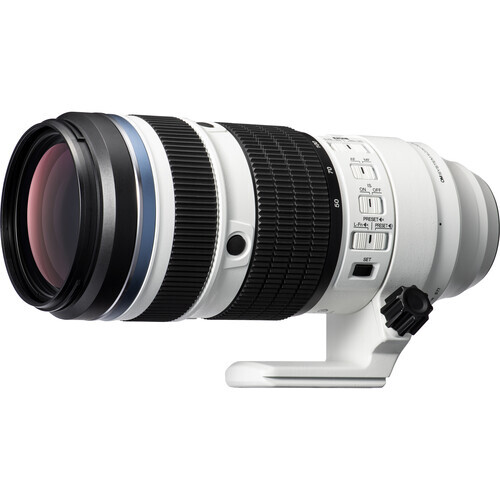
Think about what OM System is doing. The 50–200mm f/2.8 IS PRO is a lens that doesn’t exist in any other system: the reach of a 100–400mm equivalent, the speed of f/2.8, and the weight of a mid-size zoom. Add a 2× teleconverter and you’ve got an 800mm equivalent setup that weighs less than many full frame 70–200mm lenses. That’s power that you can actually use in the field, not just brag about online. It is the difference between hiking ten miles into the backcountry with a telephoto and leaving the lens at home because it’s simply too heavy.
Fujifilm takes the same philosophy in a different direction. Its X100 series has become a cultural icon, with the X100VI impossible to keep on store shelves. Why? Because it makes people want to shoot. It’s light, it’s stylish, and it feels like a camera you want to pick up every day, not just drag out for weddings or client work. The portability isn’t just physical—it’s emotional. It frees you from the feeling that photography always has to be a chore. The fact that it also delivers stunning files is almost secondary to the way it makes people fall back in love with the act of taking pictures.
Then there’s Ricoh, with the new GR IV. The GR line has been quietly building one of the most devoted fanbases in photography. The formula is simple: pocket-sized body, large APS-C sensor, fixed prime lens, and one of the best shooting experiences on the market. The GR IV pushes it further with a new sensor, faster autofocus, and refinements that keep it at the top of the compact class. For street photographers, travelers, or anyone who wants a camera that disappears until the decisive moment, it’s unmatched. Its power is precisely in its smallness. It’s always there, ready to capture the moments full frame misses because the gear stayed at home.
Smaller Systems, Bigger Ideas
One of the reasons compact systems feel so exciting is that they’re willing to experiment. OM System’s computational features, like Live Composite, Handheld High-Res, and Pro Capture, turn technical challenges into creative tools. Fujifilm’s film simulations make shooting JPEGs cool again, prioritizing character and emotion over sterile perfection. Ricoh’s Snap Focus mode, a simple innovation, has become beloved by street shooters who want instant response without fuss. Each of these ideas speaks to a philosophy that values creativity over conformity.
These ideas aren’t about competing with full frame on sharpness or dynamic range. They’re about expanding what cameras can do. They make photography playful again, lowering barriers and encouraging experimentation. They remind photographers that the craft isn’t just about technical excellence; it’s about seeing differently. When your camera gives you tools that make previously complex techniques simple, you’re free to think more about vision and less about settings. That is a different kind of innovation: less about brute force, more about imagination.
Cultural Shift: Fun Over Flex
Photography has always had a status element—gear as identity, gear as flex. A giant white Canon telephoto or Nikon’s gold-ring glass sends a message: I’m serious, I’m professional, I belong. But in an era where even entry-level cameras can produce stunning results, that flex is starting to look dated. What matters more is whether your camera makes you want to go out and shoot. Owning the latest full frame flagship might feel good, but owning a camera you can’t wait to carry feels better.
In that sense, compact systems are redefining what “serious” means. It’s not about the size of your sensor or lens. It’s about the seriousness of your intent and your willingness to put yourself in situations where images happen. Smaller gear makes that easier. And in many cases, easier means better. It means the best camera isn’t the one that looks most impressive in a lineup—it’s the one that’s invisible until you need it.
The Smartphone Factor
There’s another reason compact systems make sense in 2025: the smartphone. Everyone is used to having a small, powerful camera in their pocket at all times. The gap between smartphone convenience and full frame bulk has never felt wider. Compact systems like the GR IV or Fujifilm’s X100VI live right in that gap. They offer a dramatic upgrade in image quality and control while keeping the size and simplicity that smartphone shooters already love. They feel like natural extensions of habits people already have.
This is where full frame struggles. You can’t shrink a 24–70mm f/2.8 into something pocketable. You can’t make a 70–200mm f/2.8 weigh under a kilo. Smartphones have trained people to expect portability, and compact systems are mostly the only dedicated cameras that deliver it. Instead of trying to compete with phones by being bigger and bulkier, compact systems compete by being better at being small. That is a subtle but powerful repositioning—stop trying to be a replacement for the phone, and instead become the next level above it.
That positioning matters. It makes them appealing not only to professionals looking for a second body, but also to enthusiasts who want to step up from smartphones without giving up convenience. It’s a bridge that full frame can’t really build. And it ensures that compact systems don’t just survive—they thrive by being what the smartphone cannot: small enough to carry everywhere, but powerful enough to create images that stand apart.
The Provocation
None of this is to say that full frame is irrelevant. It remains the standard for maximum image quality, and for certain kinds of professional work it’s still indispensable. But image quality isn’t the only story. In fact, it may no longer even be the most interesting story. The cameras that excite people in 2025 are often smaller, not bigger. They’re compact, lightweight, and full of creative tools that full frame rarely bothers with. And the truth is, they’re making photographers fall back in love with the act of shooting in ways that megapixels never could.
The provocation is simple: in an era where gear is already more capable than most photographers need, the most valuable quality a camera can have is the ability to be there when you need it. Compact systems excel at that. They’re not the “budget alternative” anymore; they’re the fun, adventurous, inspiring option. And in the long run, that may be what matters most. Because photography is not about the gear you could use in ideal conditions, it’s about the images you actually make in the real world.
Smaller might not be better in every technical sense. But it might be better in the ways that count: in getting people out the door, in making photography enjoyable, in opening up creative possibilities. If the future of cameras belongs to systems that are lighter, smarter, and more approachable, then compact systems aren’t just alternatives. They’re the main event.



Join the Fstoppers community for free
-
Post comments and join in the discussions
-
Browse the site ad-free
-
Share your work and get featured in the community
-
Compete in the photo contests for fun and prizes
38 Comments
My first DSLR was an Olympus E500 so crop factor and smaller than full frame bodies of the same time, then went to Canon 60D, again crop factor and smaller body than 5D's etc, then went to full frame with a Canon 6Dmkii...a few years ago I bought a Fuji X S10 to use as a carry around camera because the DSLR and lenses were getting to be too heavy and bulky...the image quality is fantastic and the smaller size and weight suits this rapidly ageing old man...at first I only bought one lens (16-80mm f4) as it was purely to be my walk around "fun" camera...now I have 3 lenses...my telephoto (70-300mm) with a 1.4x teleconverter on it gives me more reach and weighs much, much less and takes up way less space than my 6Dmkii with my 70-200mm with a 2x teleconverter on it. When I pick up my Canon 6Dmkii with any L series lens I get a surprise as to how heavy it actually is! My Fuji comes with me when I walk to the shops, go for a bushwalk or just sightseeing.
I've earned my living for over four decades as a wildlife and nature photographer. Back in 2015 I got serious about trying MFT cameras. I've now been shooting with them full-time since 2017. The OM System 150-400mm made virtually all issues with MFT evaporate. Thanks for sharing your thoughts on what OM System is doing Alex. It really is a viable system for almost all types of photography.
Agree with small cameras. Thick cameras( more than 1.8 inces with lens) are just as uncomfortable to carry around s their larger brothers.. The best form factor among large sensor cameras is canon G9X ( NOT G7X!) . Similarly among the large sensor Sony cameras it is hard ot beat rx100 series cameras( NOT RX1). The best camera is one that gets used during outdoor activites and can slip into a shirt , coat or pant pocket. Looking forward to trying the Yashica city300 with a new gneration DAG-HDR sensor and f1.8 lens
Yes, smaller sensors have become better - but so have full-frame sensors. So the gap is still "large" - the real question is does the user (or his/her audience) care.
But it's delusional to think FF and medium format, etc, aren't any better than smaller sensors - it's simply a fact that they are. I think it comes down to color depth and dynamic range - which smaller sensors can NEVER match.
The key, sadly, is to own more than one sensor size - smaller for travel and grab-and-go, and larger for when image quality really matters.
And anyway, a small prime on a small FF body really ain't that much larger than a smaller-sensored camera.
Having the right sensor for the right application is important. I have FF and APC Nikons, sharing lenses. Sports and birding with the Z50ii, low light stills with the Zf, landscapes and architecture with the Z8. I still may add the Fuji X-E5, to get an APC with IBIS to fit in my pocket. They each do something different very well.
The OG Sony A7 weighed 474g, ten years later the OM-1 II clocked in at 599g (both with their respective batteries and media). Cameras have been getting bigger over the years it seems like, even the “small” ones.
I’m a bigger person, not huge but average big, and I’d much rather hand hold the OM-1. My little M6 Mark II was so small I had to get a SmallRig grip for it just so I could hold onto it properly, same with all my full frame Sony bodies up to and including the A7RV.
I don’t think “small” is the generic benefit it’s often said to be. It’s certainly cost me extra $$$. But that’s why there should be different types of cameras: some people are small, some people are big, some are stronger than others, some have different needs, etc.
The cost of smaller cameras is increasing along with their full frame counterparts, especially as popular features are added. For the casual user or photography hobbyist these smaller cameras makes sense for travel street, and general snapshot photography more than a smartphone. For professionals or avid hobbyists shooting studio or outdoor portraits, landscapes, or other commercial uses, full frame or medium format offers many advantages although it will most likely come at a higher cost. Another factor in the mix is hybrid video technology. These days you hear more discussion of camera video capabilities than still imagery and many want video features in smaller footprints.
I personally believe that, to take a photo, you must first have a camera with you. Any camera will do! An excellent photo taken on a phone camera is still excellent. A poorly composed photo taken with a full frame sensor is just a poorly composed happy snap.
Competency, with composition, lighting, focus and the exposure triangle will produce memorable photos regardless of the equipment used.
We are force to become familiar and to try and master overly complex camera settings. Bird focus detection! FFS! I shoot landscapes and I do not need 8k video.
Select the camera/lens combination that suits you. Take it with you and keep an eye out for that fantastic photo moment that keeps us all out there taking pictures.
This article would become of more practicable use, if you added a table of comparable systems with vital statistics. Weight especially with equivalent FoV for respective Lenses.
I want to compare the OM options for wildlife, birding especially, against the prominent choices in the Nikon Ecosystem:
Nikon Z50II - 550g
Nikon Z6III - 760g
14-30 f4S - 485g
24-120 f4S - 630g
50 f2 Macro Z - 260g
70-180 f2.8 Z - 795g
300 f4E PF - 755g
500 f5.6E PF - 1460g
FTZ II adapter - 125g
TC14 III - 190g
ZTC14 - 220g
100-400 f4.5/5.6S - 1435g
180-600 5.6/f6.3 - 2140g
400 f4.5S - 1250g
600 f6.3S PF - 1390g
800 f6.3S PF - 2385g
I appreciate the work it took to collate that information! Not sure why Lawrence doesn’t.
Thanks. There are also many competitively light and compact FX lenses available in shorter focal lengths.
Image quality in lowlight is an important criterion, conferring the extended window of pushing the sensor gain to a high ISO if needed. FX has significant advantages here, and over the past years there are more and more lighter FX lenses, which challenge the advantages of smaller sensor formats.
I decided a couple of years ago to invest primarily in FX glass, with the best of both worlds in full frame DSLRs, as mirrorless cameras continue to improve. The EXPEED7 Nikon's have validated this strategy.
The Nikon DX cameras (450g Zfc or 550g Z50 II) offer the useful option of a compact camera if it's needed to pair with a light FX lens kit. The singular exception might be to add a APC UWide. As you point out above, this questions the relevance of a 600g M43 camera
You're onto something here:
"Camera marketing has hammered home the idea that “serious” photographers need the biggest sensor"
and
"The Myth of Full Frame Supremacy"
But, by continuing to refer to 35mm format as "full frame", you have contributed to the perpetuation of this myth. 35mm format is no "fuller" than any other. The only frame that is not "full" is the one that has been cropped AFTER capture.
The biggest myth is that m43 is always small.
The 50-200 is a 400mm crop, not 800 and not an equivalent. It's still a 50-200, not 100-400, and it weights only a few grams less than a FF 70-200 2.8. It also costs $4000.
If you want tiny on a budget. Youre better off in m43 or apsc with a travel lens.
If you want telephoto or have a high budget..you're still better off in FF.
“The superiority of full frame is no longer unquestioned. It is conditional, dependent on a specific kind of shooting that most people rarely do.”
Hasn’t it always been the case. The right tool for the job, small package with long reach m43. Low light, wide angle shallow dof , take full frame. Ultimate image quality dynamic range and colour depth , take medium format. And for me smaller isn’t better, I like something substantial that fits my hand. For someone else this could be the opposite.
As a full frame shooter I don’t feel superior, but I often get the idea that some M43 shooters suffer from the Napoleon complex
I have used APSC exclusively and never had anyone challenge the format by saying that's obviously an APSC. I have been published nationally and won several awards.
I still use my R7 now with all EF/EF-S lenses and now FD and FL lenses. I have found IBIS to be a bigger help over format. Hiking is so much easier with the new mirrorless R7 even over the 7D. FF is too heavy and big for no appreciable gain.
You can make all the arguments you want about the merits of different cameras and formats, but 'better' is determined by each photographer based on their wants and needs. End of story.
I agree with the sentiment, but ending a claim with "period" or "end of story" always strikes me as a kid stomping his foot, an attempt to forestall any challenge and assert unwarranted authority.
You don't need to enforce agreement. Simply sharing your idea is enough.
No authority implied in my use of "end of story". It's just my opinion that people who are arguing about which is 'better' are missing the point. Maybe you missed my point that more words and arguments are pointless.
"End of story" implies "debate over" and no further discussion will be tolerated.
Surely arguing over sensor size is a pretty pointless debate, especially to rehash this age old debate in 2025. Choose which camera (and sensor) suits you and the rest is meaningless. Who cares about debating which is best. That will only ever be an individual opinion with no one-size-fits-all answer and not exactly a productive discussion anyway. I think ‘end of story’ is apt for this pointless debate.
We're not "arguing over sensor size".
How you took my words is on you. You cannot tell me what I meant.
I fully agree. When I bought a full frame 5d in the early 2000s, it felt like a real step up from my 35mm film camera in both image quality and convenience. When I changed to an APSC camera recently, it far outperformed my 5d. I accept that there are people who need more, but APSC is plenty good enough for me, and provides better quality than any 35mm film camera from the 20th century. I also enjoy photography much more now that I can fit three lenses in a hip bag rather than a heavy rucksack.
Paradoxically, perhaps now that medium format cameras are becoming more affordable, it will encourage people to be more open minded about what size sensor best meets their needs.
I go from one extreme to the other because Im a Fuji shooter and Fuji don't make a full frame camera..
When I'm on the tools doing a gig it's the gfx because the image quality is so good and the dynamic range is absurd. Also the flexibility with the files. But if I just want to go out for an afternoon of bush walking I grab the xt5 with a 23 F2 on it and I'm quite happy and I don't experience any fear of missing out because I don't have my gfx with me ..they both have their place.Work GFX Play XT5
All of Fuji's cameras shoot full frames. None of them are 35mm format.
When I shoot portrait jobs on my Nikon Z6III, and the 35/50/85, my setup is the exact same size as what I used to have with the E-M1mkII and the f/1.2 Pro lenses.
A Z6 and the 1.8 primes smoke it.
Micro Four Thirds since Olympus, has been the leader in computational photography. Under OM, new great lenses have been added which will only enhance options available to Micro Four Thirds users. Now I am waiting for the new Pro Camera with a larger sensor to take advantage of all the great glass in the OM lineup!
I guess you mean a sensor with more megapixels, a larger sensor will not be covered by the image circle produced by OM lenses
Thats why the a7c line from sony is so brilliant! Ever since I sold my a7IV and 24-70 plus 70-200 GM setup, I carry my camera everywhere. My lens setup: Sony 16mm f/1.8 G, Sigma 24mm f/3.5, Sony 35mm f/1.4 GM, Sony 50mm f/2.5 G, Sigma 90mm f/2.8.
Do we seriously need yet another article arguing the case for smaller sensors? This has been done to death on social media over the years and I don’t see anything new to add or why it even needs discussing in the first place.
Maybe you and I don't need it, but new photographers are joining the club all the time, and they're not likely to look up old articles on the topic.
Another thought provoking article.
I'd be interested in an article comparing camera specs to human capabilities.
For example the Hasselblad 2XD offers 16 bit colour which over the 3 bands R,G and B can theoretically produce 281 trillion colours. The average human eye is considered capable of distinguishing between 1 and 10 million colours some exceptional individuals are thought to be able to see upto 100 million.
That’s just one example, for high resolution colour vision the human eye has 6-7million cones or is a 6-7 megapixel sensor.
“That’s just one example, for high resolution colour vision the human eye has 6-7million cones or is a 6-7 megapixel sensor.”. This is not how the eye works, you only see a small portion of your vision in focus, your eye “scans” all the time and your brain builds up the image. That why you don’t see the gorilla in the experiment where you have to watch people passing a ball and a gorilla walks by. Also the deeper colour bit depth makes for smoother transions in colours.
At least that’s what I have learned
I agree with you up to a point.
The modern camera sensor can 'see' way past what the human eye can. For example Infra red and Ultraviolet, it's why camera specs are plateauing. Things like 8k or 16k are slow in take up, simply because the costs out weigh the benefits that can be quite literally seen.
405 lines televisions, to 605, to 1080p to 4K are clearly discernable from the average user's viewing distance.
Check your math. Apply "equivalency" to focal length and aperture. 200mm f/2.8 ≡ 400mm f/5.6 ≡ 800mm f/11.
That only applies to apparent DoF. You still get the exposure benefits of being able to increase shutter speed or shoot at a lower aperture for the same exposure time. Sometime more apparent DoF at the same exposure can be a benefit.
Someone once did their maths and told me, someone aged 80 at half average height was the equivalent of someone aged 160 at the average height, and aged over 200 if they were a basket ball player.