
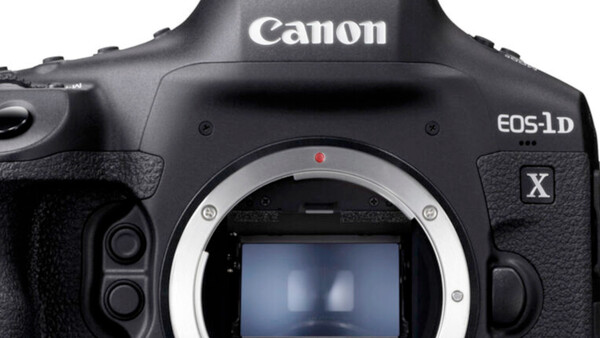
The news landed with the weight of a supertelephoto hitting the studio floor: Canon has discontinued the Canon EOS-1D X Mark III. Just like that, after 35 years of continuous evolution, the flagship DSLR line that defined professional photography for generations has reached its terminus. The last units are shipping from warehouses, repair parts are being stockpiled, and Canon's focus has irrevocably shifted to the mirrorless future.
My heart sank when I read the news on Canon Rumors.
But this isn't a eulogy. This is a celebration.
For those of us who've pressed our eyes to these viewfinders through Olympics and conflicts, weddings and wildlife, storms and championships, the 1D series represents more than camera bodies. These machines are the steel and magnesium manifestation of photography at its most uncompromising. They're the cameras that never said no, never hesitated, never failed when failure wasn't an option.
Genesis: The Birth of a Legend
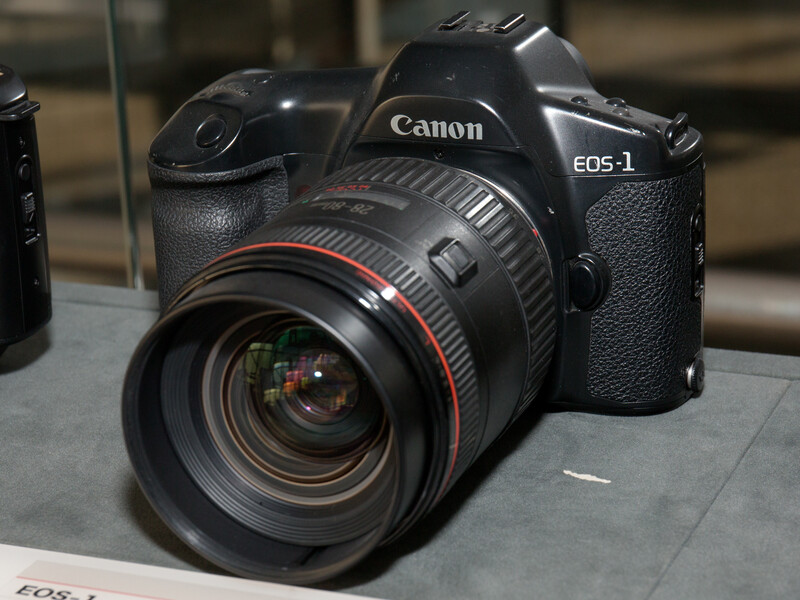
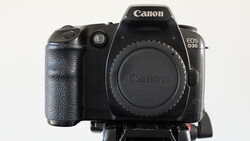
The story begins in 1989 with the original Canon EOS-1, a film camera that established Canon's professional credentials in the autofocus era. Canon had experimented with professional digital through collaborations with Kodak—the Canon EOS D2000 in 1998 and Canon EOS D6000—but the real revolution came in 2001 with the Canon EOS-1D, Canon's first fully in-house designed professional digital body, which came the year after the D30, their first in-house DSLR ever. At 4.15 megapixels and $4,999, it was both primitive by today's standards and revolutionary for its time.
What followed was Canon's systematic domination of the professional market. Canon pressed forward with regular, meaningful updates that kept professionals locked into the ecosystem. The 1D became the camera you saw at every major sporting event, its distinctive shape and sound as much a part of the professional photography landscape as the white lenses attached to it.
The Golden Age of Evolution
The Mark II Era (2004-2007)
The Canon EOS-1D Mark II and its higher-resolution sibling, the Canon EOS-1Ds Mark II, represented the maturation of digital. At 8.2 and 16.7 megapixels respectively, they offered enough resolution for serious print work while maintaining the responsiveness professionals demanded. The Canon EOS-1D Mark IIn's improved LCD was revolutionary for its time. We could finally trust what we saw on the back of the camera.
These were the cameras that proved digital wasn't just convenient; it was better. The 1Ds Mark II delivered exceptional image quality with its 16.7-megapixel sensor, though contemporary medium format backs from Phase One and Hasselblad still held clear advantages in resolution, dynamic range, and bit depth. Still, for 35mm shooters, it was a revelation.
The Mark III Breakthrough (2007-2009)
The Mark III generation brought dual DIGIC processors and Live View that actually worked. The Canon EOS-1D Mark III's 10 fps burst rate and Canon EOS-1Ds Mark III's 21 megapixels pushed the boundaries of what we thought possible. However, the 1D Mark III faced significant challenges. Canon later acknowledged AF sub-mirror design flaws and some weather-sealing issues that damaged the camera's reputation. Canon's response in fixing the issues and offering repairs showed their commitment to professionals, even if the initial problems shouldn't have existed.
The Mark IV Maturation (2009-2012)
If the Mark III generation was about pushing boundaries, the Canon EOS-1D Mark IV was about refinement. The 1D Mark IV brought respectable video capabilities to the flagship line while maintaining the stills performance pros demanded. Network connectivity was available through the optional WFT-E2/E2 II wireless file transmitter, though built-in Ethernet wouldn't arrive until the 1D X. These weren't just cameras anymore; they were becoming nodes in a global content network, even if the connectivity required additional accessories.
The Modern Titans: The 1D X Dynasty
1D X (2012): The Unification
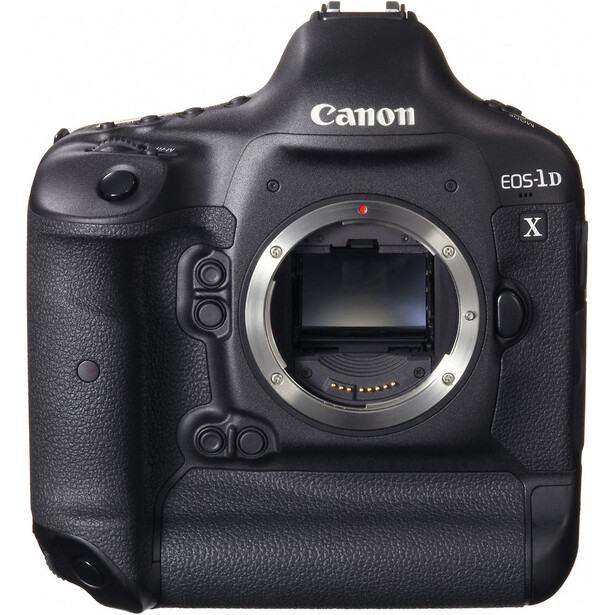
Canon's decision to merge the speed-focused 1D and resolution-focused 1Ds lines into a single Canon EOS-1D X was bold and initially controversial. At 18 megapixels, it had less resolution than the 1Ds Mark III. But Canon was right: the 1D X proved that 18 exceptional megapixels beat 21 good ones and that most professionals would rather have one incredible all-rounder than two specialized bodies.
1D X Mark II (2016): The Hybrid Revolution
When I first picked up the 1D X Mark II, I knew Canon had created something special. The jump to 20.2 megapixels might seem modest, but combined with improved dynamic range, a solid improvement even if still trailing Sony and Nikon, it represented Canon making meaningful progress while maintaining their advantages elsewhere. And on the topic of that sensor, I'll maintain it had some of the best color rendering and highlight roll-off I've ever seen from a digital camera.

But it was the Dual Pixel AF that really showed Canon's innovation. Touch-to-focus that actually worked, live view that was finally fast enough for real use. These weren't gimmicks but genuine tools that expanded creative possibilities. I frequently used it to hold the camera above my head for different angles, trusting the touch focus to nail the shot.
The anti-flicker technology deserves special mention. Anyone who's shot under stadium lights knows the frustration of inconsistent exposures due to light cycling. The 1D X Mark II detected and compensated for this automatically, saving countless hours of post-processing and delivering consistent files even in the most challenging lighting.
In my work, battery life was extraordinary. I'd regularly shoot 2,000-3,000 images and return home with half capacity remaining. The 14 fps burst rate with an essentially unlimited buffer meant never missing the decisive moment. 14 fps sounds average in today's age, but the sound of a mirror slapping back and forth 14 times a second was truly stunning. Files showed remarkable latitude in post-processing, finally allowing Canon users the kind of shadow recovery that had been the domain of other systems.
1D X Mark III (2020): The Final Masterpiece
The Mark III arrived as Canon's mirrorless revolution was already underway, yet it proved the DSLR still had fight left. The Smart Controller, CFexpress cards delivering unprecedented write speeds, and deep learning AF that could recognize and track subjects with uncanny accuracy. This was Canon showing they could still push DSLR technology forward even as they pivoted to mirrorless.
The 5.5K raw video capabilities turned it into a genuine cinema camera, while improved weather-sealing and durability meant it could survive conditions that would destroy lesser cameras. It was, in every way, the ultimate evolution of the professional DSLR.
What Made Them Legendary
Tank-like Build Quality
Every 1D body was built to be extremely durable. The magnesium alloy wasn't just for show. These cameras survived falls from significant heights, submersion in rivers, and temperature extremes that would brick consumer cameras. The shutters were rated for 400,000-500,000 actuations, but many exceeded a million without failure.
I exposed my 1D X Mark II to the full gamut of Ohio's weather: rain, snow, sleet, graupel, hail, freezing rain, and every combination thereof. It never complained, never hesitated. The sealing was so comprehensive that I stopped worrying about weather entirely. While other photographers retreated to cover, 1D shooters kept working.
Ergonomics Perfection
Despite weighing well over three pounds, the ergonomics were sublime. Every control fell exactly where it needed to be. The vertical grip wasn't an add-on but an integral part of the design, with full control duplication that made portrait orientation shooting as natural as landscape. It's hard to explain how good the camera felt to hold in your hand.
The button customization was incredibly deep. Yes, it took three hours to set up initially, but once configured, the camera became an extension of your creative vision. The fact that you could link spot metering to your active AF point, enable safety shifts for exposure parameters, and create custom shooting modes for different scenarios meant the camera could adapt to any shooting style.
Speed and Responsiveness
The 1D series never made you wait. Shutter lag was essentially zero. Autofocus acquisition was instant. Buffer depths were vast. These cameras shot at speeds that made selective moments irrelevant, because at 14-16 fps, you could capture the exact millisecond you wanted.

The Photographers Who Defined Them (And Vice Versa)
Walk the sidelines of any major sporting event from 2001 to today, and the sea of 1D bodies tells the story. These cameras captured Michael Phelps' gold medals in Beijing, Usain Bolt's world records, countless Super Bowl victories, and World Cup triumphs that defined sporting history.
Conflict photographers trusted 1D bodies in the world's most dangerous places. The cameras' reliability wasn't just about getting the shot; sometimes it was about survival when embedded with military units or covering natural disasters.
Wildlife photographers pushed these cameras to extremes. The responsiveness meant catching the exact moment of a cheetah's acceleration, an eagle's strike, a bear's charge. The durability meant surviving salt spray on zodiac boats, volcanic ash in Iceland, and minus-40 temperatures in the Arctic.
But it wasn't just the extremes. Wedding photographers appreciated the dual card slots that meant never losing a moment. Studio photographers loved the color science that rendered skin tones with organic beauty. The 1D transcended genres because it excelled at everything.
The Culture and Community
The 1D created its own culture. The distinctive sound of that mirror slap at 14 fps became the soundtrack of professional photography. Online forums developed elaborate testing methodologies, pixel-peeping to degrees that would make scientists blush. The rivalry with Nikon's D3/D4/D5/D6 series pushed both companies to heights neither would have reached alone.
The used market for 1D bodies remains robust because these cameras don't die. A well-maintained 1D Mark IV from 2009 still produces professional results today. The longevity meant photographers developed relationships with their cameras measured in decades, not product cycles. You could see those relationships in the worn look around the corners of their cameras.
Rental houses built businesses around 1D bodies because they could handle abuse that would destroy other cameras. The white lens and 1D combination became visual shorthand for "professional photographer," a status symbol that actually meant something.
Technical Innovations That Changed Photography
The 1D series pioneered technologies we now take for granted. When Canon adopted Dual Pixel AF from the Canon EOS 70D (where it debuted in 2013) into the 1D X Mark II, it transformed professional autofocus from a necessary evil to a creative tool. The progression of high ISO performance, from the 1D's grainy ISO 3,200 to the 1D X Mark III's usable ISO 102,400, redefined available light photography.
The integrated vertical grip design, while pioneered by Nikon's F5 in 1996, was refined and perfected through the 1D series, becoming synonymous with professional bodies. The weather sealing protocols developed for the 1D series influenced every prosumer camera that followed. The color science, particularly for skin tones, set standards that competitors still chase.
Canon's approach to dual card slots, allowing overflow, backup, or separation of raw and JPEG, became the industry standard. The customization philosophy that allowed photographers to configure every button and function influenced user interface design across the industry.
The Transition: Why Mirrorless Won
Mirrorless is the future, no doubt. The mechanical complexity of a DSLR, with its mirror box and optical viewfinder, has inherent limitations. The 1D X Mark III's mirror mechanism, a masterpiece of engineering operating at 16 fps, had reached the physical limits of what moving parts could achieve.
What we lose is tactile. The optical viewfinder's direct connection to the scene. The satisfying mechanical dampened thump of the mirror. The simplicity of a machine that doesn't require constant power to show you the world. What we gain is possibility. Autofocus that can track eyes across the frame at 30 fps or faster. Exposure preview before you press the shutter. Video capabilities that rival cinema cameras. Size and weight reductions that matter on 14-hour wedding days.
My Time With the 1D Series
My relationship with the 1D began with skepticism about the Mark II's price and ended with the 1D X Mark II becoming the most reliable tool I've ever owned. This camera has been with me through weather events that had me seeking shelter while it kept shooting. It's captured moments at classical concerts where its silent mode was quiet enough to avoid the ire of patrons. It's survived falls, impacts, and conditions that had me wondering if I would survive.
The EF 85mm f/1.2L II USM lens, notorious for its temperamental autofocus, became usable at events for the first time thanks to the 1D X Mark II's AF system. The keeper rate improvement was so dramatic that a lens I'd relegated to controlled shoots became a workhorse.

But beyond specifications, the 1D gave me confidence. In situations where I had one chance to get the shot, I never worried about the camera. That mental freedom, that ability to focus entirely on the moment rather than the tool, is perhaps the 1D's greatest gift to photographers.
The Legacy Lives On
The 1D series' influence extends far beyond Canon. Every professional camera today, mirrorless or DSLR, carries DNA from the 1D line. The emphasis on customization, the integration of networking capabilities, the balance of resolution and speed: these are now industry standards pioneered by the 1D.
Canon's R system inherited the 1D's color science, ergonomic philosophy, and build quality. The R1's design clearly shows its 1D heritage, from the integrated grip to the control layout. The lessons learned from decades of 1D development inform every professional Canon camera going forward.
The used market will keep 1D bodies in professional hands for years to come. Their durability means we'll see them at major events well into the 2030s. Like the F-1 and F-4 film bodies that preceded them, 1D cameras will transition from tools to icons, still capable but increasingly cherished for what they represent rather than just what they can do.
There's already a growing movement treating DSLRs like film cameras" a deliberate choice for their rendering, their process, their mechanical nature. The 1D series, as the pinnacle of DSLR development, will likely become the most sought-after examples of this movement.
Thank You for the Memories
The 1D series was the perfect camera for its era. These cameras were built for a time when missing the shot meant missing it forever, when equipment failure in remote locations could end careers, when professional meant never having to make excuses.
That era hasn't ended, but the tools have evolved. Its successors will carry forward the 1D philosophy in mirrorless form. They'll be faster, more capable, more connected. They'll capture images the 1D could never achieve.
But they'll never have that mirror slap. That optical viewfinder. That sense of mechanical perfection that made every shot feel earned rather than given. The 1D series represents the apex of 150 years of mechanical camera evolution, the ultimate refinement of mirrors and prisms and shutters.
As I write this conclusion, I can hear my 1D X Mark II's shutter in my hed. The last titan has fallen not because it failed, but because it succeeded so completely that it cleared the path for what comes next. And while the next generation is here, it will always be missing something those behemoth DSLRs had.





Join the Fstoppers community for free
-
Post comments and join in the discussions
-
Browse the site ad-free
-
Share your work and get featured in the community
-
Compete in the photo contests for fun and prizes
13 Comments
The Canon 1DXIII, 5DIV, 6DII, and Nikon D6, D850, D780 really are the end of an era.
All 6 of those cameras are state of the art DSLR, and in the case of the D780 has feature parity with a Nikon Z6.
I'm not sure about the D850 being dead just yet; I know lots of people who still drive a D850, and Nikon is still selling the D850. Personally, I'm on mirrorless, but I do miss some of the benefits of the DSLRs, such as instant on from sleep and what feels like infinite battery life compared to mirrorless.
I agree though, they will die and no one other than Pentax seems interested in further innovating on a DSLR platform.
I have used Canon cameras for at least 45 years. with this news, when my 6D and my 5D Mklll die, I will probably go back to film for everything. I am not going to re-invest the thousands of dollars of lenses that I have back into lenses for the mirrorless cameras.
Uh....Canon makes an excellent adapter for EF lenses. Back to film? Really? Given the extremely limited selection, high prices for film and processing, and all the inherent limitation of film itself?
Good luck with that.
Indeed I've been adapting to 'EF' lenses for 3 or more years. The adapter has no glass, a good one has no problem with AF, and I have had no problems. My adapter is actually a Chinese brand called 'Xuerebs' (i was mistaken when I said it was Viltrox - Edited). You take advantage of new camera abilities with good-ole glass.
That’s an interesting take! Kind of an “end like you begin” situation. I hope film sticks around through these global economic troubles. I enjoy the constraints film gives compared to my digital stuff, all the quirky films out there remind me something of craft beverages. It’s fun to explore the different types.
I can buy enough film, and put it in my freezer to last a LONG time. I process my own. I have the bodies and the lenses still. And while there is an investment in film, chemicals are very inexpensive and the cameras are completely mechanical with no electronics and if the film is processed and handled correctly the quality is VERY good. The truth is I don't appreciate the planned obsolescence on the part of manufacturers. If they can make and adapter that will make my EF lenses work with the mirrorless cameras, then they could have put a camera mount on it that would accept the EF lenses. Canon has always been a system camera from the F-1's I have stored in my closet to the 1D and 5D series. Being told that when my 5D and 6D bites the bullet, as they are designed to do and that I will have to "upgrade" to the latest and greatest lens is just offensive. Like when Adobe moved from an ownership of the software,THAT I PAID FOR! to a subscription service only, and if I decide terminate my subscription I won't be able to use it any more feels a lot like black mail.
Im sure someone else will be able to explain the reasons better than I but the reason why your lenses wont fit is to do with the new shorter flange design of the mirrorless cameras.
It gives the designers greater design freedom not having to include all the bits and bobs for the mirror.
A shorter flange means the rear element of a lens can sit closer to the sensor. That lets lens designers build optics that are:
• Sharper in the corners
• Brighter (f/1.2, f/1.0 lenses become more practical)
• Smaller and lighter
• If Canon had kept EF’s long flange:
• RF bodies would have been unnecessarily thick (to match DSLR dimensions).
• They’d lose the main optical/design benefits of mirrorless.
• The new lens line would be stuck with the compromises of EF glass.
That said all your lenses will work fine with the Canon adapter.
It’s called progress.
I understand those things and that the adapter will work. I, however, have always been averse to having anything between the lens and the camera. In this case I understand that there is no glass in the converter. However, the converter will change the actual focal length of the lens and it will change the actual maximum aperture of the lens. Those changes may be very minor, but they are changes. Maybe I am too much of a luddite, and to set in my ways.
I just bought a new Canon 1DX Mark III on clearance in 2024. It literally changed my life switching from Nikon. I hope to keep mine and my EF 100-400 going forever. They really are cameras built like tanks.
I am not sure any of the mirrorless cameras but for their video abilities come close to the D850. Canon was great but D850 remains my all time favirite.
So much time I've spent behind the wheel of a 1D series, starting with the IIn that I borrowed from the cage in grad school, to the IV, X and X II that I owned. Great cameras that I thought you'd have to pry from my cold, dead hands, but technology marches on and I'm enjoying my R6 Mark II's these days.
I love this historical account of Canon's flagship series! Thanks so much for such a useful - and nostalgic - article.