
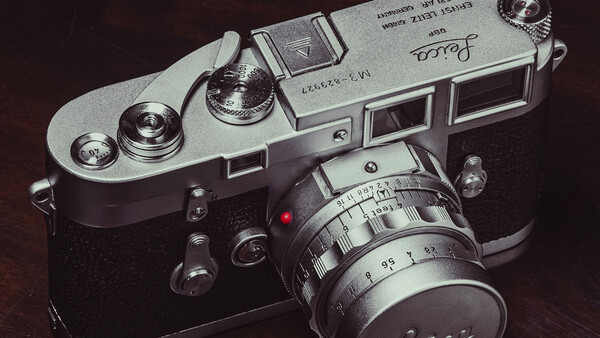
Owning a Leica is merely a dream for many. Their gorgeously designed and incredibly well-made cameras and lenses are expensive. Like a Rolex watch, they’re an indulgent luxury item, and many of us simply cannot justify the cost. If you’ve perused a Leica Store, you’ve probably discovered a new Leica M11 paired with a little APO-Summicron-M 35mm f/2 ASPH will cost you just shy of $20,000.
Why on earth would someone want to spend so much money on a camera system? Well, it’s not typically for image quality. Many cameras costing much less can give you a similar level of quality and, at the same time, offer more functionality and features that make getting a great image so much easier than a Leica. Leica lenses are renowned for their sharpness and rendering characteristics. But a Leica camera, well, that’s all about heritage, superior build quality, and user experience. And for many—let’s be honest—that red dot is a status symbol.
One could argue purchasing a Leica is an emotional and often irrational decision. You buy a Leica because of the way it makes you feel. As someone who has just purchased their second Leica, I speak from experience. I knew buying a second one made no rational sense, but I bought it anyway. Leica is like a cult, or getting into a hardcore drug habit. You become an addict.
Here are my five top picks—relatively affordable Leicas—which will act as gateway drugs and draw you into a whole new photographic world of addiction. Read with caution, and please note, I can take no responsibility and cannot be held liable for your actions once you’ve read about these cameras.
I’m going to share some thoughts from a photographer’s perspective, in addition to a collector’s perspective. Why? You might want to consider investment or resale potential down the road, should your wife threaten to divorce—frustrated by your all-consuming attention toward your Leica and not her—and give you an ultimatum: “It’s me or that camera.” Tip: Buy her flowers once in a while. That will keep her happy and give you something to photograph indoors if it’s raining.
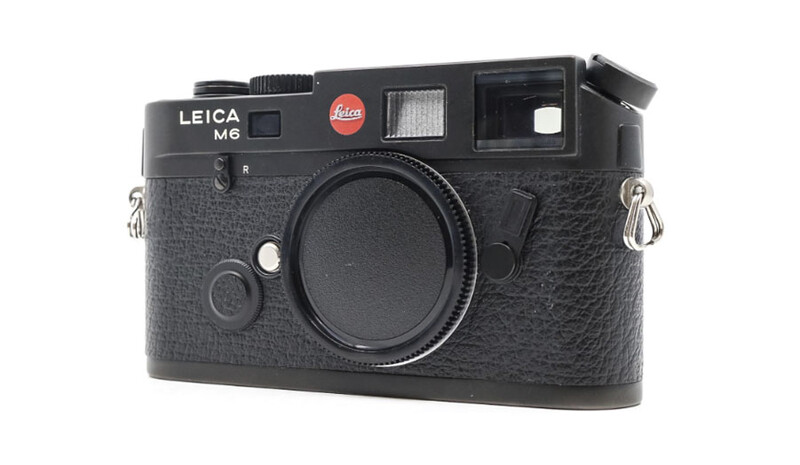
M6 (1984–2002, 2022 — Analog)
The hipsters’ film camera of choice. Because of its rapid rise to become a status symbol for those wearing cowboy hats and covered with tattoos, prices have shot up in recent years.
This is my least favorite Leica. I don’t like the red dot logo and the word “Leica” in big white capitals on the front of the camera, along with the model name. There’s something slightly pretentious and tacky about that, in my opinion. But cosmetic preferences aside, the M6 is the most modern iteration of the M film camera legacy and a decent performer.
The M6 is made with lighter, cheaper materials than the earlier models. A magnesium alloy replaces brass for many iterations of this model, and the same goes for many of the internal parts. There’s even a plastic cog or two, but let’s not tell the hipsters that; they’ll spill their special blend coffee.
There have been a few variations of the M6, including earlier models with an optional—and better—0.85 viewfinder, and later models with a 0.72 viewfinder. The re-release in 2022 was based on the MP, so some would say it’s not a true M6. Although it does have brass top and bottom plates, the plastic ISO dial is disappointing.
Photographer’s Perspective
-
The most versatile film M for everyday shooting, because of the convenient built-in light meter.
-
The bright viewfinder is easy to use with lenses ranging from 28mm to 135mm.
Collector’s Perspective
-
It’s the last “classic” metered mechanical M and therefore desirable.
-
Strong demand is keeping the prices high.
-
Limited editions—like the titanium and platinum versions—are especially collectible.
-
The best M6 in my opinion is the limited edition M6J issued in 1994, which was made to look like an M3.
Price: $3,200–$4,500+
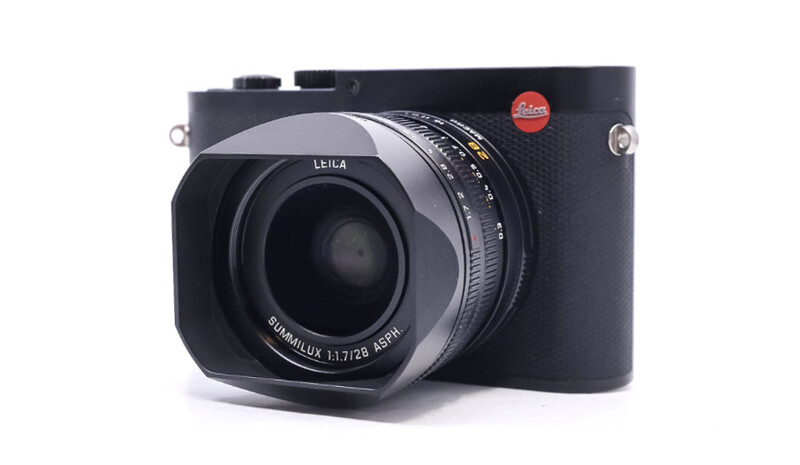
Leica Q (2015 — Full Frame Fixed-Lens Digital)
This is by far the most affordable and best-value digital Leica camera ever made. It’s also the original gateway drug. If it wasn’t for my love of monochrome sensors, this is the camera I would have bought.
It has a 24 MP sensor, which really is all you need for most photography. Paired with the incredible and unrivaled 28mm f/1.7 Summilux lens, this 10-year-old full frame camera is as good as anything being made today.
Photographer’s Perspective
-
The perfect full frame small travel camera.
-
Cheaper than the Q2 and Q3.
-
The built-in EVF and macro mode make the Q more appealing than a digital M for many photographers.
-
The only real drawback is the lack of weather sealing that can be found on the Q2 and Q3. If you’re looking to buy one, make sure no dust has found its way inside and onto the lens elements.
Collector’s Perspective
-
The Q is more of a user’s camera, although limited editions like the “Snow” or “Khaki” are desirable.
-
The Q holds its value well, despite Q2 prices dropping since the Q3 versions were launched.
Price: $1,900–$2,500
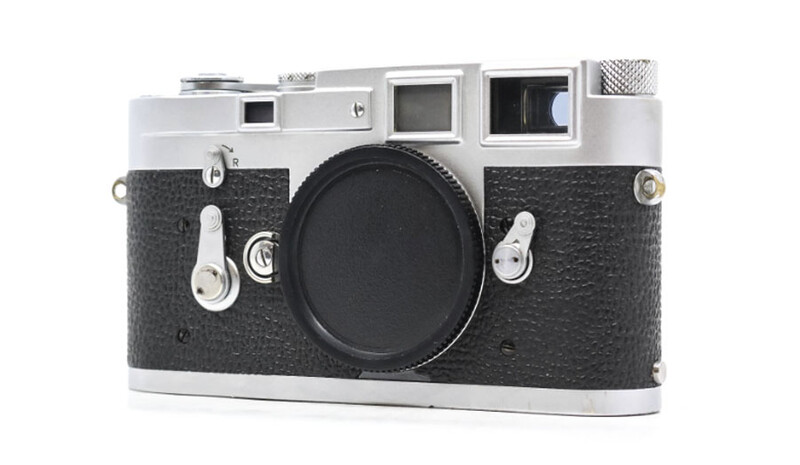
M3 (1954–1966 — Analog)
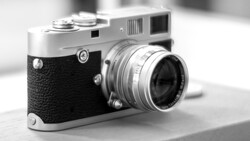
Arguably, not only the most important camera in the history of Leica, but in the history of photography. Its innovative design—including a combined viewfinder/rangefinder allowing for faster, accurate focusing, the new bayonet M mount, and quiet and reliable mechanical design—became an instant favorite with fine art photographers and photojournalists.
The M3 feels solid, well-balanced, and reassuring to hold. It’s like a fine vintage Rolex or Steinway piano. It’s the best quality Leica ever made. There was no compromise on components, many of which were brass and all hand-assembled by true craftspeople.
Photographer’s Perspective
-
The camera has three focal length frames in the viewfinder—50mm, 90mm, and 135mm. Hence the “3” in M3.
-
The 0.91 viewfinder is the easiest to use of all Leica M cameras and offers a wonderful experience for 50mm shooters in particular. Cartier-Bresson thought so.
-
The only drawback for some is the lack of ease using wider lenses. You can get a 35mm Summicron f/2 lens with “goggles,” or use an external viewfinder for even wider focal lengths.
-
With no built-in light meter, there are no electronics or batteries required. You need to learn the Sunny 16 rule, which doesn’t take too long to master, or buy an external light meter.
-
M3s often require servicing, particularly if they’ve been sitting around unused for decades. If you’re serious about owning and using an M3, I wouldn’t recommend just a vague “CLA” (clean, lubricate, and adjust); I’d go for a full service overhaul from a Leica expert.
-
The M3 has better build quality than any other Leica. It’s so well built it will take a lot of abuse and will outlast its user.
Collector’s Perspective
-
The Leica M3 is a highly desirable and sought-after camera. Its superior engineering and build quality, timeless design, and historical significance mean a mint condition M3 can fetch big money.
-
Early double-stroke models, particularly in rare black paint finish, command huge premiums.
-
Unlike other models that often ride a trend for a while, the M3 will continue to be a desirable collectible camera.
Price: $1,200–$3,000+, dependent on service records and condition. Mint examples with box and paperwork—even silver versions—can sell beyond $15,000.
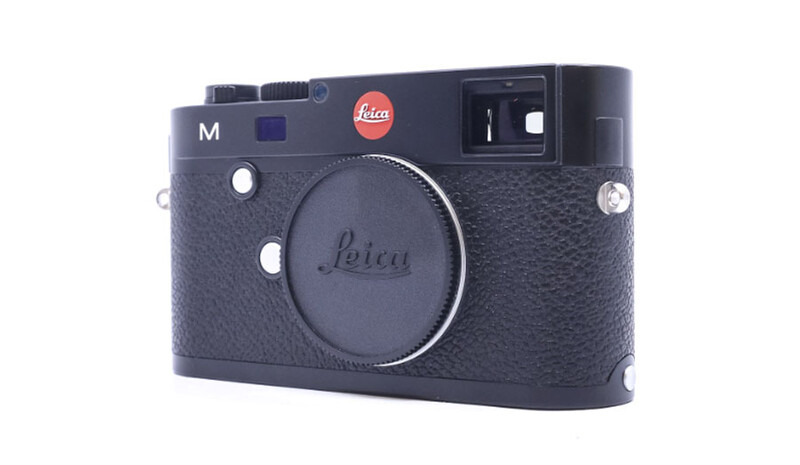
M240 (2013–2019 — Full-Frame Digital)
The Leica M (Typ 240) is a bit of a black sheep in the digital M camera lineup. It’s the only model in the M rangefinder line to have video capabilities. You don’t buy an M for video, so after this model, they didn’t bother adding it again.
The M240 is fatter than all the other Ms, because of the added hardware and large battery.
Photographer’s Perspective
-
First M to have a 24 MP CMOS sensor, which gives a lovely, rich, and distinctive image quality.
-
First model to have Live View.
-
It has a large battery and is therefore a heavier camera than other M models, but it allows for extended shooting, which many photographers appreciate.
-
The M240 is a very capable camera with more than enough pixels, providing a very affordable entry point into the modern Leica M system.
Collector’s Perspective
-
This is not a particularly desirable camera with collectors, and prices have dropped over the past couple of years.
-
However, the M-P Safari edition holds good value, as do the Edition 60 and the titanium box set. Only 333 units were produced of the latter.
Price: $2,400–$3,300
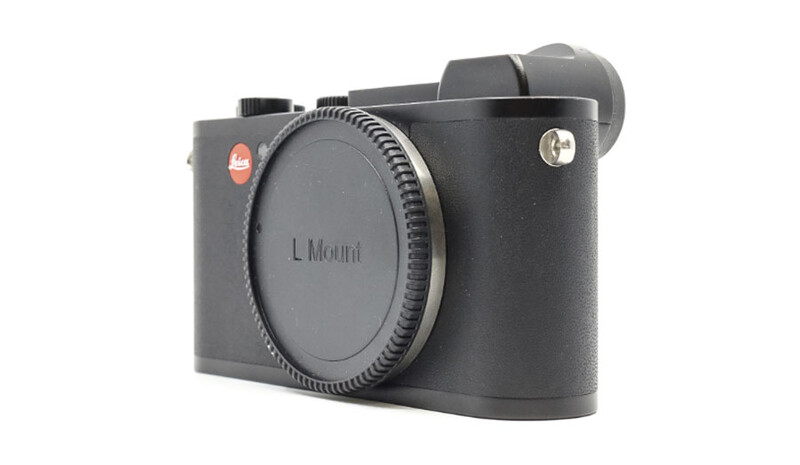
Leica CL (2017–2022 — APS-C Digital)
There is an analog CL that came out in the 1970s, but we’re talking about the digital CL here: a small APS-C camera with a respectable 24 MP sensor. Despite doubts from some, it still has an all-metal, premium-quality Leica feel to it.
This little camera also shoots 4K/30 video.
The Leica CL is comparable to Fujifilm X100 series cameras and is an often overlooked alternative for someone who is looking for a small camera but wants the flexibility of interchangeable lenses over the fixed lens on the X100 series.
Photographer’s Perspective
-
It’s smaller and lighter than the Q series, so it’s perfect for traveling and a great everyday camera.
-
It has an excellent 10 FPS burst rate, good sharp image quality, and very decent dynamic range for an APS-C sensor camera. This makes it good for street photography where there’s plenty of action to shoot.
-
The CL has an L-mount, so many of the wonderful M-mount lenses Leica is famous for can’t be used with this camera unless you use an adapter.
-
If you want to own a Leica on a limited budget, this is the most affordable option. But don’t forget the cost of lenses.
Collector’s Perspective
-
Limited edition versions are of interest, but overall this camera isn’t of huge interest to collectors.
Price: $600–$1,000
Summary
If you want a camera you can use now, get plenty of enjoyment from, and then sell later down the road for what you paid for it or even more, the M3 and M6 are your best options.
If you’re looking for a practical small travel camera, the Leica Q or CL will be your best options.
All of the cameras featured in this article can be found at MPB.com.
Images from MPB.


Join the Fstoppers community for free
-
Post comments and join in the discussions
-
Browse the site ad-free
-
Share your work and get featured in the community
-
Compete in the photo contests for fun and prizes
8 Comments
Thanks for an interesting article. I enjoy my M4 - a better M3 (larger viewfinder) and still all brass. And my CL with the 18mm pancake, a better Q than the Q.
Ah, an M4 over an M3. I can see the appeal of the M4 if you want to shoot at 35mm. Great camera.
Simon, what two Leica camera do you own? As you referred to having two Leica's in the article.
Hi Michael, I own a Q2 Monochrom and an M3.
I am tempted to get an M3 however, I am being a bit picky as I have not found one that was made the year I was born. When I do then I might be seriously tempted to pick one up, as I do admit that I like the idea of the .91 viewfinder that is in the M3. I currently use a MA for film and the M11 and M11M for digital. So I definitely got the Leica bug.
I can understand you wanting one from the year you were born, that would be a nice thing to have. The appeal of the M3 for me was it is to this day the best quality Leica ever made with zero compromise. Holding and using the M3 is like no other experience, you can feel the quality. And the viewfinder is a delight to use.
How are you liking the M11? I've been toying with the idea of one.
I really love the M11M and the M11, I might however wait when Leica release for M12 and see about the M12P when it comes out. As I like the M11, except for the fact that I have to be more careful with camera handling as I find that having a 60megapixel camera means if I have camera movement it shows up in the images. This did not happen so mean when using the M10
Will stay with my 100V1