
Photography has a generous supply of conventional wisdom. Some of it is earned. Some of it is repeated so often that nobody questions whether it was ever true in the first place. And some of it is actively wrong, kept alive by a community that confuses encouragement with honesty.
These eight opinions will irritate someone. That is by design. Each one pushes back on a widely held belief that, when examined closely, does not survive contact with how photography actually works in practice. Agreement is not the point. If even one makes you reconsider something you have been taking for granted, it did its job.
1. Gear Matters More Than People Admit
"It's not the camera, it's the photographer." You have heard this a thousand times. It is the photography community's favorite mantra, repeated every time a beginner asks whether they should upgrade, and it is only about half true.
Yes, a skilled photographer will outshoot a beginner on any equipment. That is not the argument. The argument is that gear has a ceiling, and when you hit it, no amount of skill compensates. A camera with poor autofocus will miss focus on moving subjects regardless of how well you anticipate the moment. A lens that is soft wide open will produce soft images no matter how perfect the composition is. A sensor with limited dynamic range will clip highlights and crush shadows in high-contrast scenes even if your exposure decision was correct. A body with a two-second buffer recovery will miss the peak action frame no matter how good your timing is.
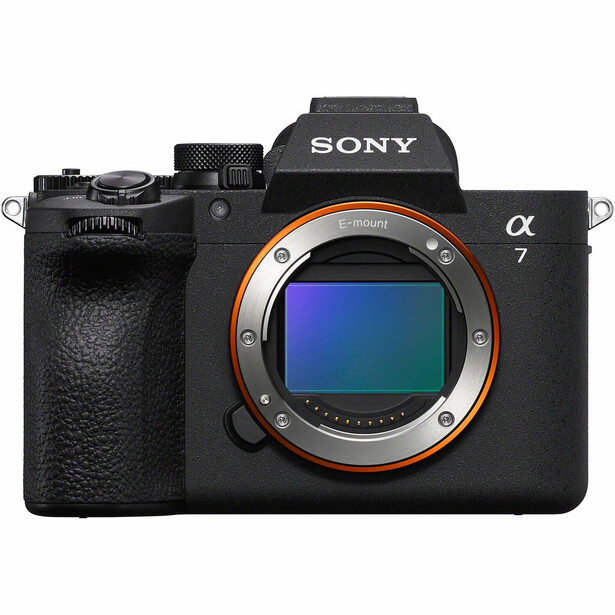
Gear is not a substitute for skill. But it is the infrastructure that skill operates on, and pretending the infrastructure does not matter is a comforting lie that experienced photographers tell beginners because they have already solved their own gear problems and forgotten how limiting bad equipment actually was. If your lens is the bottleneck, a better lens will produce better images. That is not consumerism. It is a diagnosis.
2. Most Portfolios Have Too Many Images
Thirty images is too many. Fifty is a disaster. Eighty is not a portfolio; it is a hard drive dump with a website skin. The instinct to include more comes from insecurity: what if the viewer does not like the first ten and gives up before reaching the good ones? The answer is that if the first ten are not the good ones, you have a curation problem, not a volume problem.
A portfolio should contain 15 to 20 images, maximum. Every single one should be strong enough to represent you if it were the only image a potential client ever saw. The moment a viewer encounters a mediocre frame in a sequence of strong ones, it reframes everything that came before it. One weak image in a portfolio of 20 does more damage than removing it and having 19. If you are struggling to cut, ask yourself this: would I pay to print this image at 20x30 and hang it on a wall? If the answer is no, it does not belong.
3. Instagram Followers Do Not Equal Clients
Ten thousand followers and an empty calendar. It happens constantly, and it confuses photographers who were told that building an audience would build a business. The problem is that Instagram followers and photography clients are two different populations with almost no overlap.
Followers engage with content. They like, comment, save, and share. Clients book sessions, pay invoices, and show up on a specific date at a specific location with a specific need. The content that attracts followers (dramatic edits, trending audio, behind-the-scenes reels, viral compositions) is not the content that converts clients (consistent portfolio quality, clear pricing communication, social proof from past clients, and a website that answers every question before the inquiry email is sent). A photographer with 800 followers and a clean website, strong SEO, and a Google Business Profile with five-star reviews will out-book a photographer with 50,000 followers and no conversion infrastructure every time. Build the booking pipeline first. The audience is secondary. If you want a practical framework for converting visibility into revenue, Making Real Money: The Business of Commercial Photography covers client acquisition, pricing, and the business systems that turn attention into income.
4. Not Every Hobby Needs to Become a Business
The moment you are good at photography, someone will ask when you are going pro. Friends, family, social media followers, and the entire photography content ecosystem will nudge you toward monetization as if turning a passion into a business is the natural and inevitable next step.
It is not. Going professional changes the relationship you have with photography in ways that are permanent and not always positive. Client work means shooting what someone else wants, when they want it, in conditions they chose, and delivering on their timeline. It means administrative hours, tax obligations, insurance costs, pricing anxiety, and the specific stress of having your creative output tied to your ability to pay rent. Some photographers thrive on that. Others discover that the thing they loved as a hobby becomes the thing they dread as a job.
If photography brings you joy as a hobby, that is a complete outcome. You do not owe anyone a business plan. Keep shooting for yourself, print your work, give it away, hang it on your walls, and let the camera be the thing in your life that has no invoice attached to it. That is not a lesser version of being a photographer. It might be the purest one.
5. Shooting in Auto or Aperture Priority Does Not Make You Less of a Photographer
The manual-mode gatekeeping in photography is relentless. "Real photographers shoot manual." "You will never learn if you let the camera decide." "Aperture Priority is a crutch." This advice is repeated by people who either forgot how they learned or are performing expertise for an audience.
Aperture Priority with Auto ISO and exposure compensation gives you direct control over depth of field (the creative variable that matters most in the majority of shooting situations) while letting the camera handle shutter speed and sensitivity adjustments in real time. In fast-changing light, at events, on the street, and during portrait sessions where the subject's comfort matters more than your exposure settings, this is not a crutch. It is the most efficient way to prioritize the creative decision (how much of the scene is in focus) without losing frames to manual adjustments.
Manual mode is essential to understand. It is the right choice in controlled environments (studio, product, panorama stitching) where the light does not change between frames. But treating it as the only legitimate shooting mode is a purity test that has nothing to do with image quality and everything to do with ego. The mode dial does not appear in the EXIF data your client sees. The image does. For a structured path through each shooting mode and when each one is the right tool, Photography 101 covers the full progression from Auto through semi-automatic to manual with practical exercises at each stage.
6. The Photographer Who Shoots One Genre Extremely Well Will Always Out-Earn the One Who Shoots Five Genres Adequately
Versatility is a wonderful quality in a learning photographer. It is a liability in a marketing photographer. When a potential client searches for a portrait photographer, they want a portfolio full of portraits. When they search for a real estate photographer, they want interiors and exteriors. When they search for a wedding photographer, they want weddings. They do not want a portfolio that proves you can do a little of everything. They want proof that you can do their thing at a level that justifies the price.
The photographer who shoots headshots exclusively and has 20 flawless headshots in their portfolio will command higher rates, receive more referrals, and close more consultations than the photographer who shoots headshots, weddings, real estate, pets, and product with four mediocre examples of each. Specialization signals expertise. It simplifies your marketing because you know exactly who you are talking to. It streamlines your workflow because you solve the same problems repeatedly and get faster at solving them. And it raises your pricing ceiling because specialists always charge more than generalists.
You can specialize without committing forever. Pick the genre that excites you most and that has a viable local market, shoot it exclusively for a year, and evaluate. If it works, go deeper. If it does not, pivot. But the year of focus will teach you more about that genre than five years of dabbling across several. If you want to explore multiple genres with structured instruction before committing to one, The Well-Rounded Photographer covers eight specialties, which is the ideal way to sample broadly before narrowing deliberately.
7. Your Best Image and Your Most Popular Image Are Almost Never the Same Image
You posted two images the same week. One is the strongest photograph you have ever made: the light, the composition, the timing, the emotion, the edit. It received 43 likes. The other is a competent but unremarkable sunset with saturated colors and a clean horizon. It received 600 likes, three features, and a dozen new followers.
The audience is not broken. The platform is doing exactly what it was designed to do: reward instant visual impact in a feed that moves at scroll speed. The sunset is immediately legible: bright colors, simple composition, no ambiguity. The stronger image requires a pause, a second look, an emotional context that a scrolling thumb does not provide.

The lesson is not to stop posting your best work. The lesson is to stop using engagement metrics as a proxy for quality. If you allow likes to dictate which images you value, you will optimize your shooting for the algorithm instead of for the craft, and your work will converge toward the median of what performs well: pretty, safe, and forgettable. Post the work you believe in. Let the algorithm reward what it wants. They are two separate scorecards, and only one of them matters in ten years.
8. The Obsession With Sharpness Has Made Photographers Ignore Everything Else
Zoom to 100%. Check the eyelashes. Pixel-peep the corner sharpness. Compare lens resolution charts. Reject an image because the focus is two inches behind the eye instead of on it. This is the sharpness obsession, and it has trained a generation of photographers to evaluate images by a metric that viewers never notice and that has almost no bearing on whether a photograph is good.
No client has ever rejected a gallery because the images were only sharp rather than tack-sharp. No viewer has ever been moved to tears by corner-to-corner resolution. No photograph in the history of the medium became iconic because of its MTF performance. Sharpness is a technical attribute, like file size or color bit depth. It is a prerequisite for professional work, not a measure of creative quality.
The qualities that make photographs memorable are light, timing, emotion, composition, story, and the relationship between the photographer and the subject. No resolution chart has ever quantified any of those qualities, and no lens test ever will. A slightly soft image of a perfect moment will always be more valuable than a razor-sharp image of nothing happening. Stop pixel-peeping at 100%. Start looking at the image at the size it will actually be seen: a print on a wall, a post on a screen, a page in an album. If it works at that size, it works. Period.
Conventional wisdom exists because it is easy to repeat, not because it is always correct. The opinions on this list are not contrarian for the sake of being contrarian. They are observations that hold up when tested against the reality of how photography is practiced, marketed, and consumed. But if you have been operating under an assumption that one of them challenges, it is worth examining whether that assumption is serving you or just comforting you.






Join the Fstoppers community for free
-
Post comments and join in the discussions
-
Browse the site ad-free
-
Share your work and get featured in the community
-
Compete in the photo contests for fun and prizes
14 Comments
I agree with point 5 but :( AV with auto iso) “It is the most efficient way to prioritize the creative decision (how much of the scene is in focus) without losing frames to manual adjustments” I think shutter speed is also a creative choice so imho Manual mode with auto iso works best for events etc.
For event work, I use aperture-priority with auto-ISO and Sony's Minimum Shutter with Auto ISO feature to keep shutter speeds above a motion-freezing minimum keyed to the focal length, which is great with zooms because the minimum required shutter speed changes as focal length changes. This feature even adapts to Crop Mode's impact on effective focal length. If I want to drag the shutter, I can shift the feature from "fast" (1/2xFL) or "faster" (1/4xFL) to "slow" (2/FL) or "slower" (4/FL). I use "fast" for slow-moving subjects to freeze motion and "slow" for still subjects (e.g. room shots) to capture more light.
With manual mode, I'd have to change the shutter speed manually as I zoom, which is a non-starter, or set shutter for a zoom's max focal length and accept reduced exposure at shorter focal lengths, which is another non-starter. For use with primes, manual mode is less problematic, but the approach I described above does exactly what I want with minimal input, letting me concentrate on what's in front of the camera.
That sounds like a very workable option, I still prefer setting the shutter myself but like editing in photoshop there are a lot of different ways of getting the same result.
Well stated on all items! A reason I stay a hobbyist, yes some images gained the attention of buyers, I have grown from Film to point and shoots to APS-C lastly Full Frame and by bottom find with over 26 years of digital is the Software available. A camera captures but like a painters brush the Software makes or brakes a image.
Number 1. About the gear it is a major point. Like years ago there was no IBIS and now working with lenses with IS/OSS you get a 5th line of stabilization, now I can do Bracketing 5 at +/- 2EV at sunsets/rises even into the blue hour getting dark skies with stars with multicolored band at the horizon as well a lit foreground hand holding and no need for a tripod. If not for a sensor that has the dynamic range and what few ever thought of ISO Invariance meaning using a low ISO for reduced noise and in post just increasing the exposure you get the same brightness as a higher ISO.
Auto Focus remember the film days of long ago when you had to MF kinda makes one lazy today.
Yes I have gone from Sony A7SM1 to today the A7RM5 and the A7SM3 and can not think of anything better, but there will be I know. Everyone should thank all the camera makers for also having Video on cameras if they did not have both many would be carrying two cameras!
"The Obsession With Sharpness Has Made Photographers Ignore Everything Else"
I'm not sure this is true. But, I do support the implication that emphasizing sharpness over other considerations of what makes an image effective can be counterproductive. For one thing, modern lenses are now so good that the difference in sharpness between a "good" lens and a "superb" lens can be unnoticeable in prints smaller than three feet. Also, the vast majority of images are displayed on screens, in books, and as small prints, for which 8MP of resolution is plenty.
Thank you for stating #1 out loud. It is noticeable when a pro online warns it is not the camera -- while waving a Leica M11, with a stack of lenses in the background. And many are gearheads who invest and reinvest in equipment. My experience: own the best camera and lens you can afford, and stick with it. You may never buy another.
You betcha, it is never the guy (usually the talking heads who say this are guys) with a beat up Sony a6000 saying gear doesn't matter. It is the Leica owner who is not pixel peeping but checking out the "micro contrast"...
Not so sure abot #6 Specialisation
If you work in a large urban area, specialisation might be a viable option economically. But you might get very bored. If you work in s smaller city or even a rather rural area, there might not be enough clients for your strict area of specilisation to help you sustain a business.
One solution adopted quite regularly is to have multiple websites, one for each genre. That way clients won't get irritated with you doing also other stuff than their particular need.
I guess, like in medicine, there is room for the general practioner and the specialised doctor.
And there are different levels of specialisation. If you do everything from seniors, maternity shots, food photography, architecture, wild life and celebrity portraits you might truely appear a bit weird. If you shoot people why would clients be irritated if you did corporate headshots AND family portraits? If you did weddings, would clients really be repelled knowing that you also do corporate events?
The idea of working in a very narrow niche, getting really good at it and then earning big fees might work for a select couple of photographers. However, quite often, even the local 5-star hotel doesn't want to spend big budgets on food photography if they need shots of their business lunch offerings. If you can do that reasonably well and reasonably priced you might get the job and - maybe - a referral for the next business event or wedding at this location. If you did good work in one field and clients liked you as a person most do not have second thoughts about inquiring about photos in a different catagory.
Exactly the comment I signed up to make!
That's one of the "rules" that the rest of the article does a good job of refuting.
I have a number of artist friends who work with a variety of media and #7 is frequently discussed. The most popular item of their work is many times their least favorite and vice versa. Favorite by the artist is many times not very popular.
That's why the artist is an artist and the audience members mostly aren't.
#8 is true, not here, but in the real world.
All true. I suppose the overarching theme is that popularity has nothing to do with the truth.