
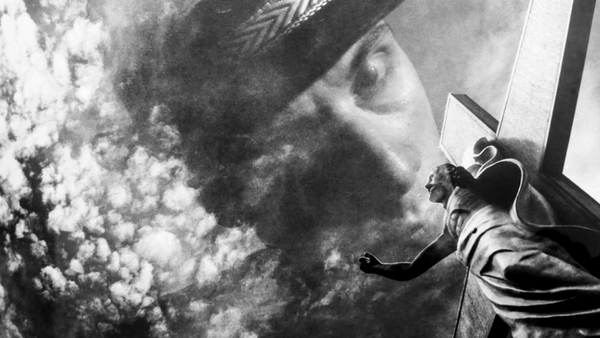
There, I said it. Not bad. Not incompetent. Not untalented. Boring. And boring is far worse.
Bad photography can at least be entertaining. It can crash through the wall drunk at two in the morning, bleeding from the forehead, demanding another round. Boring photography arrives exactly on time, wipes its shoes at the door, and asks where you keep the coasters.
The modern photographic landscape is full of coasters. Perfect exposures. Immaculate compositions. Colors marinated in the same presets everyone downloaded from the same three YouTube channels. Images so polished they could be used as surgical instruments. And yet they leave no scar.
That is the crime.
Photography has become dangerously respectable. Too many photographers are terrified of looking foolish. Terrified of missing. Terrified of making something that might divide opinion. They want applause before they have even asked a question.
Art does not work that way. A photograph should risk embarrassment. It should carry the possibility of failure in its bloodstream. If nobody can hate your work, chances are nobody will love it either.
The internet, naturally, has made this worse. Algorithms reward familiarity. Familiarity breeds repetition. Repetition breeds creative taxidermy. Soon enough, photographers are no longer making pictures. They are stuffing them.
Everyone wants a style. Very few want a point of view. A style is easy. It can be bought, downloaded, imitated by Tuesday afternoon. A point of view costs more. It requires experience. Taste. Contradiction. A willingness to be misunderstood.
That last part scares people to death, so they play it safe. Safe cameras. Safe focal lengths. Safe subjects. Safe opinions. Safe little photographs designed to offend absolutely no one and haunt even fewer.
But the camera was never meant to be safe. It is a license to trespass. Not necessarily on private property, though occasionally that too, but on the ordinary. On routine. On the lies people tell themselves about the world and their place in it.
A great photograph doesn't politely introduce itself. It grabs your sleeve. Interrupts your drink. Ruins your afternoon. That is its job.
The photographers worth remembering have always understood this. They were not decorators. They were disturbers of the peace. And peace, frankly, is overrated.
If your work never makes anyone uncomfortable, start asking yourself who exactly it is for. Your followers? Your peers? The invisible committee living rent-free in your skull? To hell with the committee.
Photography is too expensive, too difficult, and too gloriously absurd to spend your life making images that merely blend in with the wallpaper.
Go make something reckless. Go make something precise. Go make something that half the room loves and the other half cannot stop arguing about. At least then, you will know you were alive when you pressed the shutter.

Join the Fstoppers community for free
-
Post comments and join in the discussions
-
Browse the site ad-free
-
Share your work and get featured in the community
-
Compete in the photo contests for fun and prizes
11 Comments
Makes me wonder what the difference between great, bad, and boring looks like. If you had to choose three images that fit each category, what would you show us? Show us examples of a reckless photo with a point of view. Easy to talk about... much harder to produce. I'm a visual person and learn from seeing.
Then I remembered an Fstoppers contest five years ago with the theme "Uncomfortable." It was described as images that could be controversial or unsettling. Right up your alley. The fact that only 82 entries were submitted, when contests can easily reach four or five hundred, must say something about the theme. I couldn't get through just 82 pictures in that contest before stopping. It's like a bad car wreck. We're mostly curious but then sickened by what we see. Remember the work of Diane Arbus?
Does being challenged to produce that sort of work really have a receptive audience? Maybe; maybe not much. Maybe a lot of people are perfectly content to make whatever pictures resonate with themselves, and let the audience worry about which label or category to put the picture in. Whether I'm making a truly unique image, or a Disney PG rated photo duplicated by a gazillion other photographers, makes no difference to me. I don't understand algorithms, nor do I care. It's not my fault that virtually every person on the planet carries a camera in their pocket. I have no control over how you respond to my photos. Very few people have the emotional character or personality to pursue documentary photography. I don't even like being around a crowd of people, much as less create an uncomfortable photo.
A great photograph can be technically flawed. A boring one can be technically perfect. We've all made plenty of both.
As for examples, Diane Arbus is an obvious reference, but so are Garry Winogrand, William Klein, and Daido Moriyama. None of them were interested in making universally "pleasant" pictures. They made photographs that felt alive, abrasive, and deeply personal. That was the point.
And that's really the whole argument. Not that everyone should pursue discomfort, controversy, or documentary work. That would be absurd. Photography is broad enough for Arbus and Disney postcards to coexist peacefully on the same hard drive.
But if your pictures resonate with you, wonderful. That's the only place they can honestly begin. The audience comes later, if at all. Art made to satisfy everyone usually satisfies no one, rather like restaurant coffee.
The article wasn't a demand. It was an invitation: to consider whether safety has become a habit. If it hasn't, then you're already exactly where you need to be.
As a photographer I put myself in a unsafe zone even when I am working on assignment. That's me. As a writer I try to make the same, and in fact I am accused in the second comment here that is clickbait. Maybe. And maybe not. Exactly as photography: it depends from which perspective it is observed.
You and I obviously own a camera for different reasons. I am perfectly content operating, literally and figuratively, in a safe zone. I find peace in comfort zones and familiarity. You seem to operate on a different wavelength. That's all fine. Nobody expects the entire photography community to act like replicas made from a single mold.
The problem I have is with the words. The word boring should be struck from the photographer's vocabulary. Nobody sets out to intentionally shoot a boring picture. You say that we've all made plenty of both great and boring images. I don't agree with that, at least from the perspective of the photographer rather than the viewer. You may think my pictures are boring, but as I stated before, I can't control the way the entire world and viewing audience responds to my pictures, and it doesn't really matter anyway. On the other hand, every photo that I make, every last one, is something I chose to photograph because it was of interest to me. Not once have I ever removed the lens cap and said to myself, "oh, that's a boring picture," I'll set my camera up to take it.
Boring is entirely subjective and dependent upon the viewer. No matter what you or I photograph, somebody out there will think it's boring, even if we think the image is great. My problem is with the language that frames the discussion, not the invitation itself to step outside a comfort zone.
Of course you are right on this, but I am using that word because the writing dynamics in opinion articles need this, sometimes. Don't get me wrong (all of you reading this guys) but I am just applying a provocative approach in order to wake up readers in a moment so difficult to propose lectures, because most of people use the internet just to scroll down without putting attention. I am not trying to find excuses on that, my hero is Hunter S. Thompson and I want to offer something different here on fstoppers. Sometimes I can get wrong using some terms: English is just my third language and I may miss some subtleties.
Great clickbait title otherwise mehhhh. Moved on.
Fair enough, the title did its job. The article was for those willing to read past it. Sometimes the headline gets you through the door, but the conversation happens inside. Thanks for stopping by, even briefly.
It's not when you press the shutter, it's when you release the shutter. That act, releasing the stored energy of mechanical device to throw open the curtains covering the sensor or film, is the essential moment of photography.
Yes, I agree.
That was a fun read - I'm not offended or bothered in any way.
I have used a 16mpx micro four thirds camera for my entire career, you tend to cop a lot of ridicule and gear-shaming. So my skin is now as thick as a crocodile ;)
The "crocodile skin" line made me smile. Gear-shaming seems to be a strange rite of passage in photography, especially when you choose to work with what others dismiss. Yet the funny thing is that photographs rarely care about sensor size or internet opinions: I am into photojournalism and editorial and they also don't care because content and the ability to work under pressure is the ost important thing. A 16MP Micro Four Thirds camera used with intent and vision can say far more than the latest spec monster in uncertain hands.