
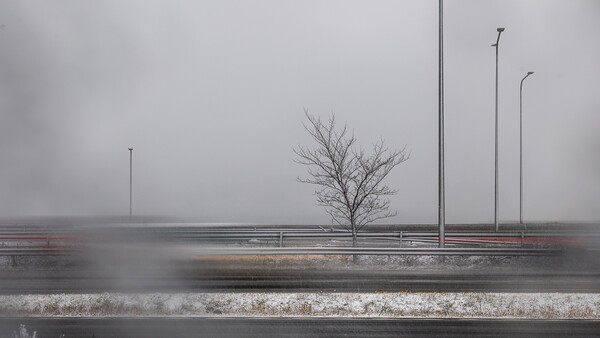
When video became the main way to capture attention, the environment for photography began to disappear. To survive, it must once again become an object, not content.
The days when photography defined visual culture are coming to an end. It replaced drawing, transformed painting, and gave the world a new way of seeing itself. But today its role is rapidly shrinking. To me, the clearest sign is the growing presence of video works in contemporary art museums. Over the past decade, video has steadily entered exhibition spaces, and visitors have begun to slow down.
Video Becomes the Viewing Standard
Museums are only an outpost, the visible part of a much larger shift not directly related to photography or video itself. It began with the rise of high-speed internet, when handling large volumes of video content stopped being a limitation.
After technological accessibility came attention. What photography achieves through complex compositional decisions that demand time to absorb, video delivers instantly. Attention replaces meaning when images compete for time instead of reflection. The result is a visual world that moves faster than we can think and remembers less than it shows. In motion, the focus is obvious. The simpler the perception, the deeper the engagement.
In the visual flow of online media, a still frame no longer holds the gaze. What used to be called “a moment” has become a brief pause between two clips. Not because photography is worse, but because it does not move. And this is noticed not only by viewers but also by algorithms that now define visibility itself. For photographers, that means working in a system where visibility often matters more than vision.
This shift is natural. Landscape photographers try to win attention through exaggerated color and unnatural contrast, leaving little of the original scene. Even architecture looks more dramatic with clouds moving across the frame. Across genres, still images lose to video in the fast logic of social media, where immediacy matters more than depth.
When magazines and newspapers were printed, images lived on the page as part of the physical world. Today, even that world is fading. According to Grand View Research, the global print media market will fall from 124 to 105 billion U.S. dollars by 2028. In the U.S., publishing revenues decline by about three percent annually (IBISWorld). Even Vogue now prints only eight issues a year, turning paper from routine into ritual. The expanded versions exist online, in apps, and in digital subscriptions. The shift is not just economic or material; it has also changed how we look. Images are everywhere now, yet it feels harder to stop and actually see them.
Not only screens but also the speed at which we consume images have transformed the very concept of photography. On social networks and online magazines, attention is measured more by viewing time than by composition. Video fits this trend perfectly. It tells a story on its own and retains attention longer than any photograph. And that is where the physical returns. That’s where photography begins to matter again.
Photography Moves Into a Niche
A hundred years ago, theater and opera were the highest forms of performing art until cinema made them a niche. As I see it, history repeats itself. Video now occupies the space once held by photography. It has become mass, inexpensive, and emotionally accessible. Photography, on the other hand, turns into a rarer, more demanding form, meaningful only where the quality of perception outweighs the quantity of views.
Yet perhaps this is not decline but transition. Painting went through the same process when photography deprived it of the function of depiction. Artists abandoned representation to preserve freedom, and modernism was born. Theater, opera, and ballet survived competition with the movie: the mass audience moved to cinemas, but the art forms remained. Photography follows the same path. Everything that can be explained or reproduced has already been captured. Its territory lies where narrative ends and experience begins. Its audience changes too, from the mass viewer to the connoisseur, as in opera or ballet.
If "to print" once meant to reproduce, now it means to assert uniqueness. Paper has become the antithesis of the video stream. It restores scale, texture, and silence to the image. Research over the past 15 years shows that when viewing printed photographs, the human eye makes more fixations and maintains attention longer. Even when the content is identical, viewers choose paper more often because it invites them to stay. Yet turning images back into objects also turns them into privileges; fewer people can see them, but those who do—stay longer.
The Photographer's New Role
For photographers, this return to material form changes everything. It shifts the craft itself, from capturing attention to learning how to hold it. On a screen, an image is just part of the interface. In a gallery, it stands on its own: something you stop to look at. There, photography regains the duration and attention that no longer exist in the digital world.
Photography is changing its state. Online, it serves design, but only in print does it become a thing. This shift gives it not its past, but its future. The fate of photography no longer depends on technology but on the environment where it exists. Cameras now produce technically perfect images, sharp and color accurate, yet that no longer surprises a viewer scrolling through endless feeds. Algorithms can shoot, generate, and edit images indistinguishable from reality. But they cannot create genuine interaction between a person and an image, the moment when someone comes not to scroll, but to see.
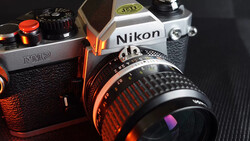
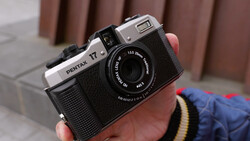
To survive, photography needs objecthood, a physical reason to exist. A print, a gallery, a zine, or a book; a space; a viewer—everything that restores physical presence. One condition remains: to become interesting enough for someone to stay. And that sets new demands on photographers: understanding audience interaction, working with scale, and mastering print. Once the horizon expands, it becomes clear that shooting and post-production skills are, at best, half the profession. In a world where video dominates online space, survival belongs to those who can restore weight, place, and time to the image.
There is always a choice: to focus on video and dive again into the red ocean of competition, or to stay still and look for a space beyond social media and digital imagery. Doing both may simply be too much to hold together—stillness and motion rarely belong to the same gaze. Perhaps that’s why photography’s stillness feels more radical than ever.
Join the Fstoppers community for free
-
Post comments and join in the discussions
-
Browse the site ad-free
-
Share your work and get featured in the community
-
Compete in the photo contests for fun and prizes
19 Comments
Good point and well written. I agree with the premise about the uniqueness of prints. I do still feel that still photographs maintain the same place online. My career was in film but I was working along side a still photographer once and noticed how simple his set up was. I said your job is so much easier than cinema, you only have to take one image and no one moves. It's no simpler he said. While no one moves, the image is looked at longer. It's a different experience, and always will be. It's not a competition, but yes it definitely has a less solitary place.
This coming May, 2026, will be 50 years since I graduated from college. My entire career since then has revolved around print. Even as a child I collected paper objects, most notably airline picture postcards. I still have them. But as each year goes by, it feels more and more like swimming upstream. I love printing and it's the only thing in my life outside of family that gives life purpose. If that sounds overly dramatic, well... 50 years of staring at paper and ink is not so easy to simply switch gears.
And I'm really fussy about my prints. I'll make at least three or four before getting it right. I had this discussion on another article so I'm repeating myself here, but I cringe at handing over digital files for someone else to print however they choose, generally as part of a larger corporate project and often on canvas or metal which are my less favorite materials. Nothing replaces paper for detail and tactile enjoyment. However the world is moving in a different direction. I can't force society to value paper. I can't get people to turn off their video games and go to an art gallery. I can't force people to look at a work of art for more than 27 seconds... the average as determined in a study by the MOMA. So what's a person with magenta ink in their veins to do?
Thank you, Ed
I don’t think the world of print has gone anywhere. There are simply far more visual messages now, but most of them are not photographs meant to be looked at. I work a lot with print labs and see how many fine art photographs they produce, even though I live in a small city. That is reassuring in itself.
In my view and in my own work, an excellent digital photograph and its processing are about 20% of a successful result; the remaining 80% are tied to its printing and presentation. Screens forgive most mistakes and help an image look better; with prints it is the other way around.
I print large formats under museum glass, which makes the choice of paper very limited, and that is also a subject of long and expensive searches. I really like how work looks on museum etching paper, for example, but glass and frame hide almost all of the texture, leaving only subtle nuances in color depth.
Print has become a luxury segment for homes and offices where there is time to enjoy a favorite photograph. Museums and exhibitions are secondary now.
"There are simply far more visual messages now, but most of them are not photographs meant to be looked at."
That is probably true of the prints that end up on the walls of businesses who buy my work, which are virtually all of my sales. After all, how much time beyond a quick glance do we give decorative wall art in the bank or shoe store? Not much, even less by the disinterested general public. Maybe it's only a dream that anyone else would want to explore the details of one of my prints to the extent that I do, but that interaction with a print is my reason for the camera. People just seem to buy it though as a decorative commodity, observing only vague impressions in passing.
I would love to change that dynamic to where my customers buy smaller prints to enjoy viewing, a book perhaps, but I would need to find a way to make them myself while establishing a reasonable price, and sales and marketing is still a big hurdle without a publisher.
I hope to address these questions in my future posts, but I see the main stumbling block in the fixation on price. As in any small business, survival is only possible if you sell your work at a high price. Reasonable prices are something only large companies can afford. Once you remove this limitation, a lot of interesting things become possible. Especially if you shift the focus from “how to sell what already exists” to “what needs to be done for people to want to buy it.
Ed Kunzelman wrote:
" ..... how much time beyond a quick glance do we give decorative wall art in the bank or shoe store?"
I spend a LOT of time looking at art or photography when it is displayed in hotels, business lobbies, doctor offices, etc, I often make a note to myself with the name of the artist or photographer, and take a few cell phone pics of their work, and then look them up when I get home and can do so on a real computer with a nice big high resolution screen (the way everything should be done).
I often send an email to the artist or photographer, or perhaps a message on Instagram. I usually have questions about their work, or simply think the world of it and want to encourage them.
I keep an informal log of all kinds of art I see that appeals to me, so that I can explore it more deeply at some point, and perhaps incorporate aspects of it into my own photography. The stuff hanging on walls in public places actually means quite a bit to me.
Ed Kunzelman also wrote:
"People just seem to buy it though as a decorative commodity, observing only vague impressions in passing."
It never continues to surprise me how shallow most of our fellow humans are. They miss out on so much by not forcing their brains to run on hyper speed to evaluate and notice and analyze and articulate everything they encounter.
Take these articles here on Fstoppers for example. How many page views do they get? How many of those people who click on this page actually read the article carefully, paying close attention to every word and every phrase hat Alvin wrote? How many of them evaluate his writing style, and try to think of other ways he could have worded his thoughts, and then think about whether those alternative ways of phrasing would be better, or worse, than the way he actually did articulate his ideas? How many of those people clicking on the page and reading the article actually take the time to ask Alvin about something he wrote that they don't quite understand? How many of them read all of the comments that other readers have written, and respond to them?
I think we are all supposed to be making our brains consume everything we encounter as thoroughly as possible. Yet most people, instead of being mentally aggressive and forcing themselves to interact with everything, just go into "mentally easy mode" and passively consume the things they see and hear. I bet they listen to podcasts and then never write insightful comments on the podcast and never make notes about what they heard on the podcast so they can look things up later when they are at their computer. This is wrong and it would be better for humanity if those people would live and pass away without ever reproducing, so that the world have less people with those shallow, mentally lazy tendencies.
Alvin Greis wrote:
"Landscape photographers try to win attention through exaggerated color and unnatural contrast, leaving little of the original scene."
This practice disgusts me. Even here on Fstoppers, the Photo of the Day will sometimes (often, even) be a landscape image that has been edited and rendered in a surrealistic way. It is the kind of look that is so disgusting to my sense of beauty that it makes me want to just leave the site and not come back. Why do the editors here tolerate, and even encourage, such fakery? Surely there are landscape photos that are real, and not the result of unnatural editing, that could be selected for POTD.
For me, this is more a cultural issue related to fast content consumption than a question of editing ethics. It’s not really a FStoppers topic, but something I explore in my artistic essays as well. Outside the online environment, this problem is much less pronounced. Printing changes how color is perceived, and that shift is a positive one.
The goal and idea of "winning attention" might be misdirected. Many people are indeed attracted to, and find beauty in, bold, rich colors. Just like so many people ooh and aah over a spectacular sunset or rainbow. Few people react that way to a dull gray overcast day. So the saturation slider becomes a tool for expressing the way someone "feels" about the subject, not necessarily just a call for attention. All of art and much of photography is rooted in an expression of emotions. It may not align with yours or mine but that does not make it wrong.
Alvin Greis wrote:
"Everything that can be explained or reproduced has already been captured."
My first reaction was to disagree with this statement, but then I realized that I am not even sure what you mean by it, and it is hard to disagree with something that you don't understand. So could you please explain what you mean here?
I can think of a LOT of things in the natural world that have never been captured at all, either by photo, video, or audio. There are literally millions of animal behaviors that man has never captured in any way whatsoever. So that is why I disagree with what I think you mean. But as I explained, I am hesitant to disagree because I am not really sure that you mean what I think you mean.
I wasn’t saying that everything in the world has already been photographed. I meant that in an online environment built around speed and video, most photographic solutions quickly become familiar and stop holding attention.
The natural world is certainly far from exhausted, and this isn’t about everything already having been documented. My point wasn’t about the number of phenomena that remain unrecorded, but about how images function once they enter the online environment: new subjects don’t always generate new attention if they are read through already familiar visual patterns.
Oh, ok, I understand now.
Personally, I could not care any less about how much interest other people have in my photos, or photos in general. Many of us shoot to please ourselves, or to have a record of something to show to those who are close to use who are interested in the same thing. Having 100,000 people "like" one of my images would not do me any good whatsoever. It would not get me any money, would not help me make any connections, and would not give me any feeling of inner satisfaction. So I do not understand why so much is being written over getting "engagement" with our work. What actual good does that do for any of us?
Engagement with other people on any level is generally more about quality rather than quantity. Unless you make some money from the number of YouTube followers, engagement is something far more personal than just driven by numbers alone. I think it's human behavior that desires connections with other humans. I enjoy going out with my camera alone, but would ultimately feel very lonely without friends, family, or customers to share my life with... photography being a huge part of my life.
To that extent I don't care in the least whether I come home with a unique, never-seen-before, one-of-a-kind photo; or the most ordinary banal picture you've ever seen in your life. I'm not interested in how the worldwide online community perceives my photography; I'm interested in how photography brings together and shapes my circle of friendships. Ordinary photos have great meaning when there's a human bond, engagement, and close connection with the viewers.
Which I would conclude by saying that the monetary value that we derive from our images is less about unique compositions and more about the quality of our relationships.
Ed wrote:
"I'm not interested in how the worldwide online community perceives my photography; I'm interested in how photography."
I absolutely love this statement, Ed!
I think that is the way that the VAST MAJORITY of serious photographers feel. And yet, for some inexplicable reason, there continue to be a stream of articles here about how we can get more engagement on social media. Most photographers don't want more engagement on social media. So these articles are like solutions to a problem that we don't have. Gazillions of likes and comments DOES NOT lead to more image sales and more income. It just doesn't. There is no correlation between the two.
I think it’s important here to distinguish between individual experience and the broader picture. For established photographers, recognition and engagement may indeed play little role. But for millions of beginners, social media often becomes the only accessible space where a career can even begin and where first recognition is possible. In that sense, the article isn’t so much about personal motivation as it is about the context in which attitudes toward photography are formed today.
Please understand that Tom and I frequently veer off course from the main points of an article. Wait until we get in a political debate and you'll probably be sorry we ever showed up in one of your articles.
actually find your discussions very useful. Please, feel free to continue.
hahaha
Yes, I often respond to a comment as though it exists independently from the article. So if I quote something, I am usually responding to the one thing I quoted as a stand-alone statement, disregarding any context whatsoever.
I'll often pick a sentence out of an article and respond to that sentence without consideration for the surrounding text. That's why I put things in quotes; so that whoever reads my comment will know it is solely in response to the excerpt I quoted.
Very deep thoughts of Photography and replies. Not a pro or a seller. I just enjoy the capture in time but I will give as gifts prints. Remember the painting art on many walls where ever you went. Today I feel over run with commensals on everything from videos like TV's and radios. Also all the streaming videos/movies interrupting with commensals, also videos. The cell phones are taking the attention of everyone from kids right up to the oldest Adult. ever look over at people in their cars at a stop light how many are slow to go at the green and how many honks at that time.
Quiet time is hard to find!!
My images of the milky way in areas lit but dark skies get the most attention I believe due to it is unseen in those areas even photographers head to tours to dark places when if they just looked into the night with long exposure in their own back yard.
All well who ever thought the invention of radar would be the future of things watched by all for 4 to 5 hours of people just setting in front of a TV doing nothing but setting and eating what a waste of time and yea i also in front of a monitor editing images. I always am jealous of the man setting next to a radio in a living room and wish for time without it.
What do people do without electricity and in darkness or on a sunny day..
All well here I sit in front of a monitor looking for stories of images!!!
Alone times are at meal times and sunrise and sunsets everyone else are in front of a TV!