

Profile picture for Steven Van Worth
Staff Writer

Steven Van Worth

Fort Gibson, OK
The Bearded Film Guy
1 10+ Portfolio Images badge

Articles from Steven Van Worth

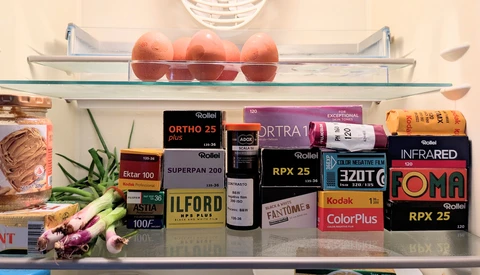
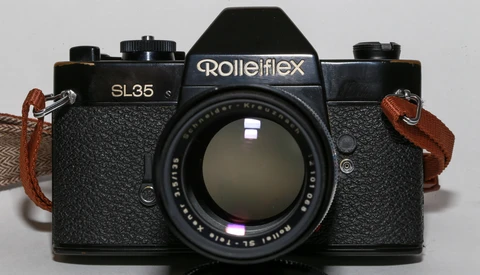
The CLA Map: Where to Send Your Film Camera (and What You Can Safely Fix Yourself)

I learned early that a lot of "broken" film cameras aren't broken—they're just stuck. The symptoms were always the same: you'd cock the shutter, press the release, and nothing would happen… or it would fire once and then lock up like it was offended you asked it to work in 2026. Sometimes it wasn't a dramatic failure, just that dead, sluggish feeling of old grease turning into glue.
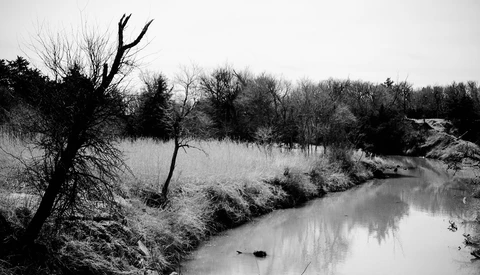
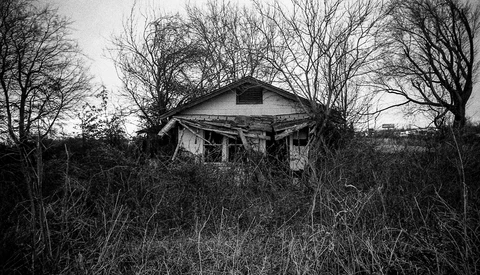
The 'Monster House' Effect: How to Find Narrative in Ordinary Ruins

There's a stretch of Highway 69 outside Muskogee that I've driven enough times to stop noticing it. You know the kind of road I mean — your brain goes into cruise control, the scenery becomes background noise, and you're just trying to get where you're going without getting stuck behind a log truck doing 42 in a 65.

The Free Photo Economy Is Ruining Sports Photography

When outlets can fill galleries with “credit-only” submissions, quality drops, prices crater, and working shooters quietly burn out. I’ve been part of the problem. Here’s why I’m done working for free—and how I’m building paid alternatives that serious shooters can copy without burning bridges.

What “Nat Geo-Quality” Actually Means: A Photo Editor Breaks Down Your Shot Selections

If you’ve ever looked at National Geographic’s “Your Shot” favorites and thought, “I could never compete with that,” you’re not alone—and you’re also probably aiming at the wrong target. Most photographers assume editors are hunting for the sharpest file, the cleanest composition, or the most technically “correct” exposure. A picture editor’s job isn’t to find the most perfect photograph. It’s to find the photograph that can carry attention, meaning, and credibility—fast—and still feels worth returning to later.

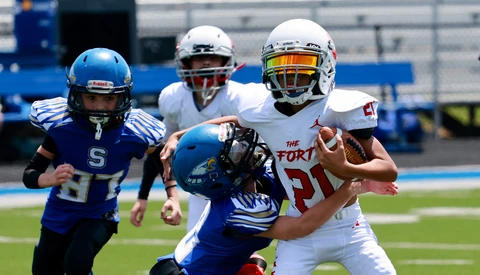
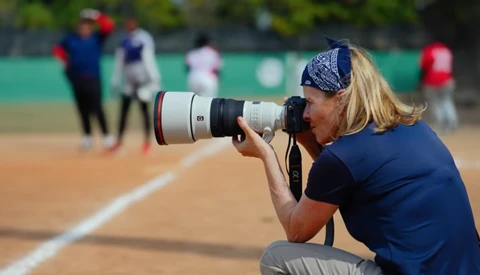
Why I Shoot JPEG for Youth Sports (And Don’t Miss Raw)

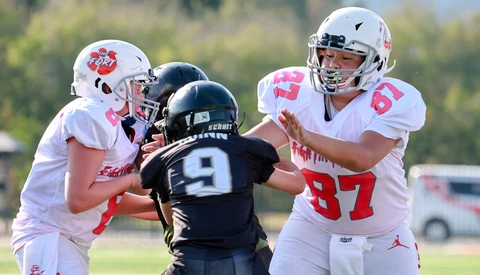
By the time I pack up my monopod and walk off the field on a Saturday, my memory cards are loaded with a thousand frames. By Sunday morning, parents are already texting to ask when the gallery goes up. That’s the job: move fast, stay consistent, and tell the story of the game without spending the rest of the week dragging sliders. That’s why I shoot JPEG—on purpose, not by accident, not because I don’t know what Raw can do, but because the work I do doesn’t require me to excavate shadows five stops deep. It requires timing, clear color, and a fast delivery.

Small Body, Big Sideline: A Month on the Canon EOS R7 with My Old Canon EOS 6D

The first time the R7 choked on a third-and-short, I felt it in my chest. I was on the sideline, ten yards ahead of the play, finger down, trusting the tiny motor under my thumb to keep up with a world that had just gone from strolling to sprinting. Five… six… seven frames in and the picture flow hiccupped—the stream turned to a stutter—and my running back chose that half-second to change direction and break a tackle. I have a folder full of the prelude and not the punchline. With my old 6D, the pace was honest and simple: a handful of frames per second and an optical viewfinder that never lied. The R7 is a hummingbird by comparison—faster, sharper, with extra reach that feels like cheating—until it teaches you that speed without rhythm is just noise.

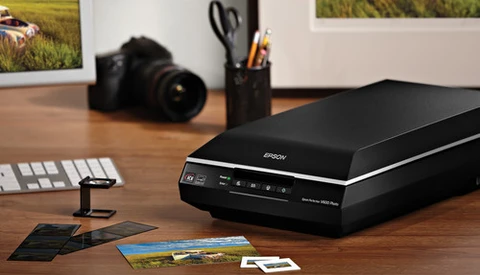
Scanning Is My Darkroom: Pro Workflows from the Epson V600

Film is having another moment. Thrift stores are lighter on old SLRs than they used to be; teenagers are loading rolls their grandparents forgot about; family closets keep surrendering shoeboxes that smell like basements, cedar, and Kodachrome. If you want those images to live again—on phones, on walls, in books—you don’t need a museum-grade scanner or a lab behind a glass wall. You need a steady hand, a repeatable rhythm, and a machine that shows up every time. For me, that’s the Epson Perfection V600 Photo Scanner.

The Canon EF 100mm f/2.8L IS Macro for Youth Football on Canon 6D

Tell most sports shooters you’re covering a football game with a 100mm macro and they’ll smile politely, the way you smile at someone who swears by decaf. But youth football isn’t the NFL. The field is smaller, the pace is choppier, and the best stories live within arm’s length of the sideline. In that environment—under sun, not stadium lamps—the Canon EF 100mm f/2.8L IS Macro on a Canon 6D is a secret weapon.

Why Gen Alpha Might Be the Last Generation to Discover Film Photography

Walk into any thrift store today and you might see it: a teenager with blue hair and earbuds thumbing through a dusty bin of film cameras, holding up a Canon AE-1 like it’s a time machine. For Gen Z, film was the cool rebellion—the antidote to megapixels and algorithms. They rediscovered what their parents left behind, turned Kodak Gold into an Instagram aesthetic, and made a $50 point-and-shoot worth five times that on eBay.

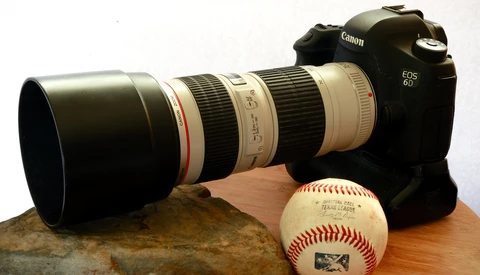
10 Years With the Canon 6D: A Love Letter to a Workhorse DSLR

I’ve shot with a lot of cameras, film and digital—but if there’s one that’s been through it all with me, it’s the Canon 6D. This isn’t a pixel-peeping review comparing MTF charts or arguing about dynamic range. This is a look back at a decade spent with one of Canon’s most underrated full frame DSLRs. From dusty MiLB diamonds and fluorescent-lit engineering offices to golden hour family portraits and rain-soaked street photography, my 6D has quietly been the backbone of my professional and personal work.

How to Tell a Story With a Single Image: Lessons From the Dugout

The best baseball photographs don’t always happen when the crowd is standing and the lights buzz a little hotter. Sometimes the picture you keep is the one that smells like rosin and bubblegum—the quiet breath between pitches when the game is thinking about what it wants to be next.

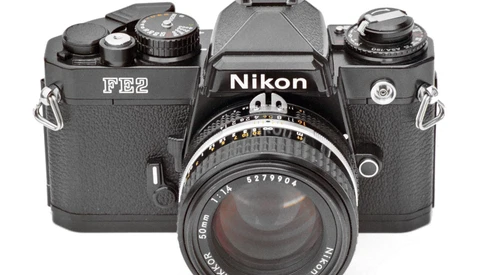
40 Years With the Nikon FE2: A Companion That Never Quit

It’s easy to lose track of how quickly new cameras come and go. In a digital era where product cycles last 12 months, photographer John P. Wineberg’s relationship with a single tool feels almost radical. In his recent vlog, “40 Years With This Camera!” he celebrates the Nikon FE2 and the 50mm f/1.8 lens he bought as a college student in 1985. His video is more than a gear chat; it’s a reflection on what happens when you spend decades with a single piece of equipment and how it shapes the way you see.

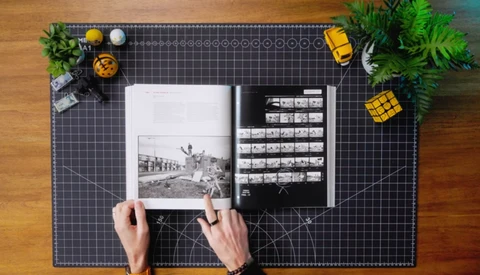
Five Street Photography Books to Transform Your Shooting

Street photography thrives on observation and instinct. In a recent video essay, photographer E.J. Chako shares five books that reshaped his approach to the streets. Each title offers a distinct lesson—from studying the masters to unlocking your own voice.

Film Photography in the Digital Era: Why Analog Still Matters in 2025

In 2025, photography has never been faster or more automated. Cameras track eyes at 60 frames per second and send 45-megapixel raws to your phone in seconds. Yet thousands of photographers are loading Kodak and Ilford rolls, proving film isn’t dead—it’s thriving as a cultural counterpunch.

Why Film Photography’s Revival Refuses to Die: Insights for 2025

Thomas Heaton drops a quick gut check on the state of film: remember when old point-and-shoots gathered dust in thrift stores, then suddenly became flex pieces on Instagram? Overnight, Contax compacts leapt from a few hundred bucks to nosebleed prices. That wave carried a lot of us back into the darkroom.