Trending Articles

Why Your Photos Look Worse Than the Scene You Saw

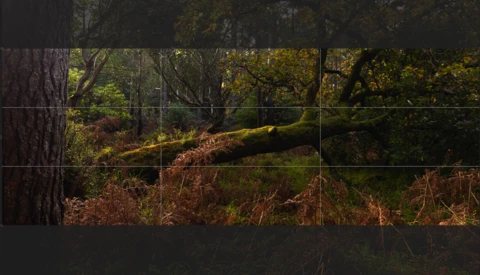
You stand in front of something stunning, a valley flooded with evening light, a city skyline at dusk, and you press the shutter sure you have captured it. Then you look at the file and the magic is gone. The colors are flatter, the sky is blown out or the ground is a muddy mess, the mountain that loomed over you looks like a small bump, and the whole thing feels ordinary. The instinct is to blame the camera, or your skill, or to start shopping for a better lens. Usually none of those is the real culprit. The real explanation is that your eyes and brain were never showing you the scene the way a camera records it, and once you understand the gap between the two, you can start closing it on purpose.

An AI Studio Made Its Own Odyssey and Timed It to Nolan's Opening

Christopher Nolan's The Odyssey opens today, shot entirely on IMAX 70mm for a reported $250 million. Three days before it reached theaters, an AI studio announced an Odyssey of its own: 135 minutes long, made largely by one person over three months, for a budget in the mid five figures.

Will We Ever See a Sony RX100 VIII? The Case of the Self-Inflicted Wound

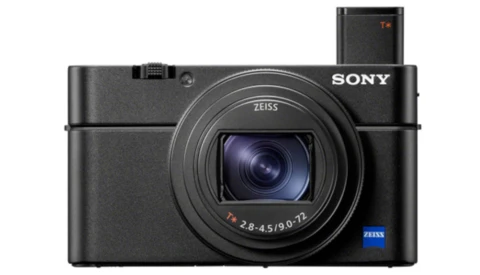
For roughly seven years, the Sony RX100 was the default recommendation for anyone seeking a serious pocket camera. When Sony launched the original RX100 in the summer of 2012, it didn't just release a camera; it created a category. Here was a genuinely pocketable compact with a one-inch sensor and a fast f/1.8 lens at the wide end, packaged in a metal body that could slide into your jacket pocket. What happened to these amazing cameras?

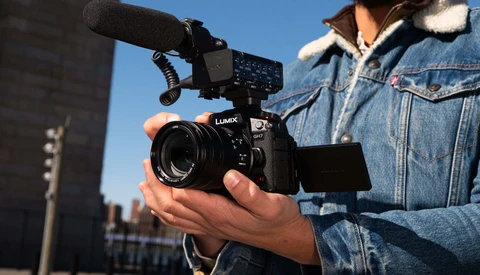
Panasonic Jumps Into the Compact Camera Game With the LUMIX L10

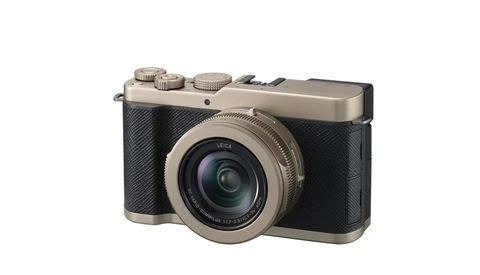
Panasonic has announced the LUMIX L10, a new fixed-lens compact camera built around a Four Thirds sensor and a Leica-branded zoom. The release marks the 25th anniversary of the LUMIX line, and Panasonic is launching the camera in three finishes: Black, Silver, and a limited Titanium Gold Special Edition.

Carry-On Rules Are Getting Stricter for Photographers in 2026: Here's How to Adapt Your Kit

If you fly with a camera bag, 2026 is the year the gate finally caught up with you. The bag that "always made it on" for the last five years is now getting weighed, measured, and gate-checked with a consistency that did not exist before. For most travelers this is an annoyance. For photographers it is a real problem, because a camera kit is the densest, heaviest, and least checkable thing most people carry. A few bodies, a couple of fast lenses, batteries, and a charger can push past a 7-kilogram (15.4 lb) cabin limit before you have packed a single shirt, and unlike a sweater, you cannot exactly stuff a 70-200mm into the overhead and hope.
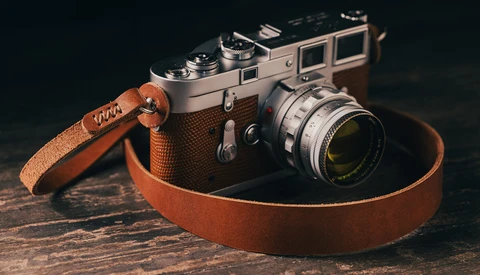
Fab’ Launches a Gorgeous New Handmade Leather Camera Strap

Fab’ are one of Canada’s top camera strap manufacturers. They have a wide range of leather and rope camera straps and harnesses, and everything is made by hand in Montreal. They’ve built up an extremely good reputation for making the highest-quality straps, yet they refuse to rest on their laurels.

Macbook Neo Vs $600 Windows Laptop

After comparing the new MacBook Neo to Apple’s Air and Pro, a lot of people asked the obvious question: what about Windows? 

Sony RX1R III Review: 10,000 Photos and the Truth About This $5,000 Compact Camera

After spending a week with the Sony RX1R III and capturing nearly 10,000 frames, I feel like I’ve truly gotten to know what this little full frame compact can do. From photographing my family to shooting three portrait sessions and a full documentary project, I pushed this camera in real-world scenarios. But the question remains: Is it really worth $5,000?

What Is Dual Gain ISO and Why Does It Matter?

Most photographers think of base ISO as a single number: the setting that produces the cleanest possible image with the widest dynamic range. In reality, even "base ISO" is more complicated than it sounds. 

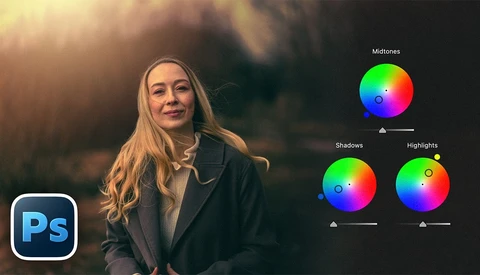
The Two-Step Method for Making Any Photo Pop in Photoshop

Photoshop's Camera Raw filter is genuinely one of the most underused tools for color grading, and most people treat it like a raw file converter rather than a full editing engine. If you've been doing your color work purely in curves or Hue/Saturation, you're leaving a lot of control on the table.

I Sold My $4,000 Sony Camera for an a6700: Here’s Why

As a professional travel photographer, I’ve shot around the world with some of the best gear Sony has to offer, including the Sony a7R V and top-tier G Master lenses. But after years of carrying heavy full-frame setups and investing thousands into the latest gear, I made a decision that might seem crazy to some: I sold it all and switched to the Sony a6700, a crop-sensor camera.

The Purity of Gray: The 5 Best Monochrome-Only Cameras for 2026

Why would anyone pay more for a camera that does less? In an era where our phones can shoot HDR video in a billion colors, buying a camera that only sees in black and white seems like a pretentious downgrade. But you might be surprised by these three cameras.

How to Get the XPan Panoramic Look on Any Digital Camera

There’s a lot of talk about the Hasselblad XPan, usually centered around the price and the mystique behind that panoramic format. The camera has earned its reputation, and the images it produces have a distinct character. But when you look closely at what makes XPan photographs stand out, it becomes clear that the look is not locked behind a rare film camera. The biggest element of the XPan aesthetic is the aspect ratio. However, it is something that any digital camera can replicate with careful planning in the field and some straightforward work in post. I set myself an experiment.

How to Make Flat Light Work for Your Portraits

Flat light gets a bad reputation. The moment the sky turns from blue to a sheet of gray cloud, a lot of photographers pack up, assuming the good light is gone for the day. That instinct is backward. Soft, flat, overcast light is one of the most forgiving and flattering kinds of natural light there is, and the only reason it disappoints people is that they treat it as a finished product rather than a starting point. Learn a few simple ways to shape it, and a dull gray day becomes some of the easiest portrait light you will ever work with. This is about natural light specifically: no strobes, no flash, just the daylight you already have and a couple of inexpensive tools to bend it your way.

Why Some People Hate Being Photographed (And How to Help Them)

Jennifer's heart rate spiked the moment she saw the camera. Her shoulders tensed, her smile became forced, and her natural warmth disappeared behind a mask of visible discomfort. The photographer, confused by her sudden transformation, kept shooting while Jennifer grew increasingly rigid and self-conscious. By the session's end, both parties felt frustrated—the photographer couldn't understand why such a vibrant person became wooden in front of the camera, while Jennifer felt embarrassed about her obvious discomfort and disappointed with the stiff, unnatural results.

The Canon RF 50mm f/1.4 vs f/1.2: Can You Actually See the Difference?

Choosing the right 50mm lens can dramatically impact both image quality and day-to-day usability. The Canon RF 50mm f/1.4 L VCM lens has entered the scene promising high-end performance in a lighter package, raising questions about whether it's worth replacing the heavier but highly respected RF 50mm f/1.2 L.

Five Premium Compact Cameras Tested Side by Side: Which One Actually Wins?

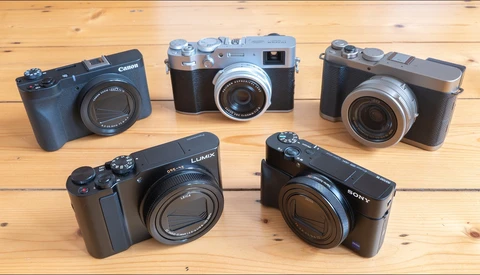
Choosing a premium fixed-lens compact camera is harder than it looks, because the category spans everything from true shirt-pocket cameras to chunky near-mirrorless bodies, and the right answer depends almost entirely on what you actually shoot. The Canon PowerShot V1, Fujifilm X100VI, Panasonic Lumix LX10, Panasonic Lumix ZS300, and Sony RX100 VII are not variations on the same theme; they make fundamentally different tradeoffs across sensor size, lens range, portability, and price.

Still Not Taking APS-C Seriously? We Review the Sony a6700

Sony has recently released a successor to a fan-favorite a6600 fittingly called the a6700. Don’t get me wrong, in those few days I had it it performed well, but there are some features that would elevate it to a different level. First things first though, what did Sony do well with the a6700?