Trending Articles

Why Harder, Slower Gear Doesn't Make Your Photos or Prints Any Better

A popular argument holds that a slow, fussy camera forces you to think harder and so produces better photographs. If that were true, the most awkward gear in your bag would also be the most valuable, and the camera you reach for first would be the one holding you back.


How to Pull a Clean Street Photo Out of a Chaotic City

Stand at Shibuya Crossing or in Leicester Square with a camera and you'll see the problem within seconds: hundreds of people, signs, cars, and colors, none of them arranging themselves into a photograph. Much of the best street work happens in exactly these places, so learning to pull one clean frame out of that noise decides whether you come home with pictures or just a record of a crowd.

Two Hard-Light Portrait Looks From One Strobe and a Plain White Wall

Soft light gets most of the credit in portrait work, yet a single snooted or bare strobe can give you crisp shadows, graphic shapes, and a sense of depth that a big softbox tends to smooth away. If you're working with one strobe and a white wall, hard light is one of the quickest ways to make a small setup look deliberate and layered.


A Pentax 67II Road Trip Through Eastern Washington's Small Towns During Fire Season

Wildfire smoke covered much of central and eastern Washington in August, and air quality in many towns stayed in hazardous territory for weeks. If you shoot small towns, farmland, and roadside history, smoke like that changes your light, flattens your color, and limits how long you can stay outside to make a picture.


Panasonic's Lumix SHX1 Is a 6K Box Cinema Camera That Records Blackmagic RAW to an SSD

Panasonic's Lumix SHX1, due in the US in January 2027, is a box-style cinema camera with a 6K full frame sensor, in-body stabilization, phase-detect autofocus, and 12G-SDI in a body that weighs about 2.17 lb. No earlier Lumix body could write Blackmagic RAW straight to a drive without a separate recorder, and this one also keeps Apple ProRes RAW on an internal card.


Why a 2009 Olympus Pancake Lens Still Earns a Spot on a New OM System PEN

The Olympus 17mm f/2.8 pancake is old, slower than most modern primes, and easy to find used for very little money. On Micro Four Thirds, where much of the appeal is keeping the camera small, that raises a fair question about whether a lens this modest still deserves a place on a current body.


Inkjet vs. C-Print: Why Only One Is True Continuous Tone

That smooth sky gradient on your inkjet print is made of tiny dots in only a handful of ink colors, packed so densely that your eye blends them into something that looks seamless. Knowing whether a print is built from dots or from light shapes how you choose a printer, a lab, and the service that prints your next book or zine.


Tamron's New 16-50mm f/2.8 Puts a Fast APS-C Zoom in a Kit Lens Body

A fast standard zoom is the lens that stays on an APS-C camera for most of the day, and Tamron's newest APS-C zoom squeezes that constant aperture into a body about the size of a slow kit zoom. Shrinking an f/2.8 zoom that far usually means giving something up, so the open question is where this one gives ground and where it holds.


Hasselblad X2D II Owners Can Now Shoot Tethered Into Capture One

Hasselblad X2D II 100C owners can now plug the camera into a computer and shoot straight into Capture One, with each 100-megapixel frame appearing on screen at full resolution as soon as it's captured. Wired tethering arrives today with camera firmware 1.4.15.7, Capture One 16.9.1 for desktop, and Capture One Mobile 4.3.0.


Cheap vs. Expensive Camera Gear: Where Paying More Actually Pays Off

Most gear budgets get shaped by an urge to buy the best version of everything, and that urge rarely lines up with what improves your pictures. Knowing which purchases change your results and which only change your bank balance can free up hundreds or even thousands of dollars for the items that protect your work.


Inside the '90s Magic Eye Phenomenon and How It Was Created

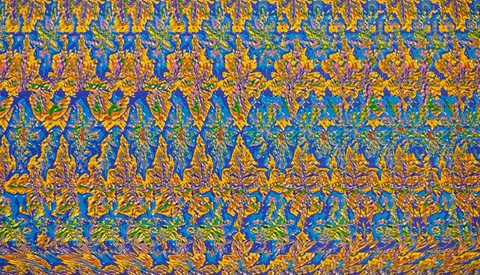
Magic Eye stereograms swept through the 1990s as a cultural phenomenon, capturing imaginations with their ability to transform a flat image into a mesmerizing 3D scene. For many, they became an intriguing challenge that separated those who could instantly discern the hidden depth from those left squinting at a frustrating blur (aka me). 

7 Frames in 1 Hour: How a Sunrise Time-Slice Collage Comes Together

A time-slice collage packs a full stretch of changing light into one frame, with blue hour on one edge and golden hour on the other. The concept sounds easy, but it falls apart if your camera shifts a millimeter or your exposure choices drift across an hour of light you can't go back and reshoot.


Fstoppers Reviews The Touchscreen Macbook Pro

Two weeks ago I spent over $7,000 on Apple's new touchscreen MacBook Pro. It finally showed up, so I put it side by side with the M3 Max MacBook Pro I've been using for the last two years. To be perfectly honest, I'm on the fence about whether I even want to keep it. 

Why There's No Best Portrait Lighting Setup, and What to Decide Instead

Search for the best portrait lighting setup and you'll find hundreds of diagrams, each one confidently showing exactly where the softbox and reflector go. Copying one can get you a decent frame on a good day, but it leaves you stranded the moment your subject, your room, or your gear changes.


How to Photograph Products in Water and Still Control the Splash

Shots of shampoo bottles plunging into water, wrapped in bubbles and topped with a crown of splash, look like luck caught at the right instant. Most of that look comes from planning, and the planning behind it answers a question you run into across product work: how to keep a subject exactly where you want it while everything around it moves.


8 New Features in Lightroom Classic 16, From Glow to Depth Masks

Lightroom Classic 16 arrived with Adobe MAX, bringing a native glow effect, depth masks that no longer depend on special camera files, color grading inside masks, and automatic blemish removal. Several of these used to require a trip to Photoshop, a plugin, or a phone that recorded depth data.


What It Takes to Make a Color Darkroom Print From Start to Finish

A color darkroom print starts with a negative, an enlarger with a color head, and a sheet of RA-4 paper that won't show you what you got until it comes out of the chemistry. Most color film shot today ends its life as a lab scan, so printing it by hand puts the color balance and density decisions back in your own hands.