Trending Articles

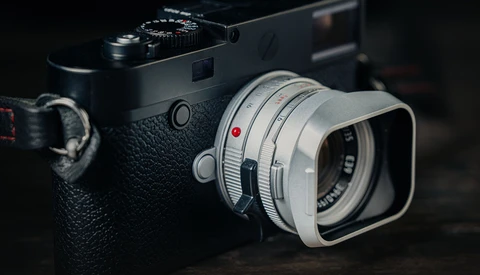
Recreating a Legendary Leica Lens: Mandler 35mm F/2

Owing to the growing popularity of Leica cameras in recent years, a bunch of new lens manufacturers have sprung up to provide much cheaper alternatives to Leica lenses. And what's particularly exciting is that, with the aid of modern technology, many rare and desirable Leica lenses from the past can now be reproduced with incredible accuracy.

A Beginner's Guide to What Every Camera Mode Actually Does (and When to Use Each One)

Look at the top of your camera. Somewhere on the body, probably on a physical dial, you will find a cluster of letters that might as well be hieroglyphics if nobody has ever explained them: P, A (or Av on Canon), S (or Tv on Canon), and M. Nikon, Sony, and OM System use P/A/S/M. Pentax mirrors Canon's labeling with Av and Tv. Some cameras throw in a green rectangle, a handful of icons depicting tiny people or mountains. Here's what they all mean.

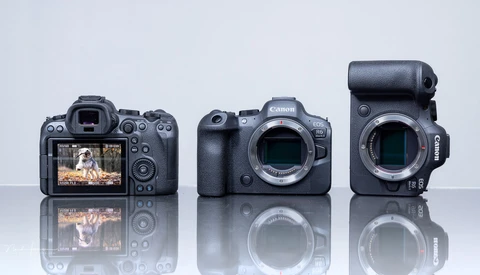
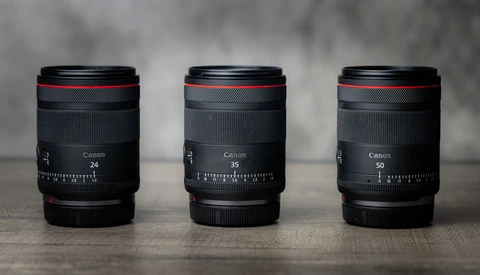
We Review the First Three Canon VCM-Prime Lenses

Canon has released a set of lenses that carry the abbreviation VCM, short for Voice Coil Motor, a fast and silent autofocus system. The first three primes of this series are the RF 24mm f/1.4L VCM, the RF 35mm f/1.4L VCM, and the RF 50mm f/1.4L VCM. Let’s have a look.

Why I Switched From the Fujifilm X100V to the Ricoh GR III Diary Edition

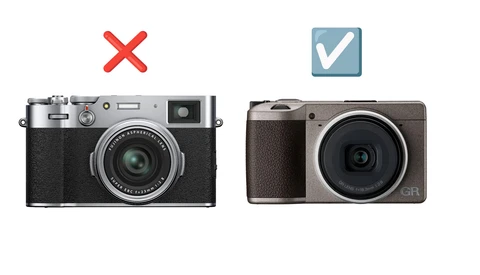
If you had asked me a year ago what the best compact camera was, my answer would have been the Fujifilm X100V. I'm a big fan of Fujifilm's fixed lens compact line, having owned one ever since the original X100 was released in 2010. What captivated me about it 13 years ago were the straight-out-of-camera JPGs. The color rendition of the f/2 Fujinon lens was simply gorgeous.

Why a Two-Decade Full Frame Shooter Switched to Micro Four Thirds

Twenty years behind a camera can lock you into fixed ideas about what gear delivers the results you want. A long-held bias against Micro Four Thirds is exactly what gets challenged here, and the reasons have less to do with specs than with how you actually shoot.

A Review of the New Hasselblad XCD 28mm f/4 P Lens

The new Hasselblad XCD 28mm f/4 P offers uses a very portable wide angle lens that still brings with it some innovative features and the promise of image quality able to keep up with the demands of 100-megapixel medium format lenses, making it intriguing for a range of applications, particularly street photography. Can it live up to those high demands in practice? This excellent video review takes a look at the sort of performance and image quality you can expect. 

Viltrox 85mm F1.4 Pro Z Review: Fast, Sharp, and Surprisingly Refined

I’ve owned a Viltrox AF 85mm f/1.8 for a few years now, and it’s been one of two lenses I take everywhere with me, the other being a 35mm f/1.8. I’ve found f/1.8 to be a very handy aperture for low light shooting, but I still encounter a few situations where I need to crank up my ISO, as it’s not quite fast enough. Therefore, I was very curious when Viltrox announced a new f/1.4 85mm in their Pro line.

Why "Less Perfection, More Human" Is the 2026 Photography Trend That Will Last

Photography has spent most of its digital era chasing technical perfection. Sharp focus, clean files, controlled lighting, smooth skin, perfect exposure across the dynamic range. The pursuit was reasonable. Each generation of cameras and editing software made these standards more achievable, and working photographers who failed to meet them risked looking unprofessional. By 2020, a wedding photographer delivering a slightly soft image was apologizing for it. A portrait photographer leaving visible skin texture was risking client complaints. The technical-perfection ceiling kept rising, and the industry kept rising with it.

What's the Difference Between Blending and Composites?

Is there a difference between blending and compositing in post-processing? Some photographers make no distinction between the two. But for many, there's a notable difference. It can represent the difference between deception and handling noise or dynamic range.

Canon’s Hidden Gem: The 135mm f/2 and Why You Should Own It

Modern mirrorless lenses are beautifully crafted technological masterpieces. Yet, these lenses come at an expense. What if investing in older technology provides a comparable, if not more pleasing, result at a fraction of the price of its modern-day equivalent?

What Is the Difference Between F-Stops and T-Stops?

You may have noticed that photography lenses are marked in f-numbers, f/1.4, f/2.8, f/8, while cinema lenses are marked in T-numbers, T1.5, T2.9, and wondered whether they mean the same thing. They are closely related, they sit in the same spots on the aperture ring, and a T-number looks just like an f-number with a different letter in front. But they measure two genuinely different things, and the gap between them tells you something real about how lenses work and why a cinematographer cares about it while a portrait photographer mostly does not.

Is the Sigma 35mm f/1.4 Art the Best 35mm Lens for Sony Shooters Right Now?

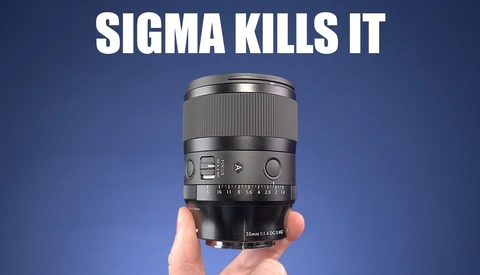
Choosing a 35mm lens for a Sony camera used to mean paying a premium for the Sony FE 35mm f/1.4 GM or settling for something that fell short in one area or another. The Sigma 35mm f/1.4 DG DN Art changes that math in a meaningful way, and the second version of this lens is smaller, lighter, and improved across nearly every metric compared to its predecessor.

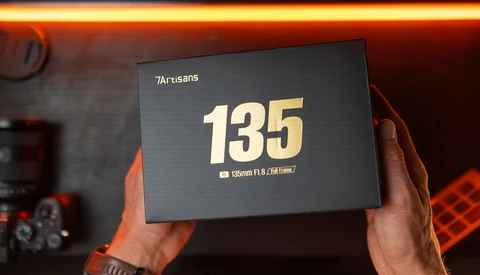
7Artisans 135mm f/1.8 vs. Viltrox: Which One Is Actually Worth Buying?

Choosing between the 7Artisans 135mm f/1.8 and the Viltrox 135mm comes down to a real tradeoff: raw optical and autofocus performance versus a lighter, smaller package at a lower price. At $689, the 7Artisans sits well below the Viltrox, and that gap raises a fair question about what you're actually giving up.

Tamron 35-150mm f/2-2.8 Review: My New Favorite Lens

I heard about the Tamron 35-150mm f/2-2.8 for Sony cameras almost two years ago, but never took the time to test the lens myself. Now that it's out for Nikon as well, I finally got a copy. After two weeks of shooting both stills and video with this lens, I regret how long I've taken to test it, because I believe It's my favorite lens of all time. 

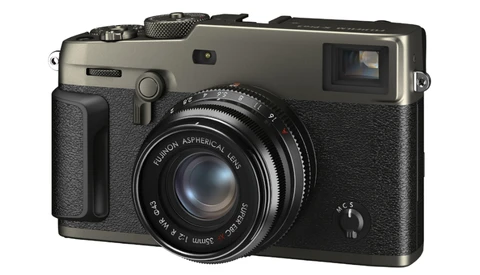
The Fujifilm X-Pro 4 Delay: Is the "Rangefinder" Hybrid Camera Dead?

The Fujifilm X-Pro series holds a peculiar place in the camera market. It is simultaneously beloved by its devoted users and seemingly abandoned by its manufacturer. As we approach what should be the natural lifecycle endpoint for the X-Pro 3, there is no official announcement and no widely corroborated leak from primary outlets suggesting that Fujifilm has any urgency to release its successor. The delay is now long enough that it demands an explanation beyond the standard "product cycles take time" dismissal. I believe the answer lies in an uncomfortable reality: the X-Pro line is being held hostage by its more popular sibling, the X100VI.

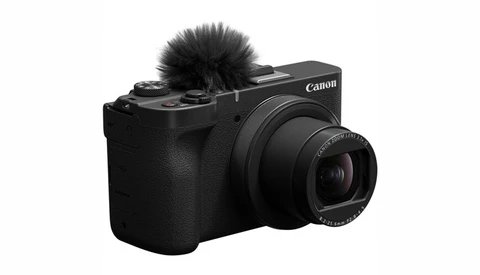
Hands On With The Canon PowerShot V1

I got to spend a week with the new Canon PowerShot V1 and wanted to share with you my impressions that might hopefully help you decide if this is the right camera for you.

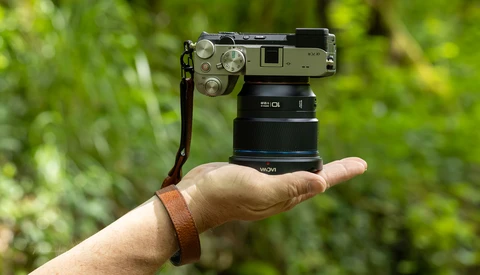
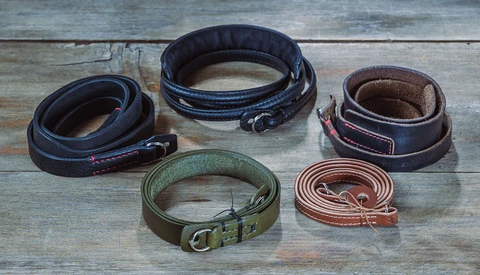
The Best Luxury Leather Camera Straps in World

If you’ve purchased a lovely camera, shouldn’t you buy a lovely, luxurious camera strap for it? That’s a rhetorical question—of course you should! If your camera is your pride and joy—something you’ve aspired to own for a while—and you finally bit the bullet and treated yourself, it’s fitting to give it a beautiful handcrafted shoulder strap. I’ve done this for a couple of my indulgent camera purchases recently, after discovering a surprising number of options when it comes to skillfully crafted leather straps.

Sony's All-in-One Wonder: We Review The 24-105mm f/4 OSS Lens

A few months back, I switched systems, mainly due to work-related requirements moving forward. The system I switched to was Sony, namely the a7R IV, so I needed a versatile lens to start with to allow me time to save for another lens after clearing out my bank account.

The Fujifilm X100VI Is Changing Photography and Now I Understand Why

I never understood why the Fujifilm X100VI is so popular, especially considering how lackluster it appeared on paper. After using it for a few months, I now fully understand exactly why this camera is still sold out everywhere. The answer is not what you'd expect.