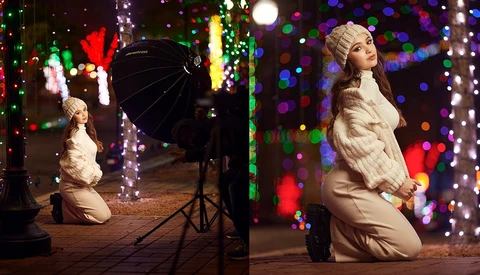
Night Portrait Techniques With One Speed Light
Knowing how to use light effectively is crucial for capturing portraits. Here's a step-by-step guide to get you started with three easy setups.
Knowing how to use light effectively is crucial for capturing portraits. Here's a step-by-step guide to get you started with three easy setups.

Creating stunning portraits even on challenging days is entirely possible with the right techniques and equipment. Understanding how to manipulate both natural and artificial light can transform your photos, giving you the control to achieve the desired effect regardless of the weather.

Hard light, when used effectively, can transform your photos from good to stunning by adding drama and depth. It’s a challenge, but learning to control and manipulate this type of lighting can significantly improve your portraits.

Creating great images doesn't always require complex setups. Sometimes, all you need is a single strobe and a bit of creativity.

Mastering your lighting setup is crucial for confidence as a wedding photographer. Having the right gear can make all the difference in both efficiency and quality.

Understanding how to use ambient light and flash together can greatly improve your versatility. Natural light conditions are unpredictable, and knowing how to work with them can make or break your shoot.

Understanding how to manipulate light direction is crucial for creating compelling portraits. The direction and quality of light can dramatically alter the mood and depth of an image, and this helpful video tutorial will show you how to harness those properties to maximize your image quality and creative vision.

Getting the right look for a portrait often depends on more than just the subject. Backgrounds are essential, and minimalist backgrounds can be a great way to create striking images that emphasize the subject.

Lighting is a crucial aspect of photography, often making or breaking a shoot. Understanding how to manipulate light effectively is essential. This video details a challenging scenario that was transformed into a valuable lesson on lighting techniques.


Aside from being an entertaining series with a great cast, this article discusses why the stunning new Netflix series “Ripley” is a must-watch for photographers.

Using open shade can transform your outdoor photography by providing soft, directional light without the need for complex lighting setups. This technique leverages natural light to create stunning images with minimal equipment, making it a great skill to master.

Off-camera flash photography can significantly enhance your images, but it's easy to make mistakes that can lead to unsatisfactory results. Properly balancing flash and ambient light, controlling flash power, and adjusting lighting angles can make a big difference in the quality of your photos.

As a photographer, you understand the importance of light in creating compelling images. Mastering lighting techniques can elevate your photography to new heights, but it can also feel overwhelming.

Lighting can make or break a shoot, especially when it comes to commercial beauty photography. Having a go-to lighting setup that you can rely on will streamline your workflow and ensure consistent, high-quality results for your clients.

The ability to manipulate and control light is a fundamental skill for any photographer, especially when working with natural light in outdoor portrait settings. Understanding how to shape and modify sunlight allows you to create dimension, depth, and mood.

The ability to craft stunning portraits isn't solely determined by the size of your studio or the expense of your equipment. In fact, with a bit of ingenuity and understanding of light, you can achieve professional-quality results in a limited space using just a single speedlight. This fantastic video tutorial will show you how.

Have you heard the buzz? Sony just unveiled the Sony a9 III, boasting the groundbreaking feature of being the first full frame camera equipped with a global shutter. This technological leap has sent shockwaves through the photography industry, but it's also sparked a flurry of questions, particularly regarding its compatibility with flash and whether it outperforms high-speed sync.

Understanding and utilizing light effectively is crucial for photographers of all levels. Whether you're capturing a landscape or a portrait, the quality and direction of light can make or break your image. But what happens when natural light isn't cooperating?

Fine art portraits often evoke a sense of emotion and tell a story through careful composition, lighting, and posing. While achieving this style might seem complex, it can be done with minimal equipment, even in a small home studio. Let's explore how you can create stunning fine art portraits using just a single light, a backdrop, and some basic modifiers.

Natural light is often touted as the photographer's best friend, yet many struggle to harness its full potential. This disconnect stems from the oversimplification of natural light usage and the expectation that it should automatically enhance photographs.

Big softbox, little softbox, umbrella, or beauty dish? When choosing a key light modifier for your portraits, it can be daunting to decide which one is the best for the job. I've been working as a portrait photographer for 19 years, so in this article, I'll take you through the modifiers I grab most often for shoots and explain what each one does and the best scenarios to use them.

Understanding and effectively utilizing light is fundamental to creating compelling and impactful portraits. This is where the concept of three-point lighting comes into play, offering a versatile and powerful technique for achieving professional-looking results.

Mastering light in photography is essential, whether one is working with the natural glow of the sun or artificial studio setups. Understanding how to manipulate light with just one or two sources can transform the quality of your work, making the subject stand out in ways that are both subtle and profound.

Understanding fill light and its influence on portraits is a cornerstone for mastering off-camera flash techniques. This helpful video tutorial will show you how fill light can elevate a portrait from good to great.

In certain scenarios, such as photographing action outdoors, it’s all too easy to find yourself needing to work at shutter speeds that exceed the flash sync speed of your camera. This is where high speed sync comes into its own, expanding your creative possibilities beyond the limitations of conventional flash.

Recently, Godox launched the V1Pro, an upgrade to the popular V1 flash. But with the V1 already at the top of the pack, was there much to improve? In this review, I’ll be comparing the Godox V1 and V1Pro to determine which you should consider adding to your flash photography kit.

Exploring the vibrancy and dynamics of color in photography opens up a new dimension for visual storytelling. This fantastic video tutorial will show you how to create eye-catching portraits that pop off the screen.

Mastering lighting techniques is a cornerstone of creating compelling compositions, allowing for the manipulation of mood, texture, and depth in an image. The helpful video tutorial will show you how to use shadows to create more pleasing images.

Navigating low-light conditions remains one of the most challenging scenarios for photographers, requiring a deep understanding of camera settings and creative use of available resources. This helpful video provides valuable insights and practical advice that can significantly enhance the quality of photos taken in such tricky environments.

Zhiyun is a brand name that is most known for its gimbals, which offer solid build, useful features and reliability, so it’s good news now that they have ventured into the world of studio lighting!

Understanding the fundamentals of flash photography is crucial for photographers aiming to elevate their portraits. This fantastic video tutorial shares five tips sure to help you improve.

The Godox X3 is a premium flash trigger, with a crystal clear OLED touchscreen and minimalist design. But does this trigger have the brains to match the beauty? In this review, I'll test the X3 versus Godox's previous flagship trigger and help you figure out which option is best for your flash kit.

The importance of the positioning of the key light in portrait photography cannot be overstated, with its placement being crucial to defining the subject's features and the overall mood of the photograph. For portrait photographers, mastering key light placement is foundational, affecting everything from the sharpness of shadows to the subtleties of facial contours.

I am becoming a fan of Neewer gear. Since they changed direction and started producing equipment for themselves, the designs have vastly improved, and the quality of the products has rocketed. Here are two new lights from their stable that are exceptionally good. Their competitors should look out.

The debate between natural light and artificial lighting in photography is ongoing, but the mastering both can significantly elevate a photographer's work and make them far more versatile.

Mastering the use of speedlights and a backdrop for full-body portraits is an essential skill for any photographer looking to elevate their studio work. This fantastic video tutorial offers a deep dive into this technique, showcasing the transformation of a simple setup into a professional-grade photo shoot.

When it comes to equipment, I'm looking for ways to simplify. I try to find tools that make my life as a photographer and videographer easier. And with the Zhiyun Fiveray M20 and M20c lights, I can achieve that, as I show in this article.

In the pursuit of technical excellence in photography, one thing that we often bring up at the forefront of the discussion is the amount of dynamic range that a camera has and how having the incredible power of shadow recovery always makes great photographs. But what if the one silent and great storyteller that often goes unnoticed has something to do with the presence of shadow?

Harnessing the simplicity of a single light and modifier to achieve multiple photographic looks is a game-changer for photographers. This approach not only maximizes the utility of minimal gear but also pushes creative boundaries, allowing photographers to produce diverse and striking images without a vast array of equipment.

Understanding professional lighting equipment is crucial for photographers aiming to elevate their craft. These tools are indispensable for creating high-quality images with ultimate control, but their complexities and capabilities can often seem daunting to those not familiar with the intricacies of professional photography gear.

Early in my photographic career, I was really into hard light in my photos, but at a point, I started opting for really soft, diffused light, that is until recently. I’ve recently revisited using hard light, and here’s how it has shifted my photography.


Often regarded as the best lighting company in the world, Profoto offers a few battery-powered lights. The pinnacle of such lighting is the Profoto B1X. In 2024, however, does it hold up against the competition, and are there better alternatives?

Understanding how to use beauty dishes is key for portrait photographers seeking close-up shots. This fantastic video tutorial will show you the ins and outs of using them for optimal results.

The Sony a9 III, featuring the first-ever global shutter in a full frame camera, is revolutionizing photography by offering unparalleled shutter speeds and flash synchronization capabilities.

I notice many guides online for various light modifiers available. What I don’t see as much is a proper comparison of nearly every modifier available. Having sorted through my kit a few days ago, I realized I have numerous modifiers. In this article, we will compare modifiers so that next time you’re selecting one, you understand their functions.

Strip boxes are an essential tool for photographers looking to refine their lighting techniques. Their dual functionality as both a narrow and broad light source allows for unparalleled versatility in creating both dramatic and subtle lighting effects.

It’s not that I hate Godox or that I am paid by a different lighting brand to hate Godox every month. It is simply that when it comes to producing professional work, their lights are just not fit for the job. Here is why I will not use Godox for professional work.
