

Here are 10 features that should be standard on every camera regardless of price point, but somehow still aren't.
1. Physical Aperture Rings on Every Lens
This isn't nostalgia talking; it's practical necessity that gets more obvious every time you try to quickly adjust aperture in changing conditions. Physical aperture rings give you instant, tactile control over one of photography's most important creative variables, allowing you to make precise adjustments without taking your eye off the subject or fumbling through electronic controls. No menu diving, no hunting for the right button, no accidentally changing your aperture when you meant to adjust something else, and most importantly, no delay between deciding you need a different aperture and actually getting it. The immediate feedback is irreplaceable: you can feel each click, know exactly where you are in the aperture range, and make adjustments even when your attention is completely focused on capturing the moment. This becomes crucial during fast-paced shooting scenarios like weddings, sports, or street photography where every second of delay can mean missing the shot.
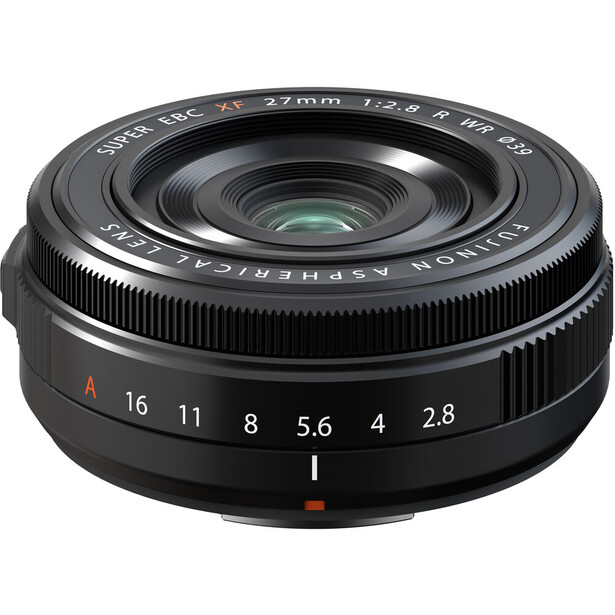
While modern electronic aperture mechanisms are admittedly reliable and consume minimal power, they still can't match the immediacy and tactile feedback of physical rings. Electronic systems require the camera to be powered on, can have slight response delays in extreme temperatures, and force you to look at a screen or viewfinder to confirm your settings. Physical aperture rings work every time, require no power, and give you the certainty that comes from mechanical precision. Give us the tactile feedback, give us the speed, give us the joy of actually using our cameras instead of operating them like sterile computer interfaces. The fact that this feature is relegated to specific brands while others continue shipping lenses without aperture rings shows a fundamental misunderstanding of what makes photography enjoyable and efficient.
2. Physical Controls for All Three Exposure Parameters
Shutter speed, aperture, and ISO are the holy trinity of exposure, and they should each have their own dedicated, physical control: not buried in menus, not assigned to the same dial with a mode switch, not accessible only through function buttons that require you to remember arbitrary assignments. The best film cameras understood this fundamental principle, with models like the Nikon FM series, Canon AE-1, and Pentax K1000 allowing you to adjust any exposure parameter without taking your eye off the viewfinder. Modern cameras have more computing power than the Apollo program, but somehow we've regressed to hunting through digital interfaces for basic controls that photographers have needed instant access to for over a century. The result is cameras that feel like computers first and photographic instruments second, creating unnecessary barriers between the photographer's creative vision and its execution.
This isn't about being "old school"; it's about efficiency and maintaining creative flow when lighting conditions change rapidly. When you're shooting a wedding and the couple moves from bright outdoor light to dim indoor reception lighting, you need to adjust ISO instantly without looking away from the action. When you're doing street photography and want to shift from shallow depth of field for portraits to deep focus for environmental shots, aperture changes should be effortless and silent. Physical controls make you a better photographer by removing the friction between thought and execution, allowing muscle memory to handle technical adjustments while your mind stays focused on composition and timing. The speed difference between turning a dedicated dial and navigating through electronic controls might seem small, but it compounds over thousands of shots and can mean the difference between capturing decisive moments and missing them entirely.
3. Articulating Rear LCD Screen on Entry-Level Models
While most mid-range and higher-end mirrorless cameras now include articulating screens, entry-level models and certain specialized cameras still ship with fixed displays. This creates an unfortunate situation where beginners and budget-conscious photographers, the very people who could benefit most from the ergonomic advantages and creative flexibility of movable screens, are denied this functionality. Low-angle landscapes, overhead crowd shots, discreet street photography, macro work, video recording, and countless other scenarios become exponentially easier with an articulating screen that can flip, tilt, and rotate to match your shooting position. The fact that any manufacturer still ships fixed screens in 2025 is baffling, especially when fully articulating mechanisms can be manufactured cheaply and have been proven reliable across millions of cameras over the past decade. A fixed rear LCD forces you into uncomfortable positions, limits your creative angles, and makes video work particularly challenging when you need to monitor your frame while the camera is positioned away from eye level.
Full articulation means you can flip the screen around for selfies (increasingly important for content creators who need to monitor themselves while recording), protect the LCD during transport by facing it inward, and shoot from virtually any angle without compromising your ability to see what the camera is capturing. It's one of those features that you don't fully appreciate until you have it, then you can't imagine living without it, like trying to go back to a phone without GPS after years of having turn-by-turn directions. The resistance from some manufacturers seems to stem from concerns about durability or maintaining a "professional" aesthetic, but modern articulating mechanisms have proven robust enough for professional use, and the benefits far outweigh the minimal added complexity. Every camera, regardless of price point, should include this basic functionality.
4. Illuminated Buttons Across All Camera Lines
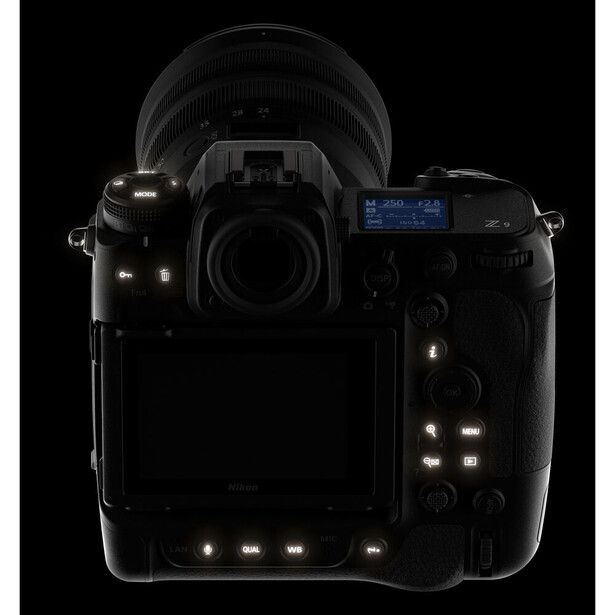
Photography doesn't stop when the sun goes down, so why do most cameras become impossible to operate in darkness? While some professional models include button illumination, the vast majority of cameras, including many high-end mirrorless bodies, still force photographers to fumble around controls in dark conditions. Illuminated buttons should be standard on every camera that costs more than a smartphone, not reserved for $5,000+ flagship models. This isn't just about night photography; it's about any situation where ambient light is low enough that you can't clearly see button labels and control positions. Wedding receptions, theater photography, concert venues, astrophotography sessions, documentary work in dimly lit environments, and even just shooting indoors without wanting to disturb subjects with bright LCD screens all become significantly easier when you can identify controls by sight rather than memory and trial-and-error.
5. Advanced Intervalometer Features
While it's true that most modern cameras now include basic intervalometer functionality, the implementations are often so limited that serious time-lapse photographers still need external accessories. Basic "take a photo every X seconds" functionality is present, but critical features like exposure ramping for day-to-night transitions, bulb ramping for star trails, and advanced scheduling options remain absent or poorly implemented. Every camera should have intervalometer controls that match what dedicated external units provide: programmable delays for setting up shots, duration limits to prevent accidental all-night shooting sessions, exposure ramping capabilities for sunrise and sunset time-lapses that maintain consistent brightness as natural light changes, and proper bulb timer functionality for star trails that can run for hours without external power or intervention. The processing power is already there in every modern camera, the software overhead is minimal, and the user interface requirements are straightforward, yet manufacturers continue to force serious time-lapse photographers into buying $200+ external triggers for functionality that should cost them pennies to implement.
OM System and some Panasonic cameras include more comprehensive intervalometer features that prove this can be done without breaking the bank, compromising other features, or adding significant complexity to the user experience. The resistance seems to be about protecting the accessory market rather than any technical limitation, which is frustrating when you consider how popular time-lapse photography has become. Advanced intervalometer features would open up creative possibilities for countless photographers who currently avoid time-lapse work because of the additional equipment requirements and complexity.
6. Customizable Info Display Layouts
Not every photographer needs the same information displayed on their screen, and we shouldn't all be locked into the manufacturer's idea of what's important, especially when shooting styles vary so dramatically between genres like wildlife, portraits, landscapes, and street photography. The LCD and EVF should function as customizable workspaces that adapt to your specific needs, not fixed interfaces that force you to wade through irrelevant information to find the data you actually use. Want histogram, level, and focus point indicators without all the other clutter that crowds the display during landscape work? That should be one custom layout that you can access instantly. Shooting video and need zebras, audio levels, recording time remaining, and frame rate information prominently displayed? That deserves a completely different layout optimized for video work. Working in controlled studio conditions where you only care about exposure settings, flash sync status, and color temperature? Another layout that strips away everything else and focuses on lighting parameters.
It's basic user interface design that smartphones figured out years ago when they allowed users to customize home screens, notification displays, and control centers. Your camera should be adaptable to your workflow rather than forcing you to adapt to its limitations, especially when the hardware is already displaying all this information and simply needs better software organization. Different shooting scenarios require different information priorities, and a landscape photographer's needs are completely different from a portrait photographer's requirements, which are different again from a sports photographer's demands. The current system of cycling through predetermined display options wastes time and forces photographers to see irrelevant information while hunting for what they actually need.
7. Electronic Level Integration in All Viewfinders
While nearly every interchangeable-lens camera made in the last decade includes a 2-axis electronic level, the implementation varies wildly, and many cameras still don't display this information effectively in the viewfinder where it's most useful. Crooked horizons ruin photos, and "fix it in post" isn't always an option, especially when you're shooting video where rotation crops the frame, working with tight compositions where any cropping loses important elements, or dealing with architectural photography where precision is absolutely critical to the final result. The electronic level should be seamlessly integrated into both the LCD and viewfinder displays, with customizable appearance options that don't obstruct the composition.
What we need isn't just the presence of electronic levels (which most cameras now have), but thoughtful implementation that makes them actually useful during shooting. This means clear, unobtrusive indicators that can be toggled on and off quickly, work in all shooting modes including video, and provide both horizontal and vertical reference points without cluttering the viewfinder. Some cameras bury the level display in menus or only show it on the rear LCD, defeating the purpose when you're composing through the viewfinder. Architecture photographers, landscape shooters, real estate professionals, and anyone who's ever had to re-crop an image because of a tilted horizon knows how valuable properly implemented level indicators become when they're easily accessible and well-designed.
8. Focus Point Linked Spot Metering
This is one of those features that seems so obvious once you think about it that you wonder why it isn't standard across every camera system: your spot meter should automatically measure the light where you're actually focusing, not some arbitrary center point that may have no relationship to your composition or subject. Manufacturers have implemented this functionality in some of their higher-end models, proving it's technically feasible and works reliably, but it remains inexplicably absent from most camera systems despite being a logical evolution of metering technology. It makes spot metering dramatically more useful and intuitive, especially for photographers who regularly work with off-center compositions, backlit subjects, or complex lighting scenarios where the center of the frame doesn't represent the exposure priority.

9. Universal USB-C Charging Implementation
While virtually all new cameras in 2025 include USB-C ports, the implementation of charging through these ports remains frustratingly inconsistent. Some cameras can charge their batteries via USB-C but only when turned off, others support charging while operating but at reduced speeds, and some still require proprietary chargers despite having USB-C connectivity for data transfer. This half-hearted adoption misses the entire point of standardization. True USB-C charging means being able to charge your camera from any USB-C power source, whether that's a wall adapter, laptop, power bank, or car charger, and at reasonable speeds and while the camera is in use.
USB-C charging should mean universal compatibility that eliminates the need for brand-specific chargers, faster charging speeds that can top up batteries during lunch breaks instead of overnight sessions, and the ability to charge directly from power banks during long shoots without needing wall outlets or proprietary adapters. It means traveling with one cable instead of five different proprietary options, being able to charge your camera from your laptop while transferring files, and borrowing charging cables from any other photographer regardless of what camera system they use. The convenience factor alone justifies proper implementation, but the environmental benefits of reducing proprietary charger waste make it a responsibility issue as well.
The resistance feels like an attempt to maintain accessory revenue streams rather than any legitimate technical limitation. Professional photographers who travel frequently or work on location for extended periods are particularly disadvantaged by inconsistent charging implementations that still require carrying proprietary chargers "just in case."
10. Menu Systems That Are Actually Logical and Fast
Camera menus are often user interface disasters that seem designed by engineers who have never actually used a camera in real shooting conditions, resulting in systems that prioritize technical organization over practical workflow needs. We've all spent frustrating minutes hunting through endless submenus for basic settings, wondering why "Image Quality" is buried three levels deep under "Shooting Settings" while "Date/Time" gets top-level placement, or why related functions like ISO settings and noise reduction are scattered across completely different menu sections. The problem isn't just organization. It's fundamental menu philosophy that treats cameras like technical specifications sheets instead of creative tools that need to be operated quickly and intuitively under pressure.
Good menu design isn't optional luxury; it's fundamental to user experience and can make the difference between a camera that supports your creativity and one that fights against it at every turn. When you're shooting a fast-moving event and need to quickly adjust white balance for changing lighting conditions, the last thing you want is to navigate through five menu layers while your subject moves on. When you're trying to set up custom function buttons or configure autofocus behavior for a specific shooting scenario, the menu system should guide you logically through related options instead of forcing you to memorize arbitrary organizational schemes that vary wildly between manufacturers.
The Real Problem
These aren't unreasonable requests that would require revolutionary technology or expensive components. They're basic usability improvements that should have been standard years ago. Most of this functionality either existed on older film cameras or can be found scattered across various current camera models, proving that the technology isn't the limiting factor and that implementation is entirely feasible within reasonable cost constraints. The real problem is that camera manufacturers have become too comfortable treating basic usability as premium features, artificially segmenting markets by withholding fundamental functionality from lower-priced models to create upgrade incentives. Physical controls, logical interfaces, and thoughtful design shouldn't be luxury items reserved for flagship models; they should be baseline expectations for any camera that aspires to be a serious photographic tool.





Join the Fstoppers community for free
-
Post comments and join in the discussions
-
Browse the site ad-free
-
Share your work and get featured in the community
-
Compete in the photo contests for fun and prizes
6 Comments
A well compiled list, just personally don’t agree with the aperture ring on the lens. In find it easier to controle aperture with the thumb wheel and then shutter speed with the index finger wheel and ISO with the control ring. Everything under control without taking my eye of the viewfinder
I'm with you there. Furthermore, aperture rings don't make sense on many large or heavy lenses since you need to swap grip to use them. They can be nice to have if well implemented, especially on small bodies. But not essential for every lens/body combination.
Actually, the aperture ring is not a camera feature, it is a lens feature, and this is an article about camera features. So while Alex's suggestion makes sense to me, it doesn't seem like it should be a part of this particular article.
Actually it’s part of the camera system, it doesn’t say Milc or DSLR. A compact camera can have an aperture ring. But you are right , it is on the lens.
Comunicate like iPhone
Camera controls are a lot like the infotainment systems in modern cars. Most stink. It's up to us to adapt to the machine in both cases.