Photography Education

Whether you just picked up your first camera or you've been shooting for years and hit a plateau, there's always more to learn. This section is where Fstoppers publishes educational content aimed at genuinely improving your photography — not just gear tips, but the foundational understanding of light, composition, and visual thinking that makes the difference between a competent photographer and a compelling one.

Why Fewer Images Can Improve Your Portfolio Fast

Carrying a small camera to a place like Malibu sounds casual, but it exposes how you shoot when nothing else gets in the way. The choices you make in the field usually echo later when deciding what images deserve space on your website.

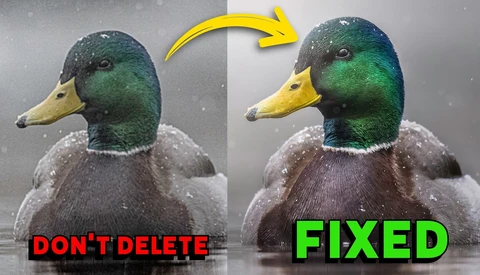
Fixing a Wide Angle Landscape When 14mm Is All You Have

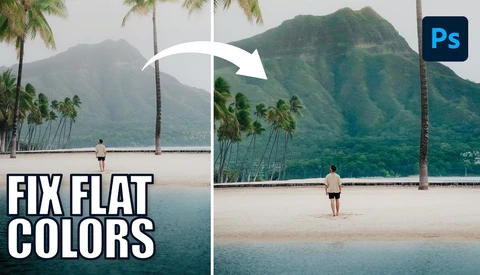
Shooting a landscape with only a 14mm lens can leave you stuck with too much foreground and not enough subject. When the light is right but the lens is wrong, the choices you make in editing decide whether the photo survives at all.

File Formats Decoded: Raw, DNG, JPEG, TIFF, PNG, HEIF, and When Each Actually Makes Sense

Every photographer makes decisions about file formats constantly, yet most of us operate on habit, hearsay, or whatever our camera defaulted to when we first pulled it out of the box. The problem is that choosing the wrong format at the wrong stage of your workflow can quietly destroy your editing flexibility, balloon your storage needs, break compatibility with clients and labs, or degrade your images in ways you won't notice until it's too late. This guide breaks down what each major format actually does under the hood, what it preserves, what it throws away, and when you should reach for each one across capture, editing, delivery, and long-term archiving.

How to Compose Big Landscapes Without Overthinking It

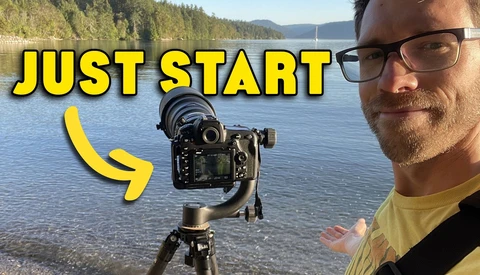
Big landscape scenes fall apart fast if the foreground, light, and framing are not controlled together. When you’re working near water and mountains at sunrise, small choices decide whether the scene feels intentional or scattered.

15 Pancake Lenses That Make Your Camera Pocket-Friendly

There's a particular joy in slinging a mirrorless camera over your shoulder and realizing it barely tugs at the strap. That feeling multiplies when you glance down and see the lens sitting almost flush with the body, transforming what should be a serious photographic tool into something that looks more like an oversized point-and-shoot. Welcome to the world of pancake lenses, where compactness isn't a compromise but a deliberate design philosophy.

Smarter Canon Camera Defaults for Real-World Shooting

Canon cameras ship with defaults that look fine but quietly work against you in real shooting. Change a few early settings and you get more honest exposure previews, cleaner files, and fewer missed shots without buying anything new.

Realistic Couples Poses That Actually Feel Natural

Valentine’s Day photos tend to bring out the same problem over and over: hands feel useless, bodies feel stiff, and everything starts to feel forced. The video focuses on simple couples poses that reduce that awkwardness, whether you’re working with a pro camera setup or just a phone.

10 Photography Laws That Sound Made Up (But Are Very Real)

From copyrighted light bulbs to illegal selfies, here are the strangest regulations governing your shutter button. Most photographers operate under a simple assumption: if your eyes can see it, your camera can capture it. Point, shoot, done. Nobody can tell you otherwise. Except they absolutely can.

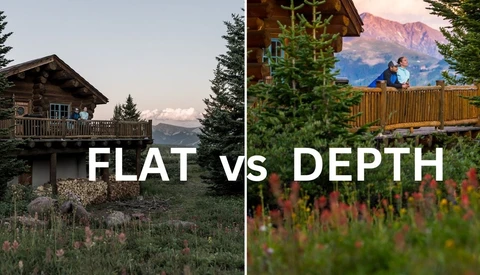
How to Add Real Depth in Lightroom Without Overediting

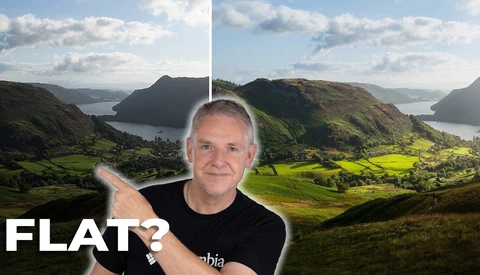
Fog can turn a strong landscape into a flat sheet, even when the scene looked deep in person. The fix is rarely a single slider, and the right masking move in Lightroom can make fog read like real space instead of gray mush.

Photoshop’s New Dehaze Layer: The Real Estate Edit That Stops Looking Fake

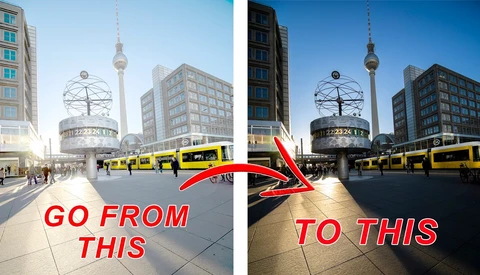
The new Photoshop update adds adjustment layers that feel tailor-made for real estate edits, especially when a scene is flat and hazy. If you shoot homes, rentals, or interiors, the difference between “fine” and “booked” often comes down to controlled, believable separation in the sky, water, and key surfaces.

The 5-Step Landscape System That Stops You From Missing Shots

You can hike all day, reach a location with a clean view, and still walk away with nothing because you rushed the setup. This video is about building a repeatable process so the light doesn’t decide whether you get a usable frame.

Lens Specs Decoded: What MTF Charts, Element Counts, and Aperture Ratings Actually Mean for Your Photography

Camera specifications have become reasonably standardized over the years, but lens specifications are a different animal entirely. Optical performance resists easy quantification, and manufacturers have learned to fill that void with impressive-sounding terminology that obscures more than it reveals. This guide cuts through the jargon to explain what each specification actually measures, when it genuinely affects image quality, and how to read between the lines when comparing options.

Stop Booking More Clients Until You Fix Your Average Booking Price

You can hustle for more bookings and still feel broke, especially when every job expands to fill your calendar. This video is about raising your Average Booking Price (ABP) so the same number of shoots can pay like a real business instead of a grind.

How to Get That Color-Flow Poster Style With a Simple Photoshop Setup

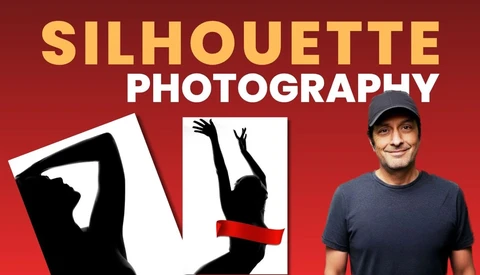
You can get a striking, modern poster look in Photoshop without fancy plug-ins, but only if you stop guessing and start building the effect in a logical order. The video focuses on a specific recipe: a clean silhouette, controlled motion blur, and color that behaves like light instead of paint.

The Painterly Photo Recipe That Actually Works

Chasing that painted look usually breaks down in post or gets derailed by gimmicks, especially when you’re trying to balance mood with detail in Lightroom and Photoshop. The video focuses on a handful of choices that change the feel fast, without wrecking the file or turning everything into mush.

Why Your Zoom Lens Feels Limiting and How to Fix It

A 24-105mm f/4 zoom lens looks like the practical pick until you start worrying that it will leave you stuck with flat light and busy backgrounds. This video makes a sharper point: the zoom isn’t the limitation, the way you drive it is.

Monitor Specs Decoded: What sRGB, Adobe RGB, DCI-P3, and Delta E Actually Mean for Photo Editing

Buying a monitor for photo editing feels a lot like reading the back of a memory card package: numbers everywhere, most of them meaningless without context, and manufacturers betting you won't ask follow-up questions. The difference is that a memory card mistake costs you convenience, while a monitor mistake costs you accurate color judgment on every image you edit. Here's what you need to know. 

Mood Matters: Transform Your Images Through Thoughtful Editing

Let’s explore the often-overlooked significance of editing in photography and how it transforms raw images into compelling visual stories. We will break down the two stages of editing and provide examples that highlight the creative process involved in crafting mood and atmosphere.

How to Make Digital Look Like Film Without Killing Detail

Highlight control in Lightroom is where a clean edit either holds together or falls apart. If skies keep turning chalky or faces get shiny fast, the fix is often less about contrast and more about what you do with the brightest tones.

How to Stop Overshooting Without Missing the Moment

Bad habits don’t always ruin your photos in the moment. They ruin your time, your storage, and your willingness to pick up the camera tomorrow. If you shoot regularly, these patterns creep in fast, and plenty of photographers don’t notice until the backlog feels unmanageable.

A Mistake Almost Every New Photographer Makes

Here's a scenario most photographers will recognize: you come home from a portrait session or family event with 800 frames on your memory card, feeling like you absolutely nailed it. Three hours of culling later, you've exported maybe 15 images worth keeping. The math on that works out to under 2%, which isn't a success rate so much as it is a coin flip repeated until something lands.

How to Start Lightroom Classic the Right Way in 2026

Adobe Lightroom Classic still scares people off in 2026, mostly because the first 10 minutes feel like a wall of buttons and empty panels. If you shoot a lot, you need a setup that keeps files predictable and edits reversible, not a messy pile of “final_final_2” exports.

If You Only Bring One Prime: 50mm or 85mm?

A 50mm and an 85mm can both make strong portraits, but they push you into different decisions the moment you pick one. This video puts the Viltrox AF 50mm f/1.4 Pro FE and Viltrox AF 85mm f/1.4 Pro FE in the same real location so you can see what changes when you use both.

Rain, Fog, Snow: 12 Photos That Prove the Plan Is Optional

You can spend a whole year chasing the next trip and still miss what actually moved your work forward. This recap is built around that tension: the gear and locations change, but the real lesson is how you respond when the day refuses to match the plan.

Stop Waiting for the “Right” Camera and Start Getting Better Results

Lightroom Classic can either become the place where your landscape work stays alive for years, or the thing you install after you have already lost track of it. The video lays out a few mistakes that feel small in the moment, then show up later as missing files, wasted trips, and slow progress.

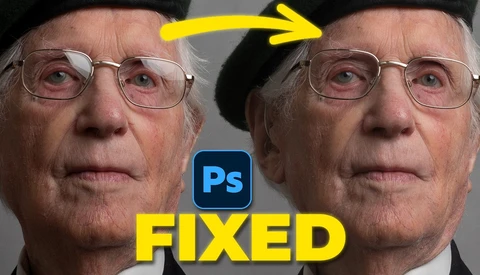
Eye Bag Removal in Photoshop That Still Looks Real at 100%

Dark under-eye bags can wreck an otherwise strong portrait, and heavy-handed fixes usually leave that telltale “plastic” skin. In this video, the focus is removing extreme eye bags in Photoshop while keeping texture believable at 100%.

Two Useful New Adjustment Layers for Photoshop Users

Photoshop just added two adjustment layers that used to force a detour through Camera Raw: “Clarity and Dehaze” and “Grain.” If you edit photos and rely on selective control, the shift is that these effects now live where masks, stacking, and quick revisions are already part of your daily flow.

Mechanical Shutter vs. Electronic Shutter: When Each Wins

The photography internet loves a good "this technology is dead" narrative, and mechanical shutters have been on the chopping block for years. Every time a manufacturer announces a new mirrorless body with blazing electronic shutter speeds, someone declares that physical shutter curtains are finally obsolete. The reality is considerably more interesting. Both shutter types remain genuinely useful tools, each with scenarios where it clearly outperforms the other. Understanding when to reach for each option will make you a more capable photographer than simply leaving your camera on its default mode.

Photoshop 27.3.0 Is Here: The Upgrades You’ll Actually Notice

Photoshop 27.3.0 just dropped, and it targets the exact spots where edits bog down: local contrast tweaks, expansion quality, and cleanup around faces. If you do any real retouching work, this update changes what you can trust inside one PSD without detouring into other dialogs.

Tripod-Free Focus Stacking in Photoshop: Real Limits, Real Results

You can get a sharp foreground and a sharp horizon without living at f/16, and without turning your hike into a tripod march. This video shows how focus stacking in Photoshop can clean up the usual weak spot in wide landscape shots, the near stuff that never lands in focus.

The Precision Myth: A Photographer's Guide to Bit Depth

You've captured what you believe is the perfect sunset. The light was extraordinary, your composition was deliberate, and the histogram looked pristine. You import the file into Lightroom or Photoshop, apply a standard S-curve to add some contrast, and suddenly your beautiful sky transforms from a smooth gradient into something resembling a topographic map. Instead of that seamless transition from warm orange to deep blue, you're looking at a series of ugly, jagged steps. What happened?

The Simple Lightroom Steps That Make a Subject Pop

Lightroom can make a flat landscape feel like it has a clear subject, but only if you control where the light goes. This video shows how simple masks can push attention without turning the edit into a fake-looking mess.

5 Whys Photography Discussions Always Collapse Into the Same Arguments

Photography arguments don’t stall because people are uninformed. They stall because professionals, hobbyists, and spectators speak from different realities while using the same language. This text maps the fault lines that make most debates structurally impossible.

How To Take Control Of Your Edits With Lightroom Classic Masks

If you use Lightroom Classic, masking is the line between “good enough” and an edit that looks intentional. This video focuses on the masking tools that let you target light, color, and texture without pushing the whole frame in the same direction.

Second Shooting vs. Lead Shooter: The Pay, The Stress, The Truth

A wedding job can look like a Saturday with a camera, until someone vanishes and couples are left staring at a calendar with no plan. The video takes that nightmare scenario and turns it into a blunt checklist for how you avoid becoming the person everyone warns about.

This Image Enhancer Beats the Competition

Among the many AI-powered image enhancement tools, the one we show in this article is the first to come close to a one-click solution for print preparation, with nearly no additional cleanup required.

Strong Images, Weak Edits: Why Your Archive Deserves Another Look

Have you ever gone back to look at older images you created? Whether they’re from six months ago or six years ago, there are often elements worth revisiting. As our eyes mature and technology advances, we’re able to see opportunities to refine those images in ways we simply couldn’t before.

The Hidden Reason Your Landscape Photos Feel Busy and Flat

Standing in front of a landscape that feels unreal can make your brain short-circuit, and your photos often show it. This video breaks down a method for getting past that frozen, everything-is-important feeling without turning the moment into a checklist.