
A Review of the Sony FE 35mm f/1.4 GM Lens
Few focal lengths are more versatile than 35mm, being wide enough to tackle things like events coverage, landscapes, and astrophotography, but not so wide that things like portraits are not reasonable.
Few focal lengths are more versatile than 35mm, being wide enough to tackle things like events coverage, landscapes, and astrophotography, but not so wide that things like portraits are not reasonable.

The sheer number of new cameras in the last few decades is staggering, but even so, there are still standout performers that either set the pace or changed the game completely. This video will go through the top 10 and why they had such a profound impact on the industry.

As visual people, we photographers and videographers may neglect extensive post-production on basic audio recordings, but that would be a mistake. In this video, find out how to match the sound of a cheap microphone to one far more expensive.

Good hardware can really help to make a photographer's life so much easier. Is this keyboard tablet hybrid about to change how we work?

Living on the road full time has a lot of challenges, one of the most important being how to keep everything fully charged. From drone batteries to a refrigerator, this is how I manage.

A wide angle lens with a wide aperture is useful for a huge range of scenarios, from landscape photography to astro work and events coverage. For Fujifilm X Series shooters, one option is the XF 18mm f/1.4 R LM WR, and this great video review takes a look at the lens and the sort of image quality and performance you can expect from it in practice.

Wide-angle lenses are the go-to for most landscape photographers, but longer lenses are often seen as underrated. In this video, two professional landscape photographers take either end of the lens spectrum to see who can produce the best shots in the mountains of Wales.

Fujifilm's GFX mirrorless camera series has brought medium format into direct competition with the upper echelons of full frame systems, opening up an entirely new format to many creatives and making it a potentially appealing option for a lot of landscape photographers.

Buying a macro lens is useful for a lot of photographers in a number of different genres, however, it's a difficult purchase to justify if you do not do much macro photography specifically. If it had some other purposes it would be a more palatable purchase, and if you take any portraits, it does have.

Now and again, we all get the desire to buy new kit; it’s only to be expected with the way new tech is marketed, combined with our desire to improve our craft. Do you need that new piece of equipment? Is it time to jump from a cropped sensor to a full frame? Should you move from DSLR to mirrorless?

Buying a new camera when photography is your hobby is a pretty straightforward decision. If you want it and you can afford it, go and buy it. However, once it becomes your profession, it can be a tad more complicated.

Sigma fans have multiple options at the 24mm focal length, both offering the traditional Sigma blend of image quality and prices that undercut first-party options.

The Sony a7R IV has the highest resolution of any full frame camera ever, combined with a range of advanced features and capabilities, making it an intriguing option for landscape, portrait, and architectural photographers or anyone looking for a ton of detail in their images.

Multiple reports describe that the newly announced GoPro HERO 10 camera overheats after just 20 minutes of recording. Overheating seems to occur in both high resolutions 5K capture modes and even in lower resolutions of 4K and 2K capture modes. This could prove to be a major problem if it cannot be fixed through a firmware upgrade.

For the longest time, my favorite lens on any camera system was a 35mm wide-aperture prime. The focal length forced me to get "in the action" for impactful portraits, yet it was wide enough to capture wide angle scenes.

While there are dozens of options for filters, covering different effects, sizes, and manufacturers, I’ve found that I only need a few key filters for a landscape shoot.

As secondary lens manufacturers keep cropping up, they appear to be racing each other to who can make the most impressive lens with the lowest price tag. This is a race I can get on board with.

26-year-old Constantin Schiller was one of very few lucky photographers to trial the newly released Nikon Z fc. Fittingly for him, the new Nikon Z fc was shaped like the FM2 camera of the 1980s, very similar to the FE2 Schiller grew up using. Here, he shares and talks through his experience of the new Nikon camera, including a photo trip to Japan.

One of the Canon EOS R5's headline features was its 8K raw video capabilities, but with all that video horsepower came the caveat of issues with overheating, some of which could be a hindrance in professional environments. So, has the EOS R3 solved those issues, or will filmmakers need to tailor the workflows around keeping the camera cool?

The new iPhone 13 models are here. Let's take a deeper look into the photo and video features of each phone.

A great deal of ink is spilled on these interwebs talking about the latest in photography gear and what you should or should not buy. But photography means more than just technology.

In the mid-2000s, compact cameras were all the rage. Everybody had one, and they were all pretty much the same — small sensors and lackluster features. I’ve lost count of how many Canon PowerShot ELPH cameras I’ve owned that fit this mold.

Tamron's holy trinity of f/2.8 zoom lenses has been a runaway hit for the company, offering smart compromises that bring professional-level quality and performance at prices that significantly undercut those of first-party options.

Fujifilm has made medium format remarkably affordable compared to the past, bringing it within the realm of full frame prices and making it a viable alternative for many photographers. If you are interested in getting into the system, both the GFX 50S and GFX 50S II are fantastic options at different price levels, and this great video will help you choose which is right for you.

Yongnuo is well known for making highly affordable speedlights, but in the last few years, the company has branched out into manufacturing lenses that follow in that budget-friendly tradition. One such lens is the YN35mm f/2R DF DSM lens, and this excellent video review takes a look at how it performs in the real world.

If you're new to photography and want to dip your toe in the waters of flash, you could be forgiven for not knowing where to start. There are speedlites ranging from cheap through to expensive by anyone's standards, and it can be difficult to delineate which option is the best value. Here is one photographer's answer to the best low-cost speedlite.

Fujifilm has lowered the bar of entry to digital medium format cameras significantly, allowing many to enjoy the larger sensor size without having to spend the price of a new car. However, Hasselblad has options that are now in line with higher-end full frame cameras, so how do they compare?

When most people think of Leica cameras, they think of their iconic rangefinders and associated lenses, but the company actually maintains several different camera systems.

The Canon EOS R3 is finally here, and it offers some jaw-dropping specs that are sure to have a lot of photographers and filmmakers salivating. How does it hold up in real-world usage? This excellent video review takes a look at the new camera and discusses how it performs.

In this video, compare the Nikon Z 5 with a kit lens to the Nikon Z 7 with the Nikon 24-70mm f/2.8 for print results. Is there as much difference as you would think, or would you be happy with the entry-level camera and the kit lens?

It takes more than a wide aperture and the right focal length to make a good astrophotography lens. Sigma's 40mm f/1.4 DG HSM Art lens offers a slightly longer but still reasonable focal length paired with that wide aperture, making it a potentially useful candidate for astro work.

The brand new EOS R3 is packed full of exciting features and we’re now starting to get an idea of just how well they perform. Artificial intelligence and eye control autofocus are exciting advances, but what advantages do they bring?

Alongside the much-anticipated EOS R3, Canon has announced the release of two new lenses for its full frame mirrorless cameras: the RF 16mm f/2.8 STM and RF 100-400mm f/5.6-8 IS USM.

Canon has fully unveiled the EOS R3, a full frame mirrorless camera with a 24.1-megapixel backside-illuminated sensor that shoots continuously, black-out free, at up to 30 frames per second. The R3 will go on sale at $5,999.

There’s a vast range of lenses available for Sony’s E mount, including a healthy selection of primes for those on tighter budgets. Here’s a list of eight impressive lenses that cost less than $650 each.

Once you try this mouse from Logitech, it is likely that your Wacom tablet will be pushed to the back of your desk to gather dust. With 20 fully programmable buttons, including a clickable scroll wheel that also tilts either way, the level of functionality reached with this mouse is unmatched by any mouse or peripheral device on the market.

Why should you keep an ultra-wide angle lens in your bag for portrait, engagement, and wedding shoots?

Back in 2015, a Kickstarter campaign appeared for a curious plastic box that attaches to your camera’s hot shoe and allows you to stabilize footage in post so successfully that it replicates the feel of a gimbal. How good is the SteadXP, and could it replace your DJI Ronin?

Premium portrait lenses usually offer apertures of around f/1.4 and sit at prices around $1,500 to $2,500. If you just want a portrait-length lens without ultra-narrow depth of field or the high price tag such lenses come with, one with an aperture like f/2 or f/2.8 could be a better choice.
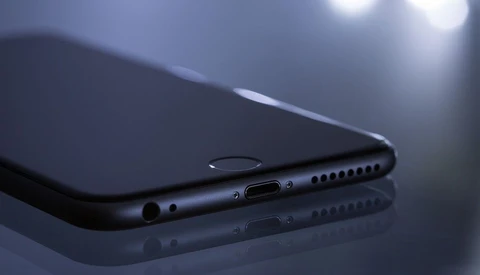
Mirrorless hasn't only won the battle, it's won the war. Last year — 2020 — was a landmark as more mirrorless cameras were shipped than DSLRs. It is the primary design choice for manufacturers and is therefore the future of the camera. However, the future of photography undoubtedly lies with the smartphone.

One of Sigma's newest lenses is the 24mm f/2 DG DN Contemporary, and it brings with the promise of good image quality and performance in a small package, making it suitable for a wide range of applications. How does it hold up in practice? This great video review takes a look at what you can expect.

I was invited for the introduction of the new Fujifilm GFX50S II at Fujifilm Netherlands. Besides the introduction to this new mirrorless medium format camera, I was able to use a pre-production model in the studio. In this article, I will share my first impressions of this new camera and compare it with the first version.

In the world of drone photography, it’s hard to remember that there are players in the market that aren’t DJI. But maybe you are in the mood for something different. Maybe you’re just starting out. It might be worth it, in that case, to check out a few other options.

Smartphones have reached a point where they are legitimate creative tools, and as such, one of the most useful accessories creatives can purchase is a smartphone gimbal. DJI is one of the leaders in this space, and their new OM 5 gimbal brings their latest features and tech to the table. How does it perform? This great video review takes a look.

Fujifilm has confirmed on several occasions that it has no intention of producing a full frame camera. What Fujifilm has done instead is produce some of the best APS-C and medium format cameras. The most remarkable thing Fujifilm accomplished was to bring down the overall price of medium format cameras. The GFX 50 series of cameras are the most notable.

Both Nikon and Sony have APS-C formats for their mirrorless mounts, so why hasn’t Canon followed suit? Many have speculated over whether an RF APS-C camera is in the pipeline, and Canon’s forthcoming lens might be the best evidence to date.

Today Apple finally sent out invites to the much anticipated September event which is cryptically named California Streaming. With only one week to go, what are we expecting to see?

Venus Optics has just unveiled the fastest 35mm prime lens available for full frame mirrorless cameras: the Laowa 35mm f/0.95 FF.

Back in July, Fujifilm announced that it plans to focus investments on pharmaceuticals — and not imaging — in order to drive profits. What does this mean for the future of its cameras?

RICOH has just announced their newest version of a previously popular — albeit reasonably rare to see in the wild — crop sensor body. With a new lens, this could well be a serious contender for a walkaround street photography camera and at a reasonable price!