Fstoppers Originals

Exclusive articles and expert opinions written by Fstoppers’ talented team of creative professionals. Here we cover everything from the latest photographic techniques to advice on running a successful photography business, to first hand accounts of working in the photography industry.

Is the Panasonic LUMIX L10 the Perfect Travel Companion?

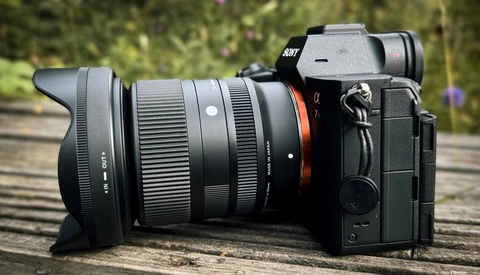
A couple of months back, Panasonic kindly allowed me to take the new Panasonic LUMIX L10 to the Italian Dolomites, with the rather simple brief of finding out what it was like as a travel companion. I wasn’t traveling with the L10 alone. Alongside it was my Nikon Z 8.
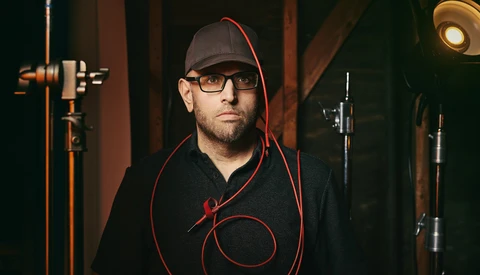
 

How Do You Become a Commercial Photographer? (Sort of)

Sometimes it feels like the photography industry is one magnificent, well-oiled grift. It will happily sell you a two-thousand-dollar lens, the romantic illusion of being an artist, and the sweet, intoxicating hope of making a living, right up until the point when you're in your garage, on a Monday, with all the gear, no clients, and a bank account in the red.


Seven Controls on Your Mirrorless Camera Still Shaped by Cameras That Loaded Film

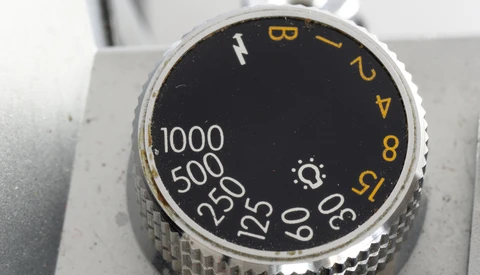
The 1/125 on your shutter dial is a rounding error that stuck. The scale it sits on halves at every step, which puts that rung at 1/128, and 1/128 is an ugly number to stamp into metal. Your camera is full of settings like that: numbers and buttons whose shape was fixed by brass, gears, and gelatin, and that crossed into digital without anyone stopping to re-derive them.


The iPhone Aperture Controversy

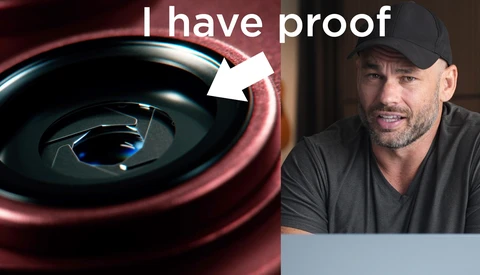
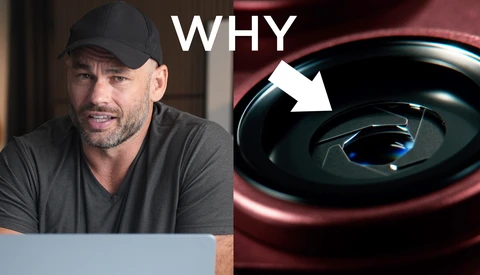
Four days ago I put out a very nerdy video about the variable aperture lens in the new iPhone 18 Pro, and it has since become the most watched thing I have made all year. I did not see that coming. What I really did not see coming was the comment section. 

Why Apple Put an Aperture in the iPhone 18 Pro

Apple announced the iPhone 18 Pro, and the headline camera feature this year is a physical variable aperture on the main camera.  I have been shooting professionally for 20 years, and I sat through that entire section of the keynote thinking the same thing over and over: this does not make any sense. Why would anyone want or need a variable aperture on a phone? 

I Watched Apple's Entire Keynote So You Don't Have To

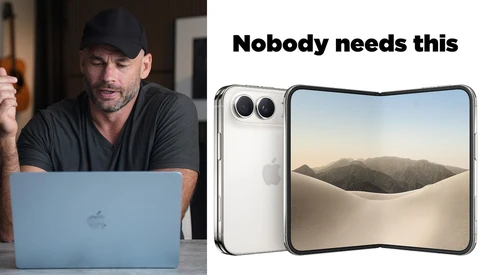
Apple just had a gigantic keynote. New iPhones, new AirPods, new Apple Watches, and the one everybody was waiting on, a folding iPhone. I sat through the entire hour and a half and took detailed notes, and I came out of it more curious than convinced. 

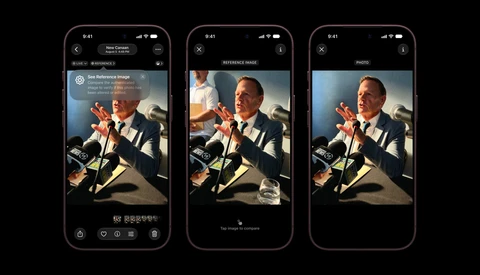
Apple Reference Image: How the iPhone 18 Pro Proves a Photo Is Real

Apple Reference Image is a camera mode on the iPhone 18 Pro and iPhone 18 Pro Max that signs the captured pixel data inside the sensor, then turns that signed data into a second, cryptographically signed copy of your photo that anyone can verify as authentic and not revoked. You keep shooting the normal photo.

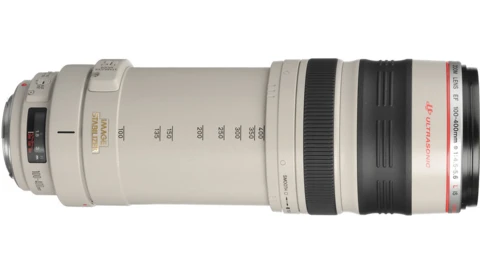
The Push-Pull Zoom Was Faster Than Any Modern Zoom Ring and Dust Got the Blame

When Canon announced the replacement for the EF 100-400mm f/4.5-5.6L IS USM in November 2014, the change photographers argued about was the disappearance of the sliding zoom collar rather than the optics or the stabilizer. The reason repeated everywhere at launch was that a rotating ring stops dust from being pulled into the barrel.

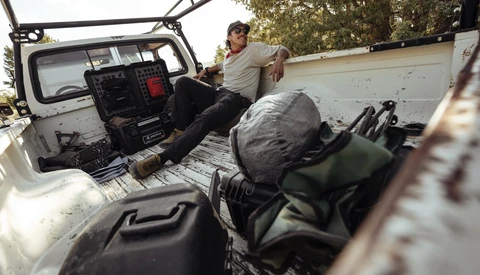
Pelican Intros First Major TV Ad Campaign with Chris Burkard

Pelican has long been a name associated with gear transport and protection. I personally remember customizing their foam inserts to fit my camera gear and lenses as I transported them in their hard cases across the country and the world.

The Undeveloped Film Market: The People Who Buy Strangers' Mystery Rolls at Estate Sales

In late 2014, a lot of 31 undeveloped film rolls that had turned up at an auction in Ohio made its way to a photographer in Boise, Idaho named Levi Bettwieser, who started processing them one at a time. What rose up in the developer was a young American soldier's private record of World War II, shot on rolls that had sat exposed but unprocessed for roughly 70 years.

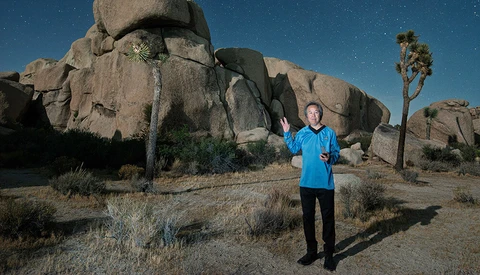
The Secret No One Tells You About Lighting Great Night Portraits

Want to photograph portraits that don't look like deer caught in headlights or someone telling campfire ghost stories? While we might obsess over the Milky Way, the stars, or even light painting, most photographers don't figure out how to take fantastic portraits of people in their night or astro-landscape photos—something that looks polished, dramatic, and intentional.

Why We Smile in Photos: The Surprisingly Recent History of Saying 'Cheese'

By the early 1840s, a daguerreotype portrait no longer took a quarter of an hour. Faster plates and brighter lenses had cut a studio sitting to under a minute, short enough to hold a pleasant face without much strain. Yet for the next 60 years, almost nobody in front of a camera smiled.


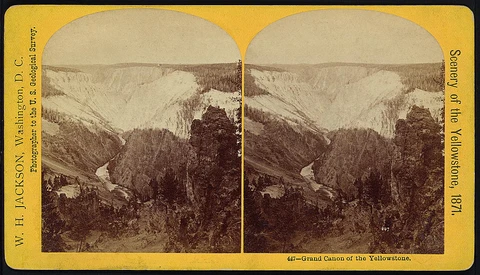
How Photographs Helped Create Yellowstone, the World's First National Park

The 1872 law that created Yellowstone runs only a few hundred words and never mentions a photograph. By the time President Ulysses S. Grant signed it on March 1, prints of the region and a painter's field watercolors had reached Washington and were being used to sell the idea. The pictures entered the campaign before the vote, then left almost no trace in the formal legislative record.

Why Your Rushed Photos Are More Than Just Snapshots

We’ve all been there. You’re out somewhere, with a camera in tow, but the purpose isn’t photography. Maybe you’re walking with family or friends. Maybe you’re running to an appointment. You don’t have the luxury of setting up a tripod or spending fifteen minutes working a composition. You take some extra frames from varying angles or perspectives, just to be safe.

Autofocus Turns 50 in 2027, and the Camera That Started It Was a Konica

Japan observes a Camera Day on November 30, and the date comes from 1977, when Konishiroku Photo Industry put the Konica C35 AF on sale. It was the first mass-produced camera that focused itself, and the part doing the focusing was built by a Minneapolis company whose main businesses were thermostats, industrial controls, and defense electronics.

Why You Aren’t Getting Useful Feedback on Your Photography

I recently wrote about why we should stop accepting standard "constructive criticism" on our photos. Instead, solicit feedback that actually helps you grow as a photographer. But most of us don’t know how to ask for anything better. We never learned how to ask. So how do you get more meaningful input on your work? Ask for a critique. 


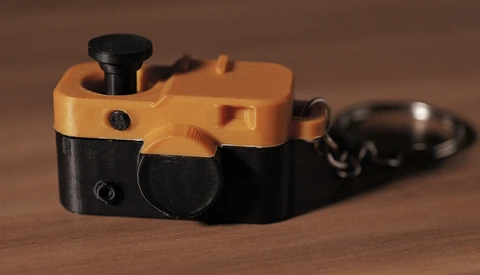
Useful Camera and Tech Accessories and Tools You Can 3D Print Yourself

Whether you do photography as a hobby or professionally, there are a lot of tools and accessories that make what we do easier, more convenient, or even more foolproof. Sometimes even the simplest tools can be instrumental in how we achieve our shots or, on the other hand, something equally important: how we take care of our camera gear.

From 20mm to 60mm: I Test Sigma’s New Full Frame Compact All-Rounder

Sigma is adding an interesting new option to its full frame mirrorless standard zoom lineup: a lens that combines a 20mm wide angle starting point with a compact, lightweight design. The idea was to create a versatile zoom that can stay on the camera most of the time, reducing the need to carry multiple lenses or constantly stop to change them.