
Is This Mid-Level 50mm Lens Worth the Extra Money?
You can spend under $100 for a 50mm lens with autofocus to well over $2,000 if you want the best of the best, with options at just about every price point in between.
Fstoppers gear reviews are written by photographers who actually use the equipment — not benchmark testers looking at spec sheets. This section covers cameras, lenses, lighting, accessories, bags, software, and everything else in a working photographer's kit. The goal is always the same: give you an accurate picture of whether something is worth your money before you spend it.
You can spend under $100 for a 50mm lens with autofocus to well over $2,000 if you want the best of the best, with options at just about every price point in between.

Everyone who owns a good camera eventually wants some degree of remote control. It may be simply to get in a selfie, to take a time-lapse, or to create bracketed images.

Canon's EOS R5 caught the attention of the photography world when it was announced, but alongside it came the EOS R6, which brought with it a lot of the same advanced features at a much more affordable price. If you do not need the 45 megapixels of the EOS R5, the EOS R6 may be the better choice, and this great video review takes a look at what you can expect from it.

Wide-aperture 85mm lenses are some of the most popular out there, a fact the seemingly never-ending arms race between manufacturers for the most bokeh-licious portrait lens can attest to. Not all of us want to spend over $2,000 on such a lens, though, and there are plenty of options that still offer good image quality at much more affordable prices.

The Leica M11 is here, and it brings with it a bevy of new features and improvements that have captured the attention of Leica fans and general photographers alike. This excellent video review takes a look at the new camera and if it can keep up with the legendary standards set by its predecessors.

Generally, travel lenses are meant to cover a wide range of focal lengths to allow you to be able to photograph most things you are likely to encounter. On the other hand, when you go for a large focal length range, that often means sacrificing wide apertures for low-light situations and sharp image quality.

The Tamron 28-75mm f/2.8 Di III RXD was a runaway hit for the company, using smart compromises to offer a light and portable lens with great performance and image quality at a price that significantly undercut offerings from first-party companies.

A 50mm lens with a wide aperture is quite versatile, offering a neutral focal length for anything from portraits to events coverage and a lot of pleasing narrow depth of field and light-gathering capabilities. It does not get much wider than f/0.95, and this excellent video review takes a look at one such option, the TTArtisan 50mm f/0.95.

It certainly is an exciting time to be a gear nerd, with manufacturers having released some truly next-level cameras and lenses in the last few years. This interesting video review takes a look at some of the best options of the last few years, their pros and cons, and how they compare to each other.

Nikon's first retro-inspired camera, the Df, came out to mostly middling reviews noting its emphasis on form over function. Their second effort, the mirrorless Z fc, keeps the retro aesthetic and features far more competitive specs. Did the company hit the sweet spot this time?

I started using the Haida M10 filter system in January 2020, and I liked it a lot. Since that time I have been using the M10 filter system exclusively. Now, Haida released a second generation with many improvements. I was provided with an M10 generation II filter holder for review.

85mm lenses are some of the most popular out there, but premium options can easily run well north of $2,000, which may be a lot more than you want or need to spend.

The Sony a7 IV has finally been released, and it is setting the bar for what we can expect from a mirrorless camera. The question is whether it is so much better than what else is out there that it’s worth getting.

A good macro lens can be one of the most versatile in a photographer's bag, offering fantastic sharpness suitable for things like portraits in addition to its extreme magnification capabilities.

Sony's a7 III was one of the most respected hybrid cameras of recent years, and the a7 IV builds on the camera's well-rounded capabilities with a range of new features and improvements that make it an intriguing option for a lot of creatives. This excellent video review takes a look at the video capabilities of the new camera and how they perform in practice.

Good camera bodies and lenses are rarely cheap, and you can easily exceed five figures outfitting an entire kit. That does not mean you can't find equipment at the other end of the spectrum, though it is going to be more of a lottery. If you need a good laugh, here is what $30 gets you on eBay.

Medium format lenses tend to be pricier than their full frame or APS-C counterparts; after all, a bigger sensor requires bigger glass to match it. A sub-$1,000 medium format lens is a rarity; even rarer is a sub-$1,000 zoom lens.

The Sony a7 IV has generally been met with positive reviews, with most praising its nice balance of photo and video capabilities. That being said, the a7 III is widely regarded as one of the most impressive hybrid cameras in recent history, particularly at its price point. So, is the a7 IV worth the upgrade, or should you save your money?

Medium format used to be something that was reserved only for rental houses and a few lucky photographers, but in the last few years, we have seen some medium format options come down in price quite significantly, though they still sit at the upper end of the price spectrum. So, is it worth shelling out extra for that larger sensor?

Fujifilm's series of GFX medium format mirrorless cameras took the industry by storm by creating medium format mirrorless cameras with modern features normally reserved for systems will smaller sensors and offering them at highly competitive prices.

100-400mm lenses have long been popular for everything from bird photography to sports, as they offer a tremendously useful focal length range.

Like it or not, mirrorless is where the majority of the industry is headed (or has already arrived). And while that means you will eventually have to upgrade your camera bodies, the situation with lenses is a bit murkier, particularly since they generally have much longer useful lifespans and there are many adapters available.

Sony's a7 IV, the long-anticipated successor to the highly popular a7 III, recently arrived, and it brought with it a range of new features and improvements over its already well-balanced and capable predecessor. This excellent video review takes a look at the new camera's stills photography capabilities and the sort of image quality and performance you can expect from it.

50mm lenses are a peculiar bunch, as you can spend anywhere from under $100 to well over $2,000 depending on the sort of parameters, performance, and image quality you are looking for. Canon, Nikon, and Sony all make 50mm f/1.2 lenses as their premium options, and this excellent video comparison takes a look at all three to see which comes out on top.

Picflow is a new program that allows you to deliver images to your client and for that client to select and even download their favorites. Let’s take a look at Picflow's features and operations.

When is a softbox not a softbox? When it's a Sundisc. Here's a long-term review of a multi-talented light modifier that packs down to the size of a pack of small tortillas.

Few recent cameras have had a more profound impact on the hierarchy of consumer options than the Fujifilm GFX medium format series of mirrorless cameras. Perhaps the most interesting of all is the GFX 100S, offering Fuji's best sensor at a price that competes with top-level full frame options, and this great video takes a look at its image quality and performance.

Apple's M1 Pro and M1 Max MacBook Pros are mightily impressive, but their prices can grow quite quickly as you add more features and capabilities, with the top model tipping the scales at over $6,000. On the other hand, the base model comes in at less than half that price. Can it keep up with the demands of professional photographers and filmmakers, though?

24mm is a useful and popular focal length, offering a noticeably wide angle of view without a lot of the distortion that starts to creep in as you go wider.

The Canon EOS R3 is here, and beyond its impressive photography capabilities, it also houses some powerhouse video features. If you have been considering the EOS R3 for your own work and want to be sure it can tackle your needs, check out this helpful video review that tackles 10 pros and cons about Canon's new powerhouse mirrorless camera.

The Canon EOS R3 and Sony a1 are two of the most powerful consumer cameras ever made, both offering ridiculous 30 fps continuous burst rates, class-leading autofocus, and a range of other highly advanced capabilities.
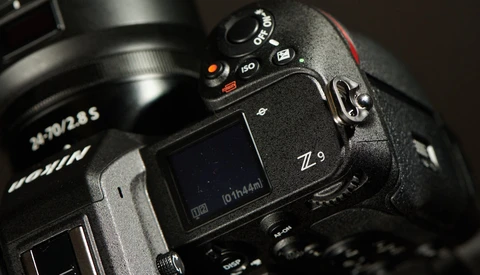
It has arrived! I've got my hands on a production unit of the new Nikon Z 9 flagship mirrorless camera, and here are my initial thoughts.

When it comes to 50mm lenses, you can spend anywhere from under $100 to well over $2,000, depending on the sort of performance, image quality, and maximum aperture you want. For Sony shooters looking for the best options, there is the FE 50mm f/1.2 GM, and this excellent video review takes a look at everything you can expect from it.

If you are unfamiliar with 3D studio software, it's maybe something worth checking out. Ellixxier software produces a 3D pre-vis studio that hits the mark in terms of time-saving when in the studio, and the software has just received another upgrade, allowing more freedom when planning your shoots.

Christopher Frost is one of the best lens reviewers out there, and in his time, he has tested some pretty incredible and rare lenses that most of us could never dream of getting our hands on. This neat video details some of the craziest lenses he has tested and shares some images from them.

Tamron has been one of the most exciting manufacturers in the last few years, establishing itself as a reinvented company that offers pragmatic, versatile lenses that provide great images without breaking the bank.

Budget smartphone Google Pixel 5a wins the MKBDH annual blind smartphone camera comparison. The test and comparison included more than 3 million votes and the results were presented on the Marques Brownlee YouTube channel. What's surprising is that none of the major flagship smartphones made it past the second round.

I got excited when Canon Netherlands asked me to review the new Canon EOS R3. Together with the camera, I received three lenses and was offered just four days to use them under different circumstances. In this review, I share my first impression and shooting experience.

A good wide-aperture 35mm lens is by far one of the most useful many photographers can have in their bag, and there is no certainly no dearth of options out there. This excellent video review compares two of the best options available, the Sony FE 35mm f/1.4 GM and the Sigma 35mm f/1.2 DG DN Art, including their autofocus, bokeh, image quality, and more.

While a 24-70mm f/2.8 lens is often the workhorse of choice for a range of scenarios, 70mm can sometimes feel a little short when you are on a trip or a walk with your camera. An alternative is the 24-105mm or 24-120mm f/4 lens, which trades a stop of aperture for more reach and often, a much lower price.

If you are someone who likes to travel or go for long hikes, you probably know the pain of carrying a bunch of lenses in one bag. A superzoom lens can alleviate that issue by offering a huge range of focal lengths all in one device.

Apple's M1 chip has evolved into the M1 Pro and M1 Max, promising even better performance than the already impressive original and similar super-long battery life. As of now, the M1 Max sits at the top of the lineup, but can it handle all the heavy demands of professional video editing? This excellent battery of tests pits it against two other options to find out.

Tamron has reinvented itself in recent years, creating lenses that offer a combination of sharp image quality, good performance, and smart compromises to bring them to prices that significantly undercut first-party options. Perhaps their most exciting lens yet is the 35-150mm f/2-2.8 Di III VXD, which could potentially replace every lens in some photographers' bags.

A wide-aperture 50mm lens is one of the most versatile a photographer can have in their bag, suitable for everything from low-light events coverage to portraits.

One of the most standard professional lenses for a wide range of genres is the 70-200mm f/2.8, but such lenses are almost always expensive and bulky. In recent years, we have seen a rise in 70-200mm f/4 lenses as alternatives for those who want the versatility of those focal lengths but who do not need the extra stop of aperture.

The Canon EOS R3 has arrived, building on the wild success of the EOS R5 by taking things to another level and offering professionals who demand the most extreme performance and capabilities an intriguing option. Does it live up to its specs? This fantastic video review takes a look.

In my opinion, the Samsung Portable SSD T7 and Portable SSD T7 Touch are some of the best SSDs available. While that sounds like a bold claim, it is based on using these drives daily for the past month. Let’s see what makes these particular models so great and why you may want to get one for the holidays.

Few cameras were more hotly anticipated than the Sony a7 IV, the long-awaited update to the popular and highly respected a7 III. Meant to be equally at home in both photo and video scenarios, the a7 IV brings with it a balanced feature set for hybrid shooters, and this excellent video review takes a look at what you can expect from it on both sides of the coin.

Fujifilm's GFX series of medium format mirrorless cameras caught the attention of the photography industry by bringing a lot of modern camera features to larger sensors and doing so at impressively modest prices. The GFX 100S epitomizes that by offering a ton of resolution, dynamic range, and image quality, all at a price that sits at the upper end of the full frame spectrum.

50mm lenses are some of the most popular out there, and they range from sub-$100 f/1.8 versions to well over $2,000 for professional-level f/1.2 versions. However, Meike makes a 50mm f/1.2 lens for all popular full frame mirrorless mounts that costs less that $400, making it a potentially appealing option for photographers and filmmakers who love bokeh but not the money it often costs.