
We’ve reached the limits of physics, but not of imagination. The next great leap in photography will come from computation, not optics.
The Plateau of Hardware Progress
For decades, the progress of photography was measured in hardware milestones. Bigger sensors delivered cleaner files, faster apertures gave us creamier backgrounds, and sharper optics raised the ceiling of what was technically possible. These were milestones you could see and feel, often with immediate results. Every upgrade was another step closer to perfection. But by 2025, perfection is largely here. Most modern lenses are razor-sharp across the frame. Most modern sensors offer more dynamic range than many photographers know what to do with. The physics of glass and silicon are running out of headroom.
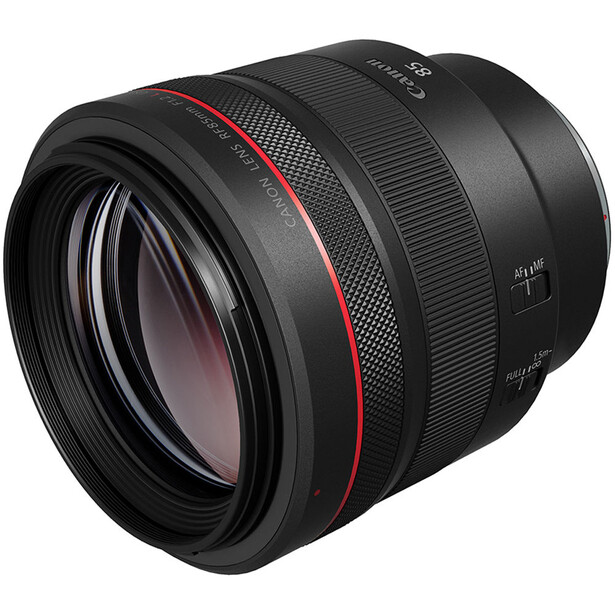
What is transformative are the moments when technology unlocks new creative experiences. A lens can make an image cleaner, but computation can make an image possible in the first place. And that difference is where the future lies.
The Silent Revolution Already Underway
Computational photography is already embedded in many “serious” cameras. OM System pioneered features like Live Composite and Live ND, available in the OM System OM-1, letting photographers simulate long exposures without glass filters and giving them the ability to stitch dozens of frames live. That is more than a time saver. It’s a new way of seeing.
Fujifilm has taken another path. Film simulations in cameras like the X100VI have become iconic. They aren’t gimmicks but deliberate translations of color science that turn otherwise sterile sensors into expressive palettes. A generation of photographers has grown up identifying not with “Fujifilm sensors” but with Provia, Velvia, and Classic Chrome, computational choices that feel every bit as real as film once did.
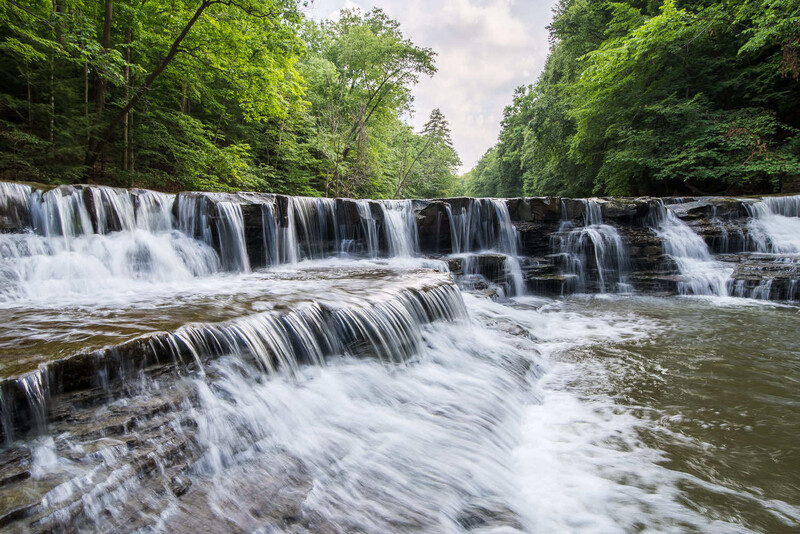
And then there are the quirks unique to certain brands. Pentax’s AstroTracer, available in cameras like the K-3 Mark III, uses sensor-shift stabilization paired with GPS to track stars across the sky. Suddenly, astrophotography becomes accessible to those who don’t own expensive equatorial mounts. Panasonic’s Depth from Defocus autofocus system leans heavily on algorithms rather than pure phase-detect hardware. Even Sony’s Real-Time Tracking autofocus is, at its core, computational, analyzing shape, pattern, and color data to follow subjects.
Smartphones as the Blueprint
The most powerful example is already in your pocket. Apple, Google, and Samsung didn’t win with physics; their phones will always have tiny sensors and simple optics. Instead, they doubled down on computation. Apple’s Smart HDR merges frames seamlessly to preserve skies and shadows. Google’s Night Sight stacks multiple exposures to produce clear, colorful images from near-darkness. Samsung’s computational zoom blends data from multiple cameras to simulate telephoto reach that would otherwise be impossible in such a small device.
These features aren’t curiosities; they’ve redefined expectations. Consumers don’t just accept computational tricks; they rely on them. A smartphone that can brighten a candlelit dinner table or capture a clean handheld photo of the Milky Way feels magical. And once people experience that, their tolerance for “serious” cameras that can’t do the same thing diminishes. A $1,200 phone that produces usable nightscapes challenges the value proposition of a $3,000 camera that requires tripods and editing to achieve a result that looks the same at social media resolutions.
This is why computation is not a side note. It is, or will be, the main story. Phones have proven that computation can stand in for physics, and in many cases, deliver results that feel even more impressive to average users. The camera industry should see this as a lesson, not a threat.
The Industry’s Stubbornness
Despite this, the traditional camera industry clings to its old playbook. Sony releases the a7R V, Canon offers the EOS R5, Nikon refines the Z9. Each delivers faster autofocus, better sensors, or incremental refinements. But these aren’t revolutions. They’re polish. They serve enthusiasts and professionals but fail to inspire the wider culture. In fairness, there is some progress with things like AI-powered autofocus, but the pace is slow.
The contrast is striking. The tools are excellent, but the experience feels outdated. Consumers notice. If phones deliver magic and cameras deliver chores, even the best optics will struggle to hold cultural ground. This isn’t about dismissing hardware. It’s about broadening the definition of progress. Cameras that continue to treat computation as an afterthought risk becoming irrelevant to all but the most technical specialists.
Why Purism Is a Myth
One of the biggest obstacles to change is cultural. Photography has long wrapped itself in the idea of purity. Real photographers, the myth goes, work with light, not algorithms. Computation is cheating. But this has never held water. Autofocus is computation. Image stabilization is computation. Even the raw file is an algorithmic interpretation of sensor data. Every era of photography has been a negotiation between physics and processing.

Unlocking Creativity at the Point of Capture
The most exciting thing about computation is that it expands creativity at the moment of capture. With traditional hardware, many ideas required complex workflows or expensive accessories. Now, they can happen instantly. Pentax’s AstroTracer turns a simple DSLR into a star-tracking machine. OM System’s Live ND lets you blur waterfalls handheld without filters. In-camera focus stacking, available in the Nikon Z9, creates macro images with impossible depth of field directly in-camera.
These tools are about more than convenience. They change the rhythm of shooting. Inspiration is fragile. The idea that pops into your head while standing on a cliff or wandering a city street might vanish if it has to wait until post-processing. Computational tools let you explore those ideas immediately. Instead of recording a scene and hoping to shape it later, you collaborate with the camera in real time. That’s a profound shift in how photographers interact with their tools.
Democratization Through Code
Computation is also a cultural equalizer. Physics has always favored those with money. A fast prime like the Sigma 35mm f/1.2 DG DN Art costs over a thousand dollars. Medium format sensors are still out of reach for most people. Computational techniques, however, give everyone a taste of those effects. AI bokeh simulates shallow depth of field. Multi-frame stacking cleans up noise. Computational sharpening rescues files shot in challenging light.
This doesn’t make hardware irrelevant. But it levels the playing field. The difference between the best gear and average gear shrinks when computation is part of the workflow. That broadens access and brings more people into the creative fold. Photography becomes less about owning the sharpest lens and more about using tools imaginatively. That democratization has always been what keeps mediums alive.
Conclusion: A Hybrid Future
The danger for traditional camera makers is not extinction but irrelevance. Smartphones have already set mainstream expectations. People want polished results immediately. They don’t want to bracket exposures or clean up noise manually. They want their devices to deliver images that look good now. If Canon, Nikon, and Sony ignore this shift, they will remain excellent tools for specialists but lose the cultural conversation.
Once that happens, it’s hard to reverse. A generation raised on iPhones that can shoot handheld nightscapes won’t flock back to cameras that demand tripods and hours of editing. Cultural irrelevance is harder to fix than technical shortcomings. The industry risks being remembered not as the leader of photography’s future but as the caretaker of its past.
The future of photography isn’t about abandoning optics. Glass and sensors will always matter; they are the foundation of image quality. But computation is the new frontier. Cameras that fuse robust optics with computational creativity will define the next decade. A lens may deliver sharpness, but computation delivers possibilities.
Photography has always advanced when it became more accessible and imaginative. Roll film made cameras portable. Digital sensors made them limitless. Computational photography is the next chapter, one that will make cameras not just sharper, but smarter, and not just technical, but cultural. The brands that embrace this shift will thrive. Those that don’t will fade. One way or another, the future of photography won’t just be written in glass. It will be written in code.




Join the Fstoppers community for free
-
Post comments and join in the discussions
-
Browse the site ad-free
-
Share your work and get featured in the community
-
Compete in the photo contests for fun and prizes
30 Comments
It's a bit like an engine. We can't eke out much more from natural aspiration, so we're going to have to use forced induction for noticeable gains now. That said, like you, I'm a little tentative over where the lines are to be drawn. I still want the heavy lifting to be optical.
What an excellent article. Nailed it.
Just when someone says or implies we have reached the technical limit of a particular subject (in this case camera optics) someone or some organization will introduce a revolutionary, disruptive technology that will make many question their current analyses. There is a lot of R&D still being directed toward imaging sensors that may in time completely change what we believe a camera sensor can achieve in terms of speed, color space, resolution, etc. Much of computational photography is not photography but a variation of AI imaging. Not for me.
James wrote:
"Just when someone says or implies we have reached the technical limit of a particular subject (in this case camera optics) someone or some organization will introduce a revolutionary, disruptive technology that will make many question their current analyses."
I agree.
We have not, as Alex suggests, reached the end of physics. Not even close. We have only gotten to a point where now, making lenses and bodies better requires more expense than what could be expected in returns via increased sales.
I am sure that if some company had 800 billion dollars to spend in R&D, they would be able to make an amazing 1200mm f4 lens that is superlatively sharp, has no vignette at all, and weighs only 8 pounds. But no company is going to spend 800 billion dollars on R&D for a lens that nobody would buy.
Ditto for camera bodies. I can think of a gazillion practical improvements for cameras that have not been made yet. But nobody is making any of these features and capabilities because they won't result in net profits. I mean who wouldn't love to shoot with a camera that could be dropped from a 10 story building onto concrete, and work perfectly, or survive a year at a depth of 500 feet in salt water? But no one would be willing to pay an extra $1,350,000 for such durability in a camera body.
So you see, we have not even begun to reach the end of physics. I can't believe Alex said we had, because that is just so incorrect. What we have reached the end of is improvements that can be made inexpensively enough to ensure a profit when manufactured and sold en masse.
You seem to be saying that what's possible and what's practical are two different things. I can't argue physics because of ignorance in that subject, but I would guess far more can be engineered than we know at this time. I agree with you on that point. However, as a consumer, I can't think of a single practical improvement in cameras, lenses or software for which I would pay a dime. I've never had the occasion to retrieve a camera from the bottom of a lake, or concrete floor after dropping it from any height, much as less a tall building. You'll have to come up with a better example. I used to be a good technology customer upgrading stuff at most opportunities because those new features would allow me to do more kinds of work, and do it faster and better, but those days are long gone.
Ok, here's an improvement that many would find practical .....
Many of us shoot things that don't give us enough time to figure everything out before taking the shot. Action sports and wildlife behavior are examples of such situations.
Because there just isn't an extra second or three, and because some scenes include an extreme or challenging dynamic range, we still don't get the exposure just right on every shot.
So how 'bout a camera that's able to continually monitor the exposure in real time, and use that information to change the exposure continually, based on exact parameters that we specify.
For example, I would be able to tell the camera that I want the exposure to have as much light as possible without any of the pixels being 240, 240, 240 (which is pure white, aka "blown out")
Or, I could say that I want the brightest pixels in the sensor to read no brighter than 235 for any of the 3 color values, or no brighter than 230 for any 2 of the color values, but that one of the color values can be 238 or higher, and so on and so forth..
Or, I could specify that I want it as bright as possible with no more than 1% of the pixels being blown ... or 2%,or 5.3%, or whatever I say.
Or I could specify that I am okay with some pixels being blown, but no more than 3 adjacent pixels, or 12 adjacent pixels, or 158, or whatever size group of pixels I say.
So we get to set precise parameters for EXACTLY what we want the exposure to be, and the computer in the camera reads the sensor in real time and adjusts the shutter speed and/or the ISO and/or the aperture to give us the exact exposure we specify. So it would be impossible to ever get an exposure that is anything different than EXACTLY what we tell it to be.
That is certainly possible, and would be useful and practical for many of us, yet it isn't available yet. Seems like it would only require programming and very little to zero actual hardware. So that's one example of a practical technology that hasn't been reached yet.
Isn't that what you do when setting the camera to aperture priority? Set it to F/5.6 or whatever and let the camera adjust shutter speed and ISO on the fly? Presumably aperture priority would give you the shutter speed and exposure without blowing out highlights. I can't imagine that you shoot full manual mode with fast moving subjects.
Seems to me that in your scenario you may get the correct exposure, but you lose control over creative choices pertaining to motion and depth-of-field if exposure is automatic. Maybe you want a bit of motion blur in the wings of a bird, sort of like airplane propellers. How does a fully-automatic system know whether you want a sharp or blurry background? I know you gave this whole subject a lot of thought but I suspect I'm missing something.
Ed asked:
"Isn't that what you do when setting the camera to aperture priority?"
No, not at all.
What I am suggesting is far more precise, far more technical, and completely automated. It ensures that you get exactly the exposure that you want, without you having to waste a precious second adjusting aperture or anything else when the light changes.
For landscapes this would not be useful because you have time to dial the exposure in to the scene you are shooting. But for very dynamic shooting of things that run or fly from light areas to dark areas it would be invaluable.
I still don't understand how you can shoot with any type of automated exposure and still control the amount of motion blur and depth of field that you want.
That is so easy!
Shutter speed is the only one of the 3 factors that controls motion blur, so you select your shutter speed and then let the camera set ISO and/or aperture accordingly.
Aperture is the only camera setting that affects depth of field, so you set your aperture and then let the camera set ISO and/or shutter speed accordingly.
Many of us already do this when we use Aperture Priority. I used to use AP a lot, and I would set the aperture and ISO and then the camera would set the shutter speed accordingly.
But it is flawed because the camera is determining the exposure based on how it reads the light of the scene that you are shooting, instead of basing it on the actual output. Because we have mirrorless systems now, the technology is in place for the camera to be able to set exposure based on output. Read the image on the sensor in real time and constantly adjust exposure based on the parameters that the photographer sets.
Another thing they could make are sensors that capture the entire image circle that the lens produces. It is asinine that our cameras crop the image into a rectangle. Damn them for doing that!
They could make cameras with sensors that are big enough to record the entire round image. Then we would have more to work with when we crop and rotate during the editing process. We could shoot a little tighter and get a few more pixels on subject because we wouldn't have to give ourselves a little room for error. I would certainly pay for this capability, and that's saying something because I am the biggest cheapskate you'll ever know.
30, 40, 50 megapixels should allow all the cropping that most anyone would need. I can crop to a vertical from out of a horizontal pretty well with megapixels to spare. Although if that were my intent, it begs the question of why I didn't shoot vertically in the first place. Honestly, this idea that you would pay extra for surprises me a little. I don't print on round paper so a round image makes no sense. I don't even do square format very often. If I do, it's occasionally as a result of two horizontal images stitched in Photoshop where I really want the extra resolution.
It keeps you from having to decide how to orient the image when you are shooting. It also means you don't have to worry about getting the horizon line level. And you don't have to shoot a little wider to give yourself room for small framing adjustments. You get ALL of the image that the lens produces, instead of the camera cropping some of that image out of the final capture.
Or how 'bout a sensor with pixels of varying sensitivity?
This would be the capability to set ISO individually for each pixel, instead of globally across the entire frame. The results would be similar to HDR, but it would be created instantly at the moment of capture, instead of using software to combine multiple frames or modify the original capture.
The way it would work is that the camera's computer reads the sensor continuously in real time. Then based on what it reads, the brightest pixels are assigned a relatively low ISO, such as 100, while the darkest pixels are assigned a relatively high ISO, such as 3200. And the mid-tones are assigned accordingly.
This would NOT be computational because it would all be done prior to, and at the instant of, the capture, with a single exposure. Traditional HDR is computational because it uses software to modify the original capture AFTER the shot was taken.
The benefit to each pixel having an individually assigned sensitivity is that it would work perfectly when only one frame can be captured, such as with fast-moving subjects like action sports or birds in flight.
I agree that a greater dynamic range would solve a lot of problems when shooting outdoors in bright contrasty light. However, unless noise at ISO 3200 was the same as noise at ISO 100 this would be difficult to do without creating some weird noise patterns. Whether it's three exposures recorded instantaneously and combined by the sensor, or variable pixel ISO, the solution either way is with sensor engineering. In that sense, isn't it all computational?
It is interesting though to see how your mind approaches photography. Thanks for taking the time to explain your ideas. Your wish list appears to be rooted in the sensor; not the optics, as in lens quality. Lens quality hasn't really improved or changed much since I can remember. Maybe smaller and lighter lenses, but as you might expect I would say... nothing new that makes the slightest difference for what and how I photograph.
Ed wrote:
"Your wish list appears to be rooted in the sensor; not the optics, as in lens quality"
What you say here is mostly true. However, there are a few notable exceptions, things about modern lenses that bug the hell out of me and sometimes keep me from getting the images I want to get.
These things are:
Vignette. With so much emphasis on lenses being lighter and smaller, manufacturers are compromising on how big the bright part of the image is. Deep corners and far edges are much darker than the center of the image. This is very much an optical quality issue - darker corners equal poor quality optics.
Minimum focus distance / maximum magnification ratio. This is so extremely, ultra important for so many kinds of shooting that I do. And yet, so many modern lenses do not emphasize, or even seem to care about, ensuring that they have excellent close-up capabilities. I bet they think that people who care about close-up shooting will just use a dedicated macro lens for that. NOT. Dedicated macro lenses are so lame because they only come in shorter focal lengths, and they don't come in zoom configurations. Plus, we don't usually need true 1:1 macro ..... for most situations and subjects, 1:2 would be sufficient.
Focus breathing. For those who shoot video, or who want the full advantage of the focal length they are paying for, a lens that "zooms out" when you focus on very near subjects just freaking sucks. What is the effing point of paying a gazillion dollars for a 600mm f4 lens when it only gives you a field of view comparable to 540m or 480mm or whatever, when you are shooting a bird that just landed at the very edge of your minimum focus distance? OR, you take so much care to quietly and stealthily creep another 2 feet closer to your skittish subject, so that you can put more pixels on the subject, but your lens effectively zooms out so that you don't get the full field of view benefit that creeping 2 feet closer should have given you.
So there's still room for lens makers to improve when it comes to some niche functionalities and the quality of the image projection that the lenses yield.
Ehh.. I dunno. Drawing links between something like Live ND and autofocus just because they both make use of computation is reducing the premise down to “everything’s computer!” and building base assumptions on top of conflation.
Autofocus works exponentially better and faster than the average human manually focusing, ergo it becomes the default. Live ND replaces a physical thing that already exists, but there’s no route for it to do its job “better” than a tinted piece of glass. More convenient? Yes. Markedly better? How? And how often does the average photographer need to focus their lens as compared to taking a photograph of blurry moving water?
What’s generally known as computational photography, beyond allowing phone cameras to shimmy their way around their physical limitations, largely applies a convenience multiplier to things that you can already do some other “usual” way. But they don’t leave you with a “better” image in most cases. Even phone manufacturers have run out of ideas and are resorting to AI-assisted moon photos or generative AI “zoom” functions that just hallucinate what they think you’re pointing your phone at.
Where is computational photography supposed to go that it hasn’t already? Pentax and OM, both highlighted, not only have their respective computational bells and whistles locked down with patents but they also have some of the lowest market shares in the industry (if not the lowest). Live ND isn’t selling that many units apparently. Every manufacturer has to find its own increasingly ineffective and inconvenient way to do Pixel Shift high-res as they patent in succession the most efficient methods.
Where’s the low hanging fruit? And are photographers on average really going to base their buying decisions on computational shortcuts to results they can achieve other ways, especially if they only do so infrequently? I don’t personally think people are that swayed by convenience above all else.
Just my 2¢, and you can’t buy anything with that anymore.
From my perspective, your comments make total sense. I have no interest whatsoever in computational camera features, but that's just my point of view, and I suspect I'm part of a small minority of photographers. My photography is rooted in manual post-processing techniques found in Photoshop versions 15 years old and older, and a 12 year old Nikon D800. However, the rest of the world does appear anxious to whip out a credit card for buying convenience, which dictates research, development and marketing by camera manufacturers. According to Google Gemini, credit card debt in the US earlier this year amounted to $1.21 trillion. I'm guessing there's a lot of people buying wants, wishes and conveniences... and a better photograph without having to think much about it. If reliant purely on pragmatic purchasing behavior, the economy probably would have collapsed by now.
There are definitely some consumer markets propped up by debt, one big one in particular.
I’m fearful of what the near-future brings, because less and less people will have the financial freedom to buy cameras, and especially when people are in stressful financial situations they don’t tend to participate in leisure or creative endeavours (whether they have the time or not).
As the debt becomes untenable, inflated by compound interest as it is, suddenly photography decreases in importance. It’s a sad potential future if people don’t have time to participate in art.
Actually 3 big ones in particular; housing, college tuition, and automobiles.
Predicting the future has almost always been a fools game. A look at the record on predicting how things pan out will reveal how far off the mark we can be. Firstly I would say your analysis is based on fairly shallow assumptions imagining you know what people currently want and knowing what they want in the future. Remember when we all thought vinyl was dead never mind film. Several record shops have opened up in my city in the last two years. Film looked to have died a few years ago now the photographic society to which I belong to has witnessed a strong surge in those wanting to use the darkroom that was almost closed a few years ago. That appears to reflect a wide resurgence in the use of film particularly among young photographers. There is a huge difference between the great unwashed and their photographic demands and that of the professional and enthusiast. The laws of physics have a say in this as there is only so much a phone camera with its built in optical limitations can achieve. I think what ever you imagine is just that your imagining. I would lay big bucks on you being wide of the mark. Futurists in the early 20th century imagined flying cars and robot butlers by the year 2000, but missed computers, the internet, and smartphones. Predictions about energy in the 1950s assumed nuclear power would dominate everything; instead, fossil fuels persisted much longer.
To predict the future demands a huge deal of analysis and understanding that trends are more chaotic in nature than simply just linear that you appear to be implying they are.
The idea behind the incredibly popular RAW file format is that it gives photographers the most flexibility in computer post-processing. Nothing has changed since its inception, no matter what features manufacturers decide to embed in their cameras. And despite the approach that Ansel Adams advocated for pre-visualizing the final print as a foundation for camera exposure and film negative development, I feel no particular obligation to get it perfectly right in camera. Digital photography and the RAW file format afford a lot of latitude in that regard.
Post-processing itself is an art form, and I much prefer to perform that aspect of photography at home on a large high resolution calibrated monitor. Fiddling with camera recipes in the field seems like a lot of misplaced effort. I can understand a wedding photographer trying to minimize post-processing in any way they can for the purpose of saving time on hundreds of similar images. The investment in time for post-processing, however, is as equally important for me as the image capture. Every last image worth printing is worth an hour or more of effort refining details in post-processing. Shortcuts are not necessarily helpful, and certainly not going to help anyone learn the technical aspects of tone and color balance. So many apps offer a simple choice of preset edits that the photographer can get by without ever touching the RGB Levels or Curves adjustments. But that would be like trying to cook a meal without understanding how flavors from different spices mix together. No doubt that seems to be the world we live in – fast with the least effort – just get the damn food on the table and be done with it. It all just feels so terribly artificial and soulless.
I suppose that ultimately I have to agree that the future of photography innovation lies in computational developments. Like it or not, that's probably where the greatest opportunity for where the amateur, hobbyist, and least skilled professional markets can be exploited by technology developers. After all, how much better optical quality can be found in lens manufacturing that we haven't already had for decades? It only makes sense that manufacturers will try and sell us something we never knew we needed. That too seems to be the world we now live in.
U all serious? Shame guys, shame. Don't call urselves photographers pls
I agree. The type of computational stuff being discussed is not photography at all. The author wrote some incorrect things about what is computational and what isn't computational. It's like he's more interested in stirring the pot and getting people to comment than he is in giving completely factual information.
BTW biggest mistake has been photography democratization
Interesting, in what context?
Well, it’s an opinion, and it’s yours Alex. Not that it doesn’t matter, but actually it does not. So a big IMHO would be nice instead of definite , ex cathedra statements.
Second sensor technology has a way to catch up with human vision in terms of dynamic range. So that will keep engineers entertained hopefully.
And finally, as we see today, people get tired and fed up with perfect clean instant images. They use filters, old cameras , old compacts , film, grain etc no negate the sterility of modern technology and bring back the human touch and the journey of creating something instead of getting it instantly and effortlessly. And this is the iPhone generation.
So, IMHO, you’re wrong. But that is okay.
I expect to be part of a very small minority here... But my photographic journey has always been about the process - discovering the world through the lens. Of course producing a good end-product/photographs is also the intention/a fantastic feeling, but purchasing expensive gear and solutions that take the process closer to a point and shoot experience, completely negates the experience for me. The process is 80% of the fun - the output 20%. So whilst the whole world can now take/make computers produce the perfect image for them, I will choose the intimate discovery of our wonderous world - through a camera lens - any day.
Thanks for a very well written and conceived article that addresses my biggest complaint about camera manufacturers. Incorporate my phone's processor in my digital camera!
Glass is still in the game, in the form of silicon sandwiches to capture photons and and then fix it into data. Well written article, food for thought. It is always a surprise what the avid photo citizen will come up with or adhere to. Kodak was quite surprised the PhotoCD was going to the scanning choice of pros for a while. Not everyone will be able to buy a certain camera just for a unique feature...