Articles written by Quentin Decaillet
Whether you are shooting film or have a large collection of negatives, chances are you will want to scan them one day. The process to digitize your analog pictures can be expensive and sometimes even disappointing regarding image quality.
As photographers and retouchers, we are often required to travel. But travel eats up a lot of time and thus it is crucial to optimize one’s workflow. While gear is not everything in our industry, it still maintains a critical place, especially to help save time.
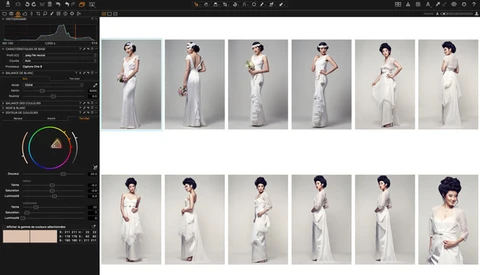
Phase One just announced Capture One 9.2 making the already excellent raw converter even better. This new iteration adds support for a few new cameras, but most importantly comes with a bunch of fresh features to improve professional workflows. The primary goal of this new version is to make professional photographers’ lives easier.
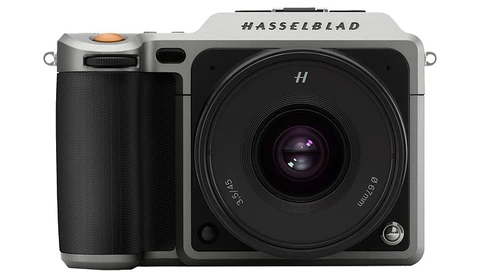
Since its transition to digital, medium format has been thought of as bulky and heavy systems for high-profit commercial jobs or for wealthy photographers. Despite the attempt of Leica to create a smaller camera with the S series, no real alternative to the Hasselblad H and Phase One DF/XF has found a place on the market.
It’s a common belief to think that creativity is a skill that you either have or don’t. While in reality, all creativity truly is a process through which you perceive things and situations differently than others around you. Coming up with an alternative way of seeing requires hard work but it becomes easier with time.
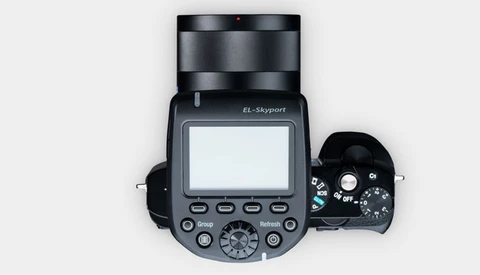
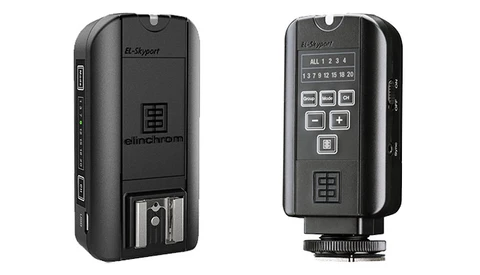
Canon and Nikon have been dominating the professional DSLR market for a while now. Photo accessories such as strobes triggers show that well. However, with the increasing popularity of Sony’s mirrorless cameras, flash manufacturers couldn’t stay with only “Canikon” options. Elinchrom apparently understood that with their Skyport HS and is releasing it’s Sony version today.
Visiting an art museum is so interesting but also so intimidating for the non-expert public. Masterpieces can be seen as very ordinary work when the story behind it is left unknown or is misinterpreted. Fortunately enough, there is at least one curator per exhibition, and they are the persons you want to turn to to get the most out of your visit.
For most of us living in the Northern Hemisphere, the wedding season has begun, and the first images are being sent out to brides and grooms. Delivering pictures to clients is more important than most photographers would like to think, especially for weddings. It is an opportunity to surprise customers, get referrals, and sell more prints or albums.
Slowing down while taking pictures is not always an easy thing. For those of us that learned with digital, the idea of shooting only a limited number of frames per session seems unthinkable.
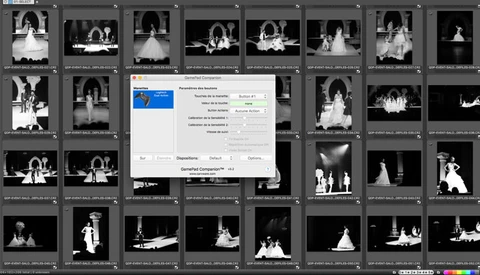
With the wedding season right around the corner, it is time to find a solution to improve last year’s workflow. Most event photographers complain about the same thing: culling. It can quickly become a very time-consuming task, and it is far from being the most interesting part of the job.
For years, Elinchrom users have been complaining about the aging Skyport. A few months ago, the Swiss flash manufacturer finally released the brand new Skyport HS, and it is a great product. However, not everyone needs its advanced features.
Jerry Ghionis probably doesn’t need an introduction anymore. He is a Nikon Ambassador, a WPPI Grand Master, as well as a three-time AIPP Australian Wedding Photographer winner, just to name a few of his achievements. Many that have attended his five-day workshop speak highly of his teaching skills and technical knowledge.
Editorial and commercial shoots are usually very lively and put quite a bit of pressure on the photographer. Managing a full crew on set and making sure all the required pictures are well executed is not an easy task. There are a few things to know in order to be certain everything runs smoothly. In this mini tutorial, Alexi Lubomirski gives you all his tips to get you started.
Continuous light sources used to be preferred by videographers more than photographers. However, in the last few years, it has become common to replace strobes with LED, HMI, or tungsten equipment. Unlike flash, with continuous lighting, what you see is what you get. It makes it much easier to set up and thus a great alternative for fast-paced work environments.
Since digital photography was introduced, our art has become available to most, for better or worse. Releasing a shutter doesn’t cost much anymore, the process of creating an image is easier than ever, and everyone who has a phone is now a photographer. In 2016, going back to film sounds like a crazy idea for many.
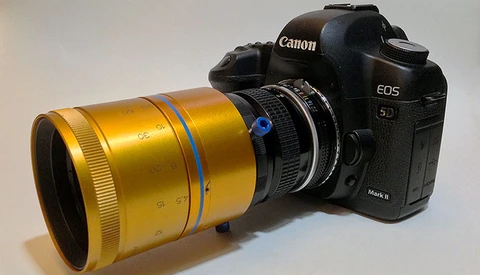
Anamorphic lenses are mostly used by cinematographers to get a ratio of 2.40:1. The cinematic look these lenses offer has become popular amongst photographers lately. While such a wide ratio is not very practical for most genres, the squeezed bokeh and the unique flare these optics create is a way to stand out amongst the competition.
When a commercial photographer, Sasha Leahovcenco, decides to document the touching experience and life of people he has never met before, the result is quite astonishing. You would think pre-production played a huge part and that he had to have had exceptional gear, carried by a huge team, but the truth is far from that.
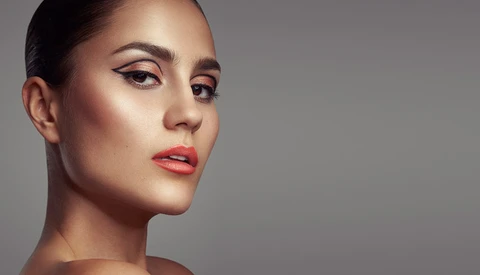
Beauty photography is a very technical genre. It requires substantial lighting knowledge, as well as interest and taste for the subject photographed, and a solid team of creative professionals. The learning curve can be quite steep.
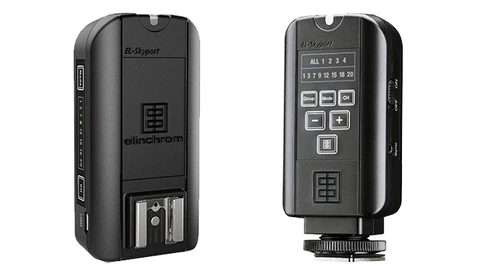
After the successful release of the Skyport Transmitter Plus HS that brought Hi-Sync capabilities to the Elinchrom lineup, the Swiss flash manufacturer now introduces the new Skyport Plus System. While many thought the Skyport Plus HS was the replacement of the old Skyport, it was not. The transmitter announced today is the real replacement.
Whenever we've written an article mentioning Affinity Photo, people have commented and complained that it is not compatible with Windows. But this is about to change in the next couple of months. Affinity just announced that they are working on Windows versions of their different apps.
Don't get me wrong; I am not going to show you how to make up for bad lighting in post-production. However, Glen Dewis has created a very interesting video that shows us how to achieve a gobo-like effect using Photoshop, something that be very handy if you are looking for an easy way to add drama to your picture without spending too much time in front of your computer.
Retouching is a great tool, one that can save pictures in some situations. However, there are a couple of things that can be really time-consuming and annoying to correct in post, two of them being flyaway strands and chapped lips. I am sure those two have happened to any of you who shoot portraits, beauty, or fashion. However, no need to fear these anymore!
Phase One released its new camera body last year, the XF. However, it was not clear if it would ever be compatible with the Leaf Credo backs. It was first said that it would be, and then, months later, the support told everyone who'd ask about it that they could not give any answer. Well, today we finally have one: Leaf Credo backs are compatible with the XF body.
In the retouching world, graphics tablets are pretty much a standard. I don’t know of many retouchers that only use their mouse to get the job done. Graphics tablets allow for a more precise, and thus refined, work. They also used to cost a fair amount of money, but that was until Huion came along.
Current cameras' sensors are getting better year after year. Unfortunately, they cannot create noise-free images at high ISO just yet. I am sure the day will come soon, but in the meantime, there is a very simple technique using Adobe Photoshop or Affinity Photo to create the illusion of a clean file.
Every creative has at least once in his or her career hit a wall and felt down. Breaking through a creative slump isn't always easy. But sometimes, what feels like a creative burnout is actually an accumulation of unproductive bad habits. Creative Live has a way for you to get out of it.
Keeping a fair amount of texture seems to be an issue for a lot of photographers and retouchers. No matter what technique they use to clean the skin of a model, I often hear people trying to find a solution to get a more natural and visible texture. Here is one for you!
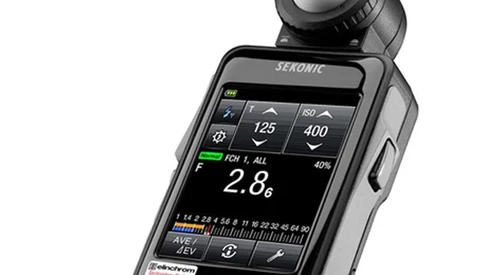
Flash meters are often seen as archaic and of no use anymore. However, good flash meters such as the L-478DR can make photographers and assistants lives much easier. Even more so with the two new products Sekonic releases today.
When learning about retouching, selections and masks should be on top of the list along with curves and brushes. But each of these tools have so many options, and it is hard to know the in and out of each of them. In this article, I will guide you through different ways to create precise and refined luminosity masks to help you improve your retouching skills.
Young photographers often don't have a great budget to buy a lot of equipment when starting out, let alone high-end lighting gear such as Broncolor's flashes and light shapers. Unless the equipment in question is given away, which is exactly what Broncolor offers to talented photographers under 30.
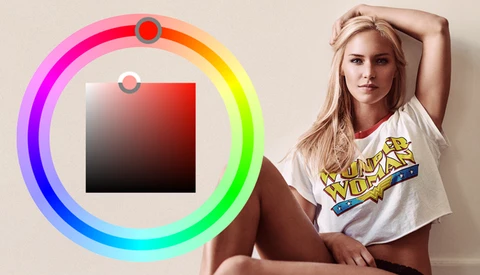
Color correction and grading are probably amongst the most difficult parts of a retouching workflow. What seems to make it difficult in Photoshop is usually the understanding of the different tools available, such as curves and levels. However, there are a couple of tricks that can make it much easier, color palettes and fill layers being some of them.
Lighting action and sports photography can often be complex. The flash cannot always be placed where it should and with the x-sync limitation of our cameras, it can be difficult to have the required settings. But some photographers, like Tristan Shu, master their craft and can push the boundaries of flash photography.
Beginners ask all the time on Facebook groups or in forums how to diminish their retouching time. The truth is, there aren't any magical technique to cut time, only tricks to help accelerate your workflow. There is one, in particular, to make your dodging and burning process more flawless and thus a bit faster by utilizing a Wacom tablet.
When looking for new creative ideas, it seems like everything has already been done by someone. But there are still people, like Jay Philbrick, that manage to create pictures never seen or even never thought of before.
When looking at urbex photographer's work, one can only wonder how they get in some places. Often these photographers will go to crazy locations just to get a single picture. Sometimes risking their life – or so it seems like – to get that adrenaline spike and a picture no one has ever captured before.
Phase One released Capture One Pro 9 just a little over two weeks ago and announced today its first update. This new version includes a couple of bug fixes and adds support for the DxO One camera.
A little over two weeks ago, Adobe released CC 2015.1 for most of its apps. The updates looked great on paper, but for photographers, there were a couple of glitches in the new Photoshop that turned out to quite be annoying. Yesterday, Adobe released a new update, CC 2015.1.1, meant to correct most of the issues.
Adobe released today the version 2.1 of Lightroom for mobile devices. It comes with a bunch of interesting new features making full use of the possibilities offered by iOS 9 and the iPad Pro. Some of the new features also could make one think that Adobe is becoming serious about making great apps for mobile devices.
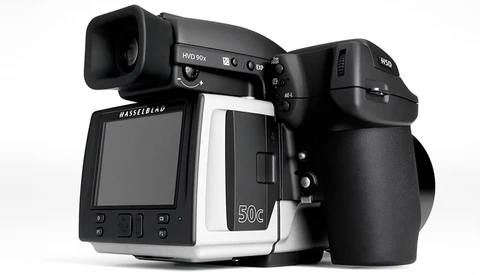
There used to be a time when getting into digital medium format meant you had to put a mortgage on your house and your family. This time seems far gone now that a full kit can be found for under $20,000. With the promotion Hasselblad is running, it looks like Christmas is early this year.
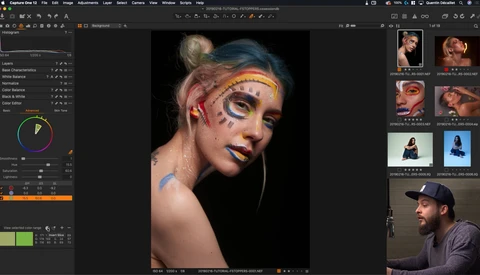
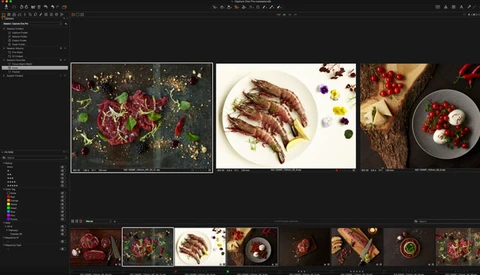
Before Capture One 9, no raw editor software on the market could create a mask based on color. With their recent update, Phase One created something unique with the improved color editor panel. It is now possible to select precisely one color – or a range of – and then create a mask to adjust only the parts needed.