




Profile picture for Alex Cooke
Editor-in-Chief

Alex Cooke

Cleveland, OH
18 3 Star badge
1 10+ Portfolio Images badge
1 Editor's Pick badge
1 Top Contributor badge

Original Articles from Alex Cooke

The Ten Rarest Weather Phenomena Ever Photographed

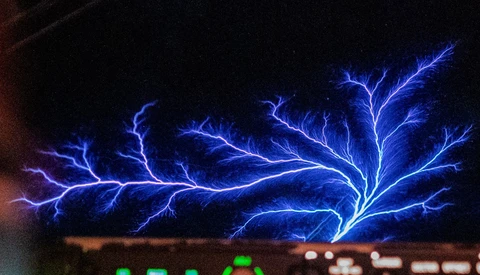
On July 6, 1989, physicists at the University of Minnesota aimed a low-light video camera at a distant thunderstorm to test the equipment and accidentally caught the first image of what is now called a red sprite, a burst of lightning firing upward toward space.
Why Cameras Still Cannot See What Your Eyes See

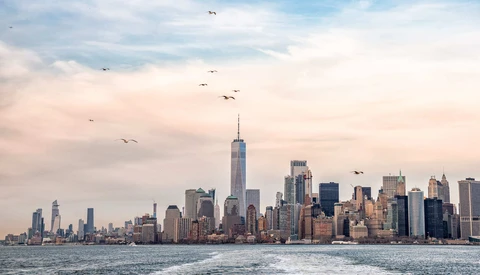
You stood at the canyon rim at sunset, took in the glowing sky and the shadowed rock below in a single glance, and pressed the shutter certain you had it. The file came back with a white sky or a black cliff, never both.

How the First Photo of a Black Hole Was Actually Made

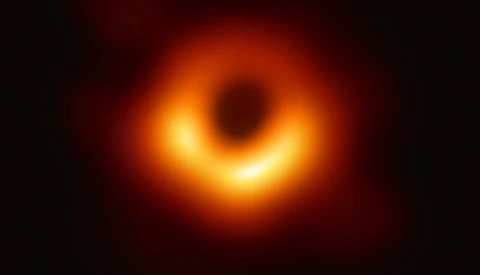
The first picture of a black hole was not taken with a camera, and no single telescope ever saw it. It is a reconstruction, assembled from petabytes of radio data recorded at seven observatories scattered around the globe, then flown across the planet on hard drives.

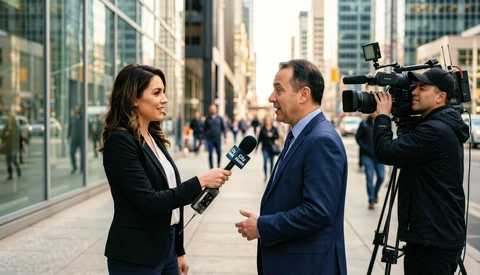
The Saramonic K9 XTX Turns Any XLR Microphone Into a Wireless One

The microphone you already trust is almost never the problem on a small shoot. The cable running out of it usually is. A shotgun on a boom, a reporter's handheld, a hypercardioid on a stand in a conference room: each one works beautifully until you have to get its signal back to the camera, and then you are taping XLR down a hallway and hoping nobody walks through it.

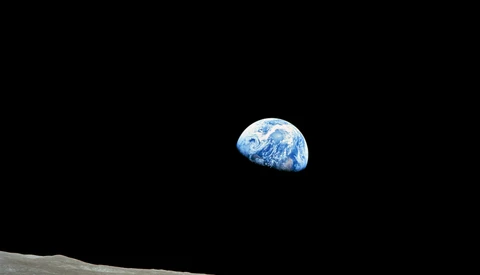
How an Unplanned Photo Became Legendary: 'Earthrise' Was Almost Never Taken

The most influential environmental photograph ever taken was not on anyone's shot list. It happened because a rolling spacecraft swung a blue planet into view over a gray horizon, and Bill Anders had about a minute to find color film before the moment was gone. When he first raised the camera, his commander told him to stop.


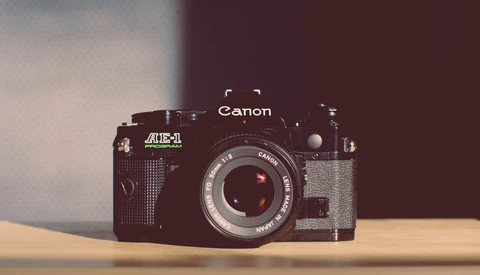
How the Canon AE-1 Turned Photography Into a Mass-Market Hobby

Sometime in 1977, a 35mm single-lens reflex interrupted your evening television. A Japanese company had bought national network airtime to sell it, which almost no camera maker had seriously tried, and the pitch was not about sharpness or lens quality. It was that the thing was easy.


5 Things Most Photographers Should Stop Doing Themselves

There is a particular kind of pride that keeps photographers doing everything alone. You built the business, you know how you like things done, and handing a piece of it to someone else feels like admitting you cannot handle it.

What to Look for in a Laptop for Photography in 2026

The right laptop edits a wedding on a hotel bed as happily as it does at your desk; the wrong one turns every export into a fan-screaming, battery-draining compromise. Here's how to tell them apart in 2026, and which machines are actually worth carrying. 

How to Get Sharp Photos Every Time: A Beginner's Checklist

Blurry photos almost always come down to one of three things: the camera moved, the subject moved, or the lens focused on the wrong place. That is genuinely most of it. Once you can recognize which of the three is ruining a shot, the fix is usually fast and specific.

What to Look for in a Desktop Computer for Photography in 2026

Your camera gets the glory, but your desk is where the hours actually go. Culling a 2,000-frame wedding, stacking a 40-shot Milky Way panorama, running AI masks across a folder of 61-megapixel raw files: none of that happens in the field. It happens on the machine under your monitor, and the wrong one turns each of those jobs into a coffee break you didn't ask for.

7 Mistakes Beginners Make With Their First Prime Lens

Your first prime lens, usually the classic 50mm f/1.8 "nifty fifty," is one of the best teaching tools in photography. It is small, sharp, inexpensive, and it forces good habits that a zoom never demands.

How to Build a Complete Landscape Photography Kit for Under $800

A used Sigma 10-20mm ultra wide for a Nikon DSLR is $97 right now. The nearest equivalent for a Sony APS-C body, the E 10-18mm f/4, is $433 on the same used shelf, and that single gap decides which system a beginner landscape kit should be built on. Here is the whole thing, camera through headlamp, itemized to $758.91.


Focus Limiters: The Overlooked Switch That Can Reduce Autofocus Hunting

There is a switch on your telephoto lens that many photographers never touch. It sits in the bank of controls on the barrel, usually labeled something like FULL and 3 m to infinity, and it is one of the quickest things to check when you hit the most maddening autofocus problem there is: the lens racking back and forth through its focus range while the bird you wanted flies away. 

The Photographer Who Never Secured a Way Home: The Death of Carl McCunn

In March 1981, an amateur wildlife photographer named Carl McCunn arranged to be flown deep into the Alaskan bush to spend the summer alone with his cameras. He brought 500 rolls of film, 1,400 pounds of provisions, two rifles, and a shotgun. He never secured a dependable way to get back out, and that failure turned out to be one of several.

13 Second-Shooter Mistakes That Get You Blacklisted

Second shooting is the most common on-ramp into professional wedding and event photography, and it runs almost entirely on trust. A lead photographer is handing you part of the most important day of a client's life, on their reputation, under their contract, for money the client paid them.

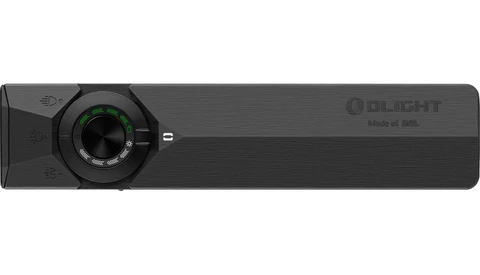
Four Lights, One Pocket: The Olight ArkPro EDC Flashlight Reviewed

The Olight ArkPro Ultra is a flat, pocketable everyday-carry flashlight that tries to do something most lights do not: put four different light sources in one slim body. Alongside the usual white flood and a longer-throwing white spot, it adds an ultraviolet output and a green laser.

Myth: Full Frame Is a Goal Every Photographer Should Be Working Toward

The way most photographers talk about sensor size gives the game away. There is a ladder in their heads. Phone at the bottom, then the little compacts, then Micro Four Thirds, then APS-C, then the promised land of full frame, and you climb it as you get more serious, upgrading rung by rung until you arrive. Buying a full frame body is treated as a graduation.

Myth: You Need f/2.8 Zoom Lenses to Turn Pro

Somewhere in the path from enthusiast to professional, most photographers absorb a belief they were never quite taught directly: that going pro means owning the holy trinity. A fast wide zoom, a 24-70mm f/2.8, and a 70-200mm f/2.8, all at that magic constant aperture, bought as a set, treated as the cost of admission. The gear becomes a credential.

Pixel Pitch: Does Camera Pixel Size Actually Matter?

Ask around and you will get a confident answer: bigger pixels are better. They gather more light, so they produce cleaner images with less noise, which is why the low-megapixel low-light specialist supposedly beats the high-resolution body when the sun goes down. It is one of the most repeated ideas in photography, and it is mostly wrong.

Quantum Efficiency: The Sensor Spec Nobody Publishes

Almost every consumer camera you have ever bought came with a spec sheet, and that spec sheet left out the one number that most directly describes how good the sensor is at its actual job: catching light and turning it into signal. It told you the megapixel count, the ISO range, the frame rate, the buffer depth, the number of autofocus points.

How to Choose Your First Interchangeable-Lens Camera in 2026

Buying your first interchangeable-lens camera is a harder decision than it should be, because the marketing pushes you toward the wrong questions. It wants you comparing megapixels and burst rates between bodies. Those numbers barely matter for a beginner.

How to Use AI in Your Photo Business Without Becoming the Thing Clients Distrust

There are two completely different ways to use AI in a photography business, and clients react to them in opposite directions. Confusing the two is the fastest way to talk yourself out of a tool that would save you ten hours a week, or into a practice that quietly costs you the trust your business runs on.

What Spot Metering Is and When to Switch to It

Your camera decides how bright to make a photo by measuring the light in the scene, and it gives you a choice of how much of the frame to measure. Most of the time it reads almost the whole frame and evaluates the scene as a whole, which works well for ordinary, evenly lit scenes. But some scenes fool that approach badly, and that is where spot metering comes in.

What Clipping Is and How to Spot It Before It Ruins a Shot

You take a photo of a beautiful sky, glance at the back of the camera, and it looks fine. Later, on your computer, the sky is a flat sheet of pure white with no clouds, no gradient, nothing to recover. That is clipping, and it is one of the most common ways a promising shot quietly dies.

What Is Base ISO and Why Does It Gives the Cleanest Photos?

If you have spent any time reading about camera settings, you have heard the advice to keep your ISO as low as possible for the cleanest image. The lowest normal ISO setting your sensor is built around has a name: base ISO.

How to Make Flat Light Work for Your Portraits

Flat light gets a bad reputation. The moment the sky turns from blue to a sheet of gray cloud, a lot of photographers pack up, assuming the good light is gone for the day. That instinct is backward.

10 Mistakes That Kill a Headshot

A headshot has one job: to make a person look like the best, most confident version of themselves, and to do it in the fraction of a second a viewer spends forming a first impression. That is a narrow target, and it is easy to miss. What helps is that these failures repeat.

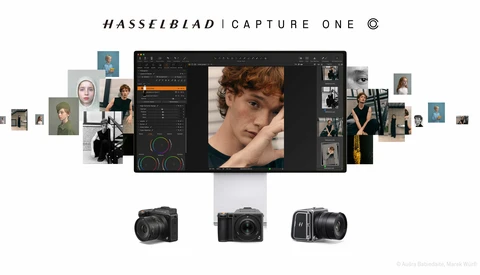
'We Own More Cameras Than We Have Employees': Inside Capture One's Hasselblad Deal

The announcement itself was straightforward enough. On July 2, Hasselblad and Capture One confirmed that Hasselblad's .3FR raw files now open natively in Capture One, with dedicated color profiles for the X2D II 100C, the X2D 100C, and the CFV 100C digital back, and lens profiles covering 19 XCD lenses. Tethered capture is planned for later in 2026.

11 Mistakes That Make a Portfolio Look Unprofessional

A portfolio is not a gallery of your favorite photos. It is a sales tool, and its only job is to answer one question in a potential client's mind: can this person deliver the specific thing I need, done well? Most portfolios fail at that job not because the photography is bad, but because of a handful of avoidable mistakes in how the work is chosen, ordered, and presented.

Why Your Photos Look Worse Than the Scene You Saw

You stand in front of something stunning, a valley flooded with evening light, a city skyline at dusk, and you press the shutter sure you have captured it. Then you look at the file and the magic is gone. The colors are flatter, the sky is blown out or the ground is a muddy mess, the mountain that loomed over you looks like a small bump, and the whole thing feels ordinary.