Featured Articles

Fstoppers Community
Photo of the Day
Oct 9

Maëlle

Oct 8

Solar eclipse August 12 2026

Oct 7

Ruinaulta

Oct 6

Under the Black Sun

Oct 5

Glass breath

Oct 4

Sunset in the Woodland

Oct 3

Bentonite

Oct 2
His Shadow Below

Oct 1

The Midas Mirror

Sep 30

Light explosion

Sep 29

Dune 47, Namibia

Sep 28

Fall from Grace

Sep 27

When the Stream Runs Low

Sep 26

Bronte Baths

Sep 25

Mighty Seceda

Editors' Picks




























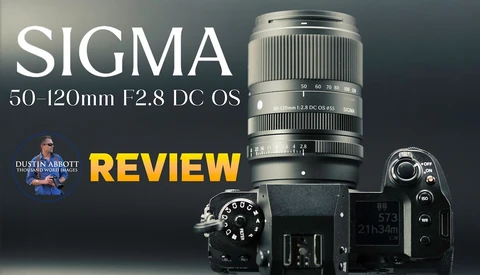
Can Sigma's 50-120mm f/2.8 Replace Fujifilm's Pricey Telephoto Zoom?
If you shoot APS-C and want a bright telephoto zoom, your options have been thin, and on most mounts they haven't existed at all. Sigma's new 50-120mm f/2.8 arrives for Fujifilm X, Sony E, and Canon RF at a size and price that make it a realistic addition to a small kit.
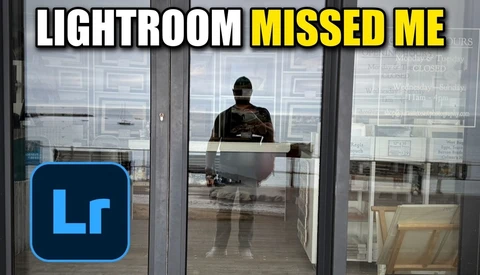
How to Fix Window Reflections That Lightroom Can't Remove
Reflections in shop windows and glass doors are among the most common things you'll try to clean up in post, and Adobe's latest Lightroom update promises to make its one-click fix more reliable. When that tool still misses, a newer generative feature in Lightroom can take over, as long as you control what it changes.
Latest Gear Reviews



Active Contests

1
53
We want to see the images that still give you chills
Welcome to the October installment of the Critique the Community! This month's critique theme is going to be "Scary," and we want to see your best photographs that scared you in some way.
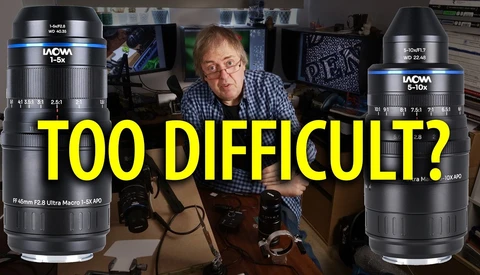
Can Laowa's New Ultra-Macro Lens Replace Canon's MP-E 65mm?
Laowa's two new Aksen Ultra Macro APO lenses cover everything from life size to 10 times life size. At that scale, depth of field shrinks to a sliver, light drops off as you zoom, and the gear around the lens decides as much about the result as the glass does.
Fstoppers Exclusives





School Picture Day: The Strange Economics of the Largest Portrait Operation on Earth
One company photographs roughly 30 million children a year. Not over a decade. In a single school year. A kid sits on a stool, a stranger says "chin down, eyes up here," a strobe fires, and the whole thing is over in the time it takes to sneeze. Multiply that by tens of millions and you have the largest sustained portrait operation the world has ever run.

Godox C100 Review: A Camera With No Rear Screen and No Pressure
I love exploring photography in all its forms, and that extends to novelty cameras. When I saw the Godox C100, which looks like it belongs in the 1990s, I had to try it as a new way of making images. It has no rear screen, so you can't perfect your composition, and you can't check a shot after you take it either.

How Many Photos Should You Take in a Day?
Burst shooting costs nothing per frame, so after a big day in a new place, it's easy to come home with thousands of files and an evening of culling ahead. That math feels free until you notice how much of your attention went into pressing the shutter and how little went into looking at the place you traveled to see.
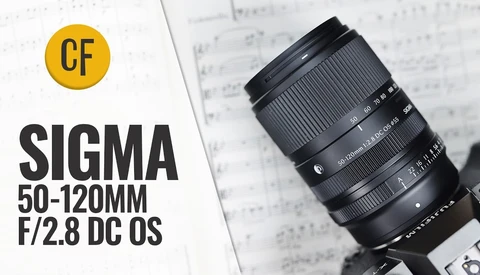
Sigma Shrinks the f/2.8 Telephoto Zoom for APS-C Cameras
An f/2.8 telephoto zoom is usually the heaviest lens in an APS-C bag, and the Sigma 50-120mm f/2.8 DC OS Contemporary is built to change that. If you shoot Fujifilm, Sony, or Canon crop bodies, a stabilized fast zoom at this size fills a spot that has mostly gone to much bigger glass.

Taking the OM System OM-3 on a Coastal Bike Ride
If you've ever packed a camera for a bike ride, you know the body is rarely the heavy part, since a couple of lenses with any reach can fill a bag faster than the camera itself. The OM System OM-3 and the Micro Four Thirds format offer one answer to that weight problem, and a long ride along the Northumberland coast puts that answer to a practical test.

Sony Never Made an 85mm f/1.2, So Sigma Did
Canon and Nikon shooters have had autofocus 85mm f/1.2 lenses for years, while anyone on Sony E-mount or L-mount has had to settle for f/1.4 or give up autofocus entirely. The new Sigma 85mm f/1.2 DG Art changes that, and it asks a fair question of anyone who already owns a good f/1.4 portrait lens.
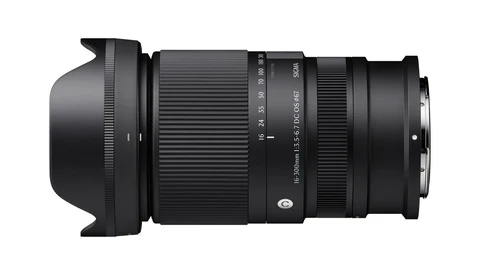
Sigma Brings Its 18.8x 16-300mm f/3.5-6.7 Zoom to Nikon Z for $769
Sigma has announced a Nikon Z mount version of its 16-300mm f/3.5-6.7 DC OS Contemporary, an all-in-one zoom for APS-C mirrorless cameras with an approximately 18.8x zoom ratio, going on sale November 5 for $769.
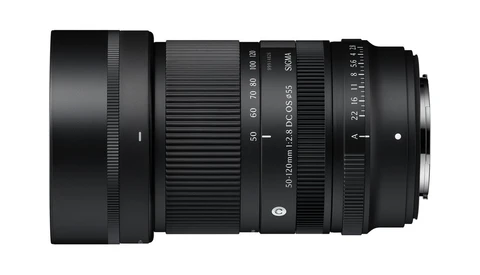
Sigma's $799 50-120mm f/2.8 Gives APS-C Shooters a 75-180mm-Equivalent Telephoto Zoom
Sigma has announced the The 50-120mm f/2.8 DC OS Contemporary, a stabilized telephoto zoom for APS-C mirrorless cameras that covers roughly 75-180mm in full frame terms at a constant f/2.8 and goes on sale October 22 for $799 in Sony E, Fujifilm X, and Canon RF mounts.

The Newspaper Picture Editor Was Photography's Most Powerful Job, and It Is Disappearing From American Newsrooms
On May 30, 2013, Sun-Times Media laid off 28 photographers and photo editors across the Chicago Sun-Times and its suburban papers, including John H. White, who had won the 1982 Pulitzer Prize for feature photography.

Spend $186, Get Over $4,700 in Photography Products Now
Fstoppers has partnered with 5DayDeal to offer the best photography deal of 2026. The bundle is filled with education, software, and tools from a wide variety leaders in the photography industry. The product list is fantastic.
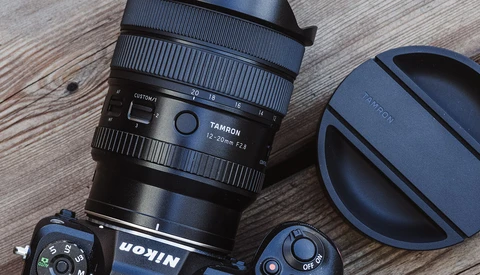
Tamron’s New 12-20mm f/2.8 Is Excellent, but Its Filter Design Won’t Suit Everyone
I’ve been playing with Tamron’s new ultra-wide 12-20mm zoom for a couple of months now. When I first peeled away the plastic wrap and held it, I thought, “Wow, very compact and light.” My next thought was that the glossy finish looked surprisingly smudged straight out of the box. I checked the marketing materials and found that this is part of Tamron’s new “Toned Profile Next” design language.

What Adobe Just Added to Camera Raw and Lightroom
Camera Raw now has a grid view with ratings, color labels, and a full filter bar, so you can cull and sort a folder of raw files without going near a Lightroom catalog. If you've stayed away from Lightroom because of imports and catalogs, the distance between the two apps just got shorter.
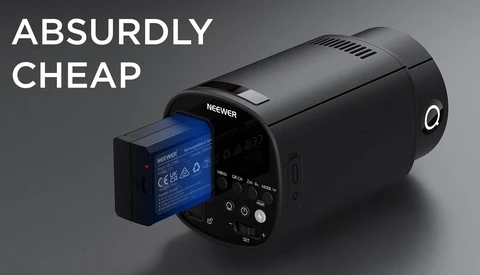
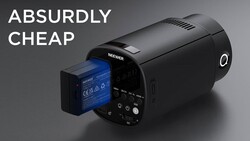
The NEEWER Q120 Is a Cheap Strobe That Does Almost Everything
The NEEWER Q120 is a new compact 120Ws battery-powered strobe that's packed with features, but the most impressive thing about it might be the price. It sells for $159.99 at B&H ($219.99 list), while its two direct competitors, the Godox AD100Pro II and the Profoto A2, cost $299 and $895.

Here's How I Ditched Adobe for Good
A few years ago, I cut the cord from all Adobe products and canceled my Creative Cloud subscription. In my latest YouTube video, I discuss why and also the software I now use instead. For a while now, photographers have asked me how I managed to free myself from using Adobe products. I learned the software I currently use while I still had a Creative Cloud subscription.

Can the Lumix L10 Become Your Everyday Camera?
A dedicated compact camera now has to justify itself against a phone that already lives in your pocket and shoots surprisingly good telephoto images. The Lumix L10 makes its case with a retro body, an eye-level viewfinder, and a Micro Four Thirds sensor, and whether that combination earns a place next to your phone is a fair question.

A Year of Weddings and Family Trips With the Sony RX1R III
Sony's RX1R III puts a 61-megapixel full frame sensor and a fixed 35mm f/2 lens into a body small enough to carry everywhere, and it costs more than most professional mirrorless cameras. A few weeks of testing can tell you how a camera like that performs, but only a year of weddings, family trips, and every season of Pacific Northwest weather shows what it's like to live with.
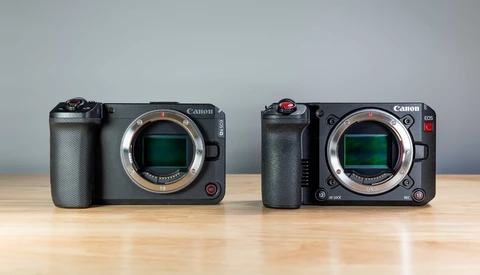
Canon C50 or R6 V: Which One Fits the Way You Work?
Canon now sells two compact full frame video cameras built around the same 32.5-megapixel 7K sensor, and $1,200 to $1,400 separates them, depending on whether the C50 is on sale. When the image coming off that sensor is nearly identical, your decision rests on heat, audio, stabilization, and how each camera behaves on an actual job.
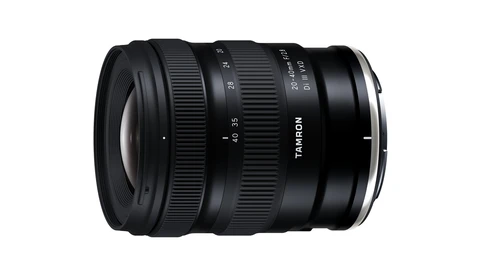
Tamron Brings Its 20-40mm f/2.8 Zoom to Nikon Z Mount for $729
Tamron has announced a Nikon Z mount version of its 20-40mm f/2.8 Di III VXD, a compact fast-aperture standard zoom for full frame mirrorless cameras that weighs 13.4 oz (380 g) and goes on sale October 22 for $729.

Five Legendary Lost Photography Archives, and What Became of Each One
Some of the most important photographic archives ever assembled are gone, and a small number of historians have spent their careers trying to get them back. One of those hunts had a storybook ending. In December 2007, three weathered cardboard boxes reached New York's International Center of Photography, carrying roughly 4,500 Spanish Civil War negatives that had been missing since 1939.
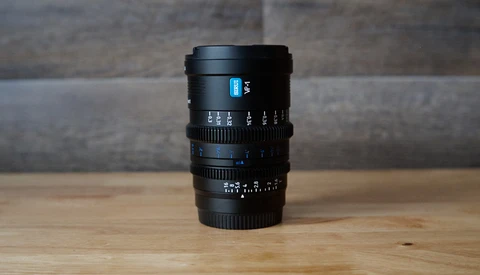
Testing The Sirui VP-1 Vista Prime 15mm T1.6 Lenses
Today, let’s have a look at the pint-sized Sirui VP-1 Vision Prime 15mm T1.6.

What Actually Makes a Photo Feel Dreamy?
The usual advice for dreamy photos is to use shallow depth of field and a pricey diffusion filter, and both tend to leave you with images that look soft without feeling like anything. The look that reads as a memory comes from light, motion, framing, and focus working together, and most of it costs nothing.
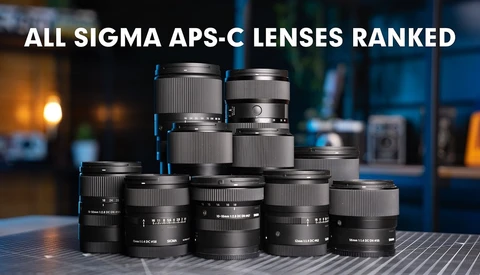
Which Sigma APS-C Lens Should You Actually Buy?
Sigma now makes 10 lenses for APS-C mirrorless cameras, priced from $344 to $919, and the primes and zooms overlap more than the spec sheets suggest. If you shoot on a crop sensor, this lineup is one of the few places you can build a complete kit of small, sharp glass without paying full frame prices.