Featured Articles

Fstoppers Community
Photo of the Day
Oct 2

His Shadow Below
Oct 1

The Midas Mirror

Sep 30

Light explosion

Sep 29

Dune 47, Namibia

Sep 28

Fall from Grace

Sep 27

When the Stream Runs Low

Sep 26

Bronte Baths

Sep 25

Mighty Seceda

Sep 24

Lightspeed
Sep 23

Sunrise Bear

Sep 22

Mira

Sep 21

Lost in the Sahara

Sep 20

The Field and the Girl

Sep 19

Cliffs of Moher, Ireland

Sep 18

Ghosts of New Mexico

Editors' Picks























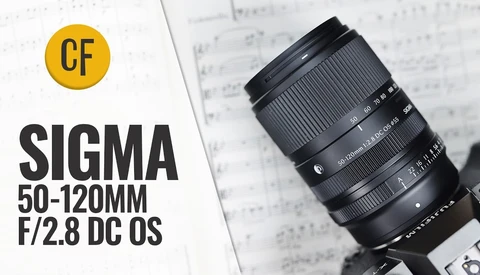
Sigma Shrinks the f/2.8 Telephoto Zoom for APS-C Cameras
An f/2.8 telephoto zoom is usually the heaviest lens in an APS-C bag, and the Sigma 50-120mm f/2.8 DC OS Contemporary is built to change that. If you shoot Fujifilm, Sony, or Canon crop bodies, a stabilized fast zoom at this size fills a spot that has mostly gone to much bigger glass.

Taking the OM System OM-3 on a Coastal Bike Ride
If you've ever packed a camera for a bike ride, you know the body is rarely the heavy part, since a couple of lenses with any reach can fill a bag faster than the camera itself. The OM System OM-3 and the Micro Four Thirds format offer one answer to that weight problem, and a long ride along the Northumberland coast puts that answer to a practical test.
Latest Gear Reviews

Active Contests
1
40
We want to see the images that still give you chills
Welcome to the October installment of the Critique the Community! This month's critique theme is going to be "Scary," and we want to see your best photographs that scared you in some way.
Sony Never Made an 85mm f/1.2, So Sigma Did
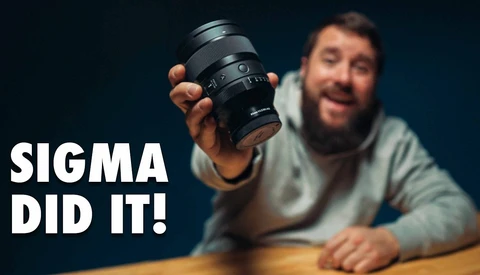
Canon and Nikon shooters have had autofocus 85mm f/1.2 lenses for years, while anyone on Sony E-mount or L-mount has had to settle for f/1.4 or give up autofocus entirely. The new Sigma 85mm f/1.2 DG Art changes that, and it asks a fair question of anyone who already owns a good f/1.4 portrait lens.
Fstoppers Exclusives




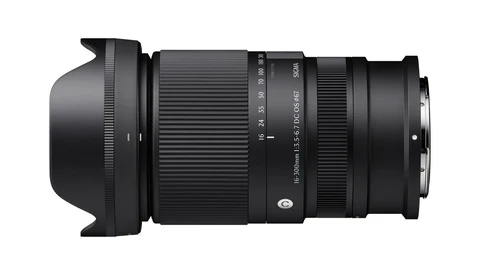
Sigma Brings Its 18.8x 16-300mm f/3.5-6.7 Zoom to Nikon Z for $769
Sigma has announced a Nikon Z mount version of its 16-300mm f/3.5-6.7 DC OS Contemporary, an all-in-one zoom for APS-C mirrorless cameras with an approximately 18.8x zoom ratio, going on sale November 5 for $769.
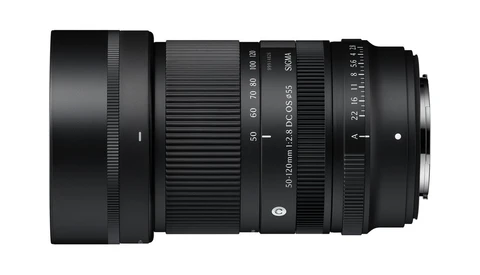
Sigma's $799 50-120mm f/2.8 Gives APS-C Shooters a 75-180mm-Equivalent Telephoto Zoom
Sigma has announced the The 50-120mm f/2.8 DC OS Contemporary, a stabilized telephoto zoom for APS-C mirrorless cameras that covers roughly 75-180mm in full frame terms at a constant f/2.8 and goes on sale October 22 for $799 in Sony E, Fujifilm X, and Canon RF mounts.
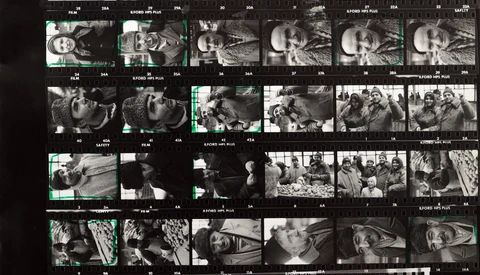
The Newspaper Picture Editor Was Photography's Most Powerful Job, and It Is Disappearing From American Newsrooms
On May 30, 2013, Sun-Times Media laid off 28 photographers and photo editors across the Chicago Sun-Times and its suburban papers, including John H. White, who had won the 1982 Pulitzer Prize for feature photography.

Spend $186, Get Over $4,700 in Photography Products Now
Fstoppers has partnered with 5DayDeal to offer the best photography deal of 2026. The bundle is filled with education, software, and tools from a wide variety leaders in the photography industry. The product list is fantastic.
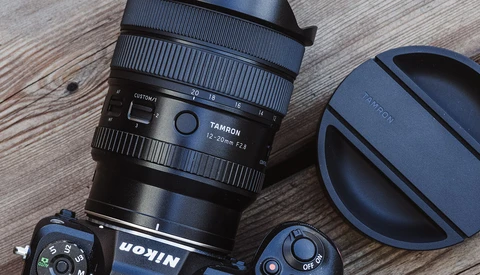
Tamron’s New 12-20mm f/2.8 Is Excellent, but Its Filter Design Won’t Suit Everyone
I’ve been playing with Tamron’s new ultra-wide 12-20mm zoom for a couple of months now. When I first peeled away the plastic wrap and held it, I thought, “Wow, very compact and light.” My next thought was that the glossy finish looked surprisingly smudged straight out of the box. I checked the marketing materials and found that this is part of Tamron’s new “Toned Profile Next” design language.

What Adobe Just Added to Camera Raw and Lightroom
Camera Raw now has a grid view with ratings, color labels, and a full filter bar, so you can cull and sort a folder of raw files without going near a Lightroom catalog. If you've stayed away from Lightroom because of imports and catalogs, the distance between the two apps just got shorter.
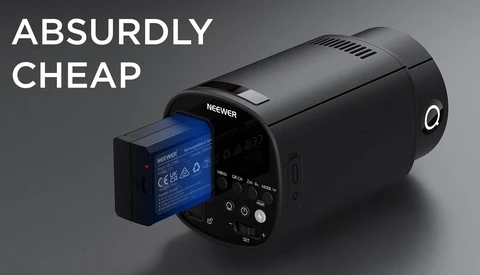
The NEEWER Q120 Is a Cheap Strobe That Does Almost Everything
The NEEWER Q120 is a new compact 120Ws battery-powered strobe that's packed with features, but the most impressive thing about it might be the price. It sells for $159.99 at B&H ($219.99 list), while its two direct competitors, the Godox AD100Pro II and the Profoto A2, cost $299 and $895.

Here's How I Ditched Adobe for Good
A few years ago, I cut the cord from all Adobe products and canceled my Creative Cloud subscription. In my latest YouTube video, I discuss why and also the software I now use instead. For a while now, photographers have asked me how I managed to free myself from using Adobe products. I learned the software I currently use while I still had a Creative Cloud subscription.
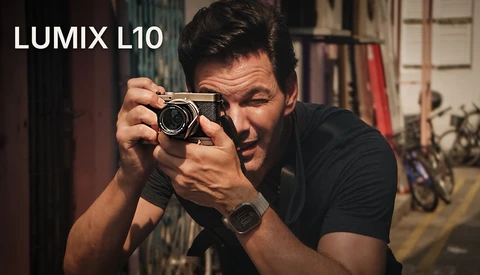
Can the Lumix L10 Become Your Everyday Camera?
A dedicated compact camera now has to justify itself against a phone that already lives in your pocket and shoots surprisingly good telephoto images. The Lumix L10 makes its case with a retro body, an eye-level viewfinder, and a Micro Four Thirds sensor, and whether that combination earns a place next to your phone is a fair question.
A Year of Weddings and Family Trips With the Sony RX1R III
Sony's RX1R III puts a 61-megapixel full frame sensor and a fixed 35mm f/2 lens into a body small enough to carry everywhere, and it costs more than most professional mirrorless cameras. A few weeks of testing can tell you how a camera like that performs, but only a year of weddings, family trips, and every season of Pacific Northwest weather shows what it's like to live with.
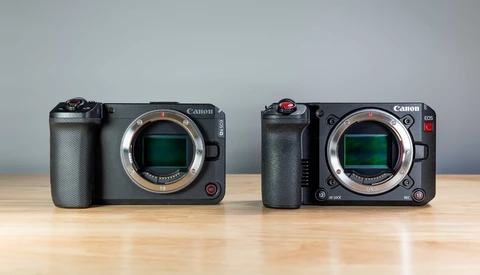
Canon C50 or R6 V: Which One Fits the Way You Work?
Canon now sells two compact full frame video cameras built around the same 32.5-megapixel 7K sensor, and $1,200 to $1,400 separates them, depending on whether the C50 is on sale. When the image coming off that sensor is nearly identical, your decision rests on heat, audio, stabilization, and how each camera behaves on an actual job.
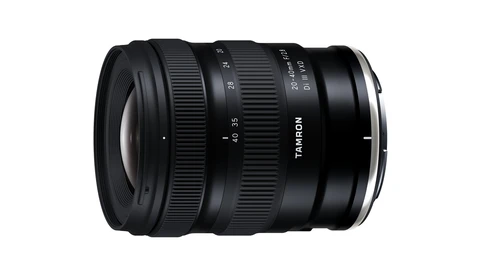
Tamron Brings Its 20-40mm f/2.8 Zoom to Nikon Z Mount for $729
Tamron has announced a Nikon Z mount version of its 20-40mm f/2.8 Di III VXD, a compact fast-aperture standard zoom for full frame mirrorless cameras that weighs 13.4 oz (380 g) and goes on sale October 22 for $729.

Five Legendary Lost Photography Archives, and What Became of Each One
Some of the most important photographic archives ever assembled are gone, and a small number of historians have spent their careers trying to get them back. One of those hunts had a storybook ending. In December 2007, three weathered cardboard boxes reached New York's International Center of Photography, carrying roughly 4,500 Spanish Civil War negatives that had been missing since 1939.
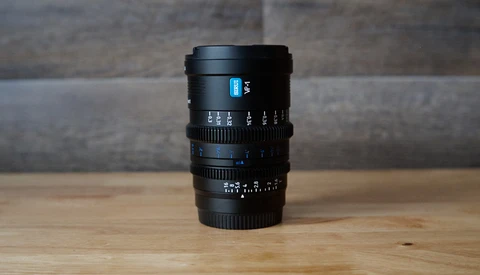
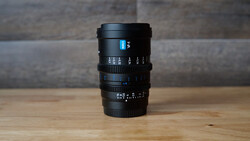
Testing The Sirui VP-1 Vista Prime 15mm T1.6 Lenses
Today, let’s have a look at the pint-sized Sirui VP-1 Vision Prime 15mm T1.6.

What Actually Makes a Photo Feel Dreamy?
The usual advice for dreamy photos is to use shallow depth of field and a pricey diffusion filter, and both tend to leave you with images that look soft without feeling like anything. The look that reads as a memory comes from light, motion, framing, and focus working together, and most of it costs nothing.
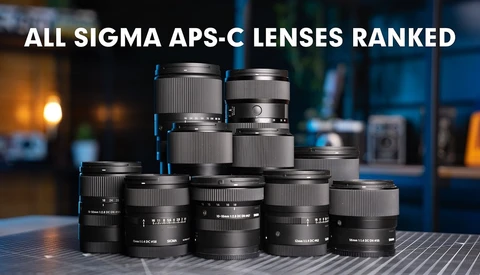
Which Sigma APS-C Lens Should You Actually Buy?
Sigma now makes 10 lenses for APS-C mirrorless cameras, priced from $344 to $919, and the primes and zooms overlap more than the spec sheets suggest. If you shoot on a crop sensor, this lineup is one of the few places you can build a complete kit of small, sharp glass without paying full frame prices.
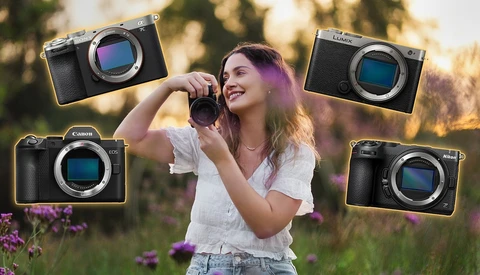
Which Small Full Frame Camera Is Worth Your Money?
The Canon EOS R8 Mark II, Sony a7C II, Nikon Z5IIC, and Panasonic Lumix S9 are each the smallest and cheapest full frame body their maker sells right now, and they don't all solve the same problem.
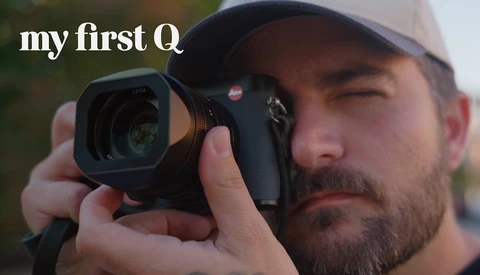
Does the Leica Q3 43 Earn a Spot in a Working Kit?
The Leica Q3 43 puts a 60-megapixel sensor behind a single fixed 43mm lens, so you commit to one focal length and lean on the sensor to cover everything else. If you shoot paid work, the harder question is whether a camera like that can serve as a backup or second body next to an interchangeable-lens system you already trust.
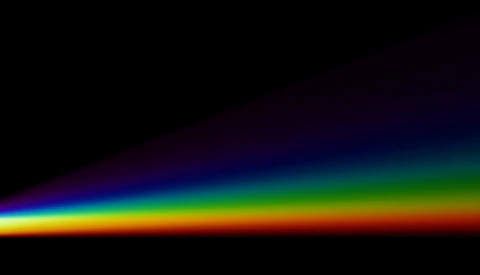
Every Color Space You Edit In Was Defined by the Eyes of 17 People in 1920s England
In a darkened room at Imperial College in London in the late 1920s, ten people looked at a small split circle of light, about the width of a thumbnail held at arm's length. Half the circle carried a single wavelength; the other half carried a mixture of red, green, and blue lamps the subject could turn up and down until the two halves fused into one uniform patch.
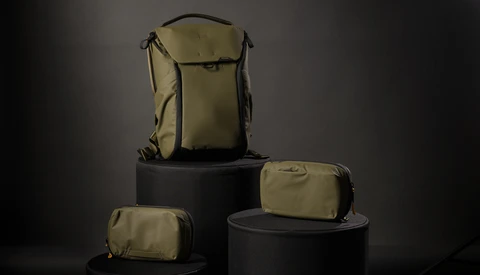
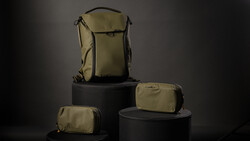
Peak Design Everyday Backpack V3 Review
Peak Design built the Everyday Backpack around fast access, real organization, and protection for whatever you're carrying. The Everyday Backpack line is already award-winning, and the newly revamped V3 improves on that solid foundation. Style, security, and day-to-day usability all show up here alongside gear protection and room to expand.

Photoshop Layers Explained From the Ground Up
Every edit you make in Photoshop lives on a layer, and the way you stack, mask, and merge those layers decides whether you can change your mind an hour later. If you've ever flattened a file to run a filter and then wished you could go back and fix the retouching underneath, you already know what a shaky grasp of the Layers panel costs.

Should You Ever Lower Your Price for a Real Estate Client?
Cutting your rate to win a listing feels like a smart move when your calendar is empty, and it's also one of the fastest ways to get stuck in real estate photography. The choices you make in your first year about pricing, gear, and which clients you chase tend to set the ceiling on what your business can earn five years later.