Film Photography

Film photography never really went away — and for a growing number of photographers, it's become more relevant than ever. There's something about the deliberateness of analog shooting, the texture of grain, and the chemistry of the darkroom that digital hasn't fully replicated. This section covers film cameras old and new, film stock comparisons, darkroom techniques, and the communities keeping analog photography alive.

Unlimited Depth of Field at Any Aperture

What if you could control perspective distortion and focus with pinpoint accuracy at any aperture? Dive into the world of tilt/shift lenses and learn how pros use the Scheimpflug Principle to create stunning images.

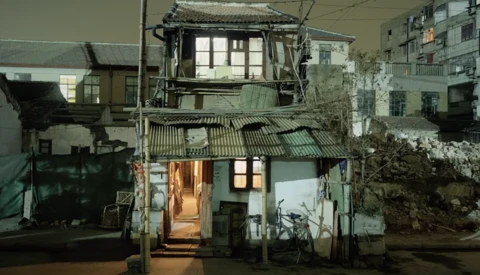
The Wonderfully Atmospheric Urban Landscapes of Greg Girard

Canadian photographer Greg Girard left Vancouver in the 1970s to explore Southeast Asia with his camera. His colorful, atmospheric landscapes showed us a very different and unfamiliar part of the world that, for Westerners at that time, was much less traveled and even less well known.
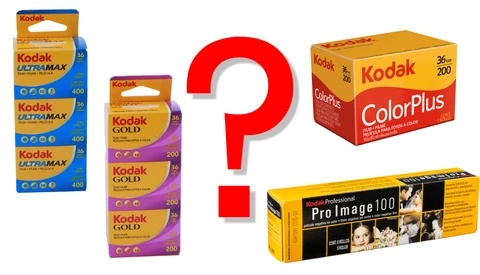
Which Budget Color Film Is Best?

With film prices ever increasing, budget-conscious photographers are always on the hunt for the best results at the lowest price. Of the cheapest mainstream offerings, which one delivers the best performance?

The Reality of Shooting 100 Rolls of Film on a Road Trip

Shooting film on the road presents unique challenges, from managing limited exposures to ensuring your gear and film stay in working condition. For a long trip, especially in remote areas, planning becomes essential.

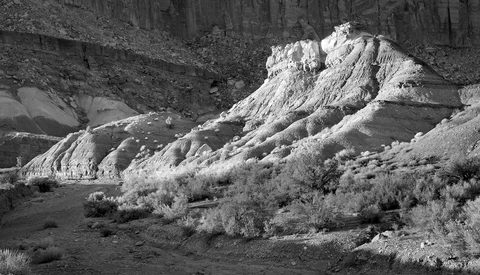
The Black and White Advantage

There’s nothing quite like the solitude of my darkroom at dawn, the hum of my enlarger in the background, and the image slowly appearing on paper in my hands. For me, photography is more than capturing a moment—it’s a meditative journey into light, shadow, and form.

A Landscape Photographer's Advice: Learn to See the Beauty All Around You

Places of emptiness and desolation might not immediately demand the attention of the photographer, but they have a haunting beauty that is all too easy to overlook. For one landscape photographer, the quiet magic of these neglected spaces has often been the source of his inspiration.

How the Camera You Choose Changes the Way You Shoot

A camera should work for you, not the other way around. The tools you choose shape how you shoot, how you move, and how much you think about settings versus composition. Some cameras get out of the way. Others force you to slow down. Understanding how different cameras affect your workflow can help you make better choices before you even press the shutter.

The Known, The Unknown, and the Transcendent

A few years ago, a friend of mine, a symphony maestro, was walking with me through my studio/gallery and remarked that I should compose a book, the title of which would be “The Known, the Unknown, and the Transcendent.” Tom was a true intellectual, a visionary who never allowed a conversation to descend into petty differences and discussions about equipment, etc. It was always about the art, beauty, and ideas.

Does Shooting Film Actually Make Photos Better?

Shooting film can completely change how you approach photography. It forces you to slow down, think more deliberately, and accept imperfections as part of the process. Many who started in digital find that switching to film rekindles their love for capturing images. But does film actually make an image better? Or is it just a different way to shoot?

Why Film Photography Still Matters—and Why You Might Want to Try It

Digital photography dominates, offering speed, convenience, and unlimited creative control. But shooting film forces you to slow down, think differently, and embrace an entirely different experience. The appeal isn’t just nostalgia—it’s a unique process that changes how you approach photography.

The 10,000-Mile Road Trip That Changed Photography

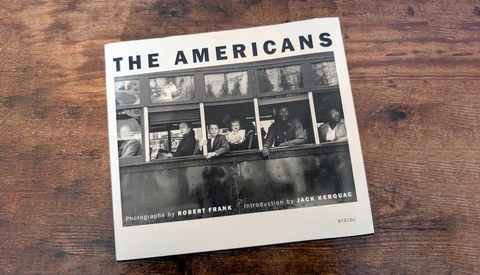
It is often through the eyes of an outsider that we are most able to see ourselves clearly. The collection of iconic images that Swiss photographer Robert Frank captured on his 10,000-mile road trip across America amounts to nothing less than a historical document and a landmark in American culture.

How to Shoot Film for Landscape Photography

Film photography offers a unique approach to capturing landscapes. Unlike digital, it forces you to slow down, consider each shot, and make deliberate choices. This makes it an excellent way to refine your skills and understand exposure, composition, and light in a deeper way.

How to Make Digital Photos Look Like Film in Lightroom

Making digital photos look like film is something many people are interested in, but achieving authentic results can be tricky. One area that often gets overlooked is the appearance of grain. Getting it right can significantly enhance your images by mimicking the subtle imperfections that define film.

Is This The Compact Film Camera I Had Hoped For?

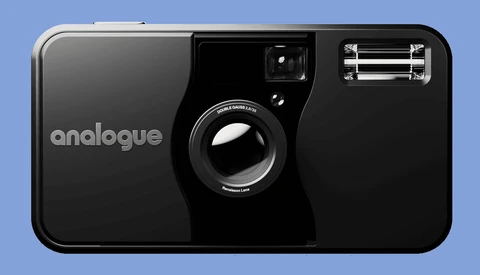
Shortly after I last mused about what I thought would be the perfect new compact film camera for 2025, I discovered that there was a camera in the works that seemed to tick every box I hoped for: the Analogue AF1. But with little more than a gorgeous website promising the moon at a modest price, I held off, preferring to wait for more details before getting too sentimental about what could be the long-awaited savior of compact film photography.

Key Tips for Film Photography Beginners

Film photography offers a creative process distinct from digital, but it requires a shift in mindset. If you're thinking about trying film or transitioning from digital, understanding the basics can save you from frustration and help you decide if it’s worth the investment.

The Key to Tack-Sharp Photography

Fact: Depth of field will remain constant across all formats and focal lengths as long as the aperture and the image size remain the same. There are several factors that determine how sharp, or not sharp, an image may be. One of those is depth of field, and another is the movement of the subject matter that occurs while the shutter is open. Here, I will discuss depth of field.

The Real Pros and Cons of Shooting Film

Some enthusiasts claim film offers qualities that digital simply can’t match, while others believe digital reigns supreme. The truth is, neither is better; they’re different, and understanding those differences can help you make the most of either medium.

The Evolution of an Image

My photographs are hardly ever representative of objective reality, but they are representative of my vision, my artistic interpretation of the scene. In this article, I will talk about why I made a particular photograph, what was done in the camera, and then what I did in the darkroom to realize the finished image—or at least the image as it is right now. Realizing that I hardly ever reach a final conclusion on a photograph, especially when I am working on it in a wet, traditional darkroom, everything remains a “work in progress.”

The Polaroid Photography of Film Director Wim Wenders

As a filmmaker, there’s no denying that Wim Wenders has a distinctive and immediately recognizable visual style. But did you know that, in the years before his film career really took off, he developed and honed a great deal of his visual creativity working in the medium of Polaroid photography?

To Zone, or Not to Zone: That May Be the Question

When I began photographing the landscape, the only option was using film, either black and white or color. When using black and white film, most of us used the Zone System or a derivation of it. Even those who cursed it as being too constrictive—it is not—or some kind of voodoo (again, it is not) were using this type of system in some way.

Six Steps to More Effective Landscape Photographs

Photographing the landscape can be hard work, at times very hard work. It entails rising well before daylight in most cases and working in sometimes very harsh conditions. Most of the time, you will be out in the woods until well past dark, waiting for just the right moment, which may not come—even after your most valiant efforts. It makes sense, then, to do everything you can to stack the odds in your favor. Here are some thoughts on that.

The Reward of Being an Artist in Residence

I have had the opportunity of working as an Artist in Residence for the National Park Service four times. The last residency was for Buffalo National River in Arkansas. In the spring of 2020, I got a call from one of the managers for the National Forest Service in Wyoming, wanting to know if I would be interested in coming to Wyoming to do a residency there in Bighorn National Forest, which I was glad to do. So, in early September 2020, I loaded up my gear into my Bronco and headed to Wyoming!

Our Field Review of the KEKS Rapid Winder

Whenever I’m considering a new product, I always ask myself whether it will make me a better photographer. Will this item help me produce better images? Will it speed up my workflow? Can it help me do something I can’t do right now? And, because I’m a working photojournalist who lives only slightly above the poverty line, if the answer is “no,” I tend to avoid picking up said item.

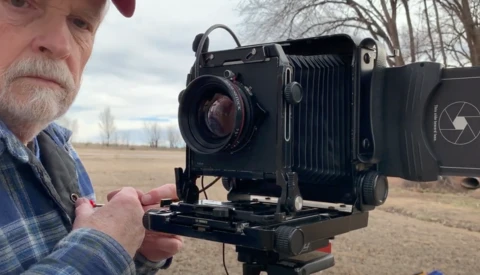
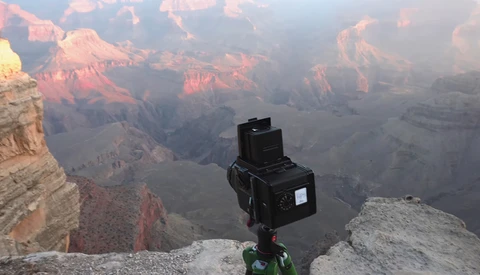
Large Format Cameras in the Landscape

A question arises: Exactly why is it that you still use very large cameras and film when photographing the American landscape? Which is what I do.

The Creative Potential of Paper-Based Photography

Using darkroom paper in a large format camera creates a distinctive aesthetic and provides an opportunity to experiment with a hands-on process. It’s an approach worth exploring if you’re looking to break away from your usual workflow.

An Affordable Alternative to Expensive 35mm Film Cameras

When it comes to budget-friendly 35mm film cameras, the Canon AE-1 and Pentax K1000 often top recommendations. However, these options can be surprisingly expensive, especially for beginners. If you’re looking for an affordable alternative that doesn’t compromise on quality, the Praktica MTL5B is a compelling choice.

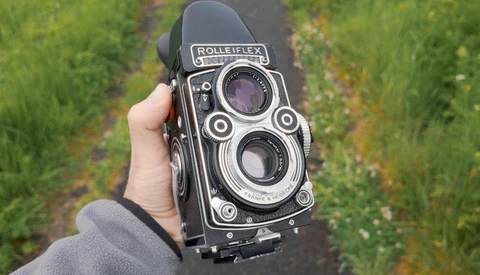
Kate Winslet on Using Lee Miller's Rolleiflex

How many times have you watched a film about a photographer where the actor clearly has no idea how to use a camera? It's an unforgivable mistake, and one Kate Winslet was sure not to make in her new film, Lee, about the photojournalist Lee Miller.

Three Decades of Lomo: We Interview The Lomography Founders

I went to meet the founders of Lomography, Sally Bibawy and Matthias Fiegl, on an unseasonably warm Halloween morning in Brooklyn. For three decades, this unicorn of a company has maintained an unwavering commitment to analog long before analog’s recent renaissance, and I was eager to uncover what has fueled their commitment, what currently drives them, and how it might shape Lomography’s future.

Shooting Modern Film on a 120-Year-Old Camera

The Kodak Brownie No. 2 is more than a vintage collectible—it’s a piece of photographic history. Released in 1901, this camera not only introduced the world to 120 film but also made photography more accessible.

The AGO Film Processor Massive Review

Some of the world's greatest ideas arise not from attempting to reinvent the wheel but by finding an easier way to make it roll. The AGO Film Processor from Vintage Visual is one such story.

Does Shooting on Film Instantly Improve Your Photos?

There's been a lot of (digital) ink spilled about the look and feel of film photos being vastly superior to their digital counterparts, and while that's a question up for debate, there's also something else I've noticed among my fellow film-shooting friends: the propensity to elevate objectively terrible photos as art.

The Stunning Beauty of Large Format Photography

Photography offers countless ways to explore creativity, and Nick Carver embodies this diversity. Known for his large format photography, Carver captures striking images of both natural landscapes and abandoned office buildings. His work highlights how settings, whether pristine nature or gritty urban spaces, can tell stories about their past and purpose.

The Next New Compact Film Camera

So many of us photographers seem to have an insatiable appetite for camera gear. For some, it’s G.A.S. (gear acquisition syndrome), while others are honing their photographic experiences into a seemingly futile and almost never-ending quest to trade up to the perfect camera. For a rare few, they have found their gear and are sticking to it.
How to Achieve a Film Look Without Shooting Film

Digital film simulations have become a popular way to capture the look of classic film stocks without the hassle of processing and scanning. They’re practical for anyone who wants a specific aesthetic without spending time on extensive post-processing, and they give you the freedom to focus on composition and light.

KEKS Announces New Leica Rapid Advance

Several days ago, KEKS—a company you most likely know from their line of hot-shoe mounted light meters—announced their release of the new KEKS Rapid-Winder for classic Leica bodies. Designed to fit the M1, M2, M3, and classic MP, this accessory is a recreation of the original Leicavit MP and is designed around the same internal structure and materials.

The Family Archive is Dying: Protect Your Family Photographs Now

Access to photography has never been greater, yet now the risk of the family archive dying out has never been more of an issue. This article explains why the digital age has put the family archive in danger, and what we, as photographers, can do about this.

This Photographer Built His Own Lens and The Results Are Gorgeous

Creating your own DIY lens for photography can be both simple and surprisingly effective. With just a few materials—some drainage pipe, magnifying glasses, and a little ingenuity—you can build a lens that opens up new creative possibilities. The idea here isn’t about high-end equipment but rather about experimenting, learning, and having fun with a setup that’s low-cost and custom-made.

Lomo 92 Film Stock Review

Over the years, I’ve accumulated a truly embarrassing amount of film stock. I’ll freely admit that it’s a sickness. If I’m being honest with myself, it likely stems from a fear of missing out on something creative and new and a fear that one day it’s all going to be gone. One day, the last roll from the last batch of the last stock is going to come off the production line, and that’ll be that.

Rollei 35AF: A Compact Film Camera With Retro Charm

If you want a compact film camera that mixes classic style with modern convenience, the Rollei 35AF could be the perfect fit. As a modern take on the original Rollei 35, it retains the compact size and design while introducing autofocus, making it more practical for everyday use. This remastered version captures the spirit of the original while adding a few contemporary touches to enhance usability.

Common Film Photography Mistakes and How to Avoid Them

Film photography has its unique charm, but it comes with its own set of challenges. One of the most common hurdles for those who explore this medium is navigating through mistakes, often with no easy fix like in digital photography.

The Advice Film Director Stanley Kubrick Left to All Photographers

You may not have been aware that film director Stanley Kubrick was also a professional photographer, having shot assignments for magazines before he ever made any of his award-winning movies. So what did his photographer’s eye bring to his movies, and what can we learn from his creative process?