Photography Gear

Gear isn't everything — but it's not nothing either. This section covers the cameras, lenses, accessories, and equipment that photographers actually use, with an eye toward helping you make smart decisions rather than just chasing the latest release. Expect news, analysis, hands-on impressions, and the occasional reality check on whether that upgrade is actually worth it.

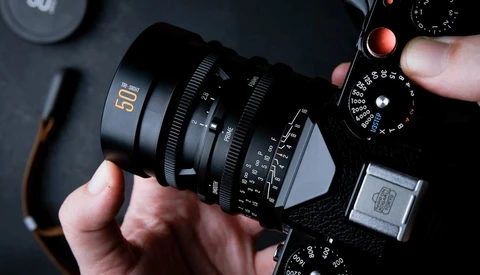
Why a 50mm Prime Might Be the Best Travel Lens You're Ignoring

Choosing a single prime lens for travel forces a real trade-off, and most people default to a 35mm or a wide angle out of habit. The 50mm prime makes a compelling case that it deserves that spot instead, especially if you care about how a location actually feels in a photo rather than just how much of it you can fit in the frame.

OM System Survived Its Split From Olympus: Who Expected This?

When Olympus sold its imaging division to Japan Industrial Partners on January 1, 2021, the new company was called OM Digital Solutions. The OM SYSTEM product brand arrived later, announced in October 2021 as the name the company would put on its cameras going forward. Most of the photography press wrote the obituary in advance of either event. The division had been unprofitable for years. Olympus itself, after more than eighty years of making cameras, was exiting the business. Micro Four Thirds had lost the sensor-size argument in the public imagination to APS-C and full frame. The buyer was a private equity firm, not a camera manufacturer. The standard expectation was managed decline: a few years of catalog padding, a thinning lens roadmap, and eventual fade.
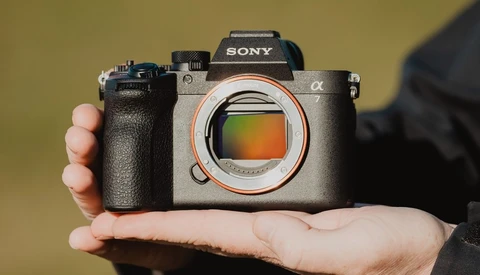
An Impressive Ultra-Wide Lens For APS-C: 7Artisans AF 10mm F2.8 Z

APS-C cameras are quickly becoming the main choice for everyday photography. I've owned a Nikon Z50 for seven years now, and it's still my favorite everyday camera, especially for travel, street, and urban photography. But finding lenses for it has always been a problem.

Why Your Most Personal Photos Shouldn't Come From Your Main Camera

Choosing a dedicated snapshot camera changes how you shoot, and the Ricoh GR IV is one of the more interesting options for that role right now. This video makes a compelling case that serious shooters are missing something by always being in "photography mode," and that having a second camera specifically for personal snapshots can fill a gap that even a smartphone can't.

Full Frame vs. APS-C in 2026: The Case for Going Smaller

The idea that full frame is the "serious photographer's" destination has shaped how people spend money on gear for decades. In 2026, that assumption deserves a hard look, because the lens market, sensor technology, and real-world shooting habits have all shifted in ways that change the math.

Why Fujifilm Is the Only Major Manufacturer That Understands Gen Z

The Fujifilm X100VI has been supply-constrained for more than two years. The camera launched in February 2024, and as of April 2026, availability remains spotty: Fujifilm's own US shop typically shows it as "Notify Me" rather than in stock, and major retailers list the camera as temporarily out of stock with rolling expected availability windows rather than steady inventory. The company raised the US price from $1,599 to $1,799, and the camera still moves for above MSRP on the secondary market. Two years of reported shortages is not a production problem that got solved. It is a demand problem that Fujifilm is openly uninterested in solving.
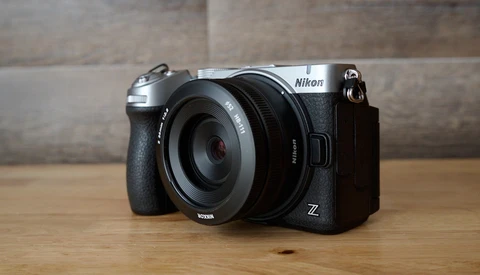
The Best Camera for Fujifilm X100VI Fans Who Want Interchangeable Lenses

The Fujifilm X-E5 sits in an interesting spot in the Fujifilm lineup: it has the same 40-megapixel sensor as the Fujifilm X-T5 but in a body closer in size to the X100 series, with interchangeable lenses. After a year of daily use, including replacing the X-T5 as his main body, Mitch Lally has a clear picture of exactly who this camera is for and where it falls short.
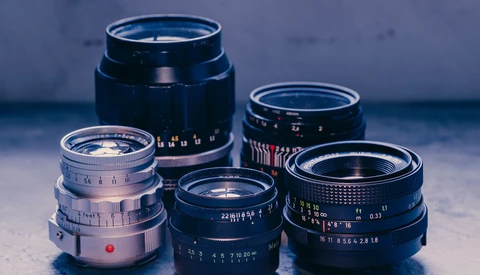
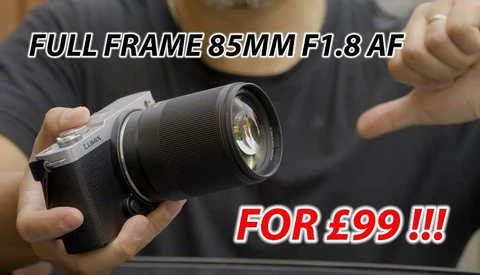
The Cheapest Way to Shoot Digital Leica M-Mount in 2026

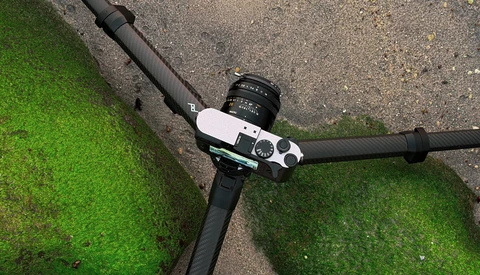
Leica and affordable rarely share the same conversation, but the Leica M240 might be the exception worth paying attention to. It's a full frame, M-mount digital rangefinder that costs a fraction of what modern Leica bodies go for, and it still delivers the core experience that makes these cameras worth owning.

Don't Miss These Amazing Photography and Video Deals at B&H Photo Right Now

B&H Photo is running some aggressive discounts across cameras, lighting, support, storage, and accessories this week. We dug through hundreds of active DealZone listings, sale prices, and lowest-in-180-day markdowns to find 30 that are worth your attention, sorted by a combination of percentage off and absolute dollar savings. These deals are time-limited, most running through the next seven days, so act quickly on anything that catches your eye. Whether you are building out a studio, restocking expendables, or hunting for a serious gear upgrade, there is something here for you.

The Return of Camera Design as Identity

Somewhere around 2010, camera design stopped mattering to the photography industry. The DSLR era had produced bodies defined by ergonomics rather than aesthetics, and the first mirrorless wave carried forward the same logic. Cameras were tools, tools looked like tools, and any photographer who cared about how a camera looked was suspected of being a poseur. The mainstream press reinforced the assumption. Reviewers evaluated bodies by their grip comfort, control layouts, button feel, and weather sealing, and any discussion of aesthetics was treated as either irrelevant or faintly embarrassing.

HUANUO FlowLift Monitor Arm and VESA Mount Review: An Inexpensive Upgrade That Actually Works

Want to reclaim your desk space and maybe even reduce the pain in your neck by optimizing your viewing angle? Consider a monitor arm. Here, we take a look at the HUANUO FlowLift™ Single Monitor Mount (formerly SS6, but still model HNSS6). I also discuss the HUANUO Universal VESA Mount Adapter Kit (Model HNMUA4), which was needed for my particular monitor. How well did they work? How easy were they to install?

The Real Advantage of Micro Four Thirds Nobody Talks About Enough

Choosing a camera system means committing to an ecosystem, and for most systems, that means locking yourself into one manufacturer's lenses. Micro Four Thirds breaks that rule in a way that has real, practical consequences for what you can carry and shoot.

Lumix S1 II Review: Incredible Dynamic Range, But There's a Catch

The Lumix S1 II sits at $3,200 list price, currently discounted to around $2,900, and it's trying to compete with video-focused cameras from Canon, Sony, and Nikon on both features and value. Whether it actually pulls that off depends heavily on a few specific trade-offs that aren't obvious from the spec sheet.

5 Things That Are Worth Splurging On in Photography (and 5 That Are Not)

Photography has a spending problem, and it starts early. The moment you get serious enough to move past the kit lens and the auto mode, the industry opens a firehose of recommendations pointed directly at your wallet. Better bodies, faster glass, studio lighting, editing software, bags, straps, filters, presets, printers, and accessories that promise to make your work look professional before you have figured out what "professional" means for you.

The Viltrox 35mm f/1.2 Lab N Fixed What Was Already a Near-Perfect Lens

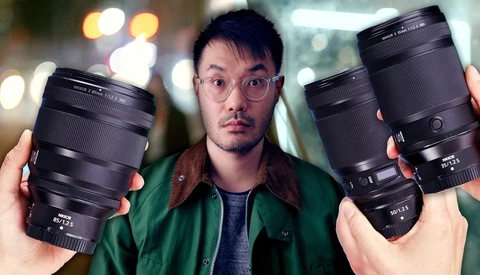
Viltrox's 35mm f/1.2 Lab was already one of the sharpest, most capable lenses in its class when it launched. The new "N" version strips out the OLED screen and replaces the unconventional control ring with a traditional aperture ring, and that single change makes a lens that was optically exceptional finally handle the way it should.

Why the 85mm f/1.8 Beats the 85mm f/1.4 for 95% of Photographers

The 85mm prime is the rare lens that almost every working portrait photographer owns, eventually. It is the focal length that does the most flattering work on faces, the easiest one to recommend to a portrait beginner, and the lens most photographers reach for when they want to make a person look the way they want to be seen.

The Best 35mm Lens for Fujifilm X Isn't What You'd Expect

Choosing a normal-length prime for your Fujifilm X system sounds straightforward until you realize there are seven legitimate autofocus options sitting in roughly the same focal length range, each with a different price, build, and rendering character. The gap between the best and worst of them is smaller than you'd expect, but the differences in autofocus reliability and real-world usability are anything but trivial.

Why a Career Canon Shooter Is Switching to the Nikon ZR

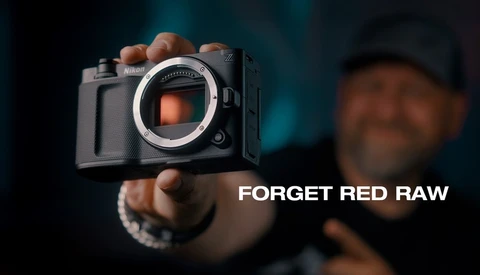
The Nikon ZR is a camera that has generated a lot of conversation since Nikon acquired Red Cinema, but most of that conversation focuses on specs and codec comparisons. What's harder to find is a perspective from someone who actually shot on a Red camera for years, sold it, moved on, and then picked up the ZR expecting to be underwhelmed.

Fujifilm X-T30 III Review: 6.2K Video in a $1,000 Camera Is Hard to Ignore

The Fujifilm X-T30 III sits at $1,000 body only, positioning it as one of Fujifilm's most accessible entry points into the X-series system. For that price, you're getting a 26-megapixel APS-C camera with some video specs that don't match what you'd expect from a camera in this range.

The Pentax K-3 Mark III and Why DSLRs Refuse to Die

The Pentax K-3 Mark III was officially discontinued in Japan in January 2025. The Monochrome variant has been more complicated: B&H's original black Monochrome listing is now marked "No Longer Available," though it points buyers to a current matte-black Monochrome listing still shown as in stock. After roughly four years of production, the K-3 Mark III is being phased out in stages rather than discontinued cleanly, and the last major APS-C DSLR from a major manufacturer is winding down. By the standard industry narrative, this should be the end of the story. DSLRs are dead. Mirrorless has won. Move on. Except the story is more complicated than that. 

24-70mm vs. 70-200mm: Which Zoom Should You Buy First?

Choosing between a 24-70mm and a 70-200mm zoom is one of the most common lens decisions you'll face when building a kit. Both are professional staples, both are genuinely useful, and neither obviously replaces the other.

When Expensive Gear Stops Working

Most photography now lives online. In the feed, in algorithms, in a constant stream of images. This is where the idea of what a photographer is supposed to need gets formed. Cheap did not become better. It became sufficient.

Why the Nikon Z9 Is Aging Better Than Anyone Expected

When Nikon announced the Z9 in late 2021, the camera was treated by most of the photography press as Nikon's "we are still here" moment. The brand had spent the early mirrorless years getting beaten in feature comparisons by Sony, criticized for slow autofocus updates, and described in obituary-adjacent language by gear reviewers who had decided Sony had won the format war. The Z9 was supposed to prove Nikon could still build a flagship. It did. Then something more interesting happened over the next four years.

This Swing Lens Camera Forces You to Rethink How You Compose Landscapes

The Horizon 202 is a Soviet-era swing lens panoramic camera that produces a field of view roughly equivalent to 14mm on a 35mm camera, with almost none of the distortion you'd expect from an ultra wide angle lens at that focal length. If you've ever wanted to capture an entire mountain range in a single frame on film, this is the kind of camera that makes that possible.

One Hasselblad Lens to Rule Them All

For the past six months, I've had the opportunity to thoroughly test the Hasselblad XCD 35–100 E — Hasselblad's brand-new all-around zoom lens. With this lens, I've photographed commercial campaigns for Hasselblad, documented a family wedding high up in the Alps, and captured my photo workshop in southern Spain — all without changing the lens even once. And honestly: the 35–100 E has impressed me in every single situation.

The Nikon Z 14-30mm f/4 S Is Still the Go-To Wide Angle Zoom for Many Nikon Shooters

The Nikkor Z 14-30mm f/4 S has been on the market since 2019, and it remains the wide angle zoom that ends up on more Nikon Z mount cameras than probably any other. At its current discounted price of around $1,100, the calculus of buying it versus something like the Nikkor Z 14-24mm f/2.8 S at roughly $2,000 gets very interesting very fast.

Don't Miss This Opportunity to Own a Rare Leica MP Camera

Leica is the only professional camera company to offer three 35mm film cameras. These cameras, M-A, M6, and MP, are popular among the fan base despite the dominance of digital photography in the past two decades. If you have a few dollars to spare, you have a rare opportunity to own an original MP camera once owned by the photographer known as the first paparazzo.

Is 35mm More Versatile Than 40mm? A Two-Day Shooting Test Says Yes

Choosing between a 35mm and 40mm prime lens sounds like splitting hairs, but if you shoot in tight spaces, near cliffs, or anywhere you can't step back, that small difference in field of view can determine whether you get the shot or go home empty-handed. James Popsys has spent years shooting 40mm primes across multiple systems and recently started questioning whether 35mm deserves a longer look.

The Tamron 35-100mm f/2.8 Might Replace Your 24-70mm

The Tamron 35-100mm f/2.8 sits in an interesting spot: it's compact and light enough to travel with, but fast enough to handle portraits, events, and low-light shooting. At around $899, it's priced to compete with other mid-range zooms, and whether it delivers enough to justify that price is genuinely worth understanding before you buy.

Why 28mm, 35mm, and 50mm Shaped the Way We Photograph Cities

In photography, style is often discussed in terms of subject matter, color, or composition. Certainly important aspects to consider, but much less frequently do we talk about something equally decisive: focal length. Yet if you look closely at the history of urban landscape photography, focal length reveals itself as a kind of quiet grammar.

Tamron's 35-100mm f/2.8 Is a Different Kind of Standard Zoom: Here's the Tradeoff

The Tamron 35-100mm f/2.8 Di III VXD is a fast standard zoom for Sony E-mount and Nikon Z-mount cameras, priced at $899 for Sony and $929 for Nikon. That longer reach comes at a direct cost: you lose the wide end compared to a typical 24-70mm, and whether that tradeoff works for you depends entirely on how you shoot.

Sony a7 V Review: Is the Price Tag Justified?

The Sony a7 V sits at $2,900 and bills itself as an enthusiast camera, but its feature set tells a different story. Whether you shoot stills, video, or both, what's inside this body has real implications for how far it can take your work.

Why the Nikon Zf Became My Most Important Camera

I realize that articles about older cameras don't trend nearly as hard as shiny new toys. But my recent purchase of the Nikon Zf has paid off in more ways than I could have ever imagined.

Is the Sigma 35mm f/1.4 Art the Best 35mm Lens for Sony Shooters Right Now?

Choosing a 35mm lens for a Sony camera used to mean paying a premium for the Sony FE 35mm f/1.4 GM or settling for something that fell short in one area or another. The Sigma 35mm f/1.4 DG DN Art changes that math in a meaningful way, and the second version of this lens is smaller, lighter, and improved across nearly every metric compared to its predecessor.