Photography Gear

Gear isn't everything — but it's not nothing either. This section covers the cameras, lenses, accessories, and equipment that photographers actually use, with an eye toward helping you make smart decisions rather than just chasing the latest release. Expect news, analysis, hands-on impressions, and the occasional reality check on whether that upgrade is actually worth it.

The Best Beginner Cameras in 2026: What Actually Matters and What Does Not

Buying your first serious camera in 2026 means walking into one of the noisiest markets in recent memory. Compact cameras are surging. Retro-styled bodies are outselling flagships. YouTube reviewers are pushing full frame. Reddit says Fujifilm. The camera store wants to sell you whatever kit is sitting on the shelf. And every recommendation answers the same question: "What camera should I buy?"

The Ultimate Travel Camera Bag? Wandrd Prvke Pocket Put to the Test

There are some pieces of gear you expect to be good, and then there are the rare ones that change your expectations altogether. I recently tested the 31L version of the new Wandrd Prvke Pocket Bag, which is an item you don't fully appreciate until you're halfway through a trip, standing in the rain, juggling passports, tech, and camera gear. This article discusses my experience with the bag, traveling long-haul.

The 7 Sharpest 85mm Lenses Tested: One Winner, Zero Easy Answers

Picking the sharpest 85mm lens on the market is harder than it sounds, because the gap between the top options is razor thin. Seven lenses made Christopher Frost's final cut, spanning a wide range of prices and maximum apertures, and the differences between them required serious pixel peeping to untangle.

What 'Stops of Light' Means (And Why Photographers Won't Shut Up About It)

If you have spent any time reading about photography, you have encountered the word "stop" used in a way that makes no apparent sense. A lens is "two stops faster." A photo is "one stop underexposed." Image stabilization gives you "five stops of compensation." Somebody on a forum says they "opened up a stop and a half" and everyone nods like that means something.

A Love Letter to the Disposable Camera

There is a specific feeling that I am going to try to describe, and I am not sure I will succeed. It is the feeling of being nine years old in 1996, holding a plastic Kodak FunSaver on a wrist strap, with the flash recycling and the little red ready light blinking on and off, knowing that I had 27 chances to take a picture and that I would not see any of them until my mom got the envelope back from the grocery store a week later. It is the feeling of a camera that did not ask anything of me and did not promise anything in return, and it is the feeling I have been trying to recapture in pieces ever since.

Is a 50mm Prime Really All You Need for Portraits?

Choosing between a 35mm and 85mm prime for portraits is one of the most common debates in portrait shooting, and most people assume you need both. This video makes a strong case that a single 50mm prime not only covers the middle ground but can actually outperform the two-lens setup in more situations than you'd expect.

TerraMaster D1 SSD Enclosure: Rugged Performance and Pocket-Friendly

Following the strong reception of its D1 Plus and Pro models, TerraMaster has introduced the D1 SSD Enclosure, and its timing couldn't be better. As AI and machine learning workloads continue to drive unprecedented demand for flash storage, SSD prices have climbed sharply, forcing creators to rethink how they invest in capacity. Instead of committing to expensive, fixed solutions, the D1 offers a more flexible approach to pair with the SSD that fits your budget and your needs.

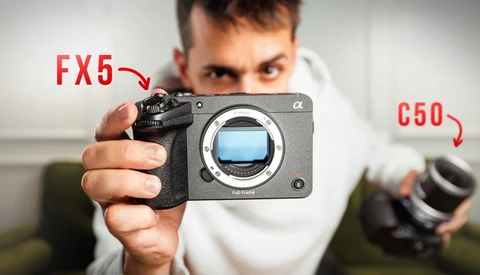
Canon's Answer to the FX3? Canon C50 Review

Recently I got to go hands-on with the all-new Canon C50 for a couple of projects, and ultimately I wanted to see if this could be the right compact cinema video camera, delivering high-quality video up to 7K that would work not only for content creation and brand videos but also for some indie filmmaking projects.

Can You Match Leica, Fujifilm, and Sony Colors in Lightroom?

Buying a camera because of its "color science" is one of the most common and costly mistakes in photography. Whether it's Fujifilm, Leica, or any other brand with a devoted following, the idea that one manufacturer has access to a secret color palette that others don't is worth examining before you spend thousands of dollars chasing it.

Sony a7R VI vs. a7 V: The Differences That Actually Matter

Choosing between the Sony a7R VI and the a7 V isn't straightforward, even though one costs significantly more than the other. The sensor architecture, video specs, and body features differ in ways that could genuinely change which one makes sense for how you actually shoot.

Sony 100-400mm f/4.5 GM Review: Can It Replace Two Lenses in Your Bag?

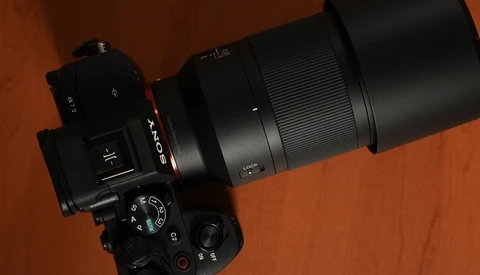
The Sony FE 100-400mm f/4.5-5.6 GM OSS has been a staple of wildlife and action shooting for years, but Sony just rebuilt the concept from scratch. The new version brings a constant f/4.5 aperture to a zoom range that has never had one before, and that single change reshapes how the lens competes against the rest of Sony's telephoto lineup.

Sony Is Still Winning the Camera Business. Fujifilm Is Winning the Conversation.

For roughly a decade between 2013 and 2023, Sony defined where the camera industry was going. The original a7 and a7R democratized full frame mirrorless and forced Canon and Nikon to abandon their DSLR-protective hesitation. The a9 line proved electronic shutters could compete with mechanical at the highest level of professional sports. The opening of the E mount to third-party manufacturers reshaped the lens economy across every competing system. Sony was the brand that other manufacturers reacted to, and the photography press treated Sony announcements as bellwethers for where the industry would move next. Working photographers debated which a7 variant to buy because the relevant comparisons were among Sony's own bodies.

We Review the Canon RF 24-105mm f/2.8

Recently, I had the chance to go hands-on with the Canon RF 24-105mm f/2.8 zoom lens to see exactly who this lens is for and if it is something that would fit into my existing workflow and maybe make it better. 

Many Working Photographers Are Buying the Wrong Camera

For roughly twenty years, the working photographer's purchase logic was simple. The flagship body was the right answer for demanding work, and the mid-range body was the right answer for everything else. Working pros bought flagships because their work demanded it. Wedding photographers shooting in dim churches, photojournalists in unpredictable conditions, sports photographers tracking fast subjects, wildlife photographers waiting for a single decisive moment, commercial photographers needing absolute reliability across long shoot days. All of them needed something the mid-range bodies could not deliver, and the flagship was where that something lived.

The Nikon 600mm f/4 TC vs. 400mm f/2.8 TC: A Wildlife Shooter's Honest Take

Spending $15,000 on a single lens is not a decision you make lightly, and getting it wrong is an expensive mistake. Tom Mason owns the Nikon Z 600mm f/4 TC VR S and has put it to work as a professional wildlife shooter for years, but he's the first to admit it might not be the right call for everyone.

Nikon ZR Tested on a Real Road Trip: Is It Worth Carrying All Day?

Picking the right cinema camera for run-and-gun work is rarely straightforward, and the Nikon ZR raises real questions about whether its feature set justifies its size and complexity for everyday shooting. This video puts that to the test not on a studio set or controlled shoot, but on a full movie-location road trip through Flagstaff, Arizona.

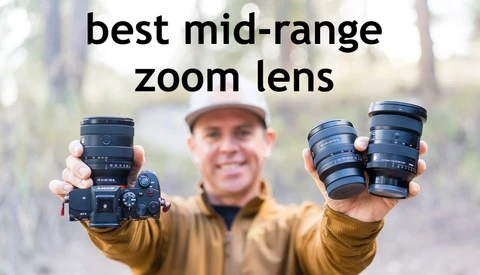
Why the 24-70mm f/2.8 Should No Longer Be the Default First Zoom Purchase

The 24-70mm f/2.8 has been the default first professional lens purchase for at least 25 years. Almost every working photographer has owned one. Every photography forum recommends one to every newcomer asking what to buy after the kit lens. Every wedding educator names it as the foundation of a working kit. Every camera store stocks it at eye level. The lens has been so culturally dominant within working photography that the question of whether it should still be the default has rarely been asked seriously. It should be asked now. 

Lumix L10 vs. Fujifilm X100VI: Which $1,500 Compact Actually Delivers?

The Lumix L10 is a compact camera built around a 26 MP Micro Four Thirds sensor, a fixed Leica-branded zoom lens, and a spec sheet that will make you question whether Panasonic even knows how to make a simple camera. At $1,500, it sits in a crowded space occupied by cameras like the Fujifilm X100VI, and the question worth asking is whether it can hold its own.

Thypoch 24-50mm f/2.8: Half the Price of Sony's Version, But Is the Image Quality There?

Thypoch built its reputation on manual focus prime lenses, so when the company announced an autofocus zoom, nobody saw it coming. The Thypoch 24-50mm f/2.8 is not only the brand's first zoom lens, it's the first autofocus zoom lens to come out of China entirely, and it lands at $619 on Sony E-mount, undercutting the Sony 24-50mm f/2.8 G by roughly half.

There Might Just Be a Disconnect Between Camera Manufacturers and Market Demands

As with every fast-paced, tech-driven industry, the cycle time for each incremental update in photography equipment seems to get shorter and shorter. Though it has become better for the past few years, each product launch is still not given sufficient time to mature before the next iteration is shoved down our throats. While this might contribute to a better-looking balance sheet from a business standpoint, in the long run, it might lead to a massive disconnect between what camera manufacturers are building and what the market actually demands.

Canon Announces the RF 20-50mm f/4 L IS USM PZ, a Power Zoom for the EOS R6 V Era

Alongside the EOS R6 V camera body, Canon today announced the RF 20-50mm f/4 L IS USM PZ, the first L-series lens from Canon to include built-in power zoom without requiring an external accessory. The lens is aimed at video shooters and hybrid creators working on gimbals, sliders, and handheld setups, and serves as the native companion to the video-focused EOS R6 V.

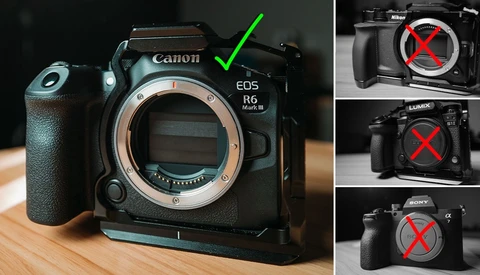
Canon Unveils the EOS R6 V: A 7K Full Frame Video Camera at $2,499

Canon today announced the EOS R6 V, a new full frame mirrorless camera built around video capture, alongside the RF 20-50mm f/4 L IS USM PZ lens and a set of accessories aimed at solo creators and small productions. The R6 V is the first V-series body to use a 32.5-megapixel full frame sensor, and it slots into Canon's lineup as a video-first counterpart to the still-focused R6 Mark III.

Leica M11-D Review: What Shooting With No Screen Actually Does to Your Photography

The Leica M11-D is a digital camera with no rear screen, and that single omission is either its greatest flaw or its greatest feature depending on how honest you are with yourself about how you actually shoot. If you've ever told yourself you'd stop chimping and never followed through, this camera calls that bluff immediately.

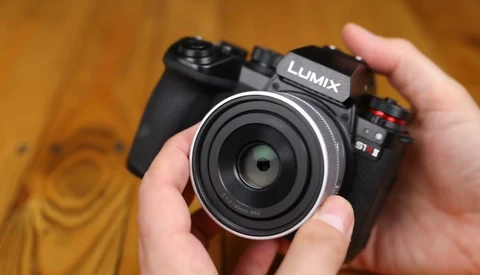
Panasonic Jumps Into the Compact Camera Game With the LUMIX L10

Panasonic has announced the LUMIX L10, a new fixed-lens compact camera built around a Four Thirds sensor and a Leica-branded zoom. The release marks the 25th anniversary of the LUMIX line, and Panasonic is launching the camera in three finishes: Black, Silver, and a limited Titanium Gold Special Edition.

The Fujifilm XC 13-33mm Kit Lens Is Cheap, Wide, and Surprisingly Capable on Some Cameras

The Fujifilm XC 13-33mm f/3.5-6.3 OIS is the one of the newest kit lens options for the Fujifilm's X-mount system, and it takes a different approach than most. Instead of the typical 15-45mm range, this lens goes wider, giving you a full frame equivalent of 20mm to 50mm, which opens up genuinely different shooting possibilities for landscapes, interiors, selfies, and vlogging.

Testing The Allen Smart Suction Snap Camera Mount

Today, I'll have a quick look at the new Allen Smart Suction Snap Camera Mount. It's a tool designed for mounting compact mirrorless cameras, action cams, and smaller DSLRs to smooth surfaces via a suction cup that can deliver dynamic moving shots.

Ranking the Viral Cameras of 2026

From Kodak's Charmera to the strange-but-interesting screenless Escura InstantSnap digital camera, 2026 is shaping up to be the year for some wild, hot takes on what makes a camera these days.