Photography Gear

Gear isn't everything — but it's not nothing either. This section covers the cameras, lenses, accessories, and equipment that photographers actually use, with an eye toward helping you make smart decisions rather than just chasing the latest release. Expect news, analysis, hands-on impressions, and the occasional reality check on whether that upgrade is actually worth it.

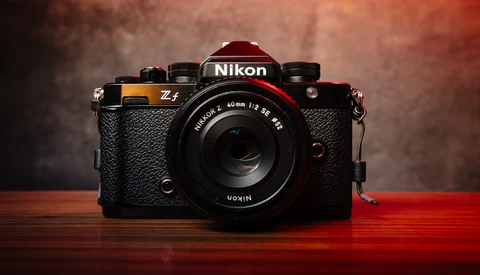
Nikon Is So Close to Something Special...

For photographers seeking the perfect balance between in-camera creativity and personal style, the quest often leads to a crossroads. On one hand, you have the instant gratification of in-camera film simulations offered by brands like Fujifilm, which deliver stunning, ready-to-share images straight out of the camera.

Sigma 35mm f/1.2 DG II Art Review: Smaller, Lighter, Sharper

The 35mm focal length has always been a workhorse, balancing natural perspective with flexibility across genres. A lens at f/1.2 pushes that versatility further, giving you subject separation and low-light capability that few other options can match. 

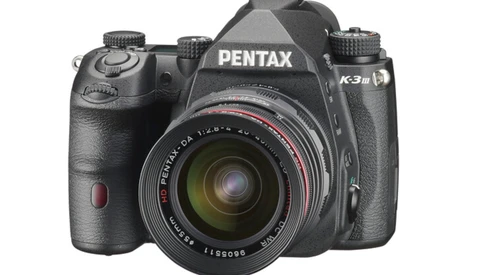
Why Pentax Still Has Diehard Fans in 2025

In 2025, Pentax is no longer shaping the mainstream camera conversation. Canon, Nikon, Sony, and Fujifilm dominate the industry’s attention, while Olympus has reinvented itself as OM System and Panasonic has carved a strong reputation with its video-centric shooters. Pentax, meanwhile, has taken a quieter path.

The Only Lens You Need? My Long-Term Test of the Hasselblad XCD 38V

Most photographers imagine their kit as a toolbox: an ultra wide for sweeping scenes, a zoom for everyday life, a telephoto for reach, and maybe a fast prime for creative flair. That setup promises flexibility. But what if the very act of having so many choices is holding you back? 

Futuristic Fun: We Review the New Viltrox Spark Z3 Mini Flash Unit

Viltrox has just released a new contender in the mini-flash market, and I tested the new Viltrox Spark Z3 TTL on-Camera Mini Flash ahead of its release. I was excited to add some fun back into my photography. What I didn’t expect was for this cool cyberpunk-looking mini flash to win me over so much that I can’t stop talking about it.

Perfectly Fast: Sigma’s 35mm f/1.2, Now Lighter and Sharper

Sigma’s 35mm f/1.2 DG II Art trims real weight and bulk while promising cleaner optics and quicker autofocus than the first version. If you rely on a fast 35mm for portraits, events, or video, this kind of update changes how long it stays on the camera, how backgrounds melt at f/1.2, and how reliably focus lands in low light. 

Two Sharp APS-C f/1.2 Prime Lenses Tested

Two bright APS-C primes with a reputation for bold styling and fast glass get a workout in the real world in this helpful video review. The focus is practical: how f/1.2 affects autofocus, handling, and day-to-day shooting . 

5 Photography Gimmicks That Went Nowhere

Every few years, camera companies roll out something meant to grab attention. Sometimes, those ideas turn into revolutions: autofocus, in-body stabilization, and mirrorless mounts all began as risks that paid off.

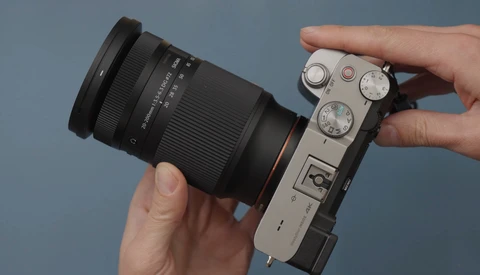
The Sigma 20-200mm Could Be the Only Travel Lens You Need

The idea of a single lens that covers nearly every situation is hard to ignore. When you carry a full frame camera, weight and size matter, and lenses are usually the limiting factor. A lens that balances reach, width, and portability solves a real problem when traveling or shooting outdoors. 

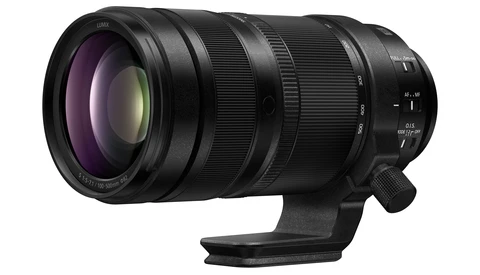
Panasonic’s First Ultra-Telephoto LUMIX S Lens Covers 100-500mm

Panasonic has introduced the LUMIX S 100-500mm f/5-7.1 O.I.S., the first ultra-telephoto zoom lens in the LUMIX S Series. Designed for the L-Mount system, the lens extends the lineup’s reach to 500mm and supports optional teleconverters for focal lengths up to 1,000mm. 

Why Shooting JPEG Doesn’t Have to Limit Your Photography

Most cameras today can capture both raw and JPEG files, but many smaller travel-friendly models only give you JPEG. That means you lose some flexibility when editing, yet with the right setup, you can still come away with strong results. The key is knowing how to make your JPEGs as clean and workable as possible before you ever open them on a computer. 

Why This Micro Four Thirds Body Beats Bigger Kits

A small, metal-bodied Micro Four Thirds camera that shoots 50 MP handheld high-res and 80 MP on a tripod changes what you can do in mixed photo-and-video workflows. If you care about fast setup, deep depth of field at lower ISO, and a compact kit that doesn’t feel like a compromise, this one hits a specific sweet spot for photographers who value mobility and control. 

The Greatest DSLR Cameras Ever Made Are Dead

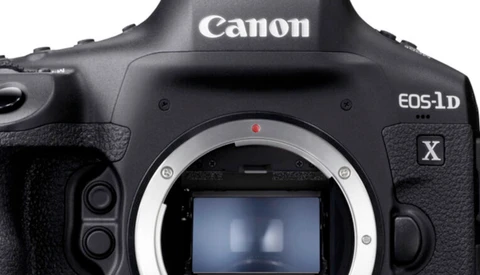
The news landed with the weight of a supertelephoto hitting the studio floor: Canon has discontinued the Canon EOS-1D X Mark III. Just like that, after 35 years of continuous evolution, the flagship DSLR line that defined professional photography for generations has reached its terminus.

Wireless Tethering With the Hasselblad X2D and Phocus Mobile 2

In professional photography, every detail matters. Being able to view an image large and live while shooting, and adjust immediately, is a real game changer. Traditionally, tethering meant long cables, bulky monitors, and staying locked to one spot. Now, it’s far easier: wireless tethering. 

An Everyday Carry Camera That Actually Gets Used

You want a compact that actually changes how you shoot, not just stats on a page. Daily carry, quieter presence in public, and stabilization for low light are the levers that move your results. 

Micro Four Thirds Lenses Worth Adding to Your Bag

When you buy your first camera, it usually comes with a basic kit lens. That lens is a good starting point, but it won’t be long before you start wondering what to add next. The choice matters because your second or third lens often shapes how your photography develops. 

10 Years With the Canon 6D: A Love Letter to a Workhorse DSLR

I’ve shot with a lot of cameras, film and digital—but if there’s one that’s been through it all with me, it’s the Canon 6D. This isn’t a pixel-peeping review comparing MTF charts or arguing about dynamic range. This is a look back at a decade spent with one of Canon’s most underrated full frame DSLRs.

Are Lens Roadmaps Killing the Surprise Factor in Photography?

Photography gear culture used to thrive on mystery, and that mystery was part of the fun. Online forums and rumor sites once operated like detective agencies, parsing blurry prototype photos, dissecting obscure patents, and arguing endlessly about what Canon or Nikon might do next.

Canon RF 24-240mm: The One-Lens Travel Solution?

Travel photography often means unpredictable light, crowded streets, and fleeting moments that don’t wait for you to change lenses. A single lens that covers nearly every focal length you might need can change how you shoot on the road. That’s where super zooms come in, offering reach and flexibility without the stress of juggling multiple lenses. 

Ricoh GR IV First Look: Faster, Slimmer, and More Refined

The release of the Ricoh GR IV digital camera marks an important update to this lineup, bringing changes that go deeper than its familiar exterior might suggest. If you work fast, in unpredictable conditions, the updates here matter. 

Why the Best Camera Is Now the Most Fun One

For years, the phrase “the best camera” was practically shorthand for a math equation. Reviewers and gearheads would line up spec sheets side by side, comparing megapixel counts, autofocus points, ISO charts, and dynamic range graphs as though the entire art of photography could be boiled down to who had the biggest number in the right column. Not anymore. 

Instant Coffee, Instant Noodles… and Now, Instant Leica?

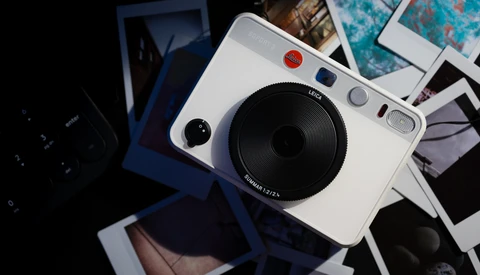
Film may be back in style, but instant photography has become the life of the party—thanks to Fujifilm and Polaroid. Now Leica, a name tied to photographic excellence for over a century, has stepped into the ring with the SOFORT 2. The question is simple: Can the masters of precision still deliver when the goal is fun, fast, and instant? 

How One Photographer Put Three Sigma Zooms to the Test

A day at a fair is unpredictable, full of fleeting expressions, quirky details, and little surprises that vanish if you’re not ready. Capturing that mix of spontaneity and structure demands a flexible setup, especially when you want to move from candid portraits to wider documentary shots without fumbling with gear changes. That’s where a versatile lens kit proves its worth. 

Sharp and Affordable: Testing the Viltrox AF 9mm f/2.8 Air E Lens

The Viltrox AF 9mm f/2.8 Air E is a lens designed to give you extreme width on APS-C cameras without draining your wallet. Ultra-wide options are often priced high, so a $199 lens that manages sharpness and a bright aperture is worth attention. The size and weight also keep it practical, making it something you can carry without a second thought. 

Do Cameras Need App Ecosystems?

Cameras still act like they’re living in 2008: closed boxes that capture files and little else. Meanwhile, smartphones became cultural powerhouses by embracing apps, and the gap is only getting wider. 

The Smartest $30 You'll Spend for Your Camera Bag or Case

We have all been there. It is pre-dawn at a landscape you’ve been waiting for weeks to shoot, or you’re packing up after a wedding reception has ended. You need to find that memory card you just dropped, but your phone flashlight just isn’t cutting it. While a phone flashlight is certainly convenient, it is rarely the right tool for the job. 

The Real-World Wins That Make The Canon EOS C50 a Great Camera

Canon finally put a 7K open gate sensor in a body that actually feels compact, and the trade-offs are going to make you pick a lane. If you prioritize consistent, no-drama recording with real cinema tools over hybrid comforts, this is the one to pay attention to. 

We Review EMEET’s Dual-Camera PTZ Webcam: Meet the PIXY

EMEET has introduced itself as a brand making innovative leaps with webcam hardware and software. Its newly released PIXY webcam is the first dual-camera PTZ 4K webcam with AI processing, promising to elevate video for content creators, educators, and professionals. After testing it in lectures, content creation, and virtual meetings, the EMEET PIXY delivers impressive results. 

Sigma 20–200mm Lens Review: Surprisingly Good

A couple of weeks ago Sigma sent me their brand new 20–200mm f/3.5–6.3 DG DN Contemporary lens. At first glance, I thought it had to be for APS-C cameras because it was so small. When I realized this little thing was actually a full-frame superzoom that started at 20mm, It seemed too good to be true.  

The Price Creep Problem: Compact Cameras Are Becoming Luxury Toys

Compact cameras were once the lifeblood of photography’s middle ground. They bridged the gap between bulky interchangeable-lens systems and casual point-and-shoots. They were the cameras you could throw in a bag, carry on a long walk, or bring along on a trip without worrying about extra weight.

Sigma 35mm f/1.2 DG II Review: Smaller, Lighter, Smarter

The Sigma 35mm f/1.2 DG II Art Lens is a major update that fixes problems with the first version while making it lighter, smaller, and more practical for long shoots. If you’ve ever struggled with heavy glass during a wedding or event, this redesign is worth paying attention to. 

The Venus Laowa 180mm f/4.5 Macro Lens Brings 1.5x Magnification in a Compact Build

The Venus Optics Laowa 180mm f/4.5 1.5x Ultra-Macro APO lens stands out because of its mix of reach and magnification. With a 180mm focal length, you get extra working distance compared to shorter macro lenses, while still achieving 1.5x magnification. That balance opens up creative options in both close-up and portrait work.

Is Smaller the New Better? The Case for Smaller Camera Systems

For as long as digital photography has existed, full frame has been treated as the gold standard. Camera marketing has hammered home the idea that “serious” photographers need the biggest sensor, the fastest zoom, and the heaviest glass. That narrative worked for a while, but in 2025, it’s looking increasingly out of touch.  

Hasselblad X2D II: Modern Architecture in Central Germany

How can a pure photo camera still evolve in 2025? While many manufacturers push for new video features, photography itself has felt like it hit a technological plateau. Real innovations have been rare. So what should a new version of the Hasselblad X2D, already one of the best cameras in the world, actually bring to the table? 

Viltrox vs Sigma 35mm f/1.2: Which Lens Wins?

Two of the most talked about lenses right now are the Viltrox 35mm f/1.2 and the Sigma 35mm f/1.2 DG DN Art. Both are full frame, both are designed with serious build quality, and both are capable of the kind of shallow depth of field that makes backgrounds melt away. Choosing between them is not straightforward, which makes this head-to-head comparison worth paying attention to. 

Viltrox 85mm f/1.4 Pro vs Sony 85mm f/1.4 GM II: Real-World Test

The Viltrox 85mm f/1.4 Pro is entering territory long ruled by Sony’s 85mm lenses. For portraits, this focal length has always been a favorite because of how it isolates the subject, smooths the background, and keeps images flattering. Can you get similar performance without paying a similar price? 

Is Micro Four Thirds the Most Interesting Camera Platform Right Now?

Micro Four Thirds has been declared “dead” so many times you’d think it was a cat working its way through nine lives. Year after year, people predict its collapse, citing smaller sensors and the dominance of full frame. And yet, here we are in 2025, with OM System unveiling one of the most audacious lenses in recent memory.

Hands-On with the Ricoh GR IV: What Works and What Doesn’t

The Ricoh GR IV is small, pocketable, and aimed at being the kind of camera you always have with you. Street photography demands speed, sharpness, and reliability, and this release promises to step up from the older GR III with a new sensor, better autofocus, and improved image stabilization. The question is how much those changes actually matter when you’re out shooting.