Photography Gear

Gear isn't everything — but it's not nothing either. This section covers the cameras, lenses, accessories, and equipment that photographers actually use, with an eye toward helping you make smart decisions rather than just chasing the latest release. Expect news, analysis, hands-on impressions, and the occasional reality check on whether that upgrade is actually worth it.

Is This the Ultimate Portrait Lens?

A 200mm f/2 telephoto lens isn’t for casual shooting. It’s heavy, demanding, and built for moments when you want striking compression and clean separation from the background. If you shoot portraits or cinematic close-ups, lenses like this turn ordinary scenes into something surreal.

5 More Cameras That Were Ahead of Their Time

In the first article, we explored five cameras that had the right vision but arrived at the wrong time, from Sony's Mavica prototype to the Contax N Digital. These machines predicted the future of photography but couldn't convince the market they were right. 

Sigma 135mm f/1.4 Art: A Portrait Powerhouse with Rare Character

The Sigma 135mm f/1.4 DG Art lens isn’t just another telephoto prime. It’s a lens that opens creative doors through its rare blend of focal length and wide aperture. You notice it right away: the way it isolates your subject, softens the background, and transforms an ordinary portrait into something cinematic.

Viltrox 50mm f/1.4 FE Review: A Heavyweight Lens at a Friendly Price

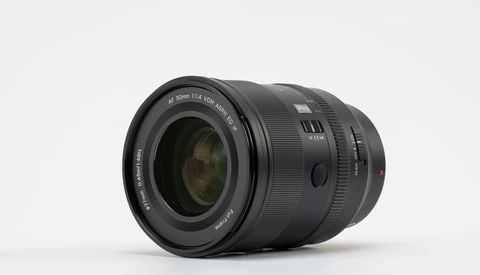
The Viltrox AF 50mm f/1.4 FE steps into a crowded field where 50mm lenses are practically a rite of passage. What makes this one stand out is its combination of build quality and $549 price for a full frame, f/1.4 optic. That’s not pocket change, but for what it offers, it sits in a competitive sweet spot for anyone wanting a fast, well-built 50mm without going into premium territory. 

The 5 Lenses Every Beginner Photographer Should Try

You can read every photography tutorial ever written, watch hundreds of hours of YouTube videos, and memorize the exposure triangle until you dream about it. But nothing will teach you to see like a photographer faster than putting different glass on your camera and forcing yourself to work within its constraints. The problem is that most beginners approach lens buying all wrong.

Wuben X4 Review: The Swiss Army Knife of Flashlights?

A reliable flashlight is a must-have in any camera bag. The Wuben X4 tries something different, with its unique rectangular design, powerful main beam, and versatile side light. It promises to be a versatile light, but does the pursuit of doing everything compromise its performance?

Sigma vs. Laowa: Which 200mm f/2 Is the Smarter Buy?

Two new 200mm f/2 full frame lenses hit the market at almost the same time, a rare coincidence in this range. One costs $3,300, the other $2,000. Both target serious users, but the price gap raises an obvious question: how much performance are you really giving up by saving over a thousand dollars? 

The M5 iPad Pro Brings Big AI and Performance Upgrades to Apple’s Flagship Tablet

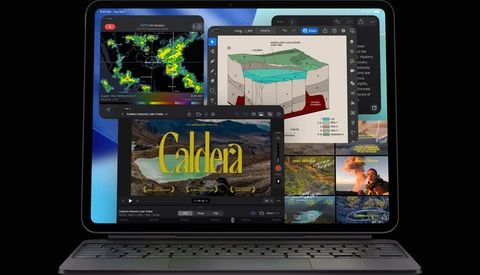
Apple has announced the latest generation of the iPad Pro with M5, bringing a substantial upgrade to processing power, graphics capabilities, and AI performance. The new tablet also introduces Wi-Fi 7 connectivity, faster storage, and an updated version of iPadOS that further blurs the line between tablet and laptop performance. 

Sharpness, Speed, and Reach: A Real Look at the 40-150mm f/2.8 PRO Lens

A long lens can change how you see the world. It pushes distant subjects close, compresses space, and isolates moments you’d otherwise miss. The OM SYSTEM M.Zuiko Digital ED 40-150mm f/2.8 PRO does all of that while staying fast, sharp, and portable enough for real-world use.

How to Choose a Backup Camera Body That Will Actually Save Your Shoot

Your primary camera body fails during a paid shoot. Maybe the shutter mechanism seizes, the sensor starts showing hot pixels, or the battery door won't close properly. In that moment, your backup camera becomes the difference between delivering the work you promised and refunding thousands of dollars while explaining to a disappointed client why you couldn't finish the job.

What One War Photographer Uses to Cover Conflict Around the Globe

War photography is not for the faint of heart. Beyond having technical expertise in your equipment, there’s a whole other level of engaging with people and resilience that comes into play. While that last part takes years of experience and training to learn, here’s a peek into what one war photographer uses to shoot with on the battlefield—and his gear will definitely surprise you. 

When One Lens Works: Watching the Sony RX1R III in Action

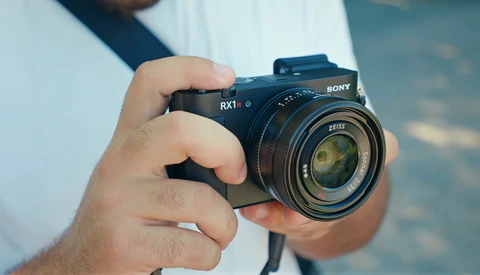
You’ve likely wondered whether a fixed-lens, full frame camera could actually replace a more flexible kit. This video confronts that question head-on using Sony’s premium compact model and shows whether convenience kills compromise or not. 

The Secret to Choosing the Right Lens for Landscape Photography

Landscape photography often brings a big questions: what focal length to use. This choice shapes how a scene feels: its depth, focus, and emotion. Picking the right lens isn’t about numbers on a barrel. It’s about how you want the viewer to see. 

An Everyday Carry Street Camera That Actually Delivers

The fixed-lens compact that actually changes how you shoot day to day is under the microscope. If speed and color straight out of camera, you’ll see where the Fujifilm X100VI helps and where it gets in the way. 

Hands-On With a 17mm Tilt Shift That Won’t Break the Bank

Tilt-shift lets you fix leaning buildings and control depth of field with precision, and a true 17mm field of view opens spaces you couldn’t cover with 24mm. If you work in tight city streets or interiors where you can’t back up, this focal length changes what you can deliver to clients. 

OM System OM-1 Mark II vs. OM-5 Mark II: Which One Fits Your Style?

When you’re choosing between two cameras like the OM System OM-1 Mark II and the OM System OM-5 Mark II, the differences aren’t just about specs. It’s about how each body handles your rhythm, your pace, and the kind of moments you chase. These two share the same design language, but they live in slightly different worlds once you start shooting. 

Why Switching to a Fixed Lens Won’t Save Your Photography

Fixed lens cameras have a strange pull. You might trade your bulky setup for something small and beautiful like a Fuji X100VI. You imagine freedom, simplicity, a creative rebirth. But the moment that initial rush fades, the results often don’t match what you expected. The photos look ordinary. The magic you saw in others’ work doesn’t appear in your own. 

Sharper, Faster, Cheaper: The 56mm to Beat on Fuji

Fuji’s 40-megapixel bodies expose which portrait lenses can actually hang at high pixel density. A fast 56mm that stays sharp at f/1.2 changes what you can shoot in bad light and how cleanly you can separate a subject from chaos. 

5 (In)famous Camera Recalls That Changed Industry Standards Forever

No photographer wants to hear that their expensive camera has a fundamental flaw. But some of the most catastrophic product failures in camera history, whether formal recalls or de facto recalls that forced official corrections, led to industry-wide improvements that benefit every photographer today. These weren't just embarrassing product failures.

Create Dreamy Portraits on a Budget with Simple Gear

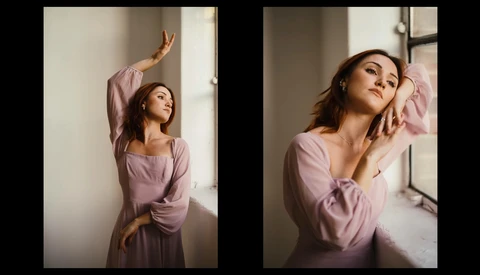
Beautiful portraits don’t depend on expensive gear. The right light, color, and idea can transform a simple setup into something striking. Irene Rudnyk proves that in this lilac-inspired shoot, using gear that’s within reach for anyone who wants professional results without spending thousands. The focus here isn’t on specs but on how to use what you have to make images that stand out. 

Big Sensor, Small Limits: GFX100RF vs X100VI

Two cameras with very different ambitions are compared head to head: the Fujifilm GFX100RF and the Fujifilm X100VI. You’ll see whether extreme resolution and a bigger sensor change your results when you actually walk around and shoot. 

The Honest Truth About Shooting With a Leica M11

The Leica M11 carries a reputation that makes people stop and stare. It’s more than a camera: it’s a statement, both in form and price. But beyond its polished brass and minimalist design lies a question that matters deeply to anyone serious about image-making: does shooting with a rangefinder actually change how you see? 

6 Brilliant Camera Features That Digital Photography Forgot

Every time I load a memory card into my camera, I think about the satisfying mechanical click of loading a fresh roll of film. Modern digital cameras are technological marvels, packed with computational photography, eye-tracking autofocus, and in-body stabilization that would seem like science fiction to photographers of the 1990s.

Pentax 645 45mm f/2.8: Vintage Lens With Hasselblad X2D and Arca Swiss Pico

Old glass on cutting-edge cameras—is that a smart move or just nostalgia? The Pentax 645 45mm f/2.8 comes from an era when medium format meant film, yet many photographers still swear by its character today. To see whether it can hold its own in 2025, I mounted it on two very modern systems: the Hasselblad X2D 100C and the Arca Swiss Pico view camera. 

Canon’s RF 85mm f/1.4: The Sweet Spot Between Power and Practicality

The Canon RF 85mm f/1.4 L VCM has arrived, and it fills a gap many portrait shooters have been waiting on. The 85mm focal length has long been the sweet spot for flattering portraits, and Canon’s latest version promises to balance sharpness, weight, and background blur better than any before it.  

Autofocus, Flare, and Color: Choosing the Right 56mm for Fujifilm X

Two 56mm primes dominate Fujifilm X right now, and they are closer than many expect. If you spend time shooting people at f/1.2, the small differences in sharpness, color bias, autofocus behavior, and flare control can change which one belongs in your bag. 

Is the Canon EOS R5 Mark II Worth the Upgrade?

Sunrise plans, moody skies, and a year of field use set the stage for a frank look at Canon’s high-resolution workhorse. If you shoot portraits, landscapes, or hybrid projects, the question isn’t specs on paper but whether a stacked sensor, faster bursts, and upgraded codecs change how you actually work. 

5 Cameras That Were Ahead of Their Time

The history of photography is littered with brilliant ideas that arrived too early. These were cameras that promised to revolutionize the industry but were met with skepticism, confusion, or outright rejection. These weren't failures of engineering. They were failures of timing. 

How I Captured The Impossible Photograph

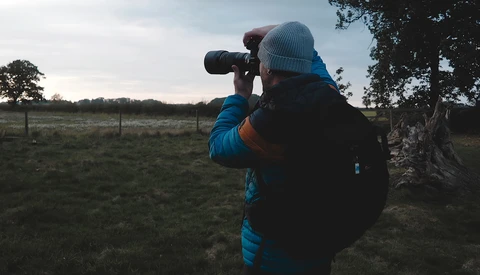
This is the story of an impossible photograph—an image that demanded an absurd amount of luck, unwavering perseverance, and a few very specific pieces of gear to pull off. 

Lights, Camera, Action? 8 Items That Really Keep a Studio Running

So you’ve got a camera, lenses, lights, and a spare space to turn into a studio—perhaps a garage, basement, or garden room. Now what? Having previously run commercial studio premises, and now lucky enough to have my own creative space at home, in this article I share the essential non-photographic items that keep you focused on creating. 

The Smart Way to Test a Lens Before You Buy

Testing lenses is not about chasing perfection or comparing specs on a screen. It’s about knowing whether a lens solves a real problem in your workflow. When you shoot high-end commercial work, even small flaws can become huge headaches on set. Knowing how and why to test a lens before buying is the difference between spending wisely and wasting money. 

Why Smaller Sensors Might Be the Smarter Choice

Micro Four Thirds has been quietly evolving while most attention has gone to full frame cameras. The question is no longer whether the smaller format can compete, but what unique strengths it offers. For anyone shooting both landscapes and wildlife, the conversation around weight, reach, and practicality has become impossible to ignore. 

The 50mm Showdown That Actually Affects Your Photos

50mm is the workhorse focal length because it balances reach with context and keeps distortion low. If you care about lifelike rendering and consistent results across bodies and brands, check out this helpful comparison of three excellent options. 

Will We Eventually See Cellular Integration in Cameras?

Your camera can connect to Wi-Fi. It can pair with Bluetooth. It can talk to your phone, your computer, and your cloud storage through various cables, dongles, and apps that work half the time. But here's what it can't do natively: connect directly to cellular networks the way your phone, your tablet, your smartwatch, and even your car already can. 

Why Everyone Wants a Kodak Charmera

Move over compact point-and-shoots. There’s a new in-demand camera on the scene — and it’s so small it fits in the palm of your hand. The hype surrounding the Kodak Charmera is real. Pre-orders have sold out not once, not twice, but three times in the last month.

Battle of the Superzooms: Canon RF 100-500mm vs. 200-800mm

Choosing between the Canon RF 100-500mm f/4.5-7.1L IS USM and the RF 200-800mm f/6.3-9 IS USM can feel like trying to choose between power and practicality. One gives you reach that borders on absurd, while the other makes every outing lighter and easier. The decision isn’t just about specs; it’s about how you shoot and what kind of day you want in the field. 

Sharper, Faster, Better: The Sony 100mm f/2.8 Macro GM Steps Up

The Sony FE 100mm f/2.8 Macro GM lens gives you something few lenses do: true macro precision with portrait-level rendering. It’s not just a tool for bugs and textures but a versatile upgrade that replaces one of Sony’s most beloved lenses, the 90mm Macro. If you’ve relied on that classic lens and started feeling its age, this new version brings back the excitement. 

The Best Sony APS-C Lens for What You Shoot

You want a single answer on the “best” Sony APS-C lens, but the right choice depends on what you shoot and how you shoot. This video sorts the chaos into real scenarios and shows what actually works when you’re moving fast or building a small kit. 

We Checked Out the $40 Powerextra DF-400 Flash: Here's How It Fared

How good is a $40 flash? We kick the tires on the Powerextra DF-400, a budget hot-shoe flash intended for DSLR and mirrorless shooters who want more power and flexibility than a built-in flash without breaking the bank. It offers only manual control plus a couple of simple wireless trigger modes. 

The Thought Behind Reviewing Something Absurdly Inexpensive