Fstoppers Originals

Exclusive articles and expert opinions written by Fstoppers’ talented team of creative professionals. Here we cover everything from the latest photographic techniques to advice on running a successful photography business, to first hand accounts of working in the photography industry.

What "Exposure Compensation" Actually Does (and When You Need It)

Somewhere on your camera, there is a button or dial marked with a plus sign, a minus sign, and a zero. It might be a physical dial on the top plate, a button near the shutter, or a virtual slider in the quick menu. You have probably noticed it. You have probably never touched it.

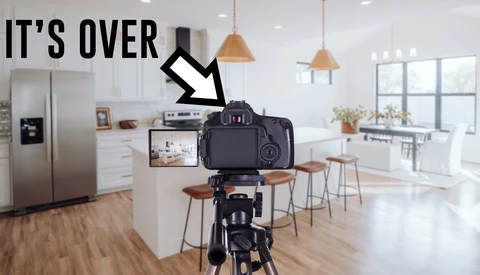
Real Estate Photography Is Dying

AI powered photography software is getting so good that it may make us obsolete. This may have already happened with real estate photography.  

What Is It Like to Photograph a 24-Hour Race?

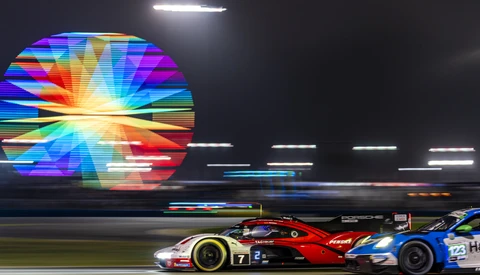
2026 marked the fifth time I worked IMSA’s season-opening Rolex 24 at Daytona race, but only the third as a photographer. My first two races focused on writing magazine articles; as a photographer, I still have a lot to learn and continue to find my way creatively. 

How to Fire a Photo Client (and When You Should)

Nobody goes into photography hoping to turn away paying work. You spent months (or years) building a portfolio, learning your craft, and figuring out how to convince strangers to hand you money in exchange for images. Every booking feels like validation. Every cancellation stings.

How to Land Your First Paid Photography Gig: A Step-by-Step Guide

The gap between "photographer with a portfolio" and "photographer with a client" feels enormous when you are standing on the wrong side of it. You have spent months learning your camera, building a body of work, and editing your images to a standard you are genuinely proud of. But nobody has paid you.

Attempting To Edit An Entire Wedding On Macbook Neo

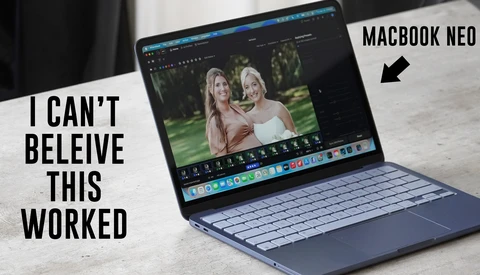
After hearing that “no professional would ever use” a cheap laptop, I decided to test it. I edited an entire wedding, about 2,600 RAW files, on Apple’s budget MacBook Neo and compared it to a MacBook Pro. The twist: I let AI do almost everything. 

The Worst Photography Advice Isn’t Wrong—It’s Vague

Every photographer has heard it: use better light, tell the story, know your camera. None of that advice is wrong; most advice is just too broad, and it becomes useless. Are we giving photographers real guidance, or just repeating slogans? 

Inside Lexar: How Memory Is Built, Tested, and Trusted

Like many digital creators, I've always justified paying more for quality memory, whether that be SD cards, CFexpress cards, or SSDs. Higher-end memory storage is faster, more reliable, and widely trusted. But I never really stopped to consider why that trust exists. That changed when I recently traveled to China to visit Lexar's facilities as part of their 30th anniversary.

Is It the End of Street Photography as a Genre?

Street photography was built on proximity, on the unscripted moment when two strangers briefly shared the same space and the same gaze. In a world where every face is searchable, traceable, and legally accountable, that proximity no longer carries the same meaning. 

How to Build a Photography Portfolio From Scratch (Even With No Clients Yet)

Here is the paradox that stops most aspiring photographers before they start: you need a portfolio to get clients, but you need clients to build a portfolio. It feels like a locked door with the key on the other side, and plenty of talented people quit before they figure out that the door was never actually locked. 

If You're Not Doing Spec Shoots, Here's Why You Should

You'll always hear photographers say that you should create the work you want to be paid for. This is a practice I implemented early on but have refined over the years to help me attract new and larger clients, and that is spec shoots. 

Why Your Photos Are Blurry: 7 Causes and How to Fix Each One

You took the photo. It looked sharp on the back of the camera. You got home, opened it on your computer, zoomed to 100%, and there it is: soft. Not artistically soft. Not "dreamy." Just blurry. The composition was right, the moment was right, and the file is unusable. 

Are Your Equipment Purchases Really an Investment?

The word "investment" often gets thrown around among photographers whenever new gear is discussed, as if this buzzword gave them some bragging rights that they are somehow financially savvy. It's a comforting word that makes spending large sums of money sound responsible and even borderline strategic.

How Steven Madow Captured the Artemis II Launch With 14 Cameras

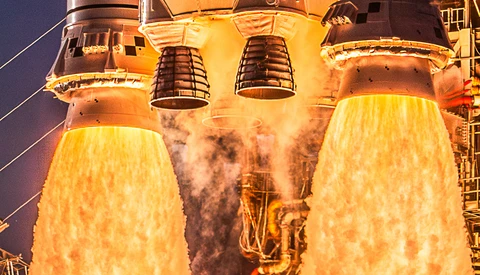
On Wednesday, April 1, NASA's SLS rocket hurled four astronauts toward the Moon for the first time in over 50 years, and Orlando-based photographer Steven Madow was standing at the Kennedy Space Center press site with a plan years in the making.

Why Writing About Your Photography Will Make You a Better Photographer

Writing for Fstoppers this past year changed my photography in ways I didn't expect. Putting words to my images clarified what I value, what I'm drawn to, and why I keep picking up a camera at all. It turns out that writing about your work might be one of the fastest ways to grow. 

Why Shooting in Black and White Makes You a Better Color Photographer

The single most effective thing you can do to improve your color photography has nothing to do with color at all. Stop shooting in color. Not permanently, not because you want to become a black and white photographer, but because spending a few weeks without color will teach you more about what makes a photograph work than years of shooting in color ever will. 

Abstract, Experimental, or Conceptual? What Photographers Actually Mean

Photographers constantly describe their work as abstract, experimental, or conceptual. The problem is not the words themselves, but that they often refer to different levels of the work. When visual style, process, and project structure are mixed under one label, clarity disappears. This article separates those levels and shows how to use the terms precisely. 

A Beginner's Guide to What Every Camera Mode Actually Does (and When to Use Each One)

Look at the top of your camera. Somewhere on the body, probably on a physical dial, you will find a cluster of letters that might as well be hieroglyphics if nobody has ever explained them: P, A (or Av on Canon), S (or Tv on Canon), and M. Nikon, Sony, and OM System use P/A/S/M. Pentax mirrors Canon's labeling with Av and Tv.

Aspect Ratio Is a Creative Choice: Here’s What 1:1 Taught Me

Most of us never question the shape of the frame—we just shoot what the camera gives us. We consider a 3:2 ratio normal, and we rarely stray from it. What happens when you stop treating aspect ratio like a default and start using it like a creative choice? 

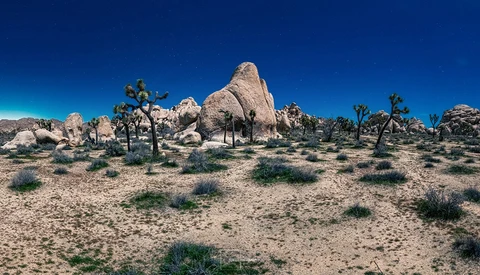
Behind the Scenes: How I Photographed Panoramas in Joshua Tree

Take a peek behind the scenes at how I created several enormous, detailed night panoramas in Joshua Tree National Park. The surreal landscapes are perfect for this sort of work. Below, I'll walk through the process, gear, and a few discoveries that make panoramas better. 

Why I Stopped Fearing AI and Started Using It

Photographers are worried about AI coming to take their jobs. Fair enough, with all the new tools out there you might very well think that. Yet, it is simply impossible, and Aftershoot has finally proven that. Aftershoot AI works for you, not against you.  

https://www.youtube.com/watch?v=s0SGhSOOF74