





Profile picture for Alex Cooke
Editor-in-Chief

Alex Cooke

Cleveland, OH
18 3 Star badge
1 10+ Portfolio Images badge
1 Editor's Pick badge
1 Top Contributor badge

Articles from Alex Cooke

40-150mm Plastic Fantastic: Can a $100 Lens Actually Deliver?

Sharpness is one of photography's most debated specs, and it's also one of the most overrated. The Olympus 40-150mm f/4-5.6 R is widely considered one of the least sharp lenses in the Micro Four Thirds lineup, and Chris Baitson decided to take it out for a full shooting session anyway.

Should The Camera Industry Make a Left-Handed Camera?

Roughly 10% of the global population is left-handed. That is approximately 800 million people. In almost every industry that manufactures hand-operated tools, those 800 million people can buy a product designed for them. In the camera industry, they cannot.

How to Set Up Back-Button Focus (And Why So Many Pros Swear by It)

Almost every camera you have ever used works the same way out of the box: press the shutter button halfway to focus, press it all the way to take the photo. One button, two jobs. It is so intuitive that most photographers never question it. You half-press, the camera focuses, you press the rest of the way, the shutter fires. Simple.

The Viltrox 90mm f/2.2 Evo Is Surprisingly Hard to Put Down

The Viltrox 90mm f/2.2 Evo is one of those lenses that shouldn't perform as well as it does at its price. At $369, it sits in territory where you'd normally make compromises on sharpness, autofocus, or build quality, and this lens largely refuses to do that.

Your Camera Is an Object. It Should Be a Beautiful One.

Somewhere in a closet or on a shelf, many photographers have a camera they love holding. Not because it has the best sensor or the fastest autofocus or the most impressive spec sheet, but because it feels right in the hand and looks right hanging from the neck. The texture of the grip. The color of the body. The glint off a machined aluminum dial when you tilt the camera in your hand. These are not specifications. They are qualities, and they affect how often the camera leaves the house, which is the only variable that determines how many photographs get made.

The OM System OM-5 Mark II Gets Put Through a Brutal First Field Test

Picking the right weather-sealed camera for wildlife shooting in genuinely rough conditions is harder than it sounds, and most reviews don't test gear the way it actually gets used. Todd DeWald took the OM System OM-5 Mark II out for its first field session in 45-degree, rainy, wind-blown grassland conditions to find out exactly what this camera can handle before committing to a full month of testing.

The Real Reason Wildlife Shooters Switch From Primes to Zooms

Shooting wildlife with a 500mm prime is a commitment. The reach, the image quality, the background compression — nothing quite replicates it, but there are real trade-offs that push even experienced wildlife shooters toward zoom lenses over time.

How a Longer Focal Length Cuts Through a Chaotic City Background

Shooting street fashion in a busy city location is a real compositional challenge. The background competes with the subject, the light shifts constantly, and the difference between a clean frame and a cluttered one often comes down to one or two decisions made on the fly.

There Are Now Cameras in Earbuds. Photographers Should Be Thinking About What That Means.

Researchers at the University of Washington have embedded rice-grain-sized cameras into a pair of off-the-shelf Sony WF-1000XM3 wireless earbuds. The prototype, called VueBuds, captures low-resolution black-and-white images, transmits them over Bluetooth to a phone, and processes them through an on-device vision language model that can answer questions about whatever the wearer is looking at. 

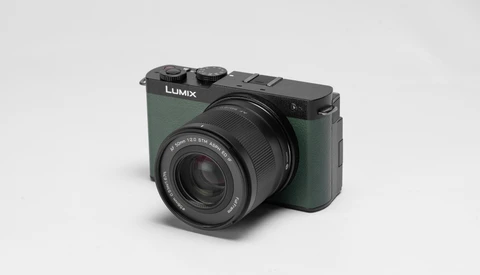
The Panasonic Lumix L10 Might Be the Perfect Journal Camera

Picking a camera that's always with you is harder than it sounds, and most people get it wrong by chasing specs instead of asking what the camera is actually for. The concept of a "journal camera" reframes that question entirely, and it's one of the more useful ideas you'll encounter if you're trying to figure out which second camera actually makes sense.

Every Camera System's Best-Kept-Secret Lens

Every lens catalog has a flagship tier. These are the lenses that dominate reviews, anchor marketing campaigns, and justify the system's reputation: the Canon RF 24-70mm f/2.8 L, the Sony FE 70-200mm f/2.8 GM II, the Nikon Z 50mm f/1.2 S. They deserve the attention. They are genuinely excellent. And they are not the lenses that most photographers would benefit from buying next.

The Biggest Debates in Landscape Photography, Settled (Sort Of)

Landscape photography is full of confident, contradictory advice. Two people can disagree completely on the same topic and both sound completely sure of themselves, which makes it hard to know what to actually believe, especially early on.

16 Years of Shooting Film: What Actually Changed and What Got Worse

Film photography cost less, took longer, and had far fewer options in 2010 than it does today. Els Vanopstal has been shooting film since that year, and the contrast between then and now covers everything from what you pay per roll to how you get your negatives back.

Canon RF 24-105mm f/4L Review: 2,000 Photos Later, Was It Enough?

The Canon RF 24-105mm f/4L IS USM is one of those lenses that tends to get overlooked once you've moved on to faster glass. If you've been shooting with f/2.8 zooms and primes, it's easy to assume the f/4 version isn't worth reaching for anymore.

A Towed Car, a Rooftop, and One Shot at a Spiral Driveway

Shooting cars at night in a city like Hong Kong is a different challenge than a controlled studio setup or a daytime location shoot. You're working with mixed artificial light, heavy traffic, unpredictable locations, and gear decisions that have real consequences when you only get one chance at a shot.

Why Your Next Upgrade Should Be a Lens, Not a Camera

The most common question beginners ask after buying their first camera is some version of "what should I upgrade to next?" The answer they expect is a better camera body. The answer that will actually improve their photographs is almost always a better lens.

What Happens When You Shoot Landscapes at f/1.2

The Viltrox 35mm f/1.2 is built for portraits and low light, but Mads Peter Iversen took it into the forest for landscape work to see how far it can stretch. That tension between a wide-open prime and a genre that typically demands stopped-down sharpness makes for a genuinely interesting test.

One Speedlight, One Umbrella, and a Lighting Trick That Actually Works

Shooting portraits in bright outdoor light is one of the harder problems to solve with a single speedlight. The sun is usually too strong, your flash can't keep up, and the results look forced. Here's a specific technique that sidesteps all of that, and it's simpler than most people expect.

Ilford HP5, a 4x5 Camera, and a Ruined Victorian Quarry in North Wales

Shooting large format film in an abandoned Welsh slate quarry sounds like a niche pursuit, but the images that come out of locations like this are unlike anything a modern digital workflow produces. The combination of 4x5 film, dramatic ruins, and unpredictable natural light creates a specific kind of pressure that forces deliberate, considered photography.

The Camera Industry Ignores Its Youngest and Oldest Customers

The camera industry designs products for a narrow band of humanity. Browse the marketing material from Canon, Nikon, Sony, Fujifilm, or any other manufacturer and the target buyer is consistent: a 25-to-45-year-old enthusiast or professional, fit enough to carry a kilogram of gear on a mountain, dexterous enough to operate tiny buttons in the dark, and technically literate enough to navigate a 400-item menu system. The cameras are excellent for this person. They are less excellent for the two populations on either side of that band: the photographer over 60 whose hands, eyes, and patience have different requirements than they did at 35, and the child under 12 who wants to take real photographs with a camera that can survive being a child's possession.

Five Premium Compact Cameras Tested Side by Side: Which One Actually Wins?

Choosing a premium fixed-lens compact camera is harder than it looks, because the category spans everything from true shirt-pocket cameras to chunky near-mirrorless bodies, and the right answer depends almost entirely on what you actually shoot. The Canon PowerShot V1, Fujifilm X100VI, Panasonic Lumix LX10, Panasonic Lumix ZS300, and Sony RX100 VII are not variations on the same theme; they make fundamentally different tradeoffs across sensor size, lens range, portability, and price.

Hasselblad X2D II vs. 907X 100C: Same Sensor, Very Different Cameras

Choosing between the Hasselblad X2D II and the Hasselblad 907X 100C is genuinely difficult, and not just because both cost the same and share the same 100-megapixel sensor. The decision comes down to something more personal than specs, and getting it wrong at this price point is an expensive lesson.

How to Start Wedding Photography

The exposure triangle, autofocus modes, backup systems, flash technique, portfolio curation, and scam awareness — wedding photography demands you get competent across all of them before your first paid job. Miss any one, and you'll either lose the shots, lose the files, or lose money from your bank account.

5 Lenses Nobody Gets Excited About That Produce More Photos Than Anything in Your Bag

Photography publications, including this one, spend most of their editorial energy on exciting lenses. The fastest aperture in the category. The sharpest optic in the lineup. The new release that leapfrogs last year's model. The GM, the Art, the L-series, the S-Line flagship. These are the lenses that generate press coverage, forum arguments, and YouTube thumbnails with wide-eyed reviewers holding glass that costs more than a used car.