




Profile picture for Alex Cooke
Editor-in-Chief

Alex Cooke

Cleveland, OH
18 3 Star badge
1 10+ Portfolio Images badge
1 Editor's Pick badge
1 Top Contributor badge

Articles from Alex Cooke

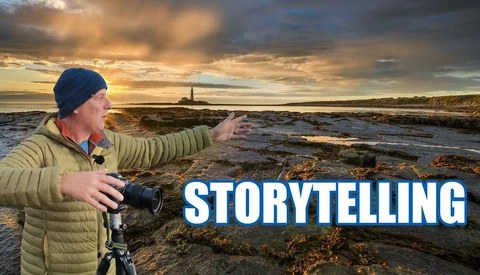
One Lighthouse, Eight Ways: How to Squeeze Every Shot Out of a Single Location

A lighthouse surrounded by a field of yellow flowers at its peak is the kind of alignment that happens once in decades, and one landscape shooter spent an entire week working it from every angle he could find. The blue sky, the red-and-white tower, and the yellow field give you three primary colors sitting together, which is close to ideal for anyone who wants saturated, punchy landscape work.

Why Amateurs Post 100 Photos and Pros Post 15

An art director at Nike once told a photographer that the reason he got hired was because his website had very few images, and every single one looked incredible. That single piece of advice about restraint sits at the center of how strong portfolios get built.

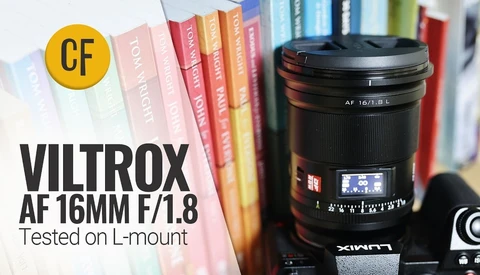
A $329 Lens That Punches Above Its Price on APS-C

A telephoto lens that weighs 325 g, holds corner-to-corner sharpness wide open, and sells for $329 sets a high bar for anyone shooting portraits on APS-C. The Viltrox 75mm f/1.8 Evo is the first APS-C lens in the Evo lineup, arriving alongside a 90mm f/2.2 sibling.

Why Golden Hour Might Be Quietly Wrecking Your Photos

Golden hour gets treated as the one condition worth shooting in, yet the same warm, angled, flattering light that makes photos look easy can also flatten your instincts and hide your subject. Leaning on it too hard limits the range of colors, moments, and conditions you learn to handle.

The Photograph That Proved Einstein Right: The 1919 Eclipse Plates

For about five minutes on May 29, 1919, the Moon blotted out the Sun over an island in the Gulf of Guinea and a hard-baked plain in northern Brazil, and two teams of astronomers pointed their cameras at a patch of sky no one could normally see. They were not photographing the eclipse for its beauty. They were trying to measure whether a handful of stars had moved.

The Camera That Refused to Change for Seven Decades

The Leica M has stayed in production for over 70 years, and the rangefinder inside a 2026 model works almost exactly like the one Leica shipped in 1954. That kind of stubbornness runs against every other camera company, all of which abandoned the rangefinder for SLRs, then mirrorless.

Set a Goal That Has Nothing to Do With Photos, Get Better Photos

Every serious hobby eventually turns into a chore, and photography is no different. When you've come home empty-handed four or five outings in a row, the little voice telling you to quit gets loud, and beating it takes more than better planning.

Darth Vader Showed Up at a San Diego City Council Meeting to 'Support' Flock Cameras

A man in a full Darth Vader costume walked up to the microphone at a San Diego city council committee meeting and delivered a sarcastic endorsement of the Flock surveillance camera network. His identity was never revealed, and the council simply called out "Darth Vader?" before he took the podium in a black helmet and cape.

How Weather Satellites Photograph a Hurricane: Inside the Cameras That Watch Storms Form

When a hurricane spins up over the Atlantic, the most frequent, most continuous pictures of it come from a camera parked 22,236 miles above the equator. That camera is the Advanced Baseline Imager, the primary instrument on NOAA's GOES-R series of weather satellites, and it works nothing like the one in your bag. It never racks focus, it has no shutter in the conventional sense, and what it delivers is not really a photograph. It is a stack of measurements that gets rebuilt into an image on the ground.

The Best Photo Culling Software in 2026: How Narrative Keeps the Story in Your Hands

The best culling software is the one that gets you to your picks faster without deciding for you. Narrative sorts a shoot by scene, ranks every frame for focus and expression, and shows you why it ranked things the way it did, so the final call stays yours. That last part is what separates it from tools that hand you a finished selection and ask you to trust it.

Four Shutter Speed Zones That Fix Noisy, Blurry Wildlife Shots

Most wildlife shooters pick a shutter speed out of habit, then wonder why their still owl on a branch came out at ISO 12,800 and full of noise. The number you dial in shapes sharpness, emotion, and the amount of grain you'll fight later, and knowing why you choose it matters more than memorizing a chart.

The Case for Building Photography Around Projects

Most photographers hit a stretch where the work stops exciting them, direction disappears, and the whole thing starts to feel like a chore. Those flat periods are often what push you toward something new, if you know where to look.

How to Work a Massive Crowd With a Single 16-55mm

A rare eclipse pulled roughly 10,000 people onto a hill in West London, and one photographer showed up with nothing but a hunch and a single lens. Events like this force quick decisions about gear, light, and how you move through a dense crowd, and the choices carry over to any assignment where you can't predict the scene.

Why 40mm Keeps Winning the Everyday Carry Debate

An everyday camera comes down to a short list of things you actually care about: size, weight, how much it hurts if it gets stolen, and whether the files are fun to edit. Most gear roundups skip the honest part and just tell you what to buy.

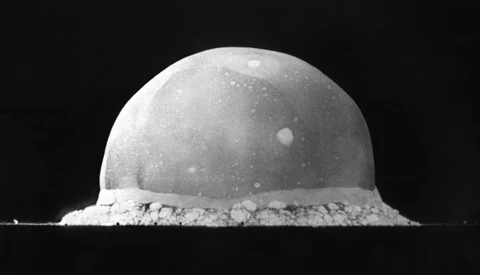
Fifty Cameras in the Dark: How the First Atomic Bomb Was Photographed

At 5:29:45 in the morning on July 16, 1945, in a stretch of New Mexico desert the Spanish called the Jornada del Muerto, the sky turned brighter than the noon sun. Aimed at that flash, tucked into steel-and-lead bunkers and buried instrument boxes ringing a 100-foot tower, sat roughly fifty cameras. Most of the cameras were unmanned and triggered automatically, although Brixner personally occupied a tracking-camera position at North 10,000. Every one had been focused, loaded, and left in the dark hours earlier, wired to fire on a countdown, because no human eye could be trusted to catch what was about to happen and no photographer could survive standing close enough to try. The world has entered the nuclear age.

The 50-150mm f/2 Lens That Replaced a Whole Wedding Bag

Walking into a wedding as the only person handling both photo and video is a gamble that hinges entirely on the light waiting for you. The decision to add a highlight film wasn't made in advance; it was made on arrival, after the conditions turned out to be forgiving enough to pull it off.

The Autofocus Fix That Changes the Hasselblad X2D II for the Better

A medium format camera with a 100-megapixel sensor rarely gets described as fast, yet one specific change has turned a slow studio-style body into something you can shoot reactively on the street. The gap between "beautiful but sluggish" and "reliable in daily use" often comes down to a single feature.

How to Breathe New Life Into Old Images

Fourteen years separate two versions of the same photo, and watching one turn into the other is a quick lesson in how editing taste changes over time. Revisiting old work with newer tools shows you exactly how far your eye has traveled, and it surfaces habits you didn't know you had.

The Skill Nobody Teaches: Knowing When to Walk Away From a Shot

August might be the worst month of the year to point a camera at the landscape, and if you shoot nature the way most people do, the woods in late summer can feel like a dead end. The trick that separates a productive session from a frustrating one has less to do with what you shoot and more to do with what you refuse to shoot.

How Scientists Photograph the Deep Sea, Miles From Where the Sun Shines

In 2022, a camera on the floor of the Izu-Ogasawara Trench off Japan, 8,336 meters down, filmed a small translucent snailfish drifting through its beam. No fish had ever been filmed so far down. No sunlight has ever reached that trench, and the light that does exist down there, the faint blue flicker of bioluminescence, is nothing like the broad-spectrum white the camera carries. When the lights came on, they almost certainly gave that fish a kind of light it had never seen. A great deal of deep-sea photography works this way: the scene has no sunlight of its own, so the camera has to bring it.

Six Life Lessons Hiding in Street Photography

Street photography looks like a hobby about cameras and light, but the habits it builds bleed into how you move through the rest of your day. Watch strangers long enough and you start noticing patterns in yourself, not just in the frame.

The f/2.0 Zoom That Outshines a 24-70mm G Master

A constant f/2.0 aperture across a full zoom range used to sound like a fantasy. Sony now offers it in a body smaller than the Canon equivalent, and the results push the limits of what a standard zoom can do.

Ordinary WiFi Can Now Identify You Without a Camera

Researchers in Germany have shown that an ordinary Wi-Fi network can pick a specific person out of a crowd with near-perfect accuracy, no camera involved. In a test with 197 people, the system recognized individuals in seconds, from different angles, no matter how they walked.

The First Photograph of a U.S. President Is a Contested Honor

In October 2017, a silver plate about the size of a paperback sold at Sotheby's in New York for $360,500. It is the earliest surviving photograph of anyone who has ever been President of the United States, and the man staring out of it had been out of the office for fourteen years by the time the lens cap came off. The question of who was photographed first is messier than a single plate suggests, and every leading candidate carries an asterisk.

The Darkroom Skill That Changes How You Shoot Digital

Modern cameras can produce a stunning image in minutes, which makes the darkroom look like a relic worth skipping. That assumption deserves a second look, because the skills a darkroom demands carry straight back into the field, whether you shoot film, digital, or both.

Who Should Actually Buy Micro Four Thirds

The Micro Four Thirds crowd doubles your depth of field on every shot, and depending on what you shoot, that either ruins the image or saves it. That single trade-off decides whether this system belongs in your bag or stays on the shelf.

Photoshop's New Blemish Tool Keeps Skin Texture Intact

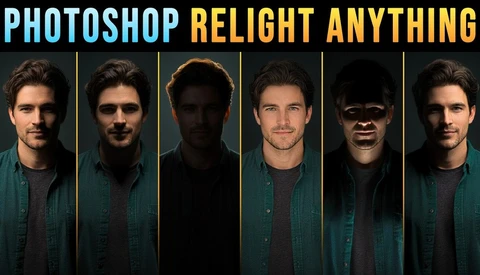
Photoshop's newest blemish tool doesn't just erase spots. It removes them while keeping the skin texture underneath exactly as it was, which is the part that has tripped up automatic retouching for years.

How NASA Blindly Aimed a Camera From Billions of Miles Away

Imagine trying to photograph a moon the size of a fist while flying past it at 45,000 miles per hour, using a camera you cannot see through, cannot focus by hand, and cannot even talk to in real time. Every instruction you send takes hours to arrive. By the time you learn whether a shot worked, the target is long gone, and there is no second pass. That was the daily reality for the people who ran the cameras on Voyager 1 and Voyager 2.

Why Pointing a Light at a Wall Beats a Soft Box Every Time

The softest, most usable light in a room often comes from the simplest move: pointing a single fixture at a white wall and turning it all the way up. Get this foundation right and the rest of your lighting becomes a matter of small refinements rather than a fight against the space.