
Why You Should Buy the Canon C300 Mark III: Full Review
The Canon C300 Mark III is a powerful little cinema camera that’s been getting a lot of attention since its release.
The Canon C300 Mark III is a powerful little cinema camera that’s been getting a lot of attention since its release.

The Sony a9 Mark II takes the impressive features of the original a9 and adds a wide variety of refinements. This excellent video review takes a look at the camera and what you can expect from it in practice.

Camera releases have been hit and miss in the last few decades in particular. Which missed the mark by the most, though?

With masks required basically everywhere, I’ve been able to get away with small things, such as not shaving as often since no one can see my face. Unfortunately, what makes personal grooming easier makes autofocusing a bit harder as my camera struggles to find a face with a mask on.

In the past few years, Samyang has started making small, affordable, and sharp prime lenses for Sony E mount cameras, and the AF 35mm f/1.8 FE continues that trend. If you are looking for such a lens for your Sony camera, check out this fantastic review.

Instant film cameras have seen a resurgence in the past few years, with their blend of instant, tactile satisfaction and nostalgia making them appealing for photographers and casual users alike. The SQ1 is the latest entry into the series, and this great video review takes a look at what you can expect from it in practice.
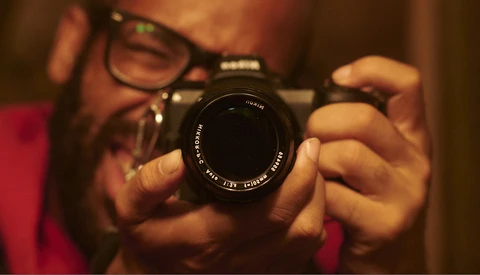
In today’s article, I’ll talk about a surprising new/old addition to my lens collection.

The M10 Monochrom was the first high-resolution M series camera that Leica had produced. As the name would suggest, this camera only produced images in black and white. Leica recently released the M10-R, which is now the highest resolution M series camera that shoots in color.

Videographers are almost spoiled for choice when it comes to run-and-gun cameras, but this Panasonic aims to take the crown.

If you have missed the launch of the Canon EOS R5 mirrorless full frame camera, you have lived under a rock for at least a year. Or perhaps you aren't interested in new cameras. The Canon EOS R5 is the most advanced Canon mirrorless camera on the market. Canon Netherlands gave me one for a week to make an extensive review.

What do you get when you cross a solo event photographer’s working bag with your favorite business travel backpack that you can also take on a day hike through the Adirondacks to photograph your favorite waterfall? How close are we to having the perfect photographer’s camera bag that ticks each and every box?

For years I have found it really hard to get into gear reviews. I simply don't care about pixel pitch, dynamic range, how many auto focus points a camera has, nor the finer part of a menu system. So what do folk like myself look for in a camera?

This upcoming week, many people will be receiving the first batch of Sony a7S III orders. Ahead of all this excitement, Atomos has released new firmware for the Ninja V.
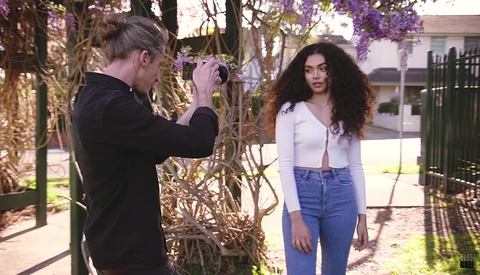
The Sony a7C is here, and it offers full-frame performance in a very compact and portable body. If you are interested in the a7C, check out this great video review.

Both Nikon and Canon’s new mirrorless mounts don’t have huge libraries of existing lens designs available for legacy mounts. While adapters help, a native option can offer a number of advantages. Venus Optics, noted for their unique lens designs, has just launched a new wide-angle with native mount support for a wide variety of mirrorless cameras. Is it worth checking out?

I am not a tech head, as you may well know. However, there are some items of equipment that I didn't upgrade that have ended up holding my commercial photography career back.

Full frame photography was once the preserve of the hefty DSLR, but as the mirrorless bandwagon gains traction, we are now seeing a number of full frame mini marvels emerging on the market. Offering the same sensor — and so image quality — of their bigger brethren, but in a much smaller and lighter package, are these fantastic additions to the product lineup or just the latest fads?

Less than a week away, Canon will be hosting a two-day online trade show conference where a new, purportedly entry-level cinema camera will be announced.

After years of waiting, one of the most highly anticipated cameras ever is finally beginning to ship to customers. Here’s what those lucky individuals should know about the Sony a7S III’s dual ISO for recording the cleanest image.
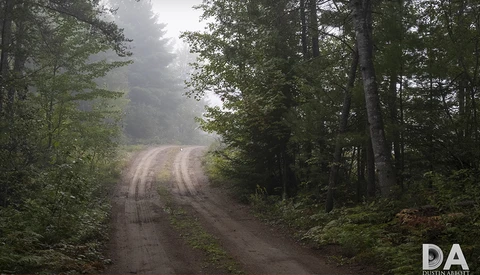
A good 35mm lens with a wide maximum aperture is one of the most versatile optics almost any photographer can own and is often the lens of choice for a lot of scenarios. If you shoot Fuji and are looking for such a lens, check out this great review of the Fujinon XF 23mm f/2 R WR.
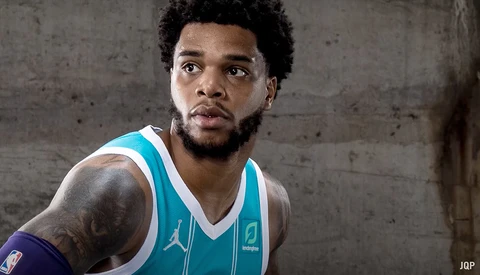
The EOS R5 has been making waves for months with a specs list that pushes the boundaries of modern camera design, but it is only now beginning to make its way into the hands of more customers. If you have been wondering how it holds up in real-world usage, this great video discusses one photographer's experience with the camera while shooting with an NBA client.
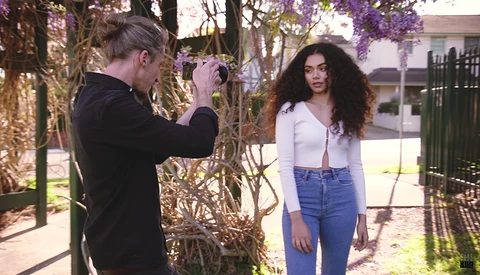
The Sony a7C is the latest in the popular a7 series, and it offers a marked departure in design from its predecessors while still including a lot of the company's most popular features. This excellent video review takes a look at the new camera and what you can expect from it in practice.

The Canon EOS R5 is one heck of a camera that packs a wallop on both the video and stills side of the equation. If you are wondering if it is the right camera for you, check out this great video review that takes an in-depth look at the sort of performance you can expect from it in practice.

Camera cages aren’t just for filmmakers, and now that prices have come down, is it worth considering?
I’m not a photographer by trade, I’ll admit. I’ve either been in TV or commercial content, but a constant has always been a trusty camera cage. A block of metal that hugs your camera, and brings a lot of flexibility. Why do I use one?

Sony announced its new compact full frame mirrorless camera today, the a7C. It shaves the dimensions of the hugely successful a7 III while retaining most of its innards, but who is this camera for and should you be excited about buying one?

The new GoPro HERO9 is bigger and better than ever before.

The Sony a7C is the yet another in a long list of interesting cameras we've had released in this otherwise torrid year, but how good is it?
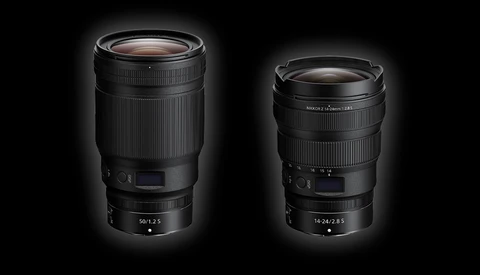
Nikon has announced that it will be launching two new lenses for its mirrorless full frame cameras: the NIKKOR Z 14-24mm f/2.8 S and the NIKKOR Z 50mm f/1.2 S.

MindShift Gear has just updated their popular ROTATION 180° series of adventure bags with the new 22L, 34L, and Pro 50L+ V2 editions, each completely redesigned with new features for active photographers who need to always be on the move.

Today, Sony has announced the Alpha 7C, their latest full-frame mirrorless camera that is 20 percent smaller than the existing lineup.

Even just two decades ago, the photography industry was a vastly different place, and the sort of gear photographers used was quite different. This fun video follows a photographer as he discusses what was in his gear bag back in 2001.
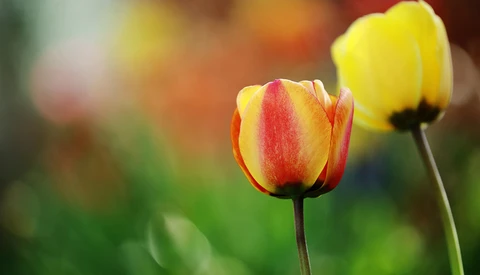
The 70-200mm f/2.8 lens is the workhorse of choice for a wide variety of photographers, but given its size and cost, creatives who do not need the f/2.8 aperture may opt for the lighter and cheaper f/4 version. If such a lens sounds right for your work, check out this great review of the Canon EF 70-200mm f/4L IS II USM.

When you think of landscape photography, you probably think of using wide angle lenses. No doubt, these are normally the lenses of choice for most landscape work, but that does not mean that telephoto lenses do not have their place too. This excellent video discusses why landscape photographers should also own a telephoto lens.

Have you ever tried out a new camera at a convention, tech show, or open house? Do you have a method for testing out something you’ve never touched before?

It all starts off nice and simple, a couple of cameras and lenses, then things slowly get out of hand. There are thousands of small parts that make up a commercial studio, and keeping on top of it all often seems like an impossible task.
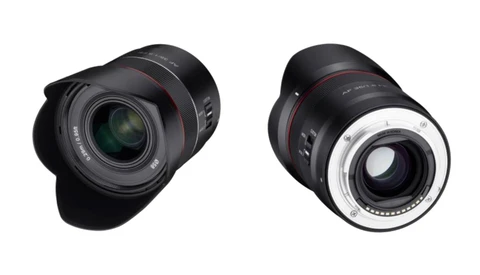
Samyang (a.k.a Rokinon) has just announced the launch of it AF 35mm f/1.8 FE lens, part of its Tiny Series, and adding more f/1.8 options alongside its 45mm f/1.8 and 75mm f/1.8 lenses.

Sony’s new a7S III is quite the piece of gear on paper, but how does it perform out in the real world? Videographer Matt Johnson puts it through its paces shooting a beautiful Texas wedding, complete with high temperatures, bright highlights, and dark shadows — not to mention some dim interiors and a couple of donkeys.
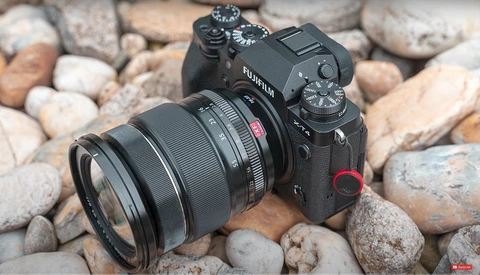
The 24-70mm f/2.8 lens is the workhorse of choice for a wide variety of photographers and videographers across a lot of genres. Fuji's version comes with a lot of the company's top technology, and this excellent review takes a look at what you can expect from it in practice.

First announced in April 2020 and now arriving a month ahead of schedule, Sony has released firmware update V2.0 for their PXW-FX9 Cinema Line cameras.

Camera manufacturers have faced a tough time in recent years as sales dwindled, whilst photographers have demanded ever better products and the development of mirrorless systems. COVID-19 added insult to injury by essentially halting production. How have manufacturers fared? Everyone is a loser, but who has lost less than anyone else?
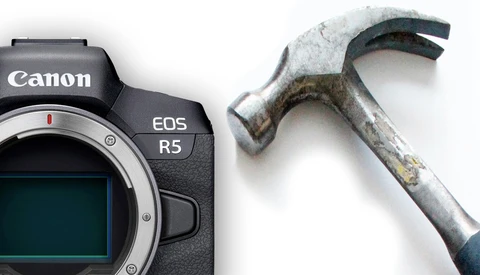
In a recent interview, one of Canon’s directors has said that the suggestion that Canon cripples its cameras in order to protect other product lines is a conspiracy theory and that doing so would make no commercial sense.
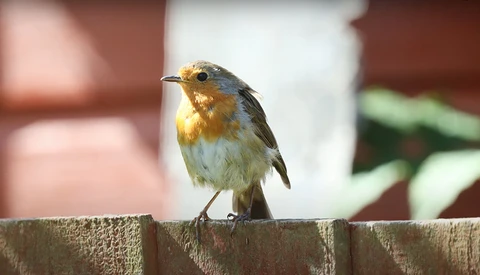
The Canon EF 400mm f/4 DO IS II USM lens is a rather unique lens that takes advantage of Canon's diffractive optics technology to help create a lighter and shorter design, perfect for people like wildlife photographers who have to lug around large lenses. This excellent video review takes a look at the lens and the kind of performance you can expect.

Debate among photographers about the best camera will rage unabated until the end is nigh. And there will likely never be universal agreement. Despite that, the best camera you will ever have is not a Canon, a Sony, a Nikon, or even a Hasselblad.

When they first brought their mirrorless line to the masses, Nikon took a pretty conservative approach when it came to lens design, opting mostly for affordable primes and workhorse zooms. Now that they have filled in a lot of those gaps, the time has come for more extreme designs, and it looks like we might see two of those next week.

It seems like the competition for the mirrorless crown has only just begun. Canon produced the first super affordable, full frame camera, with its EOS RP. Even Panasonic is trying to get in on the entry level side of the industry with its Lumix S5. Sony, seemingly doesn't want to be left out of the fray.

In the past few years, Fujifilm's X Series cameras have made some major strides in autofocus performance, putting them on par with many advanced full frame bodies and positioning the series for high-speed sports and wildlife work.

A good wide-aperture 50mm lens is a staple in the bags of many photographers, and while the Sony Planar T* FE 50mm f/1.4 ZA is definitely on the expensive side of things, it delivers fantastic images. If you are wondering if it is worth the premium price tag, check out this great video review to see what you can expect from the lens.

A good astrophotography lens is one that has a wide focal length and a wide maximum aperture. Normally, this would be a prime lens, but one of Canon's next major lenses might buck that trend.

Fifty years old this year and still innovating, Anton/Bauer have announced a new range of smaller and slimmer batteries for compact cine cameras, monitors, follow focus, and on-camera lighting demands.
Anton/Bauer has expanded their range of batteries with the introduction of the Titon SL, Titon Micro, Titon Base, and GO 90.
Titon SL
The two Canon mirrorless bodies announced earlier this year caused quite a splash in most areas of the industry. One genre of photography which can really test a camera is astrophotography, so one photographer takes them out into the desert to shoot the stars and compare their results.